Can My Dog Catch Bird Flu?
What Dog Owners Need to Know About H5N1
Bird flu has become a growing concern around the world, and it’s no longer something only poultry farmers and wildlife experts are talking about.
As H5N1 avian influenza continues to affect wild birds and other animals in different parts of the world, dog owners are understandably asking:
Can my dog catch bird flu?
The short answer is yes, it is possible—but infections in dogs are considered uncommon.
Dogs aren’t the primary hosts for avian influenza. However, they can potentially become infected after close contact with infected animals or contaminated animal products.
That doesn’t mean dog owners should panic or stop taking their pets outside.
Instead, there are some simple precautions worth understanding—particularly if your dog explores beaches, wetlands, lakes, parks or other places where wild birds gather.
Can Dogs Catch Bird Flu (H5N1)?
Bird flu, also known as avian influenza, is caused by influenza viruses that primarily infect birds.
One subtype receiving particular international attention is H5N1, a highly pathogenic avian influenza virus that has spread through wild bird populations across multiple regions of the world.
Although birds remain the main hosts, H5N1 has also been detected in a range of mammals.
That means the virus can sometimes cross the species barrier.
Dogs can become infected, although reported infections have been far less common than infections in birds and some other mammals.
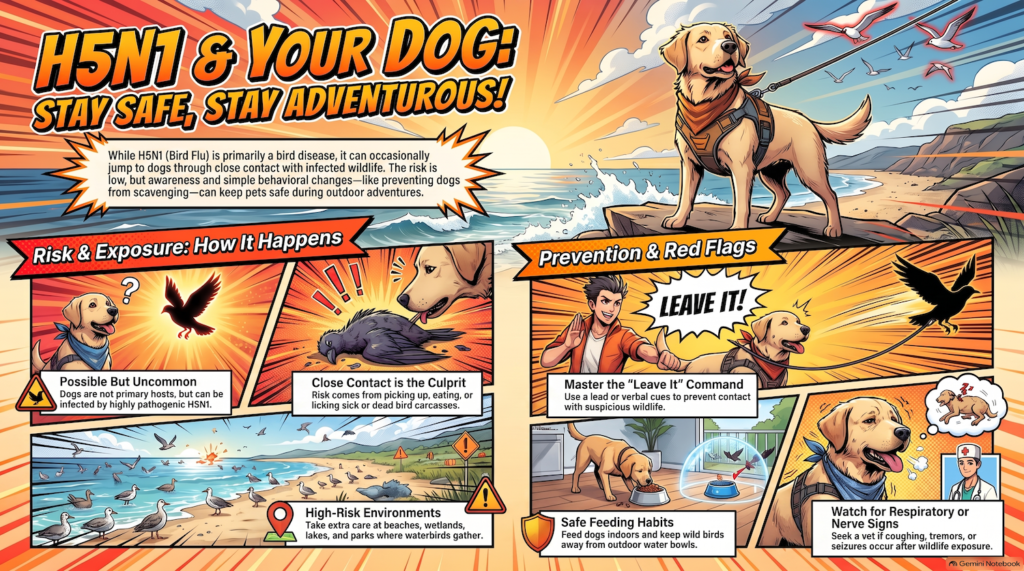
How could a dog be exposed?
For most pet dogs, the concern isn’t simply walking past a healthy bird in the park.
The greater concern is close contact with potentially infected animals or contaminated material.
Possible exposure could occur if a dog:
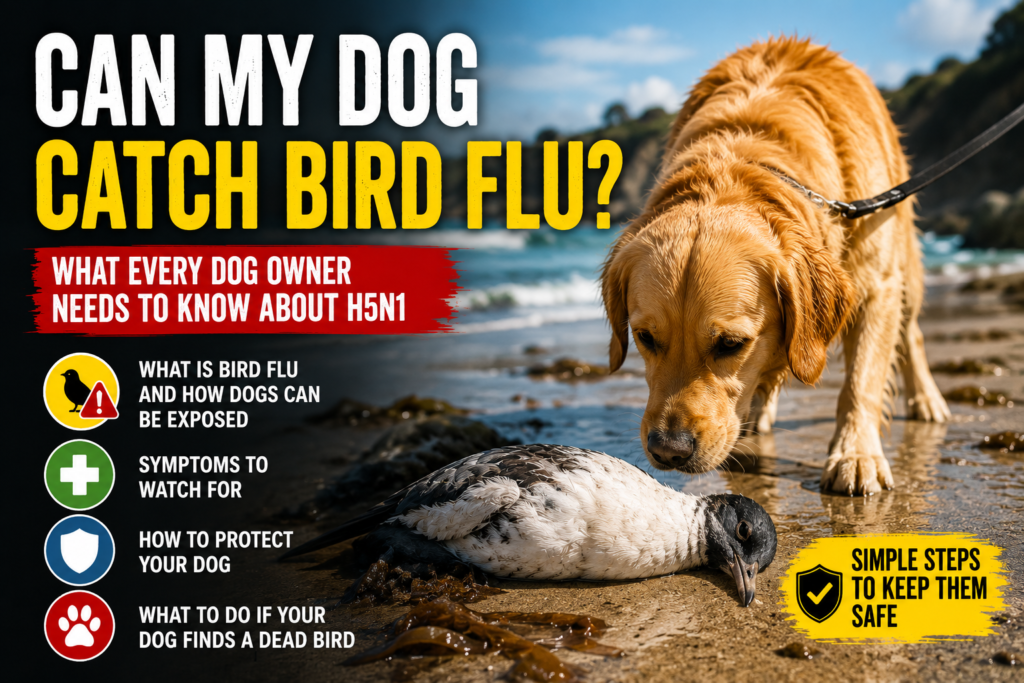
- Picks up a sick or dead bird.
- Eats part of a bird or animal carcass.
- Licks or mouths infected wildlife.
- Hunts wild birds.
- Investigates contaminated animal material.
- Consumes contaminated uncooked animal products.
This is particularly relevant because dogs naturally explore the world with their noses and mouths.
To us, a dead bird beside a lake might be something to avoid.
To an enthusiastic Labrador, it might look like the greatest discovery of the entire walk.
Is H5N1 a global problem?
Yes.
H5N1 has affected wild birds across numerous countries and has also been detected in mammals.
The situation varies significantly between countries and can change as outbreaks develop or wildlife surveillance identifies new cases.
For this reason, dog owners should pay attention to current veterinary, animal-health and wildlife guidance in their own country or region.
The existence of H5N1 does not mean dogs should suddenly stop enjoying the outdoors.
It simply gives us another reason to pay attention to what they’re sniffing, licking or attempting to eat.
What Are the Symptoms of Bird Flu in Dogs?
Because H5N1 infections in dogs are uncommon, owners shouldn’t assume that every cough, sneeze or tired afternoon means bird flu.
Many ordinary canine illnesses can cause similar symptoms.
What can be particularly important is the combination of illness and recent exposure.
If your dog becomes unwell after interacting with a sick or dead bird or other potentially infected wildlife, tell your veterinarian exactly what happened.
What symptoms should dog owners watch for?
Possible signs of illness may include:
- Coughing or sneezing.
- Difficulty breathing.
- Nasal discharge.
- Eye discharge or inflammation.
- Unusual tiredness or weakness.
- Reduced appetite.
- Fever or appearing generally unwell.
- Poor coordination.
- Tremors
- Seizures or other neurological abnormalities.
These symptoms do not automatically mean your dog has bird flu.
Many other illnesses can cause similar signs, and veterinary assessment and appropriate testing are required to determine the cause.
If your dog develops breathing difficulties, severe weakness, collapse, seizures or significant neurological symptoms, seek urgent veterinary attention.
What if my dog picked up a dead bird?
This is one of the most useful situations for dog owners to understand.
If you notice the bird before your dog reaches it:
Don’t let them investigate it.
Call your dog away or use the lead to prevent contact.
If your dog has already mouthed, carried or eaten a sick or dead bird, don’t panic—but contact your veterinarian for advice and explain exactly what happened.
Avoid handling suspicious dead wildlife with bare hands yourself.
Depending on where you live, your local wildlife, veterinary, agriculture or public-health authority may have a system for reporting unusual numbers of sick or dead birds.
Can my dog give bird flu to me?
H5N1 can infect humans in certain circumstances, which is one reason health authorities monitor it so closely.
However, dog owners shouldn’t assume that their pet represents a major transmission risk simply because H5N1 exists in their country.
If your dog becomes ill after credible exposure to infected wildlife, contact your veterinarian and follow any veterinary or public-health advice you receive.
How Can I Protect My Dog From Bird Flu?
Fortunately, reducing your dog’s potential exposure doesn’t require completely changing their life.
The goal is simple:
Prevent unnecessary close contact with potentially infected wildlife and contaminated animal products.
Keep your dog away from sick or dead birds
This is one of the most important precautions owners can take.
Don’t allow your dog to:
- Lick
- Carry
- Roll on
- Chew
- Eat
sick or dead wildlife.
A reliable “leave it” command can suddenly become much more than good manners.
It can be an important safety skill.
Take extra care where wild birds gather
Pay particular attention when walking around places such as:
- Beaches
- Wetlands
- Lakes
- Rivers and estuaries.
- Coastal areas.
- Nature reserves.
- Parks with large populations of ducks, geese or other waterbirds.
If sick or dead wildlife has been reported in an area, keeping your dog on a lead can help prevent unwanted contact before curiosity takes over.
Always follow temporary closures, warnings or other advice issued by authorities in your region.
Keep wild birds away from pet food and water
Outdoor food and water bowls may attract wild birds.
Where practical:
- Feed dogs indoors.
- Don’t leave uneaten food outside.
- Refresh outdoor drinking water regularly.
- Keep feeding areas clean.
- Avoid positioning bowls where wild birds frequently gather.
These are simple precautions that reduce unnecessary contact between wildlife and pets.
What about raw pet food?
Raw animal products are another area owners should consider carefully.
H5N1 has increased international attention on the potential risks associated with contaminated uncooked animal products.
This doesn’t mean all raw pet food contains bird flu.
It does mean owners feeding raw diets should use reputable suppliers, pay attention to food recalls and follow current veterinary and food-safety guidance in their country.
Appropriate heat treatment can inactivate influenza viruses, while freezing shouldn’t automatically be regarded as an equivalent safety measure.
As we’ve discussed in our Eat Wag Love guide to raw pet food, “natural” doesn’t automatically mean risk-free.
Practise good hygiene around wildlife
If you have handled potentially sick or dead wildlife, follow local biosecurity guidance before interacting closely with your pets.
Depending on the circumstances, this may include:
- Washing your hands thoroughly.
- Changing contaminated clothing.
- Cleaning footwear.
- Cleaning or disinfecting equipment.
Avoid bringing potentially contaminated biological material from wildlife environments back into your home.
Should I stop taking my dog to the beach or park?
For most dog owners, no.
Dogs still need:
- Exercise
- Mental stimulation.
- Exploration
- Play
- Social experiences.
The sensible response to H5N1 isn’t fear.
It’s awareness.
Continue enjoying walks with your dog while keeping them under effective control and preventing them from interacting with sick or dead wildlife.
If local authorities issue warnings or temporarily restrict access to an affected area, follow that advice.
What Dog Owners Should Remember
So, can your dog catch bird flu?
Yes—but infection appears to be uncommon.
The greatest practical concern for most dogs is direct exposure to infected wildlife or contaminated animal products rather than simply being outdoors.
Fortunately, the most useful precautions are straightforward.
Keep your dog away from sick or dead wildlife.
Use a lead when necessary around large concentrations of wild birds.
Don’t allow wildlife easy access to your dog’s food and water.
Pay attention to local H5N1 alerts and pet-food recalls.
And if your dog becomes unwell after known contact with potentially infected wildlife, contact your veterinarian and make sure they know about the exposure.
Dogs will always sniff things we’d rather they didn’t.
That’s part of sharing our lives with them.
Our job isn’t to remove every possible risk from their world. It’s to recognise the important ones and make sensible decisions that allow our dogs to continue exploring it safely.