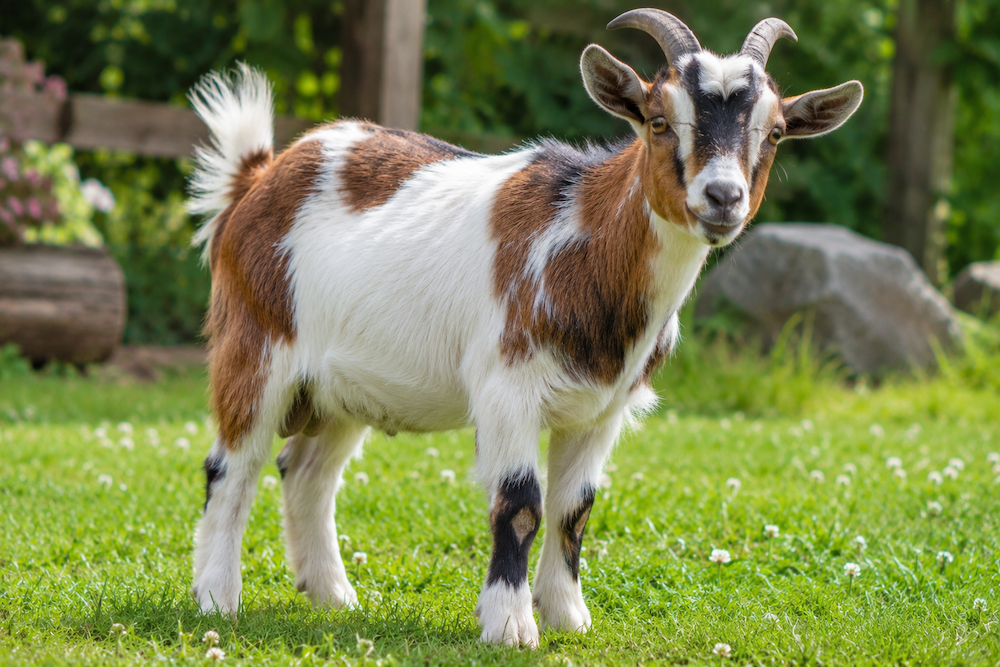







Playful, intelligent and endlessly curious, the Goat is a fascinating domestic animal famous for its mischievous personality, remarkable climbing abilities, affectionate nature and extraordinary talent for exploring almost anything.
🧠 QUICK SNAPSHOT
Trait | Goat |
|---|---|
Scientific Name | Capra hircus |
Other Names | Domestic Goat, Billy Goat (male), Nanny Goat (female) |
Pet Type | Domestic Farm Animal / Mammal |
Natural Origin | Domesticated in Southwest Asia approximately 10,000 years ago |
Typical Lifespan | Approximately 10–15 years; some live longer |
Adult Size | Approximately 40–110 cm at the shoulder, depending on breed |
Adult Weight | Approximately 20–140 kg or more, depending on breed |
Coat Type | Short, medium or long; varies by breed |
Coat Colours | White, black, brown, cream, grey, red and multicoloured |
Diet | Herbivore / Ruminant |
Activity | Primarily diurnal |
Temperament | Curious, intelligent, playful and social |
Noise Level | Moderate to high; frequent bleating |
Social Needs | Very high; requires compatible goat companionship |
Grooming | Moderate; varies by breed |
Housing | Secure outdoor enclosure with weatherproof shelter |
Exercise Needs | High; requires space to roam, climb and explore |
Training Ability | High; responds well to positive reinforcement |
Beginner Friendly? | Yes, with suitable facilities and preparation |
Famous Feature | Remarkable climbing abilities, rectangular pupils and mischievous curiosity |
📚 OVERVIEW
The Goat is one of humanity’s oldest domesticated animals, with a history stretching back approximately 10,000 years. Descended primarily from the wild bezoar ibex, domestic Goats have spread throughout the world and developed into hundreds of breeds with different sizes, appearances and purposes.
Goats are famous for their intelligence, curiosity and playful behaviour. They enjoy investigating unfamiliar objects, climbing elevated surfaces and interacting with other goats. Popular companion breeds include Nigerian Dwarf Goats, Pygmy Goats and various miniature dairy breeds.
Despite their reputation for eating almost anything, Goats are selective herbivores that naturally browse shrubs, leaves, grasses and other vegetation. Their specialised digestive systems allow them to process fibrous plant material through fermentation in a multi-compartment stomach.
Their care requires secure fencing, compatible goat companionship, appropriate forage, mineral supplementation, dry shelter, regular hoof trimming and veterinary attention. Although they can become affectionate companions, Goats aren’t suitable for small backyards without appropriate facilities and local approval.
✅ PROS & CONS
👍 Pros
Highly intelligent and entertaining
Often affectionate with familiar caregivers
Fascinating climbing and exploratory behaviours
Wide variety of breeds and sizes
Can learn commands and simple tricks
Generally active and playful
Form strong social relationships
Can help manage suitable vegetation under supervision
👎 Cons
Require compatible goat companions
Need strong, secure fencing
Can be noisy and destructive
Require substantial outdoor space
May damage gardens and landscaping
Need regular hoof trimming and parasite management
Can escape through surprisingly small openings
Ownership may be restricted by local regulations
Are Goats Good Pets?
Yes. Goats can make wonderful pets for people with suitable land, facilities and experience.
They’re intelligent, social and often develop strong relationships with familiar caregivers.
However, they require considerably more space and specialised care than typical household pets.
Are Goats Good for Beginners?
Some breeds can be suitable for beginners.
Pygmy Goats and Nigerian Dwarf Goats are popular choices because of their relatively small size.
However, beginners must understand goat nutrition, fencing, companionship, hoof care and veterinary requirements before acquiring animals.
How Long Do Goats Live?
Domestic Goats commonly live approximately 10–15 years.
Some individuals may live longer with excellent care.
Lifespan depends on breed, genetics, nutrition, housing and veterinary attention.
How Big Do Goats Get?
Goat size varies enormously between breeds.
Miniature breeds may stand approximately 40–60 cm at the shoulder, while large breeds can exceed 90 cm.
Adult weight can range from around 20 kg to more than 140 kg.
What Are the Different Types of Goats?
Popular domestic Goat breeds include:
Pygmy Goat — compact, playful and popular as a companion
Nigerian Dwarf Goat — small, colourful and intelligent
Boer Goat — large, muscular breed developed for meat production
Anglo-Nubian Goat — distinctive long ears and prominent nose
Saanen Goat — large, white dairy breed
Alpine Goat — hardy, adaptable dairy breed
Angora Goat — famous for producing mohair fibre
Cashmere Goat — valued for its exceptionally soft undercoat
Each breed has different sizes, characteristics and management requirements.
Are Goats Friendly?
Many Goats are friendly and curious.
They often approach familiar people and enjoy interacting with caregivers.
However, temperament varies between breeds and individuals, and appropriate socialisation is important.
Are Goats Affectionate?
Yes.
Some Goats show affection by approaching their caregivers, following them around or seeking gentle scratching.
They can develop strong relationships with familiar people.
However, their behaviour should be interpreted within the context of normal goat social communication.
Do Goats Recognise Their Owners?
Yes.
Goats can recognise familiar people using visual, auditory and other cues.
They may respond to familiar voices and approach caregivers associated with positive experiences.
Research also demonstrates sophisticated social recognition abilities in Goats.
Are Goats Intelligent?
Yes.
Goats are remarkably intelligent animals capable of learning, problem-solving and remembering information.
Studies have demonstrated their ability to learn complex tasks and retain solutions over extended periods.
Their curiosity and exploratory behaviour make environmental enrichment particularly important.
Can Goats Be Trained?
Yes.
Goats respond well to positive reinforcement and consistent training.
They can learn to approach when called, follow simple cues and navigate obstacles.
Food rewards are often particularly effective during training.
Are Goats Good With Children?
Goats can be enjoyable family animals when children are supervised and taught appropriate behaviour.
However, even small Goats can jump, push or accidentally knock children over.
Horned animals and adult males require particular care.
Do Goats Need Companions?
Yes.
Goats are highly social herd animals and shouldn’t normally be kept alone.
They benefit from living with at least one compatible goat companion.
Human attention doesn’t replace the social interaction provided by other Goats.
Can Two Male Goats Live Together?
Yes, under suitable circumstances.
Castrated males, commonly called wethers, often live together successfully.
Intact males may compete more intensely, particularly during breeding periods, and require careful management.
Are Male or Female Goats Better Pets?
Both can make excellent companions.
Castrated males are often popular pets because they don’t reproduce and may be easier to manage than intact bucks.
Females can also make wonderful companions, although individual temperament and breed are more important than sex alone.
Do Goats Smell?
Healthy Goats generally have a mild natural animal odour.
However, intact adult males can produce a particularly strong smell during breeding periods.
Dirty bedding, inadequate drainage and poor enclosure hygiene can also create unpleasant odours.
Are Goats Noisy?
Goats communicate through bleating and other vocalisations.
Some individuals are relatively quiet, while others vocalise frequently.
They may become particularly noisy when hungry, separated from companions or seeking attention.
How Much Space Do Goats Need?
Goats require sufficient outdoor space for movement, browsing, social interaction and enrichment.
Space requirements depend on breed, herd size, pasture quality and local regulations.
A small backyard is generally unsuitable unless it can provide appropriate exercise, shelter, hygiene and secure fencing.
What Type of Fencing Do Goats Need?
Goats require strong, secure fencing.
They can climb, jump, squeeze through gaps and investigate weak points.
Well-maintained woven-wire fencing or appropriately designed livestock fencing is commonly used, with additional security where necessary.
Can Goats Live Indoors?
Goats aren’t generally suitable as permanent indoor household pets.
They need outdoor space for normal movement, browsing and social behaviour.
Although some may temporarily enter buildings under supervision, their primary accommodation should be designed for livestock welfare.
Do Goats Need Shelter?
Yes.
Goats require dry, well-ventilated shelter that protects them from rain, wind and extreme temperatures.
They generally dislike prolonged exposure to wet conditions.
Clean, dry resting areas help prevent health problems.
What Do Goats Eat?
Goats are herbivorous ruminants.
Their diet should consist primarily of appropriate pasture, browse and good-quality hay, supplemented with suitable minerals and additional feed when necessary.
Fresh drinking water must always be available.
Dietary requirements vary with age, breed, pregnancy and production status.
Do Goats Really Eat Everything?
No.
Although Goats investigate objects with their mouths, they don’t naturally eat everything they encounter.
They’re selective browsers that prefer particular leaves, shrubs and other vegetation.
However, they may accidentally consume harmful materials, making safe environments essential.
Can Goats Eat Grass?
Yes.
Goats eat grass, although many naturally prefer browsing leaves, shrubs and other vegetation.
Good-quality pasture can contribute to a balanced diet.
However, pasture alone may not meet every animal’s nutritional requirements.
What Foods Are Dangerous for Goats?
Certain plants and substances can be poisonous to Goats.
Potential hazards include oleander, yew, rhododendron, azalea and some other toxic ornamental plants.
Mouldy feed, inappropriate grain quantities and contaminated water can also cause serious illness.
Pastures and enclosures should be checked for hazards.
Why Do Goats Have Rectangular Pupils?
Goats possess distinctive horizontal, rectangular pupils.
These pupils help provide a broad field of vision, allowing Goats to monitor their surroundings for potential predators.
Their eye structure is an extraordinary adaptation associated with life as grazing and browsing prey animals.
Why Do Goats Climb Everything?
Climbing is a natural behaviour linked to their evolutionary history.
Wild goat relatives inhabit rocky, mountainous environments where agility and balance are essential.
Domestic Goats retain strong climbing instincts and often enjoy elevated platforms and other safe structures.
Do All Goats Have Horns?
No.
Many Goat breeds naturally develop horns, but some individuals are genetically hornless, a characteristic known as polled.
Horn development varies according to genetics, breed and management.
Horned Goats require careful handling and appropriately designed facilities.
How Often Do Goats Need Their Hooves Trimmed?
Most domestic Goats require regular hoof inspections and trimming.
The interval varies according to terrain, hoof growth and individual condition, but checks every few weeks are useful.
Overgrown hooves can cause discomfort, lameness and mobility problems.
What Health Problems Are Common in Goats?
Potential concerns include internal parasites, hoof disease, respiratory infections, digestive disorders and nutritional imbalances.
Goats can also develop serious conditions such as enterotoxaemia, urinary calculi and pregnancy-related metabolic problems.
Appropriate vaccination, parasite management, nutrition and veterinary care are essential.
Are Goats Legal to Keep as Pets?
Goats are legal domestic animals in many countries.
However, local councils and other authorities may regulate livestock ownership, minimum land sizes, fencing and animal welfare.
In Australia, goat owners may also need to comply with livestock identification and movement requirements, including Property Identification Code (PIC) obligations.
Local regulations should always be checked before obtaining Goats.
What Makes the Goat Unique?
Imagine an animal capable of balancing on narrow rocky ledges, recognising familiar human faces, solving complicated puzzles and investigating almost everything it encounters.
That’s the extraordinary Goat.
These fascinating animals have lived alongside humans for approximately 10,000 years, making them among our oldest domesticated livestock species.
But their remarkable abilities developed long before domestication.
Their wild ancestors evolved in rugged, mountainous environments where exceptional balance and agility were essential for survival.
Domestic Goats retain these extraordinary climbing instincts.
They can navigate uneven terrain, leap onto elevated platforms and balance on surprisingly narrow surfaces.
Perhaps their most unusual physical feature is their eyes.
Goats have horizontal, rectangular pupils that provide an exceptionally wide field of vision.
This adaptation helps them detect potential predators while keeping their heads lowered to feed.
Their intelligence is equally impressive.
Scientific studies have demonstrated that Goats can learn complex tasks and remember solutions for extended periods.
They can also distinguish between different human facial expressions and may prefer approaching positive-looking faces.
Another remarkable feature is their social communication.
Mother Goats and their young develop distinctive vocal relationships, and Goats can recognise familiar individuals through calls and other signals.
Their digestive systems are equally fascinating.
Like cattle and sheep, Goats are ruminants with four stomach compartments that allow microorganisms to break down fibrous plant material.
But unlike animals that primarily graze, Goats are particularly skilled browsers.
They often prefer leaves, shrubs, twigs and other vegetation, using their mobile lips to select individual mouthfuls.
Their diversity is astonishing.
From tiny Pygmy Goats to enormous Boer Goats, and from long-eared Anglo-Nubians to luxurious Angora Goats, selective breeding has produced an extraordinary variety of domestic forms.
And then there’s their famous mischievous personality.
Goats are naturally inquisitive and frequently investigate unfamiliar objects, climb onto unexpected surfaces and find creative ways to escape poorly secured enclosures.
These behaviours aren’t simply mischief — they’re expressions of intelligence, curiosity and natural exploration.
The Goat isn’t merely a familiar farm animal — it’s an intelligent, agile and wonderfully entertaining companion with extraordinary senses, remarkable problem-solving abilities and thousands of years of shared history with humans.