







Tiny, adorable and full of personality, the Winter White Dwarf Hamster is a fascinating little pet famous for its remarkable ability to change coat colour with the seasons.
🧠 QUICK SNAPSHOT
Trait | Winter White Dwarf Hamster |
|---|---|
Scientific Name | Phodopus sungorus |
Other Names | Djungarian Hamster, Siberian Dwarf Hamster, Winter White Hamster |
Pet Type | Small Mammal / Rodent |
Natural Origin | Kazakhstan and parts of Siberia |
Typical Lifespan | Around 1.5–3 years |
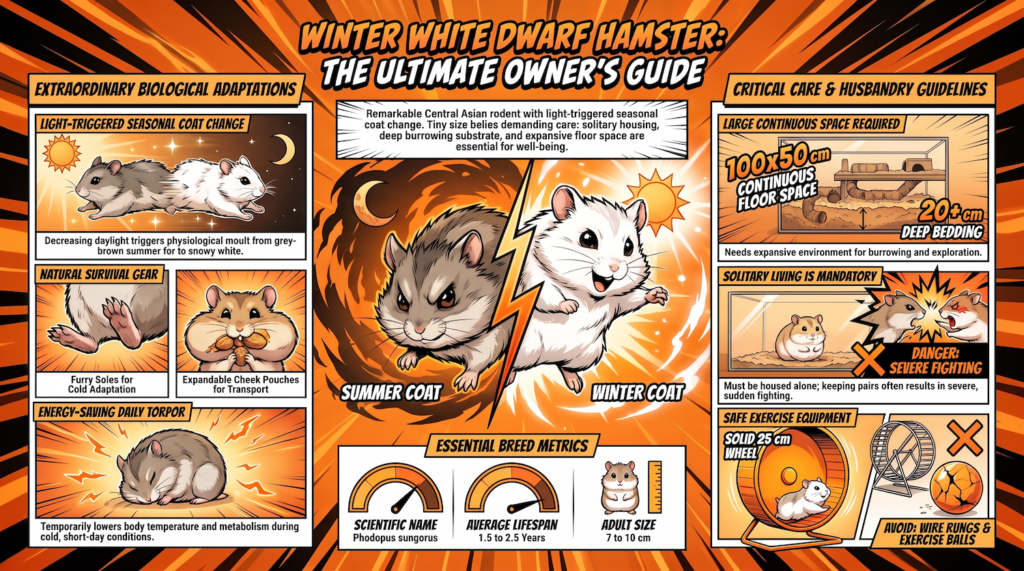
Adult Size | Approximately 7–10 cm |
Adult Weight | Approximately 25–50 g |
Coat Type | Short, dense and soft |
Coat Colours | Grey-brown, pearl, sapphire and seasonal white |
Diet | Omnivore |
Activity | Primarily nocturnal and crepuscular |
Temperament | Curious, active and sometimes shy |
Noise Level | Very quiet |
Social Needs | Best housed individually |
Grooming | Self-grooming; occasional sand bathing |
Housing | Spacious, secure enclosure with deep bedding |
Exercise Needs | High for their small size |
Beginner Friendly? | Yes, with appropriate preparation |
Famous Feature | Seasonal coat colour change and furry feet |
📚 OVERVIEW
The Winter White Dwarf Hamster is a tiny, energetic rodent native to the grasslands and steppes of Kazakhstan and parts of Siberia. Its scientific name, Phodopus sungorus, distinguishes it from the closely related Campbell’s Dwarf Hamster.
These charming animals are famous for their rounded bodies, short tails, furry feet and distinctive dark stripe running along their backs. In the wild, some individuals develop a much paler winter coat as daylight hours shorten, helping them blend into snowy surroundings.
Winter White Dwarf Hamsters are naturally curious and spend much of their time exploring, digging, gathering food and running. Although some become comfortable with gentle human interaction, others remain shy and prefer being observed.
Their care requires spacious housing, deep bedding, a suitable exercise wheel, balanced nutrition, safe hiding places and gentle handling. Despite their small size, they have complex behavioural needs and benefit enormously from an enriched environment.
✅ PROS & CONS
👍 Pros
Adorable, compact appearance
Fascinating seasonal coat changes
Generally quiet pets
Entertaining natural behaviours
Relatively inexpensive daily feeding
Can become comfortable with gentle handling
Require no outdoor exercise
Enjoy digging, exploring and foraging
👎 Cons
Relatively short lifespan
Active mainly during evening and night
Can bite when frightened
Need more enclosure space than expected
Fragile and easily injured
Require regular habitat cleaning
Not suitable for unsupervised young children
May be difficult to distinguish from hybrids
Are Winter White Dwarf Hamsters Good Pets?
Yes. Winter White Dwarf Hamsters can make wonderful pets for people who enjoy small, active animals.
They’re fascinating to observe and can become accustomed to gentle human interaction.
However, they need spacious housing, appropriate enrichment and careful handling.
Are Winter White Dwarf Hamsters Good for Beginners?
Yes, with proper preparation.
Their small size and relatively straightforward feeding requirements make them appealing to beginners.
However, they’re delicate animals that require appropriate housing, patient handling and an understanding of hamster behaviour.
How Long Do Winter White Dwarf Hamsters Live?
Winter White Dwarf Hamsters generally live around 1.5–3 years.
Some individuals may live longer with excellent care.
Their lifespan depends on genetics, nutrition, environmental conditions and overall health.
How Big Do Winter White Dwarf Hamsters Get?
Adults typically measure approximately 7–10 cm in length.
They generally weigh around 25–50 grams.
Their compact bodies and short tails give them a distinctive rounded appearance.
Do Winter White Dwarf Hamsters Turn White in Winter?
Yes, some do.
In their natural environment, shorter daylight hours can trigger a seasonal change from grey-brown fur to a much paler winter coat.
However, captive hamsters may not change colour because of artificial lighting, genetics and environmental conditions.
Are Winter White Dwarf Hamsters Friendly?
Many can become friendly and comfortable around familiar caregivers.
However, temperament varies between individuals.
Gentle, consistent interactions help build trust, while sudden movements or forced handling can cause fear.
Do Winter White Dwarf Hamsters Like Being Held?
Some tolerate or enjoy brief, gentle handling once they become accustomed to people.
Others prefer exploring independently.
Always handle them close to a safe surface because falls can cause serious injuries.
Do Winter White Dwarf Hamsters Bite?
Yes, they can bite when frightened, startled or handled incorrectly.
Biting is usually a defensive response rather than aggression.
Allowing the hamster to approach voluntarily and avoiding waking it suddenly can reduce biting.
Do Winter White Dwarf Hamsters Recognise Their Owners?
Hamsters can learn to recognise familiar scents, sounds and routines.
They may approach when they associate a caregiver with food or positive experiences.
However, their relationships with people differ from those of highly social pets such as dogs.
Are Winter White Dwarf Hamsters Nocturnal?
They’re primarily active during the evening, night and early morning.
They may also wake for short periods during daylight hours.
Their natural activity schedule makes them better suited to households comfortable with nighttime movement.
Do Winter White Dwarf Hamsters Need Companions?
No.
Although wild dwarf hamsters may display some social tolerance, captive hamsters can become territorial and fight.
Individual housing is generally the safest recommendation, particularly for pet owners.
Can Two Winter White Dwarf Hamsters Live Together?
Keeping two together carries a significant risk of fighting and injury.
Even previously compatible hamsters can become aggressive as they mature.
Separate, fully equipped enclosures are the safest approach.
What Size Cage Does a Winter White Dwarf Hamster Need?
A spacious enclosure with at least 100 × 50 cm of continuous floor space is a good target, with larger accommodation preferred.
The enclosure should allow room for deep bedding, an exercise wheel, hiding places and enrichment.
Secure ventilation and narrow bar spacing are essential.
How Deep Should Hamster Bedding Be?
Winter White Dwarf Hamsters are natural burrowers.
Providing approximately 20–25 cm or more of suitable bedding allows them to dig and construct tunnels.
Paper-based bedding and safe, low-dust substrates are commonly recommended.
Do Winter White Dwarf Hamsters Need an Exercise Wheel?
Yes.
A suitable wheel allows hamsters to run and exercise naturally.
A solid-surfaced wheel approximately 20–25 cm in diameter is commonly appropriate, provided the hamster can run without arching its back.
Avoid wire or mesh running surfaces.
What Do Winter White Dwarf Hamsters Eat?
They need a balanced, species-appropriate hamster diet.
A quality dwarf hamster food mix can be supplemented with small amounts of suitable vegetables and occasional protein sources such as insects.
Sugary treats should be limited, and fresh water must always be available.
Can Winter White Dwarf Hamsters Eat Fruit?
Small amounts of suitable fruit may be offered occasionally, but fruit isn’t necessary.
Because dwarf hamsters can be susceptible to metabolic problems, sugary foods are best limited.
Non-starchy vegetables are generally preferable treats.
Are Winter White Dwarf Hamsters Prone to Diabetes?
Dwarf hamsters can develop diabetes, although susceptibility varies between species, individuals and breeding lines.
Campbell’s Dwarf Hamsters and some hybrids are particularly associated with diabetes concerns.
A balanced diet, appropriate body weight and veterinary care are important.
Do Winter White Dwarf Hamsters Need Sand Baths?
Yes, a suitable sand bath can provide useful grooming and enrichment.
Use clean, hamster-safe sand rather than fine, dusty bathing powder.
Many dwarf hamsters enjoy rolling, digging and grooming in sand.
How Often Should You Clean a Winter White Dwarf Hamster Cage?
Remove soiled bedding and uneaten fresh food regularly.
Larger cleaning sessions should be based on enclosure conditions rather than a rigid weekly schedule.
Preserving some clean, familiar bedding can help reduce stress and maintain the hamster’s scent environment.
Can Winter White Dwarf Hamsters Escape?
Yes.
Their small bodies allow them to squeeze through surprisingly narrow gaps.
Secure lids, appropriate bar spacing and careful enclosure inspections are essential.
Exercise outside the enclosure should occur only in a safe, supervised area.
What Is the Difference Between Winter White and Campbell’s Dwarf Hamsters?
Winter Whites (Phodopus sungorus) and Campbell’s Dwarf Hamsters (Phodopus campbelli) are closely related species.
Winter Whites typically have a rounder appearance and are famous for their seasonal coat changes.
However, captive-bred hybrids are common, making visual identification unreliable.
How Can You Tell if a Winter White Dwarf Hamster Is Male or Female?
Sex can be determined by examining the distance between the genital and anal openings.
Males generally have a greater distance between these openings.
An experienced veterinarian or knowledgeable breeder can help identify sex safely.
What Health Problems Are Common in Winter White Dwarf Hamsters?
Potential concerns include dental overgrowth, respiratory infections, obesity, skin problems and tumours.
Changes in appetite, breathing, activity or body condition may indicate illness.
Prompt assessment by a veterinarian experienced with small mammals is important.
Are Winter White Dwarf Hamsters Legal to Keep as Pets?
Ownership laws vary considerably between countries.
Winter White Dwarf Hamsters are legal pets in many places, but some countries restrict hamster ownership because of biosecurity concerns.
In Australia, hamsters are generally prohibited as pets, including Winter White Dwarf Hamsters, so local regulations must always be checked.
What Makes the Winter White Dwarf Hamster Unique?
Imagine a tiny hamster that can change the colour of its fur to match the snowy landscape.
That’s the extraordinary Winter White Dwarf Hamster.
These remarkable little rodents possess one of the most fascinating seasonal adaptations among commonly known hamster species.
In their natural habitat, changing daylight hours can trigger a dramatic transformation in coat colour.
During warmer months, their fur is typically grey-brown with a distinctive dark stripe along the back.
As winter approaches and daylight decreases, some individuals develop a much paler coat, helping them blend into snowy surroundings.
But their unusual adaptations don’t stop there.
Winter White Dwarf Hamsters have furry feet that help protect them while moving across cold ground.
Their compact bodies and short tails are also well suited to life in challenging environments.
They’re enthusiastic diggers, constructing burrows that provide shelter from predators and extreme weather.
And despite their tiny size, these hamsters can be remarkably energetic.
They spend considerable time gathering food, exploring tunnels and running on exercise wheels.
Another fascinating feature is their expandable cheek pouches.
Like other hamsters, Winter Whites can carry food inside these specialised pouches, transporting supplies back to a safe storage area.
Their close relationship with Campbell’s Dwarf Hamsters has also made them particularly interesting to scientists studying genetics, behaviour and adaptation.
The Winter White Dwarf Hamster may fit comfortably in your hands, but its extraordinary seasonal transformation and remarkable survival adaptations make it one of nature’s most fascinating little mammals.