
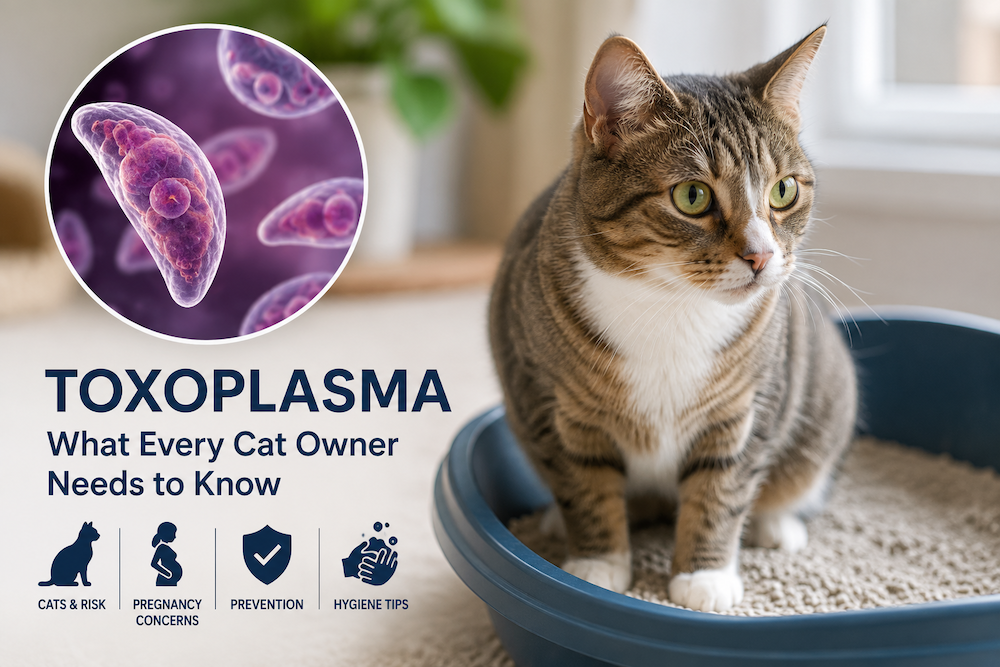
Toxoplasma is a parasite that often makes headlines because of its association with cats, but there’s a lot of misinformation surrounding it. The good news is that the risk to most healthy people is low, and with a few simple precautions, you can safely enjoy life with your feline companion. In this guide, we’ll explain what toxoplasma is, how it spreads, who is most at risk, and how you can protect both yourself and your pets.
What Is Toxoplasma?
Toxoplasma is a microscopic parasite (Toxoplasma gondii) that can infect most warm-blooded animals, including humans. Cats are the parasite’s primary host, meaning they are the only animals capable of shedding its eggs (called oocysts) in their faeces.
While this sounds alarming, most infected cats only shed the parasite for a short period of their lives, and many pet cats never become infected at all.
How do cats become infected?
Cats usually become infected by:
- Hunting and eating infected rodents or birds
- Eating raw or undercooked meat
- Living outdoors where they hunt regularly
Indoor cats that eat commercial cat food have a much lower risk of infection.
How Do People Catch Toxoplasma?
Most people assume they catch toxoplasma directly from their cat, but that’s actually one of the less common ways people become infected.
Common sources of infection
The most common ways people are exposed include:
- Eating undercooked meat.
- Handling raw meat without washing hands.
- Consuming unwashed fruit or vegetables.
- Gardening in contaminated soil.
- Drinking contaminated water.
Cleaning a cat’s litter tray is only a potential risk if:
- the cat is actively shedding the parasite, and
- the parasite has remained in the litter long enough (typically 1–5 days) to become infectious.
Daily litter cleaning greatly reduces this risk.
Who Is Most at Risk?
Most healthy adults experience either mild flu-like symptoms or no symptoms at all.
However, extra care should be taken by:
- Pregnant women.
- People with weakened immune systems.
- Organ transplant recipients.
- Individuals undergoing chemotherapy.
Pregnancy and toxoplasma
If a woman becomes infected for the first time during pregnancy, the parasite may be passed to the unborn baby, potentially causing serious health complications.
This is why healthcare professionals recommend:
- Avoiding raw or undercooked meat.
- Wearing gloves while gardening.
- Washing fruit and vegetables thoroughly.
- Asking someone else to clean the litter tray where possible.
If this isn’t possible, disposable gloves and thorough hand washing are recommended.
How to Reduce the Risk of Toxoplasma
Fortunately, preventing toxoplasma infection is usually straightforward.
For cat owners
- Scoop litter trays every day.
- Wash your hands after cleaning litter.
- Feed your cat commercial or fully cooked food.
- Keep cats indoors where practical.
- Prevent hunting where possible.
Around the home
- Wash hands before eating.
- Clean kitchen surfaces after preparing raw meat.
- Wash fruit and vegetables well.
- Cook meat thoroughly.
- Wear gloves while gardening.
These simple habits significantly reduce your risk of exposure.
Should You Be Worried About Your Cat?
Absolutely not.
Many people wrongly believe they should avoid cats during pregnancy or give them away. Veterinary experts and public health authorities agree this is unnecessary.
Instead:
- Continue caring for your cat.
- Practise good hygiene.
- Have another family member clean the litter tray if possible.
- Keep your cat indoors if practical.
Cats provide enormous emotional and mental health benefits, and sensible precautions are usually all that’s needed.
Can my dog catch toxoplasma?
Yes. Dogs can become infected, but unlike cats, they do not shed infectious oocysts in their faeces. Dogs are therefore not considered a significant source of infection for people.
Can indoor cats get toxoplasma?
Indoor cats have a much lower risk because they are less likely to hunt wildlife or eat infected prey. Feeding only commercial cat food or thoroughly cooked food further reduces the chance of infection.
Should pregnant women avoid cats?
No. Most doctors recommend continuing to enjoy your cat while taking sensible precautions such as avoiding litter tray cleaning where possible and practising good hand hygiene.
Quick Facts About Toxoplasma
Fact | Information |
Parasite | Toxoplasma gondii |
Main host | Cats |
Most common human infection source | Undercooked meat |
Can indoor cats be infected? | Yes, but the risk is much lower |
Is daily litter cleaning helpful? | Yes, it greatly reduces risk |
Should cats be rehomed during pregnancy? | No |
Final Thoughts
Toxoplasma is one of the most misunderstood parasites associated with pet ownership. While it deserves respect, it shouldn’t cause fear. For most healthy people, the risk is low, and simple hygiene practices make infection even less likely.
By understanding how the parasite spreads, keeping your cat healthy, and following sensible precautions around food preparation and litter trays, you can confidently continue enjoying life with your feline companion.
For more trusted pet health advice, breed guides, training tips, and expert videos, explore the rest of Eat Wag Love and subscribe to our YouTube channel to help keep your pets happy, healthy, and safe.