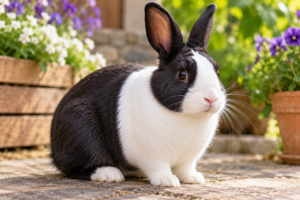
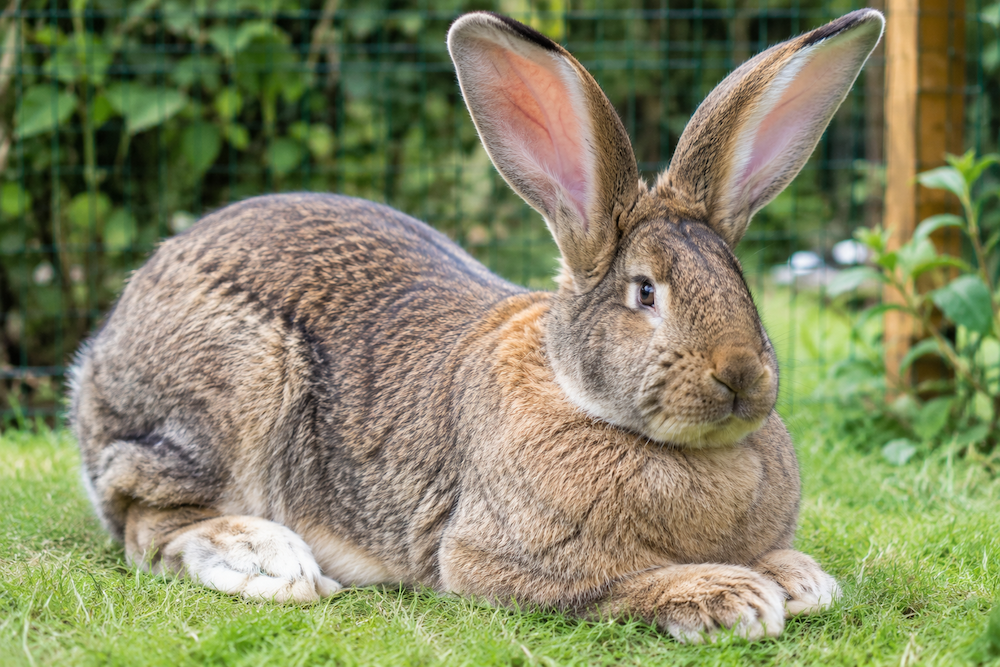







Enormous, gentle and wonderfully affectionate, the Flemish Giant Rabbit is one of the world's largest domestic rabbit breeds, famous for its impressive size, calm personality and reputation as the gentle giant of the rabbit world.
🧠 QUICK SNAPSHOT
Trait | Flemish Giant Rabbit |
|---|---|
Scientific Name | Oryctolagus cuniculus domesticus |
Other Names | Flemish Giant, Gentle Giant, Vlaamse Reus |
Pet Type | Domestic Rabbit / Giant Rabbit Breed |
Natural Origin | Flanders, present-day Belgium |
Typical Lifespan | Approximately 5–8 years; some live longer |
Adult Size | Commonly 65–80 cm in body length |
Adult Weight | Approximately 6–10 kg; exceptional individuals can exceed this |
Coat Type | Short, dense, glossy rollback fur |
Coat Colours | Black, blue, fawn, light grey, sandy, steel grey and white |
Diet | Herbivore |
Activity | Primarily crepuscular |
Temperament | Generally calm, curious, gentle and sociable |
Noise Level | Very quiet |
Social Needs | High; compatible rabbit companionship recommended |
Grooming | Low to moderate |
Housing | Extra-large indoor accommodation or secure outdoor living area |
Exercise Needs | High; substantial daily movement and exploration |
Litter Training | Usually possible with patience |
Beginner Friendly? | Possible, but size creates additional challenges |
Famous Feature | Extraordinary body size and gentle giant reputation |
📚 OVERVIEW
The Flemish Giant Rabbit is one of the largest and most recognisable domestic rabbit breeds. Originating in the Flanders region of present-day Belgium, this remarkable rabbit has been selectively bred for its impressive size and distinctive, powerful body structure.
Flemish Giants possess long, muscular bodies, broad heads and substantial upright ears. Their short, dense coats occur in several beautiful colours, while their enormous size makes them instantly distinguishable from most other domestic rabbit breeds.
Despite their imposing appearance, Flemish Giants are generally known for calm, curious and sociable temperaments. Many enjoy interacting with familiar caregivers, exploring their surroundings and relaxing comfortably in spacious environments.
Their care requires extra-large accommodation, unlimited grass hay, compatible rabbit companionship, appropriate exercise, supportive flooring and regular veterinary attention. Their size also means higher food costs, larger equipment and special consideration when handling or transporting them.
✅ PROS & CONS
👍 Pros
Extraordinary size and impressive appearance
Generally calm and gentle temperament
Often affectionate with familiar caregivers
Intelligent and responsive to training
Beautiful range of coat colours
Can learn to use a litter tray
Fascinating personalities and behaviours
Excellent companions for experienced, dedicated owners
👎 Cons
Require exceptionally spacious accommodation
Higher feeding and equipment costs
Heavy bodies make handling difficult
Vulnerable to foot and joint problems
Need compatible rabbit companionship
Can damage furniture and electrical cables
Shorter average lifespan than many smaller breeds
Require experienced veterinary care and long-term commitment
Are Flemish Giant Rabbits Good Pets?
Yes. Flemish Giants can make wonderful companions for owners who can accommodate their exceptional size.
They’re generally calm, intelligent and sociable rabbits.
However, their housing, feeding and veterinary requirements are considerably greater than those of smaller breeds.
Are Flemish Giant Rabbits Good for Beginners?
They can be suitable for well-prepared beginners, but they’re not usually the easiest first rabbit.
Their large size makes housing, handling and transportation more challenging.
Prospective owners should research giant-rabbit care and arrange access to a rabbit-experienced veterinarian.
How Long Do Flemish Giant Rabbits Live?
Flemish Giants commonly live approximately 5–8 years.
Some individuals may live longer with excellent care.
Their lifespan is influenced by genetics, nutrition, body condition, housing and veterinary attention.
How Big Do Flemish Giant Rabbits Get?
Adult Flemish Giants commonly reach approximately 65–80 cm in body length.
Some exceptional individuals may be longer.
Their elongated bodies and substantial bone structure make them considerably larger than most domestic rabbits.
How Much Do Flemish Giant Rabbits Weigh?
Adult Flemish Giants commonly weigh around 6–10 kg.
Some particularly large individuals exceed 10 kg.
Females and males may differ in size, while genetics and body condition also influence adult weight.
Are Flemish Giant Rabbits the Largest Rabbit Breed?
Flemish Giants are among the world’s largest domestic rabbit breeds.
They are especially famous for their substantial body length and weight.
Continental Giants are another exceptionally large breed, and the distinction between the two depends partly on breed standards and regional recognition.
What Colours Do Flemish Giant Rabbits Come In?
Recognised Flemish Giant colours include black, blue, fawn, light grey, sandy, steel grey and white.
Breed standards vary between countries.
Their short, glossy coats highlight their impressive body shape and distinctive appearance.
Are Flemish Giant Rabbits Friendly?
Many Flemish Giants have friendly, relaxed personalities.
They often become comfortable around familiar caregivers and enjoy gentle interaction.
However, temperament varies between individuals, and early positive socialisation is important.
Are Flemish Giant Rabbits Affectionate?
Yes.
Some Flemish Giants show affection by approaching their caregivers, nudging for attention or relaxing nearby.
Others are more independent.
Like other rabbits, they generally prefer interaction at ground level rather than being carried.
Do Flemish Giant Rabbits Bond With Their Owners?
Yes.
Flemish Giants can develop strong relationships with familiar people.
They may recognise voices, respond to feeding routines and seek interaction.
Building trust requires gentle handling, consistency and patience.
Do Flemish Giant Rabbits Like Being Held?
Most rabbits dislike being lifted, and Flemish Giants are particularly challenging to handle because of their weight.
Their powerful hind legs and heavy bodies require careful support.
Unnecessary lifting should be avoided, and handling should always protect the rabbit’s spine and hindquarters.
Are Flemish Giant Rabbits Good With Children?
Flemish Giants can be suitable family companions when children are taught respectful interaction.
However, their size doesn’t make them suitable for rough handling.
Adult supervision is essential, and children should interact with rabbits while seated on the floor.
Are Flemish Giant Rabbits Intelligent?
Yes.
Flemish Giants can learn routines, recognise familiar people and respond to positive reinforcement.
Many learn litter habits and simple behaviours.
Food puzzles, tunnels and foraging activities provide valuable mental stimulation.
Can Flemish Giant Rabbits Be Litter Trained?
Yes.
Many Flemish Giants can learn to use a litter tray.
They require an exceptionally large tray with suitable rabbit-safe litter and nearby hay.
Desexing often helps improve litter habits and reduce territorial marking.
Do Flemish Giant Rabbits Need Companions?
Yes.
Like other domestic rabbits, Flemish Giants are social animals that generally benefit from compatible rabbit companionship.
A carefully bonded, desexed pair is often ideal.
Their companion doesn’t necessarily need to be another Flemish Giant, although size differences should be considered for safety.
Can Two Flemish Giant Rabbits Live Together?
Yes.
Compatible Flemish Giants can live together successfully when given sufficient space.
Gradual bonding, desexing and careful supervision are important.
Their accommodation must be large enough for both rabbits to move freely and rest comfortably.
Are Flemish Giant Rabbits Aggressive?
Flemish Giants are generally known for calm temperaments.
However, any rabbit may display defensive or territorial behaviour when frightened, uncomfortable or stressed.
Appropriate housing, respectful handling and desexing can help reduce behavioural problems.
What Size Enclosure Does a Flemish Giant Rabbit Need?
Flemish Giants require considerably more space than smaller rabbit breeds.
A spacious, permanently accessible living area of at least approximately 3 × 2 metres for a compatible pair is a useful starting point, but larger accommodation is strongly recommended for giant rabbits.
They must be able to run, hop, stretch fully and stand upright without restriction.
Small hutches are unsuitable as permanent accommodation.
Can Flemish Giant Rabbits Live Indoors?
Yes.
Flemish Giants can make excellent indoor companions when sufficient space is available.
A rabbit-proofed room or large dedicated living area is often more suitable than a conventional cage.
Non-slip flooring, comfortable resting areas and protection from household hazards are essential.
Can Flemish Giant Rabbits Live Outside?
Yes, in suitable climates with carefully designed accommodation.
Outdoor housing must protect them from predators, rain, extreme temperatures and strong winds.
Because of their large bodies and dense coats, Flemish Giants are particularly vulnerable to overheating.
How Much Exercise Do Flemish Giant Rabbits Need?
Flemish Giants need substantial daily movement and exploration.
Ideally, they should have continuous access to a large, secure exercise area.
Running, hopping, digging and investigating their surroundings support healthy muscles, joints and mental wellbeing.
What Do Flemish Giant Rabbits Eat?
Flemish Giants are herbivores.
Their diet should consist primarily of unlimited good-quality grass hay, supplemented with suitable leafy greens and measured portions of nutritionally balanced rabbit pellets.
Fresh drinking water must always be available.
Their larger bodies generally mean greater total food consumption than smaller rabbit breeds.
Do Flemish Giant Rabbits Eat More Than Normal Rabbits?
Yes.
Their larger size means they generally consume more hay, vegetables and water than smaller rabbits.
However, feeding should be based on body condition, age and veterinary guidance rather than unlimited concentrated pellets.
Overfeeding can contribute to obesity and related health problems.
Do Flemish Giant Rabbits Shed?
Yes.
Flemish Giants shed throughout the year, with heavier moulting periods occurring seasonally.
Their short coats are relatively straightforward to maintain.
Regular brushing helps remove loose fur and reduces the amount swallowed during grooming.
How Often Should You Groom a Flemish Giant Rabbit?
Most Flemish Giants benefit from brushing once or twice weekly.
More frequent grooming may be needed during heavy shedding.
Regular nail trimming, coat inspections and checks of the feet and hindquarters are also important.
What Health Problems Are Common in Flemish Giant Rabbits?
Potential concerns include sore hocks, arthritis, dental disease, obesity, gastrointestinal stasis and flystrike.
Their substantial weight can place additional pressure on joints and the undersides of their feet.
Supportive flooring, appropriate body condition and regular veterinary care are particularly important.
A rabbit that stops eating or producing droppings requires urgent veterinary attention.
Are Flemish Giant Rabbits Legal to Keep as Pets?
Flemish Giants are legal domestic pets in many countries.
However, local laws may regulate rabbit ownership, breeding, housing and welfare.
In Australia, domestic rabbits are generally permitted in most states, but Queensland prohibits ordinary pet rabbit ownership without specific authorisation.
Local regulations should always be checked before obtaining one.
What Makes the Flemish Giant Rabbit Unique?
Imagine opening a door and discovering a rabbit so enormous that, at first glance, it almost resembles a small dog.
That’s the extraordinary Flemish Giant Rabbit.
These magnificent animals are among the largest domestic rabbit breeds in the world, with some individuals weighing more than 10 kilograms.
Their remarkable size is the result of generations of selective breeding.
The breed developed in the Flanders region of present-day Belgium, where large rabbits were historically valued for practical agricultural purposes.
Over time, their impressive appearance attracted increasing attention from rabbit enthusiasts, and Flemish Giants became popular exhibition animals and companions.
Their long, muscular bodies distinguish them from many other breeds.
Unlike compact dwarf rabbits, Flemish Giants possess substantial frames, broad hindquarters and impressive upright ears.
But their reputation isn’t based entirely on size.
They’re often called the gentle giants of the rabbit world because many display calm, sociable personalities.
Some enjoy following familiar caregivers around the home, investigating household activities and stretching out beside people they trust.
Their intelligence can also be surprising.
Flemish Giants can learn routines, recognise familiar people and respond to reward-based training.
And despite their enormous size, they still display classic rabbit behaviours.
An excited Flemish Giant may perform a binky, leaping and twisting in the air to express excitement.
Watching such a large rabbit perform this joyful movement can be particularly entertaining.
Their size also creates unusual challenges.
They need much larger litter trays, spacious resting areas and flooring that protects their substantial weight-bearing feet.
Another fascinating feature is their growth.
Flemish Giants generally take longer to reach full physical maturity than many smaller rabbit breeds, with some continuing to develop well beyond their first birthday.
Perhaps their most appealing characteristic is the contrast between their enormous appearance and their often gentle behaviour.
The Flemish Giant Rabbit isn’t simply an oversized bunny — it’s a magnificent, intelligent and wonderfully distinctive companion that combines extraordinary size with the charm and curiosity of a domestic rabbit.