






Tiny, colourful and wonderfully peaceful, Rasbora Fish are fascinating freshwater aquarium favourites famous for their shimmering colours, graceful schooling behaviour and ability to transform planted aquariums into beautiful underwater displays.
🧠 QUICK SNAPSHOT
Trait | Rasbora Fish |
|---|---|
Scientific Classification | Various genera, including Trigonostigma, Boraras, Rasbora and Trigonopoma |
Other Names | Rasboras, Harlequin Rasboras, Chili Rasboras, Lambchop Rasboras |
Pet Type | Freshwater Aquarium Fish |
Natural Origin | South and Southeast Asia |
Typical Lifespan | Approximately 3–6 years, depending on species |
Adult Size | Approximately 1.5–15 cm, depending on species |
Adult Weight | Generally a few grams or less in smaller species |
Colours | Red, orange, copper, gold, silver, green, black and iridescent blue |
Diet | Omnivore / Micro-Predator |
Activity | Primarily diurnal |
Temperament | Peaceful, social, active and sometimes shy |
Noise Level | Silent to humans |
Social Needs | High; most thrive in groups of eight or more |
Water Temperature | Commonly 23–28°C, depending on species |
Water pH | Commonly 5.0–7.5, depending on species |
Tank Size | Approximately 40–60 litres for some tiny species; 75–100 litres or more for larger, active species |
Breeding | Egg-laying; spawning methods vary |
Grooming | No grooming required |
Exercise Needs | Moderate; active swimming and group movement |
Beginner Friendly? | Yes, particularly Harlequin Rasboras |
Famous Feature | Beautiful schooling displays, distinctive markings and spectacular miniature species |
📚 OVERVIEW
The Rasbora Fish is a popular name for numerous small freshwater fish belonging to the carp family, Cyprinidae. Native primarily to South and Southeast Asia, these beautiful fish inhabit forest streams, rivers, ponds, peat swamps and other freshwater environments.
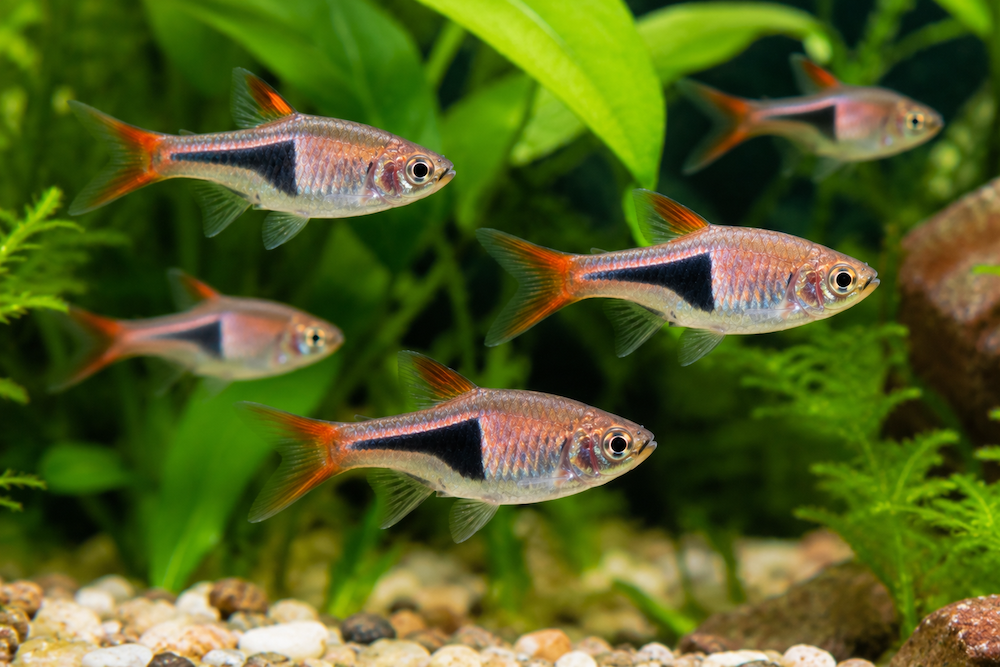
Popular aquarium varieties include Harlequin Rasboras, Chili Rasboras, Lambchop Rasboras, Scissortail Rasboras and Emerald Dwarf Rasboras. Their appearance ranges from shimmering copper bodies with distinctive black markings to tiny, brilliantly coloured red fish decorated with intricate patterns.
Rasboras are particularly admired for their peaceful temperaments and attractive group behaviour. Many form coordinated schools or loose shoals, creating beautiful displays as they move through planted aquariums. Their relatively small size makes several species suitable for carefully designed community tanks.
Their care requires stable water quality, appropriate group sizes, suitable food, peaceful tankmates and species-specific aquarium conditions. Although many Rasboras are hardy, certain miniature and blackwater species require more specialised care.
✅ PROS & CONS
👍 Pros
Beautiful colours and distinctive markings
Generally peaceful community fish
Fascinating schooling and shoaling behaviour
Many species suitable for beginners
Several varieties ideal for planted aquariums
Relatively straightforward feeding requirements
Small species suitable for modest aquariums
Attractive, graceful swimming behaviour
👎 Cons
Require groups of compatible companions
Very small species are vulnerable to larger fish
Some require soft, acidic water
May become stressed in noisy or overcrowded tanks
Tiny species need appropriately sized food
Can jump from uncovered aquariums
Some species are sensitive to sudden water changes
Breeding certain varieties can be challenging
Are Rasbora Fish Good Pets?
Yes. Rasboras make excellent aquarium pets for people who enjoy peaceful, colourful freshwater fish.
Their graceful swimming and attractive group behaviour make them particularly rewarding to observe.
Many species are well suited to planted community aquariums with compatible companions.
Are Rasbora Fish Good for Beginners?
Yes.
Harlequin Rasboras are particularly popular with beginners because they’re generally hardy and adaptable.
However, more delicate species such as Chili Rasboras may require greater attention to water chemistry, feeding and aquarium maturity.
How Long Do Rasbora Fish Live?
Many commonly kept Rasboras live approximately 3–6 years.
Some individuals may live longer with excellent care.
Lifespan depends on species, genetics, nutrition and aquarium conditions.
How Big Do Rasbora Fish Get?
Adult size varies considerably between species.
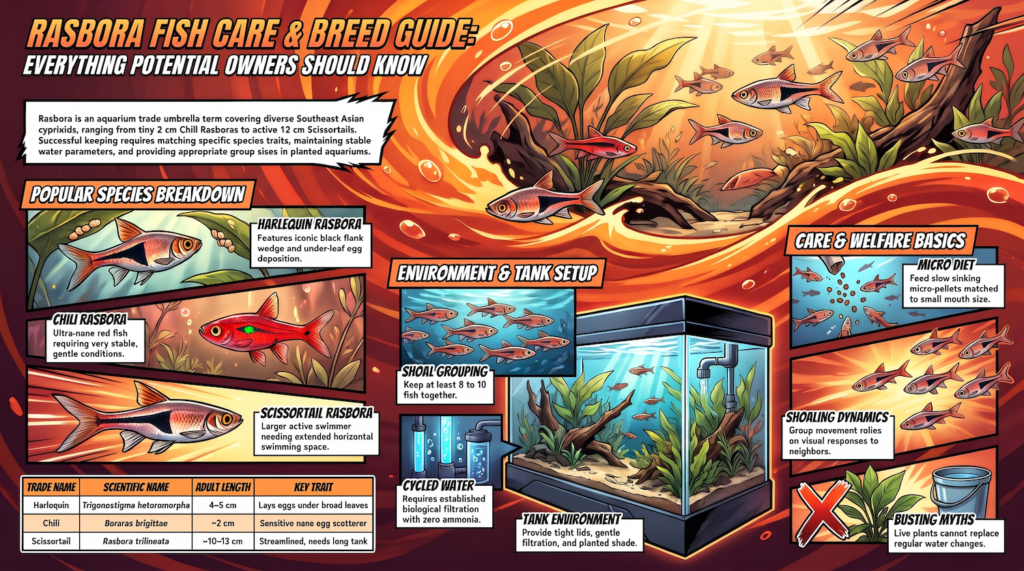
Chili Rasboras typically reach approximately 1.5–2 cm, while Harlequin Rasboras grow to around 4–5 cm.
Larger species, including Scissortail Rasboras, can reach approximately 12–15 cm.
What Are the Different Types of Rasbora Fish?
Popular aquarium varieties include:
Harlequin Rasbora — copper-orange body with a distinctive black triangular marking
Chili Rasbora — tiny, brilliantly coloured red fish
Lambchop Rasbora — attractive orange fish with a distinctive dark marking
Scissortail Rasbora — larger, streamlined fish with a forked tail
Emerald Dwarf Rasbora — small, beautifully patterned fish
Phoenix Rasbora — miniature red fish with delicate markings
Brilliant Rasbora — silvery fish with a prominent dark horizontal stripe
Each species has different adult sizes, water requirements and behavioural characteristics.
Are Rasbora Fish Aggressive?
Most commonly kept Rasboras are peaceful.
They generally coexist well with similarly sized, non-aggressive aquarium fish.
Occasional chasing may occur during courtship or social interactions, but serious aggression is uncommon in suitable conditions.
How Many Rasbora Fish Should Be Kept Together?
Most Rasboras should be kept in groups of at least six to eight individuals.
Larger groups of ten or more are often preferable, particularly for smaller species.
Group living encourages natural behaviour, improves confidence and creates more impressive swimming displays.
Can Rasbora Fish Live Alone?
Generally, no.
Most popular Rasboras are social fish that benefit from living with their own species.
Solitary individuals may become stressed, withdrawn or unusually timid.
Keeping an appropriate group is important for their wellbeing.
Are Rasbora Fish Schooling Fish?
Yes.
Many Rasboras form schools or loose shoals in which individuals swim together.
Their group movements can become particularly coordinated when they feel threatened.
In relaxed aquarium conditions, they may spread out while maintaining social contact.
Can Different Rasbora Species Live Together?
Yes, some species can coexist successfully.
However, differences in adult size, temperament, feeding requirements and water preferences must be considered.
Tiny Rasboras may struggle to compete for food alongside larger, more energetic species.
Can Rasbora Fish Live With Guppies?
Some Rasboras can coexist with Guppies.
However, many Rasboras prefer softer, more acidic water than the harder, alkaline conditions favoured by Guppies.
Compatibility depends on the exact species and suitable overlapping water parameters.
Can Rasbora Fish Live With Bettas?
Yes, some Rasboras can make suitable Betta companions.
Harlequin Rasboras are sometimes kept successfully with peaceful Bettas in appropriately sized aquariums.
However, individual Betta temperament varies, and compatibility isn’t guaranteed.
Can Rasbora Fish Live With Tetras?
Yes.
Many Rasboras coexist successfully with peaceful Tetra species.
Both groups often appreciate planted aquariums, stable water conditions and compatible companions.
Aquarium size and species-specific requirements remain important.
Can Rasbora Fish Live With Shrimp?
Some small Rasboras coexist well with adult freshwater shrimp.
However, they may eat newly hatched shrimp or very small juveniles.
Dense plants and mosses provide useful hiding places for shrimp colonies.
Are Rasbora Fish Intelligent?
Rasboras can learn feeding routines and respond to familiar environmental cues.
They also demonstrate social coordination and responses to potential threats.
Their behaviour reflects the complex interactions required for survival in natural freshwater environments.
What Size Tank Do Rasbora Fish Need?
Tank requirements depend on species and group size.
Some tiny Rasboras can thrive in mature, carefully maintained aquariums around 40–60 litres.
Harlequin Rasboras generally benefit from 75 litres or more, while larger, active species require substantially bigger tanks.
What Water Temperature Do Rasbora Fish Need?
Many tropical Rasboras thrive around 23–28°C.
However, some species prefer slightly cooler or warmer conditions.
A reliable heater and stable temperature are important for tropical varieties.
What pH Do Rasbora Fish Prefer?
Many Rasboras naturally inhabit slightly acidic water.
A pH around 6.0–7.0 suits numerous popular species, although some tolerate a wider range.
Certain blackwater species naturally inhabit extremely soft, acidic environments and may require specialised conditions.
Do Rasbora Fish Need Strong Filtration?
Rasboras require reliable biological filtration and stable water quality.
Many species prefer gentle to moderate water movement.
Tiny Rasboras can struggle with strong currents, so appropriately protected filters and sheltered areas are important.
What Do Rasbora Fish Eat?
Most Rasboras are omnivorous or primarily feed on small aquatic organisms.
They generally accept high-quality micro-pellets, finely crushed flakes and appropriately sized frozen or live foods.
Tiny species may require particularly small foods, such as baby brine shrimp, daphnia or suitable microfoods.
Do Rasbora Fish Need Live Plants?
Live plants are highly beneficial.
They provide shelter, visual barriers and natural-looking surroundings.
Many Rasboras display their best colours and most confident behaviour in well-planted aquariums.
Floating plants can also help create subdued lighting.
Why Are My Rasbora Fish Hiding?
Rasboras may hide when they’re stressed, frightened or newly introduced to an aquarium.
Insufficient group sizes, aggressive tankmates or bright lighting can increase nervous behaviour.
Providing plants, appropriate companions and stable water conditions helps them feel secure.
Why Are My Rasbora Fish Losing Colour?
Colour changes may result from stress, poor water quality, illness or environmental conditions.
Some Rasboras also display more intense colours during courtship or when competing with other males.
Sudden colour loss accompanied by abnormal behaviour should prompt a water-quality and health assessment.
How Do Rasbora Fish Breed?
Rasboras reproduce by laying eggs.
Breeding behaviour varies between species.
Harlequin Rasboras often attach eggs to the undersides of broad leaves, while many other Rasboras scatter their eggs among plants or other surfaces.
Most provide little or no parental care.
What Health Problems Are Common in Rasbora Fish?
Potential concerns include white spot disease, bacterial infections, parasites, nutritional deficiencies and stress-related illness.
Small species can be particularly sensitive to sudden changes in water quality.
Stable aquarium conditions, appropriate feeding and quarantining new fish help reduce health risks.
Are Rasbora Fish Legal to Keep as Pets?
Many Rasbora species are legal aquarium pets in numerous countries.
However, importation, sale and possession regulations vary by species and jurisdiction.
In Australia, commonly traded Rasboras may be permitted, while other species may face biosecurity restrictions.
Always check current regulations and never release aquarium fish into natural waterways.
What Makes the Rasbora Fish Unique?
Imagine a tiny fish no longer than your fingernail, glowing brilliant red as it swims through a dark, plant-filled forest stream.
That’s the extraordinary world of Rasbora Fish.
These beautiful freshwater fish are among the most fascinating small aquarium species, combining spectacular colours with remarkably complex social behaviour.
Perhaps the most recognisable is the Harlequin Rasbora.
Its copper-orange body features a distinctive black triangular marking that makes it instantly recognisable.
But the Rasbora world includes far more than this familiar aquarium favourite.
The Chili Rasbora, Boraras brigittae, is one of the smallest commonly kept ornamental fish, reaching approximately 2 cm in length.
Despite its tiny size, it can display extraordinary red colouring, particularly when maintained in suitable conditions.
Another remarkable feature is the natural habitat of certain Rasbora species.
Some inhabit Southeast Asian peat swamp forests, where decomposing leaves and vegetation release tannins into the water.
These environments can contain dark, tea-coloured water with remarkably low mineral content and acidic conditions.
Specialised Rasboras have evolved to survive in these unusual habitats.
Their breeding behaviour is equally fascinating.
Harlequin Rasboras differ from many other small egg-laying fish because they often deposit adhesive eggs beneath broad plant leaves.
This behaviour contrasts with species that scatter eggs freely among vegetation.
Their group behaviour also reveals remarkable coordination.
When threatened, Rasboras may swim together in tightly organised schools, helping individuals respond collectively to potential predators.
In peaceful surroundings, their movements become more relaxed as they explore and forage.
Their diversity extends beyond colour.
Some species have streamlined bodies designed for active swimming, while miniature varieties are adapted to navigating densely vegetated, sheltered habitats.
And their popularity among aquarists has helped draw attention to the conservation importance of Southeast Asia’s freshwater ecosystems.
Habitat destruction, pollution and changes to peat swamp environments threaten some specialised freshwater species.
Perhaps most surprising is how much visual impact such tiny fish can create.
A healthy group of brilliantly coloured Rasboras swimming through a planted aquarium can produce a spectacular display of coordinated movement and shimmering colour.
Rasbora Fish aren’t simply small aquarium companions — they’re beautiful, social and remarkably specialised freshwater fish that reveal the extraordinary diversity hidden within Southeast Asia’s rivers, streams and forest waters.