






Playful, curious and wonderfully unusual, Loaches are fascinating freshwater aquarium fish famous for their entertaining personalities, distinctive bottom-dwelling behaviour, remarkable camouflage and surprising ability to make clicking sounds.
🧠 QUICK SNAPSHOT
Trait | Loaches Fish |
|---|---|
Scientific Classification | Several families, including Botiidae, Cobitidae, Nemacheilidae and Gastromyzontidae |
Other Names | Loaches, Clown Loaches, Kuhli Loaches, Yoyo Loaches, Hillstream Loaches |
Pet Type | Freshwater Aquarium Fish |
Natural Origin | Primarily Asia, with some species native to Europe and North Africa |
Typical Lifespan | Approximately 5–15 years; some species can live over 20 years |
Adult Size | Approximately 5–30 cm for many popular species; some grow considerably larger |
Adult Weight | Varies considerably by species |
Colours | Orange, yellow, black, brown, silver, gold and patterned |
Body Type | Generally elongated, often with barbels around the mouth |
Diet | Omnivore; some species specialise in invertebrates, algae or biofilm |
Activity | Diurnal, crepuscular or nocturnal, depending on species |
Temperament | Curious, social and often playful; some species are territorial |
Noise Level | Usually quiet; some produce audible clicking sounds |
Social Needs | Many species require groups of five or six or more |
Water Temperature | Approximately 20–30°C, depending on species |
Water pH | Commonly 6.0–7.5, with species-specific variation |
Tank Size | Approximately 75 litres to 400+ litres, depending on species |
Substrate | Smooth sand or fine, rounded gravel; species-dependent |
Breeding | Egg-laying |
Grooming | No grooming required |
Exercise Needs | Moderate to high, depending on species |
Beginner Friendly? | Some species are suitable for prepared beginners |
Famous Feature | Entertaining bottom-dwelling behaviour, unusual body shapes and social interactions |
📚 OVERVIEW
Loaches are a diverse group of freshwater fish belonging to several families within the order Cypriniformes. Found across much of Asia and parts of Europe and North Africa, these remarkable fish inhabit rivers, streams, ponds and other freshwater environments.
Popular aquarium varieties include the colourful Clown Loach, the eel-like Kuhli Loach, the beautifully patterned Yoyo Loach and the unusual Hillstream Loach. Their appearances and environmental requirements vary enormously, ranging from secretive, slender fish that burrow beneath sand to active species that swim energetically throughout the aquarium.
Many Loaches are highly social and display surprisingly complex behaviours. Some form close groups, rest together in unusual positions and communicate through clicking sounds. Others specialise in grazing biofilm from rocks or searching through substrate for small invertebrates.
Their care requires species-appropriate aquarium space, stable water quality, suitable substrate, compatible companions, appropriate feeding and sufficient hiding places. Although some Loaches are relatively hardy, others require specialised water movement, oxygen levels or long-term accommodation.
✅ PROS & CONS
👍 Pros
Fascinating personalities and unusual behaviours
Beautiful colours and distinctive patterns
Many species display entertaining social interactions
Some help control nuisance snails
Excellent additions to suitable community aquariums
Interesting bottom-dwelling and foraging behaviour
Several species have impressive lifespans
Wide variety of sizes and appearances
👎 Cons
Some species grow surprisingly large
Many require groups of their own species
Certain varieties need specialised water conditions
Some can become territorial or boisterous
Sensitive barbels may be damaged by unsuitable substrate
Several species are difficult to breed in captivity
Some are vulnerable to medication-related complications
Long-lived species require substantial commitment
Are Loaches Good Pets?
Yes. Loaches can make excellent aquarium pets for fishkeepers who appreciate unusual behaviour and distinctive appearances.
Many species are entertaining, curious and highly social.
However, their requirements vary considerably, so selecting an appropriate species is essential.
Are Loaches Good for Beginners?
Some Loaches are suitable for prepared beginners.
Kuhli Loaches can be manageable in established aquariums with suitable conditions, while certain larger or specialised species require more experience.
Clown Loaches, for example, are generally unsuitable for small beginner aquariums because of their eventual size.
How Long Do Loaches Live?
Lifespan varies considerably between species.
Many smaller Loaches live approximately 5–10 years, while some larger species may live 15–20 years or longer.
Clown Loaches can survive for more than two decades under excellent conditions.
How Big Do Loaches Get?
Loach size depends on species.
Kuhli Loaches commonly reach approximately 8–12 cm, while Yoyo Loaches may grow to around 12–15 cm.
Clown Loaches can reach approximately 25–30 cm or more, requiring substantially larger aquariums.
What Are the Different Types of Loaches?
Popular aquarium varieties include:
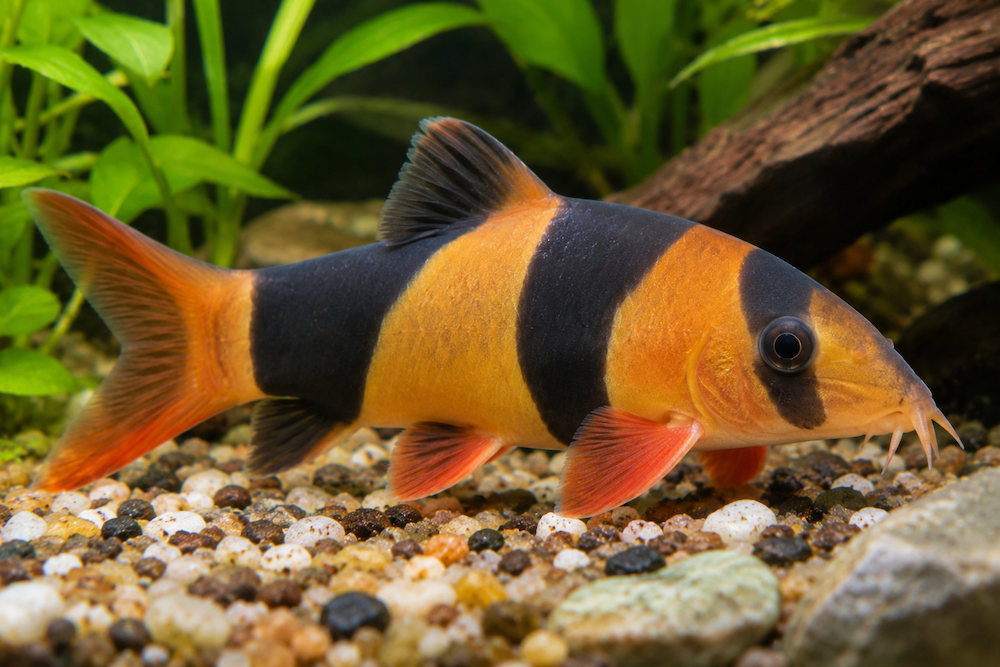
Clown Loach — large, orange fish with three bold black bands
Kuhli Loach — slender, eel-like fish with distinctive stripes
Yoyo Loach — active species with unusual dark markings
Zebra Loach — beautifully striped, social bottom-dweller
Hillstream Loach — flattened fish adapted to flowing water
Dwarf Chain Loach — small, energetic species with chain-like markings
Weather Loach — elongated fish known for unusual activity changes
Each species has different housing, feeding and environmental requirements.
Are Loaches Aggressive?
Many Loaches are generally peaceful.
However, some species may become territorial or compete with other bottom-dwelling fish.
Yoyo Loaches and certain other botiid species can be particularly boisterous, especially when kept in unsuitable groups.
Are Loaches Social Fish?
Yes, many Loaches are highly social.
Species such as Clown Loaches, Yoyo Loaches and Kuhli Loaches generally benefit from living with compatible members of their own species.
Social interactions can include group swimming, resting together and establishing dominance relationships.
How Many Loaches Should Be Kept Together?
Many social Loaches should be kept in groups of at least five or six individuals.
Larger groups may encourage more natural behaviour and reduce stress.
However, exact group requirements vary between species, and some more territorial varieties need different arrangements.
Can Loaches Live Alone?
Most commonly kept social Loaches shouldn’t be kept alone.
Solitary individuals may become stressed, unusually shy or display abnormal behaviour.
Providing compatible companions is important for their wellbeing.
Can Different Loach Species Live Together?
Some Loach species can coexist successfully.
However, differences in adult size, temperament, water requirements and feeding behaviour must be considered.
Combining small, peaceful Kuhli Loaches with large, boisterous species may create unnecessary stress.
Can Loaches Live With Guppies?
Some peaceful Loaches can coexist with Guppies.
However, water requirements and activity levels must be compatible.
Certain Loaches prefer softer water or may become too boisterous for delicate, long-finned fish.
Can Loaches Live With Tetras?
Yes.
Many Loaches coexist successfully with peaceful Tetra species.
Tetras generally occupy the middle areas of the aquarium, while numerous Loaches spend more time near the bottom.
Adequate space and compatible water conditions remain essential.
Can Loaches Live With Bettas?
Some peaceful Loaches may coexist with Bettas in suitable aquariums.
Kuhli Loaches are sometimes kept successfully with calm Bettas.
However, individual temperament, aquarium size and feeding competition must be considered.
Can Loaches Live With Shrimp?
Compatibility depends on the species.
Some small Loaches may coexist with adult shrimp, but many will eat baby shrimp.
Larger predatory or opportunistic species may consume even adult shrimp.
Shrimp breeding colonies are generally safest in carefully selected species-only or shrimp-focused aquariums.
Do Loaches Eat Snails?
Yes, some Loaches are effective snail predators.
Yoyo Loaches and several related species may consume small aquarium snails.
However, not all Loaches specialise in eating snails, and they shouldn’t be purchased solely as a temporary solution to snail overpopulation.
Do Loaches Eat Algae?
Some Loaches graze algae and biofilm.
Hillstream Loaches are particularly associated with grazing surfaces in fast-flowing freshwater environments.
However, many other Loaches primarily eat invertebrates and prepared foods rather than substantial quantities of algae.
Are Loaches Intelligent?
Loaches demonstrate learning, social interactions and responses to environmental cues.
Some recognise feeding routines and become comfortable around familiar aquarium activity.
Their complex group behaviour makes them particularly interesting to observe.
What Size Tank Do Loaches Need?
Aquarium requirements vary enormously.
A suitable group of Kuhli Loaches may thrive in an established aquarium of approximately 75–100 litres or larger.
Clown Loaches require much larger accommodation, often 400 litres or more as adults, with substantial horizontal swimming space.
What Water Temperature Do Loaches Need?
Temperature requirements depend on species.
Many tropical Loaches thrive around 24–28°C.
However, Weather Loaches generally prefer cooler conditions, while some Hillstream Loaches require relatively cool, highly oxygenated water.
Always research the exact species.
What pH Do Loaches Prefer?
Many popular tropical Loaches prefer slightly acidic to neutral water.
A pH around 6.0–7.5 suits numerous species.
However, appropriate hardness and pH vary, and stable water chemistry is particularly important.
Do Loaches Need Strong Filtration?
All Loaches require reliable biological filtration and clean water.
Some species, particularly Hillstream Loaches, benefit from strong water movement and high dissolved oxygen levels.
Other species, including Kuhli Loaches, prefer calmer areas with plenty of shelter.
What Substrate Is Best for Loaches?
Soft sand or smooth, fine gravel is suitable for many bottom-dwelling Loaches.
Species that burrow or search through substrate with sensitive barbels benefit particularly from smooth surfaces.
Sharp or abrasive gravel should be avoided where it may cause injury.
Do Loaches Need Hiding Places?
Yes.
Many Loaches appreciate caves, driftwood, plants and other sheltered areas.
Kuhli Loaches are particularly fond of narrow hiding places and soft substrate.
Providing adequate shelter helps reduce stress and encourages natural behaviour.
Why Do Loaches Hide?
Hiding is natural for many species.
Some Loaches are primarily nocturnal or crepuscular and become more active when lighting is subdued.
However, persistent hiding accompanied by poor appetite or unusual behaviour may indicate stress or illness.
Why Do Loaches Make Clicking Sounds?
Some Loaches produce audible clicking or popping sounds.
These noises may occur during feeding, competition or social interactions.
In certain species, sound production is associated with specialised movements involving internal structures.
Why Is My Loach Lying on Its Side?
Some Loaches, particularly Clown Loaches, occasionally rest on their sides or in unusual positions.
This can be normal behaviour.
However, loss of balance accompanied by rapid breathing, abnormal swimming or other symptoms may indicate illness or poor water quality.
How Do Loaches Breed?
Loaches reproduce by laying eggs.
Breeding behaviour varies considerably between species.
Some scatter eggs among plants or substrate, while others have more specialised reproductive requirements.
Many popular aquarium species are difficult to breed consistently in home aquariums.
What Health Problems Are Common in Loaches?
Potential concerns include white spot disease, bacterial infections, parasitic infestations, barbel injuries and stress-related illness.
Some Loaches are sensitive to certain aquarium medications, so treatments must be selected according to species-specific veterinary guidance.
Quarantining new fish and maintaining stable water conditions help reduce health risks.
Are Loaches Legal to Keep as Pets?
Many Loach species are legal aquarium pets in numerous countries.
However, importation, sale and possession regulations vary between species and jurisdictions.
In Australia, some Loaches are commonly traded, while others may be restricted under biosecurity regulations.
Always check current requirements and never release aquarium fish into natural waterways.
What Makes the Loaches Fish Unique?
Imagine a fish that looks like a tiny underwater snake, another that resembles a miniature stingray, and a third that appears to sleep on its side.
Remarkably, all three can belong to the diverse group commonly known as Loaches.
These extraordinary freshwater fish are among the most entertaining and unusual aquarium inhabitants.
Perhaps the most famous is the Clown Loach, Chromobotia macracanthus.
Its brilliant orange body and three bold black bands make it instantly recognisable.
But its appearance isn’t its only remarkable feature.
Clown Loaches are highly social and may rest together in unusual positions, sometimes lying on their sides in ways that can alarm inexperienced owners.
They can also produce clicking sounds during feeding and social interactions.
Another fascinating species is the Kuhli Loach.
With its long, slender body and distinctive bands, it resembles a miniature eel.
Kuhli Loaches spend much of their time exploring the aquarium floor, squeezing into narrow spaces and burrowing into suitable substrate.
Their unusual body shape allows them to navigate environments that would be difficult for more conventionally shaped fish.
Hillstream Loaches are equally extraordinary.
Many possess flattened bodies and enlarged paired fins that create a distinctive, ray-like appearance.
These adaptations help them maintain contact with rocks in fast-flowing streams.
Their specialised body structure allows them to exploit habitats with strong currents and highly oxygenated water.
Some Loaches also possess sharp, movable spines beneath their eyes.
These structures can provide protection against predators and may become extended when the fish feels threatened.
Another remarkable characteristic is their social intelligence.
Certain species establish complex dominance relationships and communicate through movement, positioning and sound.
Their diversity is astonishing.
From tiny Dwarf Chain Loaches to large Clown Loaches, and from secretive burrowers to specialised stream-dwellers, Loaches have evolved to occupy an extraordinary range of freshwater habitats.
Their feeding behaviour is equally varied.
Some search the substrate for worms and small invertebrates, others consume snails, while specialised species graze biofilm growing on submerged surfaces.
Perhaps most surprising is their ability to turn an ordinary aquarium into a constantly changing display of unusual behaviours.
One moment a Loach may be investigating a cave, the next chasing a companion, clicking during feeding or resting in an unexpected position.
Loaches aren’t simply bottom-dwelling aquarium fish — they’re intelligent, adaptable and wonderfully unusual freshwater animals with extraordinary body shapes, fascinating social lives and some of the most entertaining behaviours in the aquarium world.