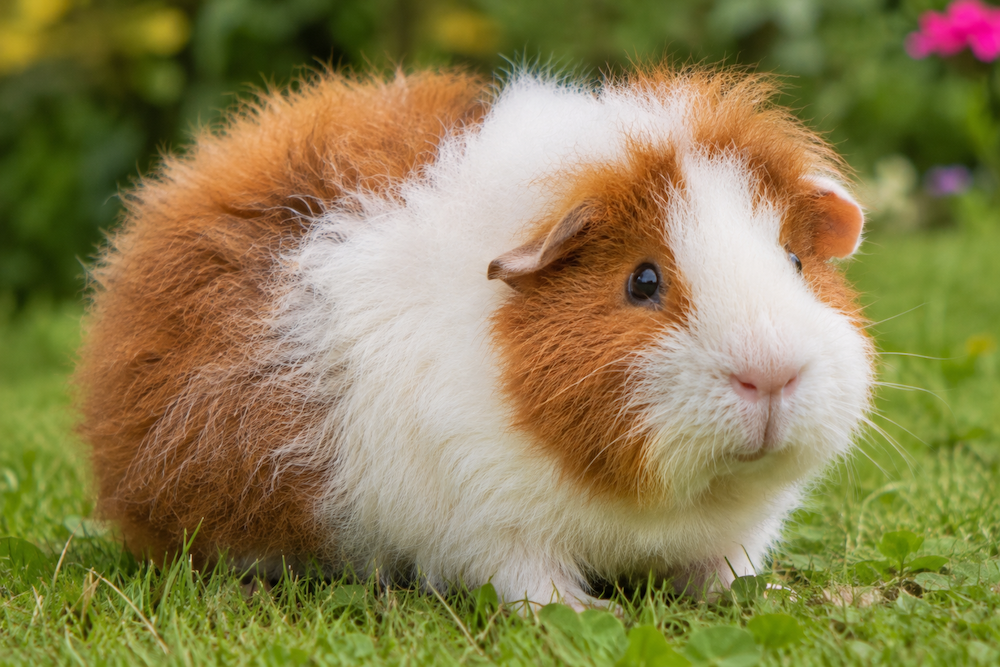







Fluffy, friendly and irresistibly adorable, the Teddy Guinea Pig is a charming domestic guinea pig breed famous for its dense, plush coat, teddy bear appearance, gentle personality and delightful social behaviour.
🧠 QUICK SNAPSHOT
Trait | Teddy Guinea Pig |
|---|---|
Scientific Name | Cavia porcellus |
Other Names | Teddy Cavy, American Teddy Guinea Pig |
Pet Type | Domestic Guinea Pig / Small Mammal |
Natural Origin | Domestic guinea pigs originated in South America; Teddy coat developed through selective breeding |
Typical Lifespan | Approximately 5–8 years |
Adult Size | Approximately 20–30 cm |
Adult Weight | Approximately 700–1,200 g; some individuals are heavier |
Coat Type | Short, dense, coarse and springy |
Coat Colours | White, black, brown, cream, red, gold, chocolate and multicoloured |
Diet | Herbivore |
Activity | Active throughout the day and night, with frequent resting periods |
Temperament | Generally gentle, curious, social and sometimes shy |
Noise Level | Moderate; communicates through squeaks, whistles and purring sounds |
Social Needs | Very high; compatible guinea pig companionship essential |
Grooming | Low to moderate |
Housing | Spacious indoor enclosure with solid flooring |
Exercise Needs | Moderate; requires daily exploration and movement |
Training Ability | Can learn routines and simple reward-based behaviours |
Beginner Friendly? | Yes, with appropriate preparation |
Famous Feature | Distinctive plush, upright coat resembling a teddy bear |
📚 OVERVIEW
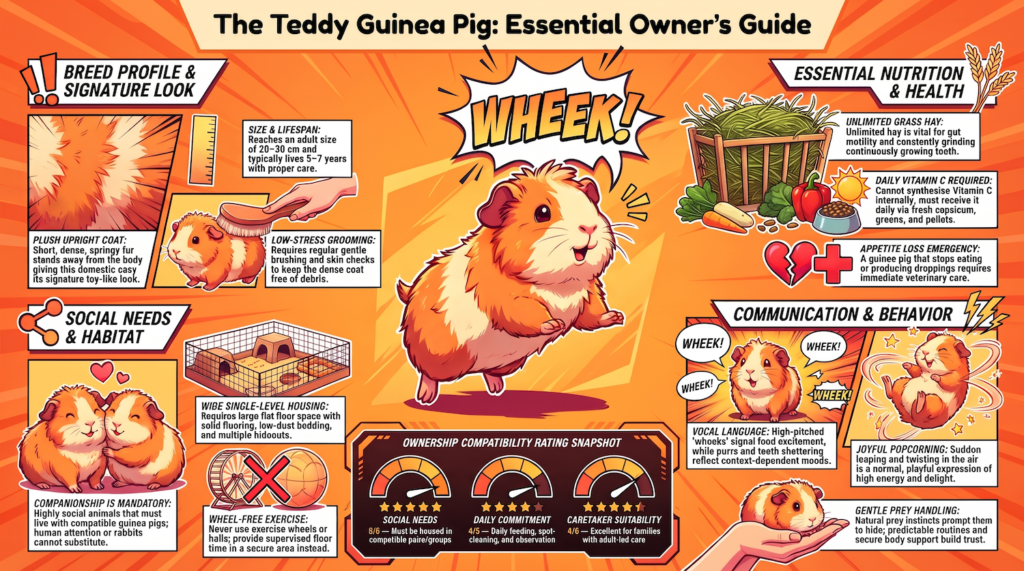
The Teddy Guinea Pig is a distinctive variety of domestic guinea pig recognised for its short, dense coat that stands away from the body. Unlike the smooth, flat fur of American Guinea Pigs, the Teddy’s coat has a springy texture that creates its characteristic teddy bear appearance.
Teddy Guinea Pigs developed through a naturally occurring coat mutation that was subsequently established through selective breeding. They are available in numerous colours and patterns, with rounded bodies, expressive eyes and small ears contributing to their adorable appearance.
Like other guinea pigs, Teddies are highly social animals that communicate through a fascinating variety of sounds and body movements. Many become comfortable around familiar caregivers, learn feeding routines and enjoy gentle interaction. However, their personalities vary, and some individuals remain naturally cautious.
Their care requires unlimited grass hay, daily vitamin C, compatible guinea pig companionship, spacious accommodation, appropriate bedding and regular health monitoring. Their dense coats also benefit from occasional brushing and careful skin inspections.
✅ PROS & CONS
👍 Pros
Adorable teddy bear appearance
Generally gentle and sociable
Distinctive, easy-to-recognise coat
Relatively straightforward grooming
Entertaining vocalisations and behaviours
Can develop strong bonds with caregivers
Suitable for prepared beginners
Available in many beautiful colours
👎 Cons
Must have compatible guinea pig companionship
Require substantial enclosure space
Need daily vitamin C through an appropriate diet
Can be nervous around sudden movements
Require regular enclosure cleaning
May develop skin or dental problems
Sensitive to excessive heat
Not all individuals enjoy being picked up
Are Teddy Guinea Pigs Good Pets?
Yes. Teddy Guinea Pigs can make wonderful companions for people who enjoy gentle, social small mammals.
Their charming appearance and entertaining behaviour make them particularly appealing.
However, they require appropriate housing, daily care and compatible guinea pig companionship.
Are Teddy Guinea Pigs Good for Beginners?
Yes.
Teddy Guinea Pigs are generally suitable for well-prepared beginners.
Their short coats are relatively easy to maintain, although owners must understand guinea pig nutrition, social needs and veterinary care.
How Long Do Teddy Guinea Pigs Live?
Teddy Guinea Pigs commonly live approximately 5–8 years.
Some individuals may live longer with excellent care.
Lifespan depends on genetics, nutrition, housing, veterinary attention and overall health.
How Big Do Teddy Guinea Pigs Get?
Adult Teddy Guinea Pigs generally measure approximately 20–30 cm in length.
Their bodies are compact and rounded.
Size varies according to genetics, sex and individual development.
How Much Do Teddy Guinea Pigs Weigh?
Adult Teddy Guinea Pigs commonly weigh approximately 700–1,200 grams.
Some healthy individuals may be heavier, particularly large adult males.
Regular weighing is important because unexpected weight loss can be an early indication of illness.
Why Are They Called Teddy Guinea Pigs?
Their name comes from their resemblance to a teddy bear.
Their short, dense fur stands away from the body, producing a soft-looking, plush appearance.
The distinctive coat texture makes them immediately recognisable.
What Is the Difference Between Teddy and American Guinea Pigs?
The main difference is coat texture.
American Guinea Pigs have short, smooth fur that lies relatively flat against the body.
Teddy Guinea Pigs have dense, springy fur that stands upright, giving them a more rounded appearance.
Their general care requirements are very similar.
Are Teddy Guinea Pigs the Same as Rex Guinea Pigs?
No.
Teddy and Rex Guinea Pigs are distinct coat varieties, although both have short, dense, upright fur.
Rex Guinea Pigs generally have a particularly coarse, woolly coat, while Teddy coats are often described as more plush or springy.
Breed standards and terminology can vary between countries.
What Colours Do Teddy Guinea Pigs Come In?
Teddy Guinea Pigs occur in numerous colours.
These include black, white, cream, red, gold, chocolate and combinations of these shades.
They may also display attractive patterned coats.
Are Teddy Guinea Pigs Friendly?
Many Teddy Guinea Pigs are friendly and curious.
They can become comfortable around familiar caregivers through regular, gentle interaction.
However, temperament varies between individuals and isn’t determined by coat type alone.
Are Teddy Guinea Pigs Affectionate?
Yes.
Some Teddy Guinea Pigs enjoy gentle stroking, approaching familiar people and relaxing nearby.
Others prefer interacting without being held.
Their affectionate behaviour develops through trust, positive experiences and respectful handling.
Do Teddy Guinea Pigs Recognise Their Owners?
Yes.
Guinea pigs can learn to recognise familiar voices, routines and environmental cues.
Many become excited when they hear their caregivers approaching with food.
They may respond with enthusiastic squeaking or move towards the enclosure entrance.
Do Teddy Guinea Pigs Like Being Held?
Some Teddy Guinea Pigs tolerate or enjoy gentle handling once accustomed to it.
However, guinea pigs are prey animals and may initially find being lifted frightening.
Their bodies should always be supported securely, and handling should remain calm and gentle.
Are Teddy Guinea Pigs Good With Children?
Teddy Guinea Pigs can make suitable family pets when adults supervise their care.
Their gentle nature and entertaining behaviour can appeal to children.
However, young children should interact with them while seated and must be taught to avoid squeezing or dropping them.
Are Teddy Guinea Pigs Intelligent?
Yes.
Guinea pigs can learn feeding routines, recognise familiar people and respond to simple training cues.
Some learn to approach when called or navigate small obstacle courses.
Food rewards and consistent positive reinforcement can encourage learning.
Can Teddy Guinea Pigs Be Litter Trained?
Guinea pigs may learn to use particular areas of their enclosure for toileting.
However, they are generally less reliably litter trained than rabbits.
Placing hay near a designated toileting area may encourage more consistent habits.
Do Teddy Guinea Pigs Need Companions?
Yes.
Guinea pigs are highly social animals that generally require companionship from other compatible guinea pigs.
A bonded pair or suitable group is preferable to keeping one alone.
Human interaction doesn’t fully replace the social benefits of living with another guinea pig.
Can Two Male Teddy Guinea Pigs Live Together?
Yes.
Two compatible males can live together successfully, particularly when properly introduced and provided with sufficient space.
However, some males may become territorial or incompatible.
Multiple feeding stations, hiding places and careful monitoring help reduce conflict.
Can Teddy Guinea Pigs Live With Other Guinea Pig Breeds?
Yes.
Teddy Guinea Pigs can live with American, Abyssinian, Peruvian and other domestic guinea pig varieties.
Coat type doesn’t determine social compatibility.
Individual temperament, sex, introductions and adequate accommodation are more important.
Can Teddy Guinea Pigs Live With Rabbits?
Keeping guinea pigs and rabbits together is generally not recommended.
Rabbits may accidentally injure guinea pigs because of their larger size and powerful hind legs.
They also have different communication styles and nutritional requirements, and rabbits may carry bacteria that can cause serious respiratory illness in guinea pigs.
Are Teddy Guinea Pigs Noisy?
Teddy Guinea Pigs communicate through a variety of sounds.
These include squeaks, whistles, low rumbling noises and gentle chattering.
Their vocalisations are generally manageable, although excited guinea pigs can become surprisingly loud around feeding time.
Why Do Teddy Guinea Pigs Squeak?
Squeaking is an important form of communication.
Guinea pigs may vocalise when anticipating food, seeking attention or communicating with companions.
Different sounds can indicate excitement, discomfort or social interaction.
What Does It Mean When a Teddy Guinea Pig Popcorns?
Popcorning is a joyful behaviour in which guinea pigs suddenly jump, twist or bounce into the air.
It’s particularly common among young, energetic animals.
This behaviour often occurs during excitement, play or exploration.
What Size Enclosure Does a Teddy Guinea Pig Need?
Teddy Guinea Pigs require spacious accommodation with a large, uninterrupted floor area.
For a compatible pair, approximately 1.5 square metres or more of usable floor space is a practical starting point, with larger enclosures strongly preferred.
Multi-level cages don’t replace the need for adequate ground-level space.
Can Teddy Guinea Pigs Live Outdoors?
Guinea pigs can be housed outdoors in suitable climates with carefully designed accommodation.
However, they are sensitive to temperature extremes, damp conditions and predators.
Indoor housing is often easier to manage, particularly in regions experiencing very hot or cold weather.
Do Teddy Guinea Pigs Need Exercise?
Yes.
Teddy Guinea Pigs require daily opportunities to walk, run, explore and forage.
A spacious enclosure and secure exercise area support physical and mental wellbeing.
Tunnels, hiding places and scattered hay encourage natural movement.
What Do Teddy Guinea Pigs Eat?
Their diet should consist primarily of unlimited good-quality grass hay, supplemented with fresh leafy vegetables and measured portions of appropriate guinea pig pellets.
Fresh drinking water must always be available.
Because guinea pigs cannot manufacture their own vitamin C, their diet must provide sufficient amounts every day.
Why Do Teddy Guinea Pigs Need Vitamin C?
Like humans, guinea pigs cannot synthesise sufficient vitamin C internally.
They must obtain it through their diet.
A deficiency can cause scurvy, resulting in weakness, joint pain, poor healing and other serious health problems.
Fresh vegetables and properly stored, vitamin C-fortified guinea pig pellets help meet their needs.
Can Teddy Guinea Pigs Eat Fruit?
Yes, in small amounts.
Suitable fruits may include small portions of apple without seeds, strawberry or blueberry.
However, fruit contains natural sugars and should be treated as an occasional supplement rather than a dietary staple.
Do Teddy Guinea Pigs Shed?
Yes.
Teddy Guinea Pigs shed naturally throughout the year.
Their dense coats may release more loose hair during seasonal changes.
Regular gentle brushing helps remove loose fur and allows owners to inspect the skin.
How Often Should You Groom a Teddy Guinea Pig?
Most Teddy Guinea Pigs benefit from gentle brushing approximately once or twice weekly.
More frequent grooming may be helpful during heavier shedding.
Regular nail trimming, skin inspections and checks of the hindquarters are also important.
Are Teddy Guinea Pigs Hypoallergenic?
No.
Teddy Guinea Pigs are not hypoallergenic.
All guinea pigs produce potential allergens through skin particles, saliva and urine.
Their bedding and hay can also trigger allergies in sensitive people.
What Health Problems Are Common in Teddy Guinea Pigs?
Potential concerns include dental disease, respiratory infections, vitamin C deficiency, skin parasites, fungal infections and urinary problems.
Their dense coats can make some skin problems less obvious during casual inspection.
Regular weighing, appropriate nutrition and veterinary care are essential.
A guinea pig that stops eating or producing droppings requires urgent veterinary attention.
Are Teddy Guinea Pigs Legal to Keep as Pets?
Teddy Guinea Pigs are legal domestic pets in many countries, including Australia.
However, local regulations may apply to animal housing, breeding, welfare and ownership.
Prospective owners should check relevant requirements and obtain animals from reputable, welfare-focused sources.
What Makes the Teddy Guinea Pig Unique?
Imagine a tiny, round animal with a coat that looks like a plush teddy bear, a remarkable vocabulary of squeaks and whistles, and the ability to leap into the air when excited.
That’s the delightful Teddy Guinea Pig.
These charming animals are among the most distinctive domestic guinea pig varieties, thanks to their extraordinary coat texture.
Unlike smooth-coated guinea pigs, whose fur lies flat against the body, Teddy Guinea Pigs have short, dense hair that stands upright.
This unusual appearance results from an inherited coat characteristic that breeders have selectively maintained.
Although their coats look incredibly soft, they often feel surprisingly springy or slightly coarse when touched.
Their distinctive appearance has made them popular among guinea pig enthusiasts and exhibition breeders.
But their charm extends far beyond their fur.
Teddy Guinea Pigs share the fascinating communication abilities of other domestic guinea pigs.
They produce a remarkable range of vocalisations, including whistles, squeaks, rumbling sounds and gentle purring-like noises.
One particularly entertaining sound is the enthusiastic wheek.
Guinea pigs often produce this high-pitched call when anticipating food or interacting with familiar caregivers.
Another delightful behaviour is popcorning.
When excited, guinea pigs may suddenly leap, twist and bounce into the air.
The movement resembles a piece of popcorn popping, which explains its unusual name.
Their social lives are equally fascinating.
Guinea pigs establish relationships with companions, communicate through body language and often prefer living in compatible groups.
They may rest near one another, investigate their surroundings together and exchange subtle vocal signals.
Another extraordinary feature is their digestive biology.
Guinea pigs are hindgut fermenters, relying on microorganisms in an enlarged caecum to help process fibrous plant material.
They also practise caecotrophy, consuming specialised soft droppings to recover nutrients produced during digestion.
And unlike many other mammals, guinea pigs cannot manufacture their own vitamin C.
This unusual nutritional requirement makes fresh, appropriate food particularly important.
Their history is equally interesting.
Domestic guinea pigs descend from South American cavies and have been kept by humans for thousands of years.
Over time, selective breeding produced numerous coat types, colours and patterns, including the distinctive Teddy variety.
Perhaps their most appealing characteristic is the contrast between their adorable appearance and their surprisingly complex behaviour.
Behind that fluffy teddy bear face is an intelligent, social animal capable of learning routines, recognising familiar people and expressing excitement through an extraordinary variety of sounds and movements.
The Teddy Guinea Pig isn’t simply an adorable fluffy companion — it’s a fascinating little mammal with remarkable communication skills, unusual digestive biology and one of the most distinctive coats in the guinea pig world.