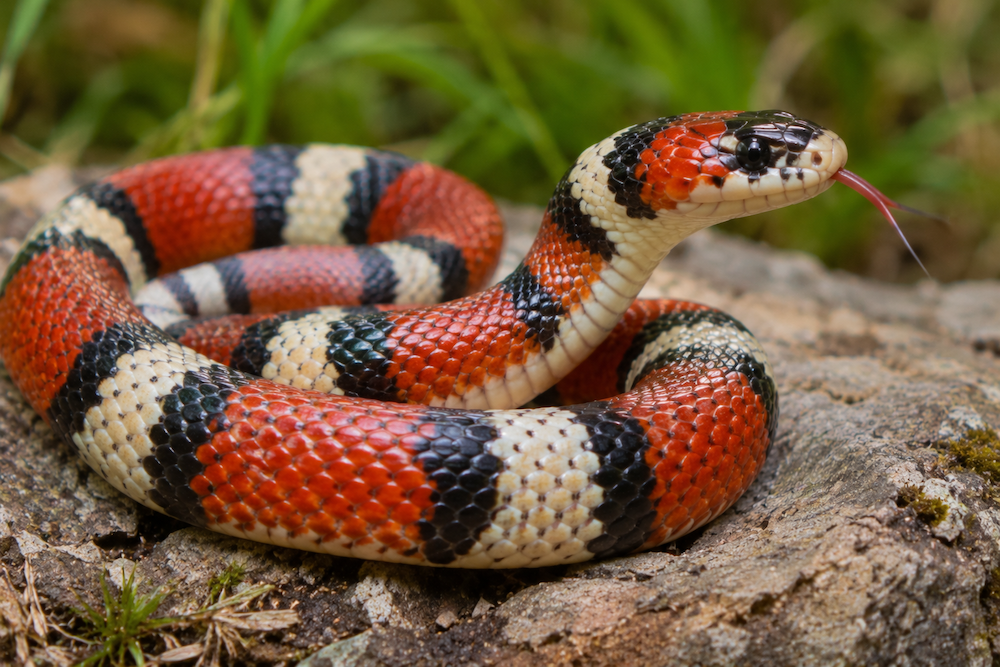







Beautifully patterned, curious and remarkably powerful for their size, Kingsnakes are fascinating non-venomous snakes famous for their striking colours, impressive constricting abilities and extraordinary natural resistance to the venom of certain other snakes.
🧠 QUICK SNAPSHOT
Trait | Kingsnake |
|---|---|
Scientific Classification | Lampropeltis species |
Other Names | King Snake, California Kingsnake, Eastern Kingsnake, Mexican Black Kingsnake |
Pet Type | Reptile / Non-Venomous Snake |
Natural Origin | North America, including the United States and Mexico |
Typical Lifespan | Approximately 15–25 years in captivity; some live longer |
Adult Size | Commonly 90–150 cm; varies considerably by species |
Adult Weight | Approximately 300 g–1.5 kg, depending on species and size |
Colours | Black, white, cream, yellow, brown, red, orange and banded |
Skin Type | Smooth, glossy scales |
Diet | Carnivore |
Activity | Diurnal, crepuscular or nocturnal, depending on species and conditions |
Temperament | Curious, active and generally manageable; juveniles may be defensive |
Noise Level | Silent, apart from occasional defensive hissing |
Social Needs | Solitary |
Housing | Secure, well-ventilated terrestrial reptile enclosure |
Temperature | Warm area approximately 28–31°C; cooler retreat around 22–25°C |
Humidity | Commonly 40–60%, with species-specific variation |
Substrate | Suitable reptile-safe substrate that permits burrowing |
Grooming | No grooming required |
Exercise Needs | Moderate; benefits from exploration and climbing opportunities |
Handling | Usually manageable with gentle, appropriate handling |
Beginner Friendly? | Yes, certain captive-bred species where legally permitted |
Famous Feature | Ability to prey on other snakes, including some venomous species |
📚 OVERVIEW
The Kingsnake is a fascinating group of non-venomous snakes belonging to the genus Lampropeltis. Native primarily to North America, Kingsnakes inhabit an extraordinary variety of environments, including forests, grasslands, deserts, rocky hillsides and agricultural areas.
Popular captive varieties include the California Kingsnake, Eastern Kingsnake, Mexican Black Kingsnake and several other beautifully patterned species. Their appearance varies dramatically, from bold black-and-white bands to glossy, almost entirely black bodies and intricate chains of pale markings.
Kingsnakes are particularly famous for their unusual diet. In the wild, some species regularly consume other snakes, including venomous species such as rattlesnakes. Their resistance to certain snake venoms is one of their most remarkable biological adaptations.
Their care requires a secure enclosure, appropriate temperature gradients, species-specific humidity, suitable hides, correctly sized prey and careful handling. Kingsnakes should generally be housed individually because of their natural tendency to consume other snakes.
✅ PROS & CONS
👍 Pros
Spectacular colours and distinctive patterns
Non-venomous and generally manageable
Many captive-bred varieties suitable for beginners
Fascinating natural hunting behaviours
Relatively straightforward feeding requirements
Generally hardy with appropriate husbandry
Interesting, active and curious personalities
Long-lived companions for dedicated reptile keepers
👎 Cons
Must generally be housed individually
Can bite when frightened or during feeding
Skilled escape artists requiring secure enclosures
Need carefully controlled temperatures
May mistake hands for food
Require appropriately sourced whole-animal prey
Long lifespan creates a substantial commitment
Ownership is restricted or prohibited in some countries or regions
Are Kingsnakes Good Pets?
Yes. Kingsnakes can make excellent reptile companions for people interested in observing and caring for snakes.
Many captive-bred individuals become accustomed to gentle handling and regular husbandry routines.
However, they require secure housing, appropriate environmental conditions and a long-term commitment.
Are Kingsnakes Good for Beginners?
Yes, certain species are widely regarded as suitable for prepared beginners.
California Kingsnakes are particularly popular because they’re generally hardy, active and adaptable.
However, beginners must understand reptile heating, feeding, hygiene and safe handling before obtaining one.
How Long Do Kingsnakes Live?
Kingsnakes commonly live approximately 15–25 years in captivity.
Some individuals may live longer with excellent care.
Their lifespan depends on species, genetics, nutrition and environmental conditions.
How Big Do Kingsnakes Get?
Many commonly kept Kingsnakes reach approximately 90–150 cm in length.
Some species and particularly large individuals may exceed this range.
Adult size varies according to species, sex and genetics.
How Much Do Kingsnakes Weigh?
Adult Kingsnakes vary considerably in weight.
Many commonly kept individuals weigh approximately 300 grams to 1.5 kilograms.
Larger species may weigh more, while smaller individuals remain considerably lighter.
What Are the Different Types of Kingsnakes?
Popular and well-known Kingsnakes include:
California Kingsnake — famous for bold black-and-white or brown-and-cream patterns
Eastern Kingsnake — often displays distinctive pale chain-like markings
Mexican Black Kingsnake — known for its beautiful, glossy black appearance
Desert Kingsnake — attractive dark body with pale markings
Speckled Kingsnake — distinctive pattern of pale spots across dark scales
Grey-Banded Kingsnake — striking grey, orange and black banding
Scarlet Kingsnake — colourful red, black and pale bands resembling certain coral snakes
Taxonomic classifications vary, and some historically recognised species or subspecies have been revised.
Are Kingsnakes Venomous?
No.
Kingsnakes are non-venomous snakes.
They subdue prey primarily through constriction rather than venom.
However, they possess teeth and can bite when threatened or confused by feeding-related movement.
Are Kingsnakes Dangerous to Humans?
Kingsnakes are generally not considered dangerous to healthy adults.
They are non-venomous and usually attempt to escape rather than confront people.
However, bites can cause puncture wounds, and appropriate hygiene and handling precautions remain important.
Do Kingsnakes Bite?
Yes.
Kingsnakes may bite when frightened, stressed or responding to the smell of food.
Some individuals have particularly enthusiastic feeding responses.
Using feeding tongs, washing hands after handling prey and avoiding sudden movements can reduce accidental bites.
Are Kingsnakes Aggressive?
Kingsnakes aren’t inherently aggressive towards humans.
However, some individuals, particularly juveniles, may display defensive behaviour.
This can include hissing, tail vibration, musking or striking.
Patient, respectful handling often helps captive-bred snakes become more accustomed to routine care.
Are Kingsnakes Friendly?
Kingsnakes don’t form affectionate relationships in the same way as social mammals.
However, many become calm and manageable around familiar husbandry routines.
Their curious behaviour and active exploration make them interesting animals to observe.
Do Kingsnakes Recognise Their Owners?
Kingsnakes can become accustomed to familiar environmental cues, scents and handling routines.
However, scientific evidence for individual human recognition in Kingsnakes is limited.
Their responses shouldn’t be interpreted as affection in the human sense.
Do Kingsnakes Like Being Held?
Some Kingsnakes tolerate gentle handling well.
Others remain nervous or defensive, particularly when young.
Handling should be brief, supportive and avoided during shedding, immediately after feeding or when the snake displays signs of stress.
Are Kingsnakes Active?
Yes.
Many Kingsnakes are relatively active compared with some other commonly kept pet snakes.
They may explore their enclosures, investigate hiding places and climb low branches.
Activity patterns vary between species, seasons and environmental conditions.
Are Kingsnakes Nocturnal?
Kingsnakes can be active during the day, at dusk or at night.
Their activity patterns depend on species, temperature and seasonal conditions.
In hot environments, they may become more active during cooler periods.
Can Kingsnakes Live Together?
Generally, no.
Kingsnakes are solitary animals and may prey on other snakes, including members of their own species.
Housing them together creates a serious risk of injury or cannibalism.
Individual enclosures are strongly recommended.
Can Kingsnakes Live With Other Snakes?
No.
Kingsnakes should not normally share an enclosure with other snakes.
Their natural diet includes other reptiles, and some individuals will attempt to consume enclosure companions.
Separate housing is essential for safety.
What Size Enclosure Does a Kingsnake Need?
Enclosure requirements depend on the snake’s adult length and activity level.
For many adult Kingsnakes, an enclosure approximately 120 × 60 × 60 cm is a useful starting point, with larger accommodation preferred.
The enclosure should allow the snake to stretch out fully, explore and move between suitable temperature zones.
What Temperature Do Kingsnakes Need?
Many commonly kept Kingsnakes benefit from a warm area of approximately 28–31°C.
A cooler retreat around 22–25°C allows behavioural thermoregulation.
Exact temperatures vary by species, and all heating equipment should be controlled by a reliable thermostat.
What Humidity Do Kingsnakes Need?
Many Kingsnakes thrive with moderate humidity, often around 40–60%.
However, requirements vary according to species and natural habitat.
A humid hide can be particularly helpful during shedding.
What Substrate Is Best for Kingsnakes?
Suitable substrates may include reptile-safe soil mixtures, aspen bedding or other appropriate materials.
Many Kingsnakes enjoy burrowing and investigating their surroundings.
Substrate should be clean, free from hazardous chemicals and suitable for the species’ humidity requirements.
Do Kingsnakes Need Hiding Places?
Yes.
Kingsnakes require secure hiding places to feel safe.
At least one hide should be available in the warm area and another in the cooler area.
Additional branches, cork bark and other suitable furnishings provide valuable enrichment.
Are Kingsnakes Good Climbers?
Yes.
Although primarily terrestrial, many Kingsnakes climb when exploring or hunting.
They may investigate branches, rocks and elevated enclosure furnishings.
Secure climbing structures can provide useful environmental enrichment.
What Do Kingsnakes Eat?
Kingsnakes are carnivores.
Wild individuals may consume rodents, lizards, birds, eggs and other snakes, depending on species and habitat.
Captive Kingsnakes are commonly maintained on appropriately sized, commercially sourced frozen-thawed rodents.
Whole prey provides a more nutritionally complete diet than isolated meat.
How Often Should You Feed a Kingsnake?
Feeding frequency depends on age, size, species and body condition.
Juveniles generally require smaller meals more frequently than adults.
Many healthy adults are fed approximately every 10–14 days, although individual requirements vary.
Overfeeding should be avoided.
Do Kingsnakes Eat Other Snakes?
Yes.
This is one of their most famous natural behaviours.
Many Kingsnakes are ophiophagous, meaning they consume other snakes.
Some prey on venomous species, including rattlesnakes, using constriction and their natural resistance to certain venoms.
Are Kingsnakes Immune to Snake Venom?
Kingsnakes possess resistance to the venom of certain snakes, particularly some pit vipers.
However, resistance doesn’t mean complete immunity to every venom.
The degree of protection varies according to the Kingsnake species, venom type and circumstances.
Why Do Kingsnakes Shake Their Tails?
Kingsnakes may rapidly vibrate their tails when frightened or threatened.
When the tail moves against dry leaves or other material, it can create a rattling sound.
This defensive behaviour may resemble the warning sound produced by rattlesnakes, although Kingsnakes don’t possess rattles.
How Often Do Kingsnakes Shed Their Skin?
Kingsnakes shed periodically throughout their lives.
Young, rapidly growing snakes generally shed more frequently than adults.
Healthy shedding depends on appropriate hydration, humidity and environmental conditions.
How Do Kingsnakes Breed?
Kingsnakes reproduce by laying eggs.
After mating, females typically deposit a clutch of eggs in a protected location.
Clutch size varies considerably between species and individuals.
Captive breeding requires careful preparation, appropriate environmental conditions and responsible management of offspring.
What Health Problems Are Common in Kingsnakes?
Potential concerns include respiratory infections, mites, retained shed, mouth infections, obesity and digestive problems.
Incorrect temperatures, unsuitable humidity and poor enclosure hygiene can contribute to illness.
Regular monitoring and access to a reptile-experienced veterinarian are essential.
Are Kingsnakes Legal to Keep as Pets?
Kingsnakes are legal pets in some countries, but some countries or regions restrict or prohibit their ownership, breeding, sale or importation.
In Australia, Kingsnakes are exotic reptiles and are generally prohibited as private pets under strict biosecurity and wildlife regulations.
Prospective owners should verify current national, state and local laws before attempting to obtain one.
What Makes the Kingsnake Unique?
Imagine a beautiful snake with glossy scales, striking black-and-white bands and the extraordinary ability to hunt animals that most predators would avoid.
That’s the remarkable Kingsnake.
These fascinating reptiles are among North America’s most impressive natural predators, despite their relatively modest size.
Their name reflects one of their most extraordinary abilities.
Kingsnakes are famous for eating other snakes, including venomous species.
In some habitats, they prey on rattlesnakes and other potentially dangerous reptiles.
But how can a non-venomous snake survive an encounter with venomous prey?
The answer lies partly in remarkable biological adaptations.
Certain Kingsnakes possess natural resistance to specific snake venoms, allowing them to survive bites that could seriously harm other animals.
This resistance is not universal, but it provides an extraordinary evolutionary advantage.
Their hunting abilities are equally impressive.
Kingsnakes are powerful constrictors that use muscular coils to subdue prey.
Scientific research has found that some Kingsnakes can generate remarkably high constriction pressures relative to their body size.
Their beautiful appearance is another fascinating feature.
California Kingsnakes often display bold black-and-white bands, while Mexican Black Kingsnakes possess stunning, glossy black scales that can shimmer in sunlight.
Eastern Kingsnakes may have pale chain-like markings across dark bodies.
The genus name Lampropeltis comes from Greek roots meaning shining shield, an appropriate reference to their beautiful, glossy scales.
Another extraordinary feature is their resemblance to venomous snakes.
Some brightly coloured Kingsnakes possess red, black and pale bands that resemble the warning colours of certain coral snakes.
This resemblance is often discussed as an example of Batesian mimicry, in which a harmless species gains protection by resembling a dangerous one.
However, colour patterns vary considerably, and appearance alone should never be used to determine whether an unfamiliar wild snake is venomous.
Kingsnakes also possess fascinating defensive behaviours.
When threatened, some vibrate their tails rapidly against leaves or dry vegetation, creating a rattling sound.
Others release foul-smelling musk or attempt to escape.
Their adaptability is equally remarkable.
Different Kingsnake species inhabit deserts, forests, grasslands, rocky hillsides and agricultural landscapes.
Some are active hunters, while others spend considerable time concealed beneath logs, rocks or underground.
Their varied diets and ability to exploit different environments have helped them become successful predators across much of North America.
And despite their reputation as snake-eaters, Kingsnakes are themselves important parts of local ecosystems.
They help regulate populations of rodents and other small animals while also serving as prey for larger predators.
Perhaps most surprising is the contrast between their appearance and their extraordinary hunting abilities.
A Kingsnake may look like an elegant, harmless reptile, yet it possesses a combination of muscular strength, specialised feeding behaviour and venom resistance that makes it a formidable predator.
The Kingsnake isn’t simply a beautifully patterned reptile — it’s a remarkable predator with extraordinary constricting strength, fascinating defensive behaviours and one of the most unusual diets in the snake world.