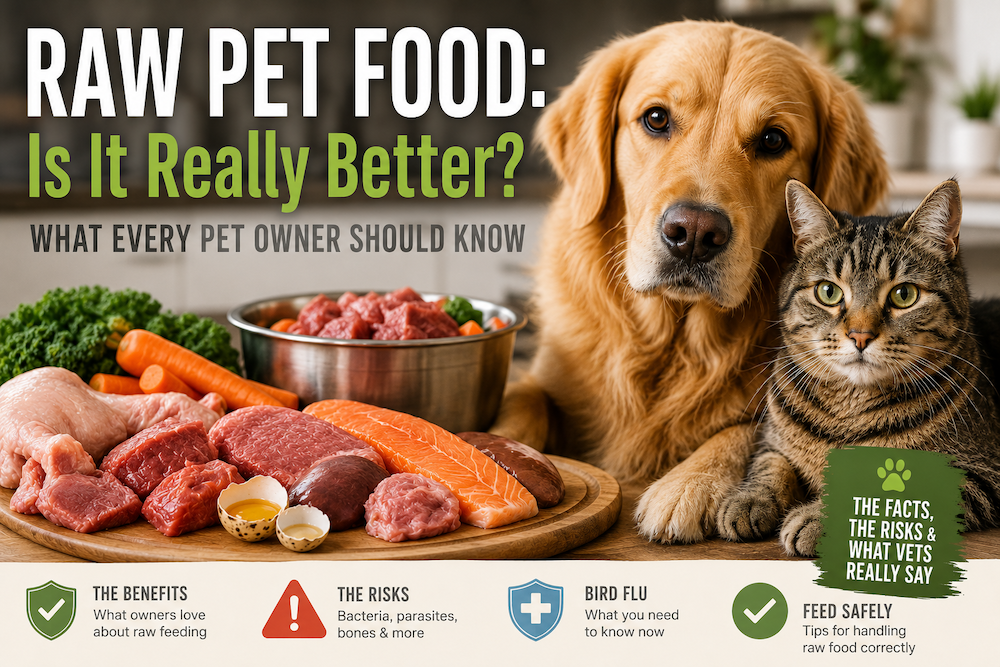
Is Raw Pet Food Better?
What Every Pet Owner Should Know About Raw Pet Food
Every pet owner wants to give their companion the healthiest possible life. Over the last decade, raw pet food has become one of the most talked-about feeding trends, with passionate supporters claiming it produces shinier coats, healthier teeth and happier pets.
But is feeding a raw diet really the best choice?
Recent concerns about food safety, bacteria and even bird flu have sparked fresh debate among veterinarians and pet owners alike. While many animals thrive on carefully managed raw diets, others may face unnecessary risks if meals aren’t properly balanced or handled safely.
So, what’s the truth?
In this guide, we’ll take a balanced, evidence-based look at raw feeding, exploring both the potential benefits and the genuine risks so you can make the best decision for your dog or cat.
Is Raw Pet Food Better Than Commercial Pet Food?
There isn’t a simple yes or no answer.
A raw diet can work well for some pets when it’s nutritionally complete, carefully prepared and safely handled. However, a high-quality commercial diet can also provide everything a healthy dog or cat needs while reducing many of the food safety risks associated with raw meat.
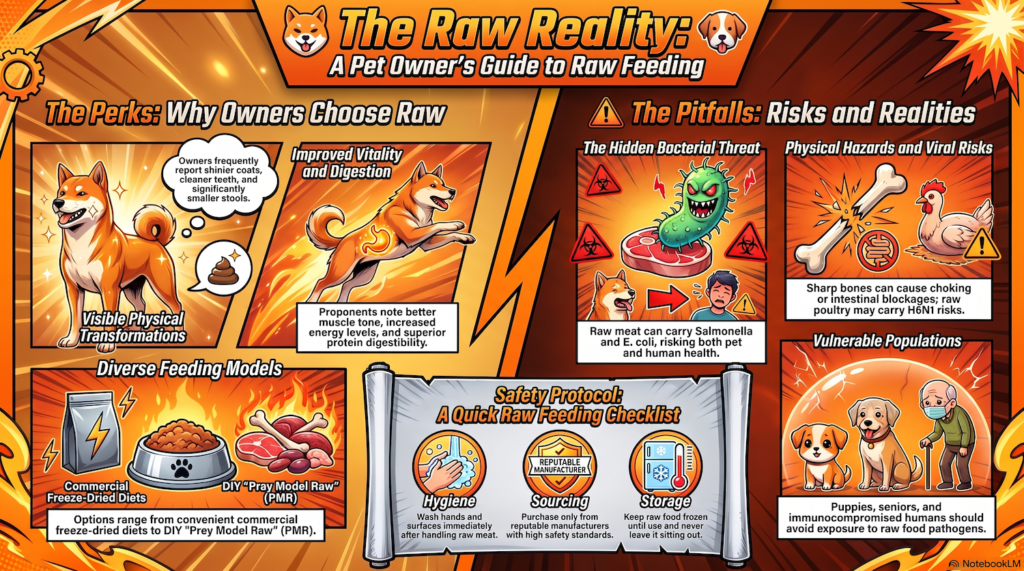
Supporters of raw feeding often report benefits such as:
- Shinier coats
- Healthier skin
- Smaller stools
- Improved muscle tone
- Greater enthusiasm at mealtimes
- Cleaner teeth from chewing raw meaty bones
While these observations are common, scientific research is still mixed. Many of the claimed benefits are based on owner experiences rather than large clinical studies.
What experts do agree on is that the most important factor is nutritional balance. A pet’s diet should provide the right mix of protein, fats, vitamins and minerals appropriate for their age, breed and health.
Whether you choose raw, fresh cooked, wet food or kibble, a complete and balanced diet is far more important than simply following the latest trend.
What Are the Risks of Feeding a Pet a Raw Diet?
Raw feeding isn’t without its challenges, and understanding the risks is just as important as understanding the potential benefits.
One of the biggest concerns is harmful bacteria. Raw meat may contain organisms such as Salmonella, E. coli, Listeria and Campylobacter. While some healthy pets may show no signs of illness, they can still spread these bacteria around the home through their saliva, food bowls and even their fur.
Improperly prepared homemade diets may also lack essential nutrients, particularly calcium, phosphorus and certain vitamins. Growing puppies and kittens are especially vulnerable to nutritional deficiencies that can affect healthy development.
Bones also require careful consideration. While many raw feeders include raw bones as part of the diet, they can still present choking hazards or cause broken teeth and digestive injuries. Cooked bones should never be fed, as they can splinter and cause serious internal damage.
More recently, veterinarians have also raised concerns about Highly Pathogenic Avian Influenza (H5N1), commonly known as bird flu. Cases linked to contaminated raw poultry products have highlighted the importance of sourcing food carefully and following current veterinary advice.
None of these risks automatically mean raw feeding is unsafe, but they do reinforce the importance of proper food handling and informed decision-making.
How Can You Feed Your Pet Safely?
Whatever feeding approach you choose, good nutrition and food safety should always come first.
If you decide to feed a raw diet:
- Purchase food from reputable manufacturers or trusted suppliers.
- Store and thaw raw food correctly.
- Wash hands thoroughly after handling raw meat.
- Clean bowls and preparation surfaces immediately after use.
- Keep raw pet food separate from human food.
- Avoid leaving raw meals sitting at room temperature.
- Speak with your veterinarian before changing your pet’s diet, particularly if they are young, elderly or have underlying health conditions.
Many owners also choose a mixed approach, combining quality commercial food with fresh ingredients under veterinary guidance. There is no single diet that suits every pet.
The best choice is one that keeps your companion healthy, meets their nutritional needs and fits safely within your household.
Final Thoughts
Raw pet food is one of the most debated topics in modern pet nutrition, and it’s easy to see why. Passionate advocates and cautious veterinarians often present very different perspectives.
The reality lies somewhere in the middle.
A carefully planned raw diet may work well for some pets, while others thrive on premium commercial or fresh cooked diets. What matters most isn’t whether a meal is raw or cooked—it’s whether it’s complete, balanced, safely prepared and appropriate for your individual pet.
Every dog and cat is unique, and the best diet is one that supports a long, healthy and happy life. By staying informed, following evidence-based advice and working with your veterinarian when needed, you can make confident choices that put your pet’s wellbeing first.