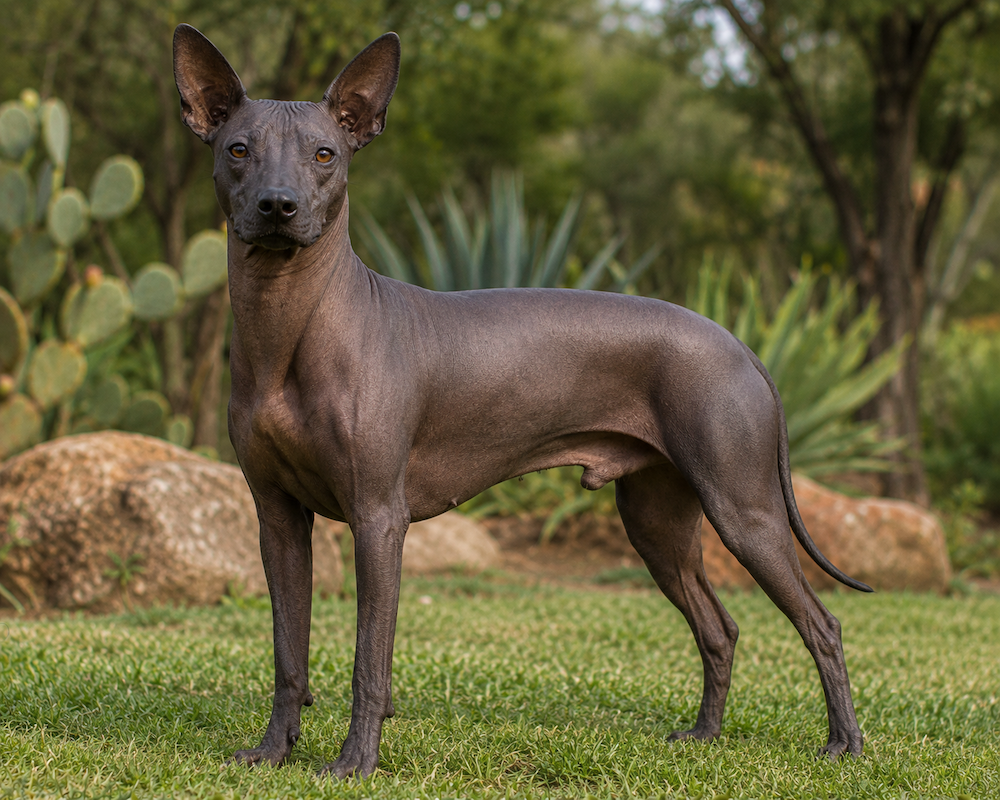







Ancient, intelligent, and wonderfully unique — the Xoloitzcuintli is Mexico's national dog, celebrated for its hairless appearance, loyal nature, and thousands of years of fascinating history.
🧠 QUICK SNAPSHOT
- Temperament: Loyal, calm, intelligent
- Energy Level: Moderate
- Size: Toy, Miniature, or Standard
- Good With Families: Yes
- Trainability: High
- Grooming: Low
- Best For: Families, allergy-conscious owners, apartment or house living
📚 OVERVIEW
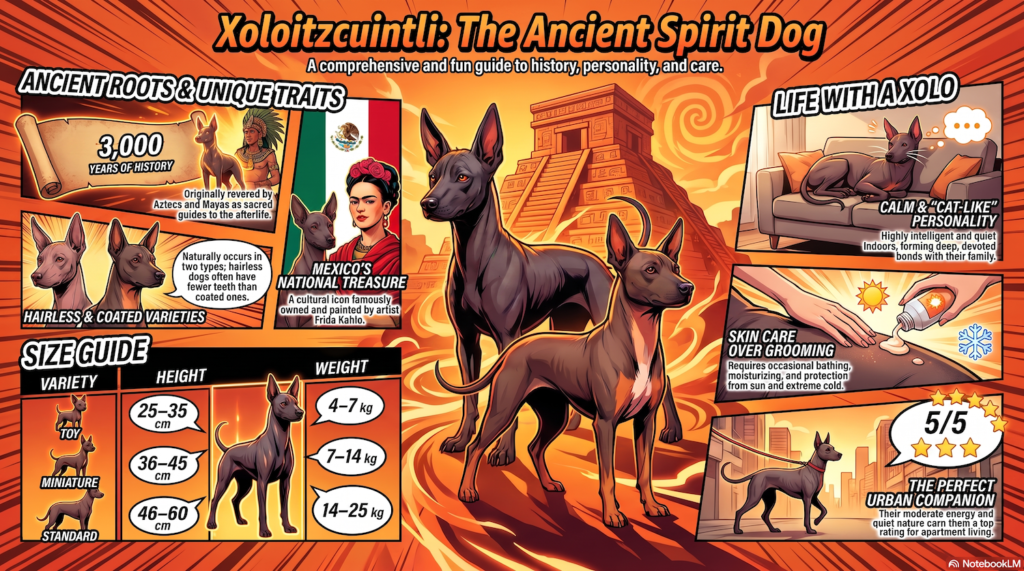
The Xoloitzcuintli (pronounced show-low-eats-QUEENT-lee), often simply called the Xolo, is one of the oldest dog breeds in the world, with a history stretching back more than 3,000 years to ancient Mexico. Revered by the Aztecs and other Mesoamerican cultures, the Xolo was believed to guide souls to the afterlife and remains the national dog of Mexico today.
Available in toy, miniature, and standard sizes, the Xoloitzcuintli is best known for its hairless variety, although a coated variety also exists. Beneath its distinctive appearance is a calm, affectionate, and highly intelligent companion that forms exceptionally close bonds with its family. Quiet, clean, and adaptable, the Xolo thrives in homes where it receives regular companionship, positive training, and moderate daily exercise.
✅ PROS & CONS
Pros
- Extremely loyal and affectionate
- Low grooming requirements
- Intelligent and easy to train
- Generally quiet indoors
- Suitable for apartments and houses
Cons
- Hairless skin requires special care
- Can be reserved with strangers
- Dislikes being left alone for long periods
- Needs protection from extreme temperatures
- Early socialisation is important
Is a Xoloitzcuintli a Good Family Dog?
Yes, the Xoloitzcuintli is an excellent family dog for many households. This breed is deeply loyal and enjoys spending time with the people it loves, often forming particularly strong bonds with one or two family members while remaining affectionate with everyone in the home. Its calm and gentle nature makes it a wonderful companion for families, couples, and older owners alike.
The Xolo generally gets along well with respectful children and can live happily alongside other pets when introduced from an early age. While naturally cautious around strangers, it is rarely aggressive and typically becomes friendly once it feels comfortable. Early socialisation helps ensure the breed develops confidence in a variety of situations.
Because the Xolo enjoys close companionship, it prefers homes where someone is around for much of the day. Families seeking a quiet, affectionate, and devoted companion often find this remarkable ancient breed to be an ideal addition to the household.
How Much Exercise Does a Xoloitzcuintli Need?
The Xoloitzcuintli requires around 45 to 60 minutes of exercise each day, depending on its size and age. While energetic enough to enjoy outdoor adventures, it is generally less demanding than many working or sporting breeds and adapts well to a variety of lifestyles.
Daily walks, interactive games, obedience training, and opportunities to explore new environments provide excellent physical activity. Standard Xolos often enjoy hiking and longer walks, while toy and miniature varieties are usually satisfied with shorter outings and indoor play sessions.
Mental stimulation is equally important for this highly intelligent breed. Puzzle toys, scent games, trick training, and learning new commands help prevent boredom and strengthen the bond between dog and owner. A balanced routine of exercise and enrichment keeps the Xolo happy, healthy, and well behaved both indoors and outdoors.
Is a Xoloitzcuintli Easy to Train?
Yes, the Xoloitzcuintli is generally easy to train thanks to its intelligence and eagerness to form close relationships with its owner. It learns quickly and responds particularly well to calm, consistent training based on positive reinforcement.
Rewarding good behaviour with praise, treats, and play encourages enthusiasm and helps build confidence. Harsh corrections are unnecessary and may cause the breed to become withdrawn or reluctant to participate. Short, engaging sessions that provide variety tend to produce the best results.
Early socialisation is highly recommended. Introducing a Xolo puppy to different people, environments, sounds, and experiences helps it become a confident and well-mannered adult. With patient guidance and regular training, the Xoloitzcuintli develops into a polite, obedient companion that is both intelligent and eager to please.
Does a Xoloitzcuintli Shed?
The hairless variety of the Xoloitzcuintli sheds very little, making it one of the lowest-shedding dog breeds available. However, this does not mean it is maintenance-free. Instead of brushing a coat, owners need to focus on keeping the skin healthy through regular bathing, moisturising when needed, and protecting it from excessive sun exposure and cold weather.
The coated variety has a short, smooth coat that sheds lightly throughout the year and requires only occasional brushing. Both varieties benefit from regular nail trimming, ear cleaning, and dental care.
Although the hairless Xolo produces less loose hair than most breeds, no dog is completely hypoallergenic. People with dog allergies may still react to proteins found in saliva and skin cells. Even so, many allergy sufferers find the Xolo to be one of the more suitable breeds for their lifestyle.
What Health Problems Are Common in a Xoloitzcuintli?
The Xoloitzcuintli is generally a healthy and long-lived breed with relatively few inherited health problems. Responsible breeding has helped preserve its natural resilience, and many Xolos remain active well into their teenage years.
Hairless Xolos may be prone to skin irritation, sunburn, and dryness if their skin is not properly protected and cared for. Dental issues are also more common in the hairless variety because the gene responsible for hairlessness can affect tooth development, occasionally resulting in missing or irregular teeth.
Other potential concerns include hip dysplasia, patellar luxation, and occasional eye disorders, although these occur less frequently than in many other breeds. Choosing a puppy from health-tested parents, providing regular veterinary care, maintaining a healthy diet, and following an appropriate skincare routine all help ensure a Xoloitzcuintli enjoys a long, healthy, and comfortable life.