






Small, beautifully patterned and remarkably adaptable, Stimson's Python is a fascinating Australian snake famous for its gentle disposition, distinctive reddish-brown markings, impressive climbing abilities and extraordinary survival skills in Australia's harsh landscapes.
🧠 QUICK SNAPSHOT
Trait | Stimson’s Python |
|---|---|
Scientific Name | Antaresia stimsoni |
Other Names | Stimson’s Python, Stimmy, Stimson’s Children’s Python |
Pet Type | Reptile / Non-Venomous Snake |
Natural Origin | Australia |
Typical Lifespan | Approximately 15–25 years in captivity; some live longer |
Adult Size | Commonly 70–110 cm; some individuals grow larger |
Adult Weight | Approximately 200–600 g, depending on size and condition |
Colours | Cream, tan, sandy brown, reddish-brown and chocolate markings |
Skin Type | Smooth, glossy scales |
Diet | Carnivore |
Activity | Primarily nocturnal and crepuscular |
Temperament | Generally calm, curious and manageable |
Noise Level | Silent, apart from occasional defensive hissing |
Social Needs | Solitary |
Housing | Secure terrestrial reptile enclosure with climbing opportunities |
Temperature | Warm hide approximately 31–33°C; cooler area around 24–27°C |
Humidity | Generally moderate, with a humid hide available |
Substrate | Reptile-safe soil, aspen or other suitable substrate |
Grooming | No grooming required |
Exercise Needs | Moderate; benefits from exploration and climbing |
Handling | Usually manageable with gentle, appropriate handling |
Beginner Friendly? | Yes, for prepared keepers with the appropriate licence |
Famous Feature | Compact size, distinctive blotched pattern and remarkable adaptation to Australia’s arid environments |
📚 OVERVIEW
The Stimson’s Python is a small, non-venomous Australian python belonging to the genus Antaresia. It is closely related to the Children’s Python, Spotted Python and Pygmy Python, collectively forming a group of relatively small Australian pythons.
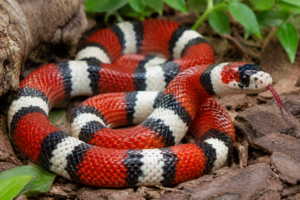
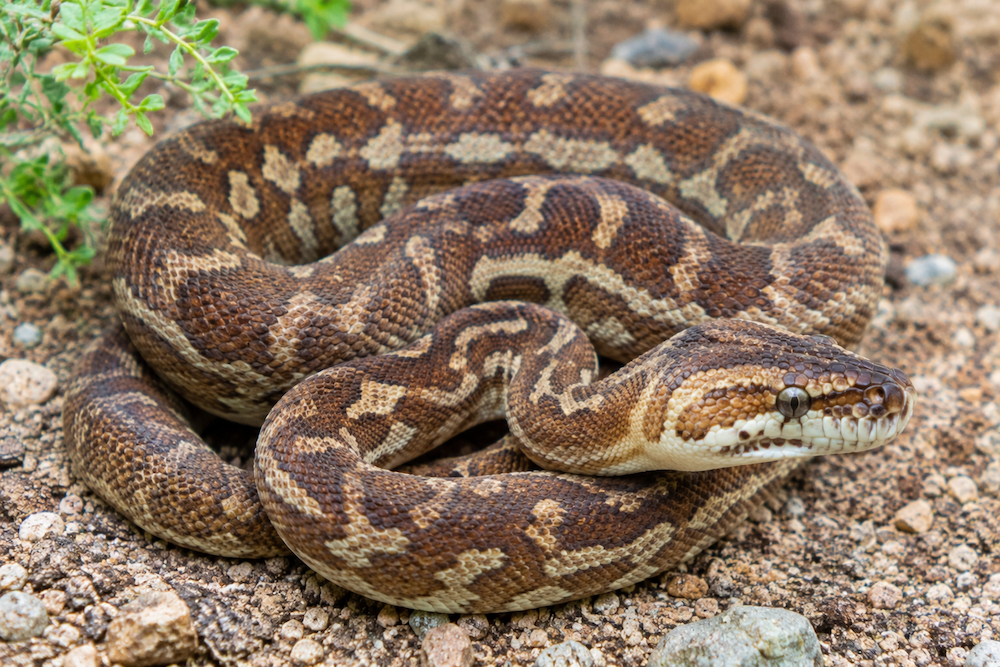
Native to large areas of inland and northern Australia, Stimson’s Pythons inhabit rocky landscapes, dry woodlands, shrublands and other environments. Their attractive patterns typically consist of reddish-brown or dark brown blotches against a lighter cream, tan or sandy background, providing effective camouflage among rocks and vegetation.
Stimson’s Pythons are popular among Australian reptile enthusiasts because of their relatively modest size, manageable care requirements and generally calm temperament. Captive-bred individuals often become accustomed to gentle handling, although juveniles may initially be defensive or enthusiastic feeders.
Their care requires a secure enclosure, appropriate temperature gradients, suitable hiding places, correctly sized whole prey, access to fresh water and careful handling. As native Australian reptiles, their ownership is subject to state and territory wildlife regulations, including licensing requirements where applicable.
✅ PROS & CONS
👍 Pros
Beautiful natural colours and distinctive patterns
Relatively small adult size
Non-venomous and generally manageable
Often suitable for prepared beginner reptile keepers
Fascinating nocturnal hunting behaviour
Adaptable to well-designed captive environments
Generally straightforward feeding requirements
Long-lived with appropriate care
👎 Cons
Wildlife licensing requirements may apply
Can bite when frightened or responding to food
Skilled escape artists requiring secure enclosures
Need controlled heating and temperature gradients
May remain hidden for much of the day
Require whole-animal prey
Long lifespan creates a substantial commitment
Should generally be housed individually
Are Stimson’s Pythons Good Pets?
Yes. Stimson’s Pythons can make excellent reptile companions for people interested in keeping Australian native snakes.
Their relatively small size and generally manageable temperament make them appealing to dedicated reptile enthusiasts.
However, they require appropriate housing, careful environmental management and compliance with wildlife regulations.
Are Stimson’s Pythons Good for Beginners?
Yes.
Stimson’s Pythons are often recommended as suitable Australian pythons for prepared beginners.
Their modest adult size and generally hardy nature can make them easier to accommodate than larger python species.
However, correct heating, feeding, hygiene and handling remain essential.
How Long Do Stimson’s Pythons Live?
Stimson’s Pythons commonly live approximately 15–25 years in captivity.
Some individuals may live longer with excellent care.
Their lifespan depends on genetics, nutrition, housing conditions and veterinary attention.
How Big Do Stimson’s Pythons Get?
Adult Stimson’s Pythons commonly reach approximately 70–110 cm in length.
Some individuals may grow larger.
Females are often slightly larger and more robust than males.
How Much Do Stimson’s Pythons Weigh?
Adult weight varies according to age, sex, length and body condition.
Many healthy adults weigh approximately 200–600 grams.
Regular monitoring helps ensure the snake maintains an appropriate body condition without becoming overweight.
What Colours Do Stimson’s Pythons Come In?
Stimson’s Pythons typically display a light cream, tan or sandy background with darker blotches.
These markings may be reddish-brown, chocolate brown or almost black.
Colour intensity and pattern vary naturally between individuals and geographic populations.
Are Stimson’s Pythons Venomous?
No.
Stimson’s Pythons are completely non-venomous.
They capture and subdue prey using constriction.
However, they possess small, sharp teeth and can bite when frightened or responding to food.
Are Stimson’s Pythons Dangerous?
Stimson’s Pythons are generally not considered dangerous to healthy adults.
Their relatively small size and non-venomous nature make serious injuries uncommon.
However, bites can cause puncture wounds, and normal hygiene and safe handling precautions remain important.
Do Stimson’s Pythons Bite?
Yes.
Like all snakes, Stimson’s Pythons may bite when frightened, stressed or confused by feeding-related movement.
Juveniles can sometimes be particularly defensive.
Gentle handling and avoiding the smell of prey on your hands help reduce accidental bites.
Are Stimson’s Pythons Aggressive?
Stimson’s Pythons aren’t inherently aggressive towards humans.
However, individual temperament varies.
Some young snakes may hiss, strike or attempt to escape when approached, while many captive-bred adults become relatively calm with appropriate care.
Are Stimson’s Pythons Friendly?
Stimson’s Pythons don’t form affectionate relationships in the same way as social mammals.
However, many become accustomed to familiar husbandry routines and tolerate gentle handling.
Their calm behaviour shouldn’t be confused with a desire for human affection.
Do Stimson’s Pythons Recognise Their Owners?
Stimson’s Pythons can become familiar with environmental cues, scents and regular routines.
Some appear less defensive around familiar handling situations.
However, scientific evidence for individual human recognition in this species is limited.
Do Stimson’s Pythons Like Being Held?
Many captive-bred Stimson’s Pythons tolerate gentle handling.
However, handling should remain calm, supportive and relatively brief.
Snakes should not be handled immediately after feeding, during stressful shedding periods or when displaying defensive behaviour.
Are Stimson’s Pythons Active?
Yes, particularly during the evening and night.
They may explore their enclosures, investigate hiding places and climb suitable structures.
During daylight hours, they often remain concealed.
Are Stimson’s Pythons Nocturnal?
Yes.
Stimson’s Pythons are primarily nocturnal and crepuscular.
They often become more active after sunset when temperatures are suitable.
Their natural activity patterns help them avoid excessive daytime heat in Australian environments.
Can Stimson’s Pythons Live Together?
Stimson’s Pythons are generally best housed individually.
Although some snakes may tolerate temporary proximity during breeding, permanent cohabitation can create stress, feeding competition and injury risks.
Separate enclosures allow better monitoring of feeding, health and environmental conditions.
Can Stimson’s Pythons Live With Other Snakes?
Mixed-species housing is not recommended.
Different snakes may have incompatible environmental requirements and can transmit diseases or parasites.
Separate accommodation is the safest approach.
What Size Enclosure Does a Stimson’s Python Need?
A secure enclosure measuring approximately 90 × 45 × 45 cm can provide a useful starting point for many adults, although larger accommodation is preferable.
The enclosure should allow the snake to stretch out fully, move between temperature zones and explore.
Adequate floor space, secure hides and suitable climbing structures are important.
What Temperature Do Stimson’s Pythons Need?
Stimson’s Pythons require a suitable temperature gradient.
A warm hide around 31–33°C and a cooler area around 24–27°C are commonly used husbandry targets.
Exact requirements should be adjusted according to the individual, enclosure design and expert veterinary guidance.
All heating equipment should be controlled by a reliable thermostat.
Do Stimson’s Pythons Need UVB Lighting?
Stimson’s Pythons can benefit from appropriately provided low-level UVB lighting.
Although primarily nocturnal, they may receive some natural UV exposure while sheltering or moving during daylight.
UVB lighting should be selected carefully, with access to shaded retreats and a consistent day-night cycle.
What Humidity Do Stimson’s Pythons Need?
Stimson’s Pythons generally thrive with moderate humidity and a relatively dry enclosure environment.
A humid hide can help support healthy shedding.
Excessively damp, poorly ventilated conditions should be avoided because they may contribute to skin and respiratory problems.
What Substrate Is Best for Stimson’s Pythons?
Suitable substrates may include reptile-safe soil mixtures, aspen bedding or other appropriate materials.
Substrate should be clean, free from hazardous chemicals and suitable for natural exploration.
Avoid sharp, abrasive or excessively dusty materials.
Do Stimson’s Pythons Need Hiding Places?
Yes.
Stimson’s Pythons require secure hiding places to feel safe.
At least one hide should be available in the warm area and another in the cooler area.
Additional cork bark, rocks and other stable furnishings provide valuable environmental enrichment.
Are Stimson’s Pythons Good Climbers?
Yes.
Although primarily terrestrial, Stimson’s Pythons are capable climbers.
They may investigate branches, rocky surfaces and elevated enclosure furnishings.
Secure climbing opportunities can encourage natural exploration.
What Do Stimson’s Pythons Eat?
Stimson’s Pythons are carnivores.
Wild individuals consume small mammals, lizards and other appropriately sized vertebrates.
Captive individuals are commonly maintained on appropriately sized, commercially sourced frozen-thawed rodents.
Whole prey provides balanced nutrition for these specialised predators.
How Often Should You Feed a Stimson’s Python?
Feeding frequency depends on age, size and body condition.
Juveniles generally require smaller meals more frequently than adults.
Many healthy adults are fed approximately every 10–14 days, although individual requirements vary.
Overfeeding should be avoided because captive snakes can become overweight.
Can Stimson’s Pythons Eat Rats?
Yes.
Larger Stimson’s Pythons may consume appropriately sized young rats.
However, prey must be selected according to the snake’s size and body condition.
Many individuals can be maintained successfully on appropriately sized mice.
Do Stimson’s Pythons Need Live Food?
No.
Captive Stimson’s Pythons can usually be maintained on properly thawed, appropriately sized frozen-thawed prey.
Live rodents can injure snakes and should generally be avoided.
Food should be sourced from reputable suppliers and handled hygienically.
How Often Do Stimson’s Pythons Shed Their Skin?
Stimson’s Pythons shed periodically throughout their lives.
Young, growing snakes generally shed more frequently than adults.
Healthy shedding depends on appropriate hydration, temperature and access to suitable humidity.
Why Is My Stimson’s Python Hiding?
Hiding is normal behaviour.
Stimson’s Pythons naturally shelter beneath rocks, within crevices and in other protected locations.
However, persistent hiding accompanied by weight loss, unusual breathing or other symptoms may indicate stress or illness.
How Do Stimson’s Pythons Breed?
Stimson’s Pythons reproduce by laying eggs.
Females typically deposit a relatively small clutch in a protected location.
Like many pythons, females may coil around their eggs during incubation.
Captive breeding requires appropriate preparation, suitable environmental conditions and responsible management of offspring.
What Health Problems Are Common in Stimson’s Pythons?
Potential concerns include respiratory infections, mites, retained shed, mouth infections, obesity and digestive problems.
Incorrect temperatures, poor hygiene and unsuitable humidity can contribute to illness.
A reptile-experienced veterinarian should assess persistent refusal to eat, abnormal breathing, swelling or unusual behaviour.
Are Stimson’s Pythons Legal to Keep as Pets?
Yes. Stimson’s Pythons can legally be kept as pets in many parts of Australia, subject to applicable wildlife regulations.
Licensing and possession requirements vary between Australian states and territories, and some jurisdictions may impose additional restrictions.
Internationally, some countries or regions restrict or prohibit their ownership, importation or trade.
Prospective owners should verify current requirements with their relevant wildlife authority and obtain captive-bred animals from lawful sources.
What Makes the Stimson’s Python Unique?
Imagine a beautifully patterned little python capable of surviving in Australia’s harsh inland environments, squeezing through narrow rocky crevices and hunting prey in almost complete darkness.
That’s the remarkable Stimson’s Python.
These fascinating snakes belong to the genus Antaresia, a group containing some of the smallest pythons in the world.
Unlike enormous pythons that can grow several metres long, Stimson’s Pythons generally remain around one metre in length.
Their relatively small size makes them especially interesting examples of how the python body plan can succeed without enormous physical dimensions.
One of their most remarkable characteristics is their adaptability.
Stimson’s Pythons inhabit a variety of Australian environments, including rocky outcrops, dry woodlands, shrublands and arid landscapes.
These habitats can experience dramatic temperature fluctuations between day and night.
To survive, the snakes use sheltered locations such as rock crevices, burrows and other protected spaces.
Their beautiful markings provide effective camouflage.
Reddish-brown or dark brown blotches break up their outline against rocks, soil and vegetation.
This camouflage helps them remain concealed from predators while also allowing them to approach unsuspecting prey.
Another fascinating feature is their hunting ability.
Stimson’s Pythons are non-venomous constrictors.
They use their muscular bodies to restrain prey before swallowing it whole.
Like other pythons, they possess specialised sensory adaptations that help them locate prey.
Heat-sensitive structures around the mouth assist in detecting warm-blooded animals, particularly under low-light conditions.
Their jaws are also remarkably flexible.
Rather than dislocating their jaws, as is sometimes incorrectly claimed about snakes, they possess specialised joints and highly mobile jaw elements that allow them to swallow prey wider than their heads.
Their digestive biology is equally extraordinary.
After consuming a meal, a python’s digestive system becomes highly active.
The stomach and intestines process the prey, extracting nutrients that can sustain the snake for extended periods.
Between meals, metabolic activity can decrease substantially.
Another fascinating characteristic is their reproductive behaviour.
Stimson’s Pythons lay eggs rather than giving birth to live young.
Females may coil around their eggs, helping protect them during incubation.
This behaviour demonstrates an important form of parental care that many people don’t associate with reptiles.
Their evolutionary relationships are also interesting.
Stimson’s Pythons are closely related to Children’s Pythons, Spotted Pythons and Pygmy Pythons.
The Pygmy Python, another member of Antaresia, is recognised as one of the smallest python species in the world.
Together, these snakes demonstrate the remarkable diversity of Australia’s native pythons.
Perhaps most surprising is how successfully Stimson’s Pythons combine modest size with the sophisticated adaptations of much larger constrictors.
They possess powerful muscles, specialised sensory systems, effective camouflage and the ability to survive in challenging environments.
And despite their impressive hunting abilities, they are generally secretive animals that prefer avoiding confrontation.
Their natural strategy is to remain hidden, conserve energy and emerge when conditions are suitable.
Stimson’s Python isn’t simply a small Australian snake — it’s a remarkable survivor with extraordinary hunting adaptations, beautiful natural camouflage and all the fascinating abilities of a python in a wonderfully compact package.