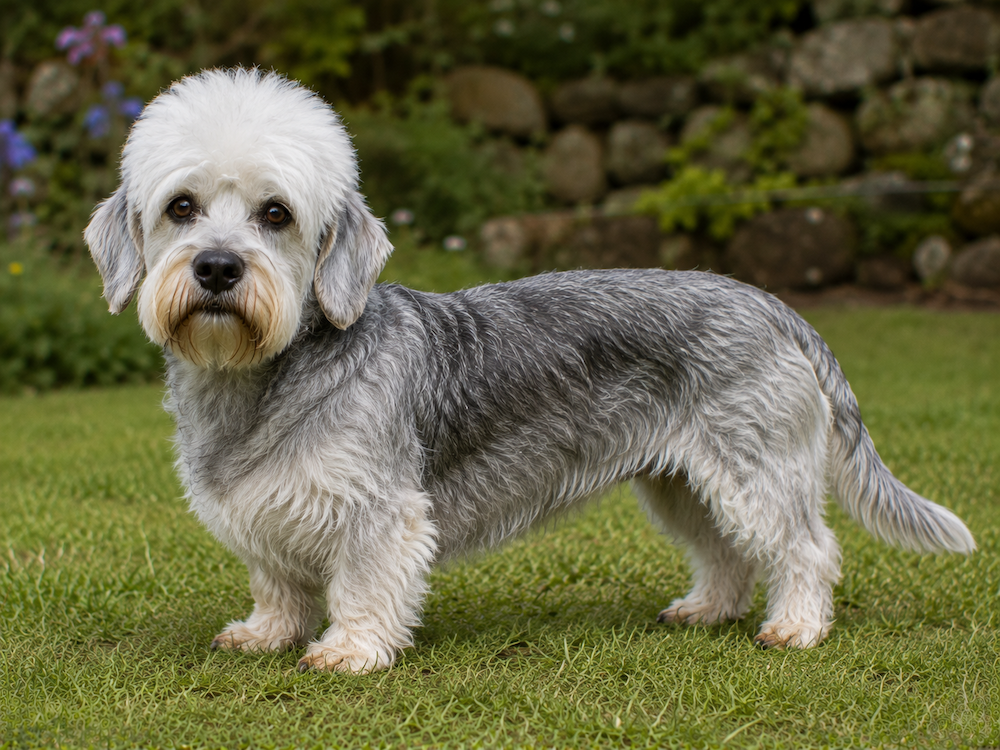







Gentle, courageous, and wonderfully distinctive — the Dandie Dinmont Terrier is a rare Scottish breed with a unique appearance and a loyal, affectionate personality.
🧠 QUICK SNAPSHOT
- Temperament: Affectionate, intelligent, independent
- Energy Level: Moderate
- Size: Small
- Good With Families: Yes
- Trainability: Moderate
- Grooming: Moderate
- Best For: Families, retirees, companion homes, experienced owners
📚 OVERVIEW
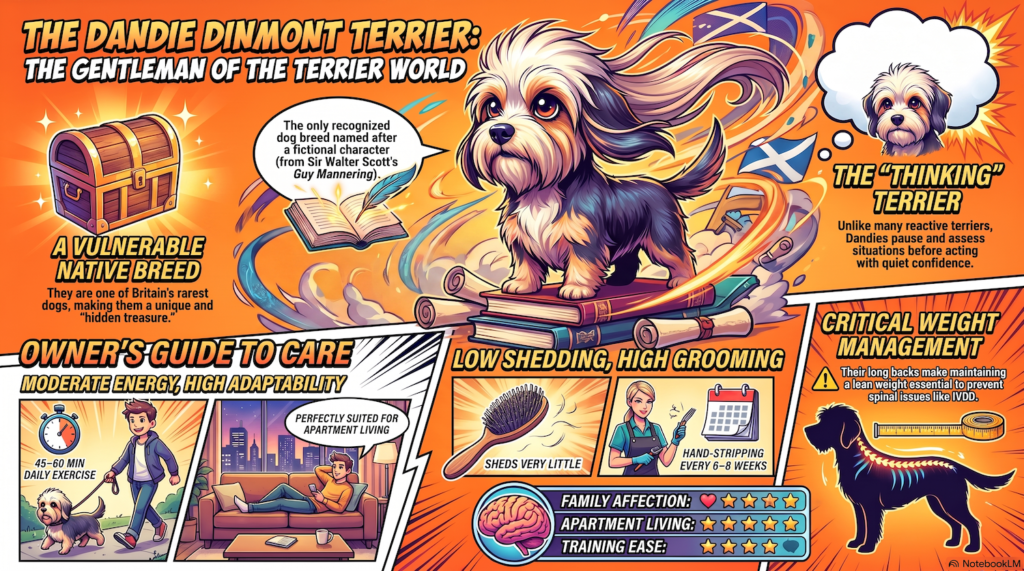
The Dandie Dinmont Terrier is one of the world’s rarest terrier breeds and the only recognised dog breed named after a fictional character. It takes its name from Dandie Dinmont, a farmer featured in Sir Walter Scott’s 1815 novel Guy Mannering. Long before becoming famous in literature, however, these hardy little terriers were valued by Scottish and English farmers for hunting otters, badgers, foxes, and other vermin.
Instantly recognisable by its long body, short legs, silky topknot, and expressive eyes, the Dandie Dinmont Terrier is unlike any other terrier. While it possesses the courage and determination typical of the terrier group, it is generally calmer and more relaxed than many of its relatives. Loyal, affectionate, and quietly confident, the Dandie enjoys spending time with its family and adapts well to both country and suburban living. Owners looking for a distinctive companion with plenty of character often fall in love with this charming little breed.
✅ PROS & CONS
Pros
- Loyal and affectionate companion
- Calmer than many terrier breeds
- Intelligent and adaptable
- Low-shedding coat
- Excellent watchdog
Cons
- Strong prey drive
- Independent personality
- Coat requires regular maintenance
- Can be reserved with unfamiliar dogs
- Rare and difficult to find
Is a Dandie Dinmont Terrier a Good Family Dog?
Yes, the Dandie Dinmont Terrier makes an excellent family companion for households seeking a loyal and affectionate dog with a calmer temperament than many other terriers. It forms strong bonds with its family and enjoys spending time indoors just as much as joining them on outdoor adventures.
The breed generally gets along well with respectful children who understand how to interact gently with dogs. Because of its compact size and sensitive back, rough play should always be discouraged. Dandies can live happily with other dogs when properly socialised, although their natural terrier instincts may lead them to chase smaller pets unless introduced carefully from an early age.
While naturally alert, the Dandie Dinmont Terrier is not usually an excessive barker. Families who provide companionship, gentle leadership, and moderate daily activity will enjoy a devoted, entertaining, and wonderfully unique companion.
How Much Exercise Does a Dandie Dinmont Terrier Need?
The Dandie Dinmont Terrier requires around 45 to 60 minutes of exercise each day to stay healthy and mentally stimulated. Although it has a relatively relaxed nature indoors, it still enjoys regular opportunities to explore, play, and investigate its surroundings.
Daily walks, scent games, interactive play, and secure off-lead time in a safely fenced garden provide excellent exercise. Because the breed was developed for hunting, it enjoys using its nose and often finds scent-based games especially rewarding.
Mental stimulation should also be included in its daily routine. Puzzle toys, obedience training, trick training, and interactive feeders help satisfy the breed’s intelligent mind and prevent boredom. A balanced combination of moderate exercise and enrichment allows the Dandie to remain calm, content, and well behaved throughout the day.
Is a Dandie Dinmont Terrier Easy to Train?
The Dandie Dinmont Terrier is intelligent but naturally independent, making training moderately challenging. Like many terriers, it enjoys learning but may decide there are more interesting things to do if training becomes repetitive or inconsistent.
Positive reinforcement using praise, treats, toys, and patience is the most effective approach. Short, enjoyable sessions keep the dog’s attention and help maintain enthusiasm. Harsh corrections should always be avoided, as they may damage trust and reduce confidence.
Early socialisation is essential to help puppies become comfortable around different people, dogs, and environments. With calm, consistent guidance, the Dandie develops into a polite and dependable companion while retaining the confidence and character that make the breed so appealing.
Does a Dandie Dinmont Terrier Shed?
The Dandie Dinmont Terrier is considered a low-shedding breed, making it a popular choice for owners who prefer less hair around the home. Its unique coat consists of a soft undercoat covered by a crisp, slightly harsh outer coat that requires regular maintenance.
Brushing several times each week helps prevent tangles and keeps the coat healthy. Professional grooming or hand-stripping every few months is recommended to maintain the coat’s traditional texture and appearance. The distinctive silky topknot also benefits from regular attention to keep it neat.
Although the breed sheds very little, it is not completely hypoallergenic, as allergens are still present in saliva and skin cells. Routine grooming should also include regular ear cleaning, nail trimming, and dental care to support long-term health.
What Health Problems Are Common in a Dandie Dinmont Terrier?
The Dandie Dinmont Terrier is generally a healthy breed with an average lifespan of 12 to 15 years, but there are several inherited conditions prospective owners should understand.
Because of its long back and relatively short legs, the breed is more susceptible to intervertebral disc disease (IVDD), which can affect the spine. Owners should discourage repeated jumping from furniture and help maintain a healthy body weight to reduce strain on the back. Other potential concerns include hip dysplasia, glaucoma, hypothyroidism, and certain inherited eye disorders, although these remain relatively uncommon when responsible breeding practices are followed.
Choosing a puppy from health-tested parents is the best way to reduce inherited risks. Combined with regular veterinary care, a balanced diet, appropriate exercise, and preventative health checks, the Dandie Dinmont Terrier can enjoy a long, active, and comfortable life as a much-loved family companion.