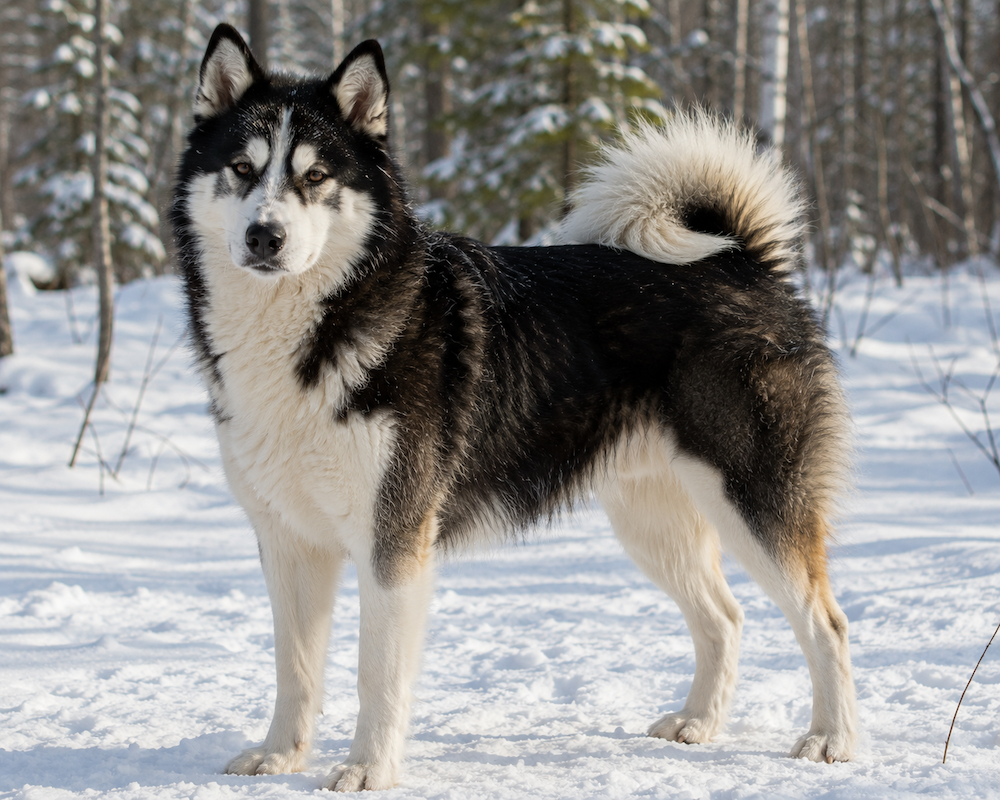







Friendly, hardy, and built for the Arctic — the Yakutian Laika is an ancient Siberian working dog that combines impressive endurance with intelligence, affection, and a strong desire to be part of the family.
🧠 QUICK SNAPSHOT
- Temperament: Friendly, intelligent, affectionate
- Energy Level: High
- Size: Medium
- Good With Families: Yes
- Trainability: High
- Grooming: Moderate to High
- Best For: Active families, experienced owners, outdoor lifestyles, cooler climates
📚 OVERVIEW
The Yakutian Laika is an ancient working breed originating in the Yakutia region of northeastern Siberia, one of the coldest inhabited places on Earth. For centuries, Indigenous communities relied on these hardy dogs for pulling sleds, hunting, herding reindeer, and companionship in an extraordinarily demanding Arctic environment.
That history created a remarkably versatile dog. The Yakutian Laika possesses the endurance and thick double coat expected of a northern sled dog but is also known for being particularly people-oriented. Working closely with humans was essential to its survival and development, and modern Yakutian Laikas typically retain a strong desire for companionship.
The breed has a sturdy yet athletic build, erect or semi-erect ears, and a heavily coated tail usually carried over its back. Coat colours vary considerably, with striking white-and-dark combinations particularly common. Some individuals also have blue or differently coloured eyes.
Although still uncommon outside its homeland, the Yakutian Laika is gaining admirers as an active, intelligent family companion with a fascinating working heritage.
✅ PROS & CONS
Pros
- Friendly and affectionate with family
- Highly intelligent and trainable
- Excellent companion for active owners
- Usually sociable with other dogs
- Hardy and athletic
- Fascinating ancient working heritage
Cons
- Requires substantial daily exercise
- Heavy seasonal shedding
- Thick coat is poorly suited to extreme heat
- Can become vocal or destructive when bored
- Strong working instincts require regular mental stimulation
- Still relatively rare outside its traditional homeland
Is a Yakutian Laika a Good Family Dog?
Yes, the Yakutian Laika can be an excellent family dog for an active household. Unlike some more independent northern breeds, Yakutian Laikas were developed to work closely alongside people and are typically affectionate, sociable, and strongly attached to their families.
They generally interact well with respectful children, particularly when raised alongside them. Their playful personality can make them enthusiastic companions for older children who enjoy outdoor activities, although supervision is always sensible around younger children.
Yakutian Laikas often get along well with other dogs. Working cooperatively in sled teams favoured dogs capable of functioning successfully alongside their canine companions. Relationships with cats and smaller animals can vary because some individuals retain hunting instincts, making early introductions important.
This is not a dog that thrives when regularly left alone for long periods. Families that include their Yakutian Laika in walks, adventures, training, and everyday activities are most likely to experience the friendly and devoted temperament for which the breed is increasingly appreciated.
How Much Exercise Does a Yakutian Laika Need?
A Yakutian Laika generally needs around 90 to 120 minutes of exercise each day, although young, healthy working-line dogs may happily handle considerably more. This is an endurance breed developed to travel long distances rather than spend its life relaxing indoors.
Long walks, hiking, running, sledding, canicross, skijoring, swimming, and interactive games can all provide excellent exercise. Activities that allow the dog to work alongside its owner are particularly appropriate.
Mental stimulation matters just as much. Scent games, puzzle feeders, obedience exercises, trick training, and learning new tasks prevent an intelligent Yakutian Laika from becoming bored.
Climate also needs consideration. The breed’s extraordinarily dense coat evolved for Siberian winters, not intense summer heat. Exercise should be reduced or moved to cooler parts of the day during warm weather, with constant access to shade and fresh water.
Given sufficient physical and mental activity, most Yakutian Laikas settle comfortably around the home.
Is a Yakutian Laika Easy to Train?
Yes, the Yakutian Laika is generally highly trainable, particularly compared with some more independent northern breeds. It is intelligent, enjoys working with people, and usually responds enthusiastically when training is engaging and rewarding.
Positive reinforcement using food, toys, praise, and play produces excellent results. Short, varied sessions are more effective than repetitive drills, particularly with younger dogs.
Early socialisation should introduce puppies positively to different people, friendly dogs, environments, noises, vehicles, grooming, and veterinary handling. Recall training should also begin early because outdoor distractions and inherited hunting instincts can occasionally compete with an owner’s commands.
The breed’s working intelligence makes it suitable for much more than basic obedience. Yakutian Laikas can enjoy canine sports, scent work, pulling activities, agility, and advanced trick training.
Committed first-time owners can potentially succeed with the breed, provided they understand its considerable exercise and enrichment requirements and are prepared to maintain training throughout adulthood.
Does a Yakutian Laika Shed?
Yes. The Yakutian Laika sheds heavily, particularly when it blows its undercoat during seasonal coat changes. Anyone considering this breed should be comfortable with substantial amounts of dog hair.
Its dense double coat consists of a protective outer layer and a thick insulating undercoat developed to withstand extreme Arctic temperatures. Weekly brushing may be adequate during quieter periods, but daily grooming can become necessary when the undercoat is being shed heavily.
Despite its impressive coat, routine clipping is neither necessary nor generally desirable. The double coat provides insulation and protection and should be maintained through appropriate brushing rather than shaved simply to make the dog cooler.
Bathing is required only periodically, although dogs should be thoroughly dried afterwards because moisture can remain trapped within the dense undercoat.
Regular nail trimming, dental care, and ear checks complete the grooming routine. The Yakutian Laika is not hypoallergenic.
What Health Problems Are Common in a Yakutian Laika?
The Yakutian Laika is generally a robust working breed, but responsible breeding and health screening remain important. With appropriate care, many individuals live approximately 10 to 14 years.
Potential concerns include hip dysplasia, elbow dysplasia, and certain inherited eye conditions. Responsible breeders should screen breeding dogs for relevant orthopaedic and ophthalmic problems.
Congenital deafness is another consideration within the breed, particularly because white pigmentation and blue eyes occur in some Yakutian Laikas. Blue eyes do not automatically mean that a dog is deaf, but appropriate hearing assessment can identify affected individuals.
Prospective owners should ask breeders for documented health-test results rather than relying on the assumption that a traditional working breed will automatically be healthy.
Maintaining a lean body condition, providing age-appropriate exercise, feeding a nutritionally balanced diet, protecting the dog from overheating, and arranging regular veterinary care all contribute to long-term health.
⭐ How Does a Yakutian Laika Survive Extreme Cold?
The Yakutian Laika developed in a region where winter temperatures can fall to extraordinary levels, and almost every aspect of the breed reflects that environment.
Its dense double coat traps insulating air close to the body, while the outer coat helps provide protection from snow and moisture. Its compact, sturdy construction also helps conserve body heat while allowing the athletic movement required for travelling through snow.
But physical adaptations tell only part of the story.
For generations, these dogs survived because they worked alongside people. They pulled sleds carrying essential supplies, helped hunters, assisted with livestock, and provided companionship in isolated Arctic communities.
That combination of physical resilience and close cooperation with humans helps explain the modern Yakutian Laika: a tough working dog that is also remarkably social and affectionate.
It is a breed shaped not simply by the cold, but by centuries of partnership between dogs and people in one of the world’s most challenging environments.