






Mysterious, fascinating and surprisingly low-maintenance, Tarantulas are among the world's most extraordinary exotic pets.
🧠 QUICK SNAPSHOT
Trait | Tarantula |
|---|---|
Scientific Family | Theraphosidae |
Pet Type | Arachnid / Invertebrate |
Natural Origin | Americas, Africa, Asia, Australia and other warm regions |
Typical Lifespan | Females 10–30+ years; males often 3–8 years |
Adult Size | Approximately 5–28 cm leg span, depending on species |
Adult Weight | Varies greatly; large species can exceed 100 g |
Colours | Brown, black, orange, blue, green, pink and combinations |
Diet | Carnivore |
Activity | Often nocturnal or crepuscular |
Temperament | Solitary; varies greatly by species |
Noise Level | Silent |
Social Needs | Solitary |
Handling | Generally not recommended |
Housing | Secure, species-specific terrarium |
Temperature | Species-dependent; often around 22–28°C |
Grooming | None required |
Beginner Friendly? | Some terrestrial species |
Famous Feature | Eight legs, impressive fangs and remarkable moulting ability |
📚 OVERVIEW
Tarantulas are a diverse family of large, often hairy spiders found across tropical, subtropical and some temperate regions of the world. With more than a thousand described species, they vary enormously in size, colour, behaviour and habitat.
Popular captive species include the Chilean Rose Tarantula, Mexican Red-Knee Tarantula, Curly Hair Tarantula and Brazilian Black Tarantula. Some are relatively calm terrestrial spiders, while others are extremely fast, defensive or specialised climbers.
Tarantulas are primarily solitary predators that feed on insects and other small animals. They spend much of their time resting in burrows, hiding beneath objects or waiting for prey.
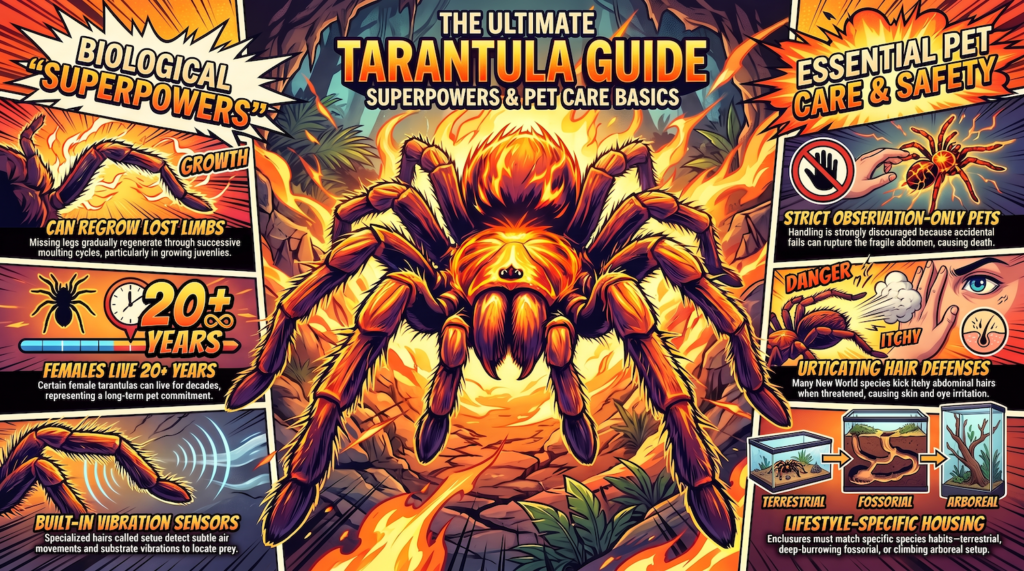
Their care requires secure housing, suitable substrate, correct humidity, appropriate temperatures and minimal disturbance. Unlike traditional pets, Tarantulas are best appreciated through observation rather than handling.
✅ PROS & CONS
👍 Pros
Fascinating natural behaviours
Remarkable colours and patterns
Generally quiet pets
Require relatively little space
No grooming necessary
Interesting moulting process
Some species are beginner-friendly
Female Tarantulas can live for decades
👎 Cons
Not suitable for cuddling or handling
Some species are highly defensive
Venomous bites can cause injury
Some have irritating defensive hairs
Require live insect prey
Sensitive to falls and injuries
Can remain hidden for long periods
Specialised care varies by species
Are Tarantulas Good Pets?
Yes. Tarantulas can make fascinating pets for people interested in spiders and exotic invertebrates.
They’re quiet, require relatively little space and display remarkable natural behaviours.
However, they’re observation pets rather than animals that enjoy physical affection or regular handling.
Are Tarantulas Good for Beginners?
Some species are suitable for well-prepared beginners.
The Curly Hair Tarantula, Mexican Red-Knee Tarantula and Brazilian Black Tarantula are often recommended because of their generally manageable care requirements.
Fast-moving, defensive or medically significant species are better left to experienced keepers.
How Long Do Tarantulas Live?
Lifespan varies considerably by species and sex.
Female Tarantulas may live 10–30 years or longer, while males generally have much shorter lifespans.
Some mature males survive only a relatively short period after reaching adulthood.
How Big Do Tarantulas Get?
Tarantulas vary enormously in size.
Smaller species may have leg spans of approximately 5–8 cm, while the largest species can exceed 25 cm across their legs.
The Goliath Birdeater is among the world’s largest spiders by mass.
What Are the Best Pet Tarantula Species?
Popular captive Tarantulas include:
Curly Hair Tarantula — hardy and often relatively calm
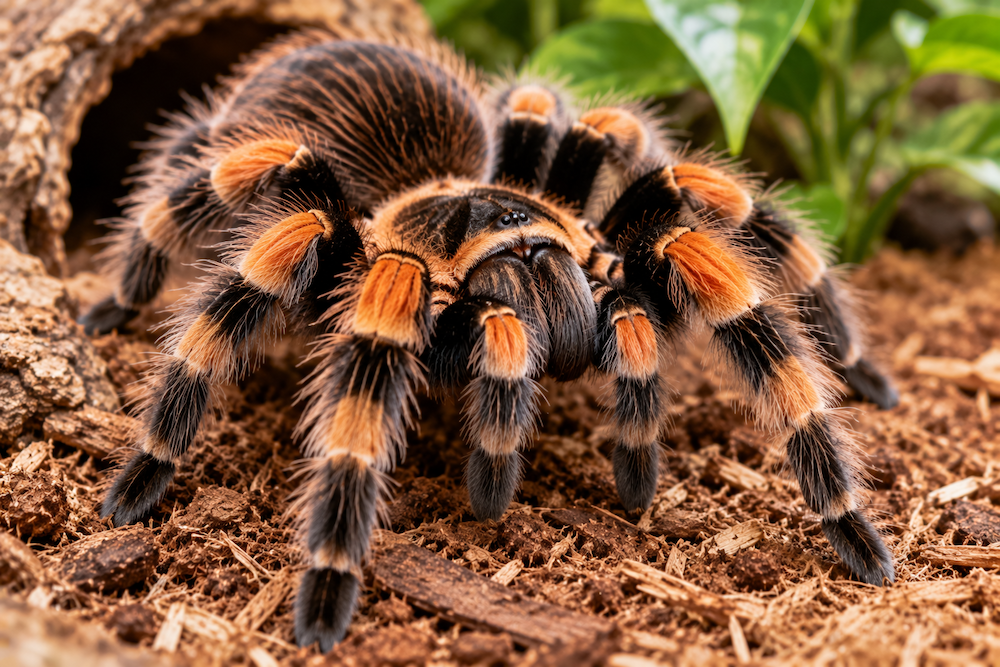
Mexican Red-Knee Tarantula — striking orange-and-black markings
Chilean Rose Tarantula — generally slow-moving, with variable temperament
Brazilian Black Tarantula — glossy black appearance
Arizona Blonde Tarantula — attractive desert species
Greenbottle Blue Tarantula — spectacular colours and extensive webbing
Suitability depends on experience, local regulations and the individual spider.
Are Tarantulas Dangerous?
Most commonly kept beginner Tarantulas present a relatively low risk when left undisturbed.
However, all Tarantulas possess venom, and some species can deliver medically significant bites.
Defensive hairs from certain species can also irritate skin and eyes.
Are Tarantulas Venomous?
Yes.
Tarantulas use venom to subdue prey.
The effects of a bite vary by species and may include pain, swelling and other symptoms.
Some Old World species can cause more severe reactions and require particular caution.
Can a Tarantula Bite Kill You?
Fatalities from Tarantula bites are exceptionally rare, and no human deaths have been conclusively attributed to Tarantula venom alone.
However, bites can be painful, and certain species may cause serious symptoms.
Anyone experiencing severe symptoms after a bite should seek urgent medical attention.
Do Tarantulas Bite Their Owners?
They can bite when threatened, restrained or disturbed.
Many Tarantulas prefer retreating or displaying defensive behaviours rather than biting.
Avoiding unnecessary handling greatly reduces the risk.
Do Tarantulas Like Being Held?
No.
Tarantulas don’t seek physical affection or handling.
Being picked up can cause stress, and even a short fall can result in serious injury.
Observing them inside their enclosure is generally the safest approach.
Do Tarantulas Recognise Their Owners?
There is no strong evidence that Tarantulas recognise or bond with their owners in the way mammals or birds can.
They respond primarily to environmental cues, vibrations and sensory information.
Some may become accustomed to predictable enclosure routines.
Are Tarantulas Aggressive?
Tarantulas are generally defensive rather than aggressive.
Their responses depend on species, individual temperament and environmental conditions.
Some retreat readily, while others may display threat postures or defend themselves more actively.
What Do Tarantulas Eat?
Tarantulas are carnivorous predators.
Captive diets commonly include appropriately sized crickets, roaches and other suitable feeder insects.
Large species may occasionally capture small vertebrates in the wild, but vertebrate prey is unnecessary for routine captive feeding.
How Often Should You Feed a Tarantula?
Feeding frequency depends on age, size and species.
Young spiderlings generally eat more frequently, while adults may require feeding only every one or two weeks.
Body condition and moulting cycles should guide feeding schedules.
Do Tarantulas Need Water?
Yes.
Tarantulas need access to suitable hydration.
Most juvenile and adult terrestrial species should have a shallow, clean water dish.
Humidity requirements vary considerably between species.
Do Tarantulas Need Heat Lamps?
Not usually.
Many commonly kept Tarantulas thrive at normal, stable indoor temperatures.
Direct heat lamps can create dangerous hot spots and dry out enclosures.
Supplemental heating should only be used when necessary and carefully controlled.
What Size Enclosure Does a Tarantula Need?
Enclosure size depends on the spider’s species, leg span and natural behaviour.
Terrestrial species need suitable floor space and safe substrate depth, while arboreal species require greater vertical climbing space.
Excessive height in terrestrial enclosures can increase the risk of dangerous falls.
Do Tarantulas Need Substrate?
Yes.
Suitable substrate allows terrestrial Tarantulas to walk, burrow and maintain appropriate environmental conditions.
Common options include appropriately prepared coco fibre and reptile-safe soil mixes.
Substrate depth and moisture requirements vary by species.
Do Tarantulas Need Light?
Tarantulas don’t generally require specialised UVB lighting.
Normal ambient day-and-night lighting is usually sufficient.
Bright direct lighting and excessive heat should be avoided.
Why Is My Tarantula Hiding?
Hiding is normal Tarantula behaviour.
Many species naturally spend considerable time inside burrows or sheltered areas.
They may also hide before moulting or when adjusting to a new enclosure.
Why Is My Tarantula Not Eating?
Tarantulas may refuse food before moulting, during seasonal changes or when environmental conditions are unsuitable.
Some adults can go for extended periods without feeding.
Persistent refusal accompanied by weakness, dehydration or abnormal behaviour requires investigation.
How Often Do Tarantulas Moult?
Young Tarantulas may moult several times annually as they grow.
Adults generally moult less frequently, sometimes approximately once a year or less.
Moulting frequency depends on species, age, sex and environmental conditions.
Why Is My Tarantula Lying on Its Back?
A Tarantula lying on its back may be preparing to moult.
This is normal behaviour and shouldn’t be mistaken for death.
Never disturb or attempt to turn over a Tarantula during moulting.
What Are Urticating Hairs on Tarantulas?
Many New World Tarantulas possess specialised defensive hairs called urticating setae.
They may release these hairs when threatened.
Contact can cause skin irritation, while exposure to the eyes can result in serious injury.
Not all Tarantula species possess these hairs.
Can Two Tarantulas Live Together?
Generally, no.
Most Tarantulas are solitary and may attack or cannibalise one another.
Although a few species have been maintained communally under specialised conditions, solitary housing is safest for the vast majority.
What Is the Difference Between Old World and New World Tarantulas?
New World Tarantulas originate from the Americas, while Old World Tarantulas occur in Africa, Asia and surrounding regions.
Many New World species possess defensive urticating hairs.
Old World species generally lack these hairs and may rely more heavily on speed, defensive displays and biting.
Are Tarantulas Legal to Keep as Pets?
Ownership and import regulations vary by country and region.
Some Tarantula species are protected under wildlife legislation or international trade controls.
Always verify local requirements and obtain legally sourced, preferably captive-bred specimens.
What Makes the Tarantula Unique?
Imagine a creature that can grow an entirely new outer skeleton, detect approaching prey through vibrations and survive for weeks without eating.
That’s the extraordinary Tarantula.
These remarkable spiders possess abilities that seem almost unbelievable.
Their bodies are covered with sensitive hairs that help detect movements and vibrations in their surroundings.
Rather than chasing prey over long distances, many Tarantulas wait patiently before launching a rapid ambush.
But their most extraordinary transformation happens during moulting.
As a Tarantula grows, it must shed its rigid external skeleton.
The spider may lie on its back while gradually emerging from its old exoskeleton, revealing a soft new body that eventually hardens.
Some Tarantulas can even regenerate lost legs through successive moults.
Then there’s their remarkable longevity.
While many spiders live relatively short lives, females of certain Tarantula species can survive for several decades.
And despite their intimidating appearance, many Tarantulas spend most of their time quietly resting, hiding or waiting for food.
Their impressive fangs, unusual defensive strategies and extraordinary survival adaptations make them fascinating examples of arachnid evolution.
The Tarantula may look like something from a horror movie, but behind those eight legs lies one of nature’s most remarkable and misunderstood predators.