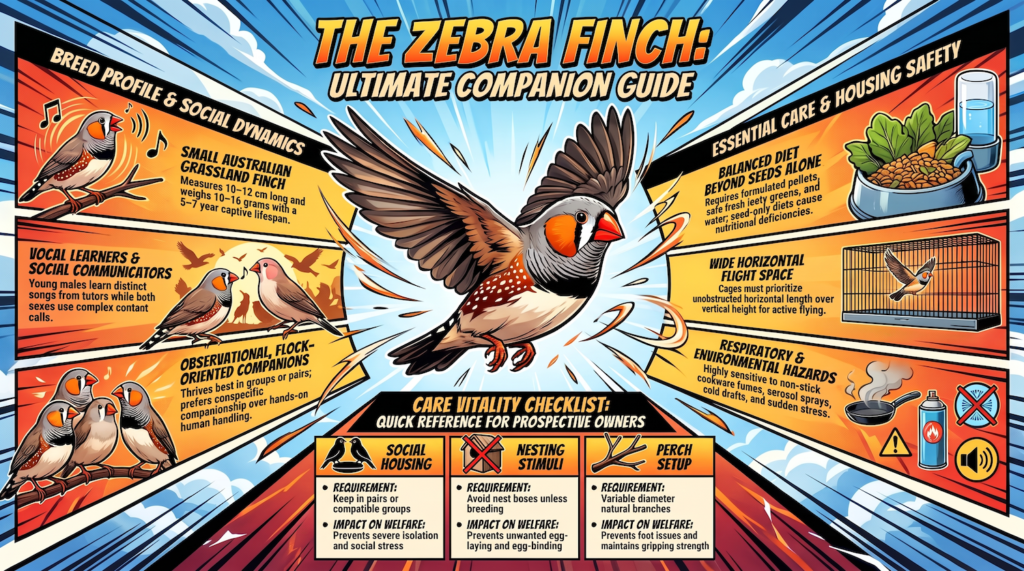







Tiny, cheerful and endlessly entertaining, the Zebra Finch is a colourful Australian songbird famous for its delightful chirping, beautiful markings and fascinating social behaviour.
🧠 QUICK SNAPSHOT
Trait | Zebra Finch |
|---|---|
Scientific Name | Taeniopygia guttata |
Other Names | Australian Zebra Finch, Chestnut-Eared Finch |
Pet Type | Small Bird / Finch |
Natural Origin | Mainland Australia |
Typical Lifespan | Around 5–10 years |
Adult Size | Approximately 10–11 cm |
Adult Weight | Approximately 10–16 g |
Feather Type | Short, smooth and sleek |
Colours | Grey, white, fawn, chestnut, black and various mutations |
Diet | Primarily granivorous |
Activity | Diurnal |
Temperament | Active, social, curious and generally gentle |
Noise Level | Low to moderate; frequent soft chirping |
Social Needs | Very high; compatible finch companions essential |
Grooming | Self-grooming; enjoys bathing |
Housing | Spacious horizontal flight cage or aviary |
Exercise Needs | High; regular flying essential |
Breeding | Readily breeds in suitable conditions |
Beginner Friendly? | Yes, with appropriate preparation |
Famous Feature | Distinctive zebra-striped throat and individually learned songs |
📚 OVERVIEW
The Zebra Finch is one of Australia’s most recognisable small birds and among the world’s most popular captive finches. Native to much of mainland Australia, these lively little birds inhabit open grasslands, scrublands and other environments where grass seeds and water are available.
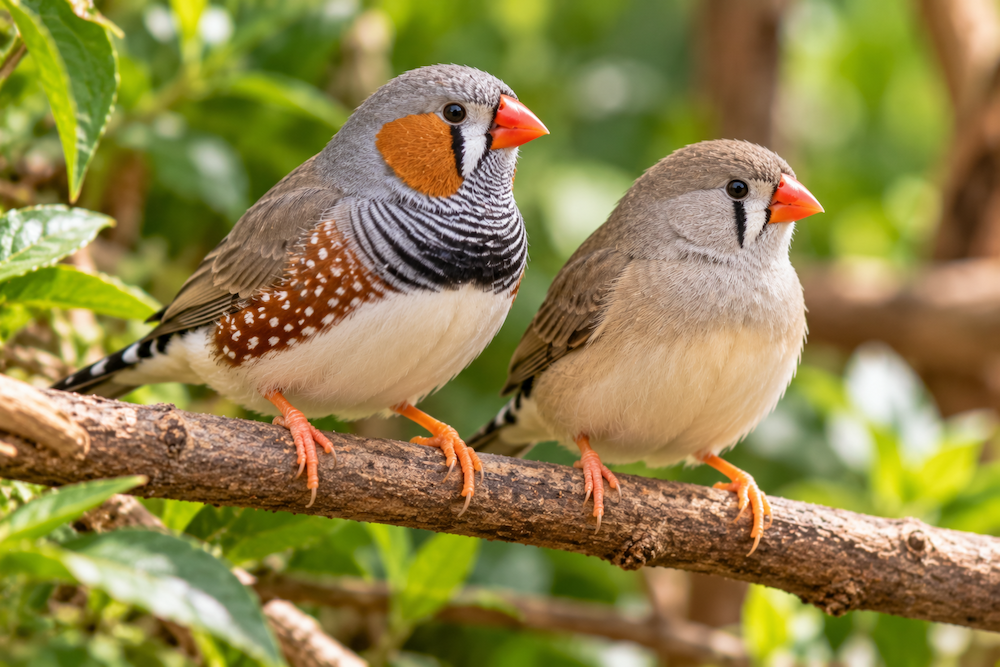
Wild-type male Zebra Finches are especially distinctive, displaying orange cheek patches, black-and-white throat stripes and chestnut-coloured flanks dotted with white spots. Females generally have more subdued grey-brown colouring, although domesticated colour varieties can look very different.
Zebra Finches are highly social birds that spend much of their time flying, communicating, feeding and interacting with companions. Unlike parrots, they generally prefer the company of other finches rather than frequent human handling.
Their care requires a spacious flight enclosure, compatible companions, a balanced diet, safe perches, bathing opportunities and daily enrichment. Their small size and cheerful personalities make them appealing pets, but their need for flight and social interaction should never be underestimated.
✅ PROS & CONS
👍 Pros
Cheerful, entertaining personalities
Beautiful colours and markings
Generally suitable for beginners
Relatively quiet compared with parrots
Fascinating songs and communication
Enjoy living with compatible companions
Small size suits well-designed indoor aviaries
Active and enjoyable to observe
👎 Cons
Usually dislike being handled
Require compatible finch companions
Need plenty of horizontal flying space
Scatter seed husks and feathers
Can breed rapidly if unmanaged
Frequent chirping may disturb quiet households
Vulnerable to cold, draughts and sudden temperature changes
Illness can be difficult to recognise early
Are Zebra Finches Good Pets?
Yes. Zebra Finches make excellent pets for people who enjoy observing active, social birds.
Their cheerful sounds, attractive markings and fascinating behaviours make them rewarding companions.
However, they’re generally better suited to observation than cuddling or hands-on interaction.
Are Zebra Finches Good for Beginners?
Yes.
Zebra Finches are among the more approachable pet birds for beginners who understand their needs.
They require suitable companionship, a spacious flight enclosure and consistent daily care.
Their small size doesn’t eliminate the need for proper husbandry.
How Long Do Zebra Finches Live?
Zebra Finches commonly live around 5–10 years in captivity.
Some individuals may live longer with excellent care.
Lifespan depends on genetics, nutrition, housing, disease prevention and overall wellbeing.
How Big Do Zebra Finches Get?
Adult Zebra Finches typically measure approximately 10–11 cm in length.
They generally weigh around 10–16 grams.
Despite their tiny size, they’re energetic flyers that need considerable room to move.
What Colours Do Zebra Finches Come In?
Wild-type Zebra Finches are predominantly grey with distinctive black, white and chestnut markings.
Captive breeding has produced numerous colour varieties, including white, fawn, pied and chestnut-flanked white.
Their appearance can vary considerably between breeding lines.
How Can You Tell Male and Female Zebra Finches Apart?
Wild-type males typically have orange cheek patches, striped throats and chestnut flanks with white spots.
Females generally lack these distinctive male markings.
However, some colour mutations make visual identification more difficult, and singing behaviour can provide additional clues.
Do Zebra Finches Sing?
Yes.
Male Zebra Finches produce distinctive learned songs consisting of repeated sequences of notes.
Females generally communicate through calls rather than producing the elaborate songs typical of males.
Each male can develop an individually recognisable song pattern.
Are Zebra Finches Noisy?
Zebra Finches are generally quieter than many parrots.
However, they communicate frequently through soft chirps, beeps and contact calls.
Groups can produce considerable background noise, particularly during active periods.
Can Zebra Finches Talk?
No.
Zebra Finches don’t imitate human speech in the way some parrots can.
However, they possess sophisticated vocal communication and are famous for their ability to learn songs.
Do Zebra Finches Recognise Their Owners?
Zebra Finches can become familiar with regular caregivers and predictable routines.
They may respond when someone approaches with food or fresh water.
However, their relationships with humans are generally less physically interactive than those of companion parrots.
Are Zebra Finches Affectionate?
Zebra Finches display affectionate social behaviours towards compatible companions.
They may sit close together, preen one another and maintain frequent contact calls.
However, they rarely seek physical affection from humans.
Do Zebra Finches Like Being Held?
Generally, no.
Most Zebra Finches find handling stressful and prefer flying freely within a secure enclosure.
Handling should usually be limited to necessary health checks or veterinary care.
Do Zebra Finches Need Companions?
Yes.
Zebra Finches are highly social birds and should generally be kept with at least one compatible finch.
They naturally form social relationships and communicate frequently.
Keeping a Zebra Finch alone can lead to stress and reduced wellbeing.
Can Two Male Zebra Finches Live Together?
Yes.
Two compatible males can often live together successfully.
Providing sufficient space, multiple feeding stations and appropriate enrichment helps reduce competition.
Individual compatibility should always be monitored.
Can Male and Female Zebra Finches Live Together?
Yes.
Male and female Zebra Finches often form strong pair bonds.
However, mixed-sex pairs may breed readily when suitable nesting conditions are available.
Owners should plan carefully to avoid unwanted breeding.
Can Zebra Finches Live With Other Birds?
Sometimes.
Zebra Finches can coexist with certain peaceful finch species in sufficiently spacious aviaries.
However, compatibility depends on temperament, enclosure size and breeding behaviour.
They shouldn’t be housed with larger birds that could injure them.
What Size Cage Does a Zebra Finch Need?
Zebra Finches need a cage that prioritises horizontal flying space.
For a pair, an enclosure approximately 90–120 cm long is a useful minimum planning target, with larger accommodation strongly preferred.
A spacious indoor flight cage or outdoor aviary is ideal.
Can Zebra Finches Live Outdoors?
Yes, in suitable climates.
Outdoor aviaries can provide excellent flying opportunities and environmental enrichment.
However, birds must be protected from predators, draughts, extreme temperatures and severe weather.
Do Zebra Finches Need Exercise?
Yes.
Flying is essential for maintaining muscle condition, cardiovascular health and overall wellbeing.
Their enclosure should allow meaningful horizontal flight rather than only short hops between perches.
A variety of safe perches encourages natural movement.
What Do Zebra Finches Eat?
Zebra Finches primarily eat grass seeds in the wild.
Captive birds benefit from a balanced diet incorporating appropriate finch seed mixtures, nutritionally complete formulated foods where accepted, fresh greens and suitable supplements.
Fresh drinking water and an appropriate calcium source are essential.
Can Zebra Finches Eat Fruit?
Small amounts of suitable fruit may be offered occasionally.
However, Zebra Finches generally prefer seeds, grasses and appropriate leafy greens.
Fruit should not replace their main diet.
Do Zebra Finches Need Baths?
Yes.
Many Zebra Finches enjoy bathing in shallow water.
Providing a clean, shallow bathing dish allows them to maintain their feathers naturally.
Bathing water should be replaced regularly to maintain hygiene.
How Often Should You Clean a Zebra Finch Cage?
Food and water containers should be cleaned daily.
Soiled cage liners and heavily used areas should be cleaned regularly.
More thorough cleaning depends on enclosure size, bird numbers and environmental conditions.
Do Zebra Finches Breed Easily?
Yes.
Zebra Finches are prolific breeders when conditions are favourable.
Pairs may begin nesting readily if suitable nesting sites are provided.
Uncontrolled breeding can create overcrowding and place considerable strain on breeding females.
How Many Eggs Do Zebra Finches Lay?
A typical Zebra Finch clutch contains approximately 4–6 eggs, although numbers vary.
Both parents usually participate in incubation and chick care.
Eggs generally hatch after approximately 12–14 days of incubation.
What Health Problems Are Common in Zebra Finches?
Potential concerns include respiratory infections, mites, nutritional deficiencies, egg binding and injuries.
Birds often conceal signs of illness until their condition becomes serious.
Fluffed feathers, reduced activity, breathing difficulties or changes in droppings require prompt assessment by an avian veterinarian.
Are Zebra Finches Legal to Keep as Pets?
Captive-bred Zebra Finches are legal pets in many countries, including Australia, subject to applicable regulations.
However, wildlife protection laws, licensing requirements and movement restrictions can vary between jurisdictions.
Wild birds should never be captured for the pet trade.
What Makes the Zebra Finch Unique?
Imagine a tiny Australian bird whose song has helped scientists unlock some of the greatest mysteries of how animals learn to communicate.
That’s the extraordinary Zebra Finch.
These remarkable little birds are among the most extensively studied songbirds in the world.
Male Zebra Finches don’t simply hatch knowing their complete songs.
Instead, young males learn their songs by listening to adult tutors, usually their fathers, during a critical period of development.
Over time, they practise and refine their vocalisations until they develop a characteristic adult song.
This extraordinary ability has made Zebra Finches invaluable in research into vocal learning, memory and the neural mechanisms underlying communication.
But their fascinating abilities extend far beyond singing.
Wild Zebra Finches inhabit some of Australia’s challenging dry environments, where rainfall and food availability can be unpredictable.
Unlike many birds that follow strictly seasonal breeding patterns, Zebra Finches can breed opportunistically when conditions become favourable.
Their social communication is equally remarkable.
Pairs use contact calls to maintain communication, while groups exchange a variety of vocal signals during everyday activities.
Researchers have also discovered that Zebra Finch parents can produce particular calls during hot weather that may influence aspects of their developing chicks’ growth.
Their appearance is another distinctive feature.
Wild-type males display striking orange cheek patches, chestnut flanks and black-and-white throat stripes, creating a beautiful contrast against their grey plumage.
And despite their tiny bodies, Zebra Finches are energetic, agile flyers capable of travelling across open landscapes in search of food and water.
Perhaps most endearing is their social nature.
Compatible pairs frequently sit close together, communicate throughout the day and participate in cooperative nesting activities.
The Zebra Finch may be one of Australia’s smallest and most familiar pet birds, but its extraordinary songs, remarkable intelligence and fascinating social life make it one of the most scientifically important songbirds on Earth.