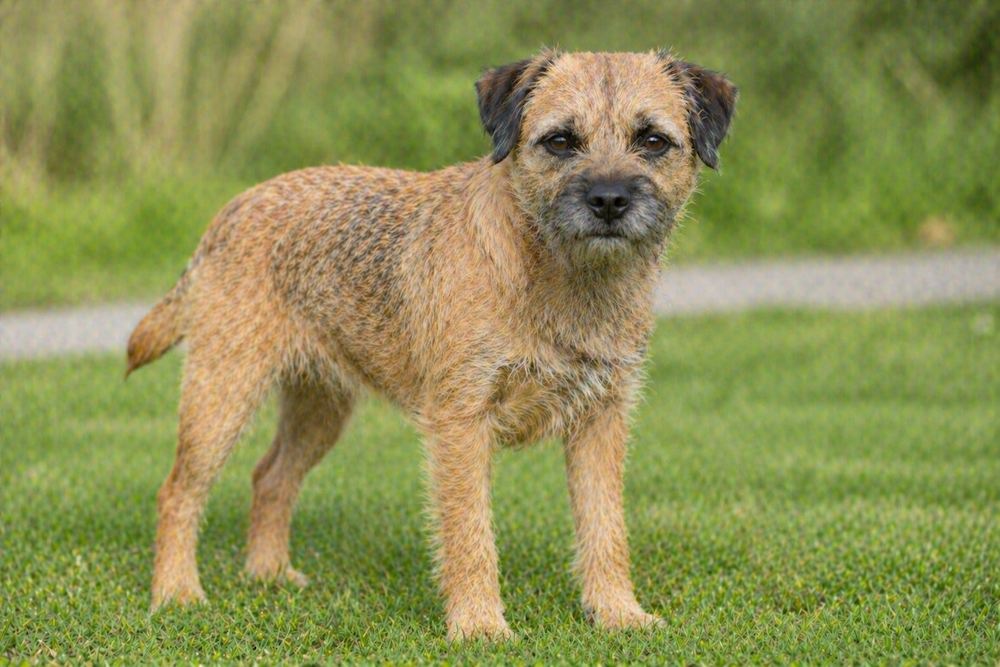







Tough, affectionate, and full of spirit — a small working dog with a big heart.
🧠 QUICK SNAPSHOT
- Temperament: Friendly, hardy, affectionate
- Energy Level: Moderate to high
- Size: Small
- Good With Families: Yes
- Trainability: Moderate
- Grooming: Low to moderate
- Best For: Active families, terrier lovers
📚 OVERVIEW
The Border Terrier is a rugged, working terrier originally bred to hunt foxes along the English-Scottish border. Despite their tough background, they are known for their affectionate and friendly nature.
They are adaptable, resilient dogs that enjoy both outdoor activity and relaxing with their family.
✅ PROS & CONS
Pros
- Friendly and affectionate
- Hardy and adaptable
- Low grooming needs
- Good with families
Cons
- Strong prey drive
- Can be stubborn
- Needs regular activity
- May chase small animals
Is a Border Terrier a Good Family Dog?
Yes, the Border Terrier is generally an excellent family dog, combining the toughness of a working terrier with a particularly affectionate and sociable personality.
Border Terriers tend to form strong bonds with their families and can be very good with respectful children. They’re energetic enough for outdoor adventures but usually capable of settling at home after sufficient exercise.
They often get along better with other dogs than some terrier breeds because they historically needed to work alongside hounds and other dogs.
They’re small dogs, but definitely not decorative ones. Underneath that scruffy face is a genuine working terrier with plenty of personality.
How Much Exercise Does a Border Terrier Need?
Most adult Border Terriers need around 60 minutes of exercise each day, with active individuals happily doing considerably more.
Walking, hiking, scent games, retrieving and safe opportunities to explore are excellent activities.
Despite their small size, Border Terriers were developed to follow horses and hounds across demanding countryside, so they can have impressive stamina.
Mental stimulation is also important.
A quick walk around the block may not satisfy a young Border Terrier that still has an entire day’s worth of terrier ideas waiting to be explored.
Is a Border Terrier Easy to Train?
Border Terriers are intelligent and generally trainable, although they retain the independence expected of a working terrier.
Positive reinforcement and food rewards usually work well.
Recall deserves particular attention because the sight or scent of potential prey can suddenly become far more interesting than the owner.
Early training should also focus on loose-lead walking, calm behaviour and reliable responses around other animals.
They’re often more cooperative than some terriers, but nobody has informed the Border Terrier that obedience should always outrank an extremely interesting hole in the ground.
Does a Border Terrier Shed?
Yes, Border Terriers shed, although usually not excessively when their coat is properly maintained.
They have a dense undercoat covered by a harsh, wiry outer coat designed to provide protection from weather and rough vegetation.
Regular brushing helps remove loose hair.
Traditional coat maintenance involves hand stripping, which removes dead outer hairs while preserving the characteristic wiry texture.
Clipping is sometimes used for pet dogs, but repeated clipping can soften the coat and change its colour and texture.
Is a Border Terrier Hypoallergenic?
No, Border Terriers aren’t considered truly hypoallergenic.
They may shed less noticeably than some heavily coated breeds, particularly when regularly hand stripped, but they still produce allergens.
Dog allergies are generally caused by proteins found in saliva, dander and other secretions rather than hair alone.
People with significant allergies should spend time around adult Border Terriers before deciding whether the breed is suitable.
What Health Problems Are Common in Border Terriers?
Border Terriers are generally robust dogs, but several health conditions occur within the breed.
Canine Epileptoid Cramping Syndrome (CECS), sometimes called Spike’s Disease, is particularly associated with Border Terriers. Episodes can involve abnormal movement, muscle cramping or difficulty walking while the dog remains conscious.
Epilepsy, patellar luxation, hip problems and certain eye disorders can also occur.
Responsible breeders should understand health problems within their lines and undertake appropriate screening.
Persistent unusual movement episodes should always be investigated by a veterinarian rather than assumed to be typical terrier behaviour.
How Long Do Border Terriers Live?
Border Terriers typically live around 12–15 years, with some reaching their later teens.
Their relatively moderate size and generally functional body structure contribute to good longevity.
Maintaining a healthy weight is particularly important.
Regular exercise, dental care, appropriate nutrition and preventive veterinary care can all support a long life.
Many Border Terriers remain active well into old age, although the legs may eventually become less enthusiastic than the terrier brain directing them.
How Big Does a Border Terrier Get?
The Border Terrier is a small but sturdy working dog, typically weighing around 5–7 kg, with males usually somewhat heavier than females.
They’re relatively narrow through the body compared with many stockier terriers.
This wasn’t accidental.
A working Border Terrier needed enough stamina to follow horses but also had to be small and flexible enough to pursue a fox into its underground den.
The traditional breed standard even emphasised that the dog should be capable of being spanned by two hands behind the shoulders.
Can a Border Terrier Live in an Apartment?
Yes, a Border Terrier can live successfully in an apartment if it receives sufficient daily exercise and mental stimulation.
Its compact size makes apartment living physically easy.
The greater challenges are barking, digging instincts and the need for regular outdoor activity.
A well-exercised Border Terrier can settle comfortably indoors.
An under-stimulated one may decide that the apartment itself contains numerous exciting opportunities for renovation.
Do Border Terriers Bark a Lot?
Border Terriers can be alert and vocal, although they aren’t necessarily relentless barkers.
They may bark at visitors, unfamiliar noises, wildlife or exciting activity outside.
Boredom can significantly increase barking.
Early training should teach appropriate alert behaviour and encourage calm responses.
Their historical work required determination and communication, so owners shouldn’t expect an entirely silent little dog.
Are Border Terriers Good With Other Dogs?
Border Terriers are often quite sociable with other dogs, particularly when properly socialised.
Historically, they needed to work alongside packs of foxhounds, so excessive dog aggression would have been highly undesirable.
Individual personalities still vary, and terrier confidence can occasionally create disagreements.
Early socialisation and appropriate introductions remain important.
Their generally dog-friendly nature is one characteristic that distinguishes them from some other traditional working terriers.
Are Border Terriers Good With Cats?
Border Terriers can live successfully with cats, particularly when raised alongside them, but their prey drive shouldn’t be underestimated.
They were deliberately bred to pursue foxes and control vermin.
A familiar household cat may be treated completely differently from an unfamiliar cat running outdoors.
Introductions should be careful and supervised.
Small pets such as rabbits, guinea pigs and rodents require particularly secure separation.
Can a Border Terrier Be Left Alone?
A Border Terrier can learn to spend reasonable periods alone, but it generally prefers being involved with its family.
These are affectionate dogs despite their independent working heritage.
Long periods without exercise, companionship or stimulation can result in barking, chewing or digging.
Puppies should gradually learn independence and how to settle when nobody is entertaining them.
Providing appropriate chews and enrichment can help turn alone time into something manageable rather than an opportunity for terrier-led home improvement.
Do Border Terriers Dig a Lot?
Yes, many Border Terriers have a powerful instinct to dig.
This behaviour makes perfect sense when you consider their original work.
They were expected to pursue foxes underground and investigate burrows, so determination around holes was valuable rather than undesirable.
Modern Border Terriers may happily apply those instincts to lawns, garden beds and fences.
Providing a designated digging area can give the dog an acceptable outlet.
Trying to convince a working terrier that digging has no purpose can be a fairly ambitious gardening strategy.
Can a Border Terrier Be Trusted Off Lead?
Some Border Terriers develop excellent recall, but their strong prey drive means off-lead freedom requires careful judgement.
A rabbit, fox or other small animal can trigger an immediate chase.
Once focused on prey, even a normally responsive dog may ignore recall commands.
Secure fenced areas are therefore the safest places for unrestricted running.
Long training leads can also provide greater freedom while recall is being developed.
Training improves control, but it doesn’t erase generations of hunting instinct.
Why Does a Border Terrier Have an Otter-Shaped Head?
The Border Terrier breed standard famously describes the head as being “like that of an otter.”
This refers to the relatively broad, flat skull, short strong muzzle and characteristic facial shape.
Combined with the small V-shaped ears and expressive dark eyes, it gives the Border Terrier its distinctive appearance.
The description doesn’t mean the breed has any actual connection with otters.
It’s simply one of the more memorable anatomical descriptions found in dog breed standards.
Why Is the Border Terrier’s Skin So Loose?
Border Terriers traditionally have relatively loose, thick skin, which was useful for a dog expected to work in rough terrain and confront quarry underground.
The loose skin may provide some protection and allow the dog greater freedom of movement if grabbed or caught.
Combined with its harsh weather-resistant coat, the Border Terrier was physically designed for demanding outdoor work rather than the show ring alone.
Its scruffy appearance is therefore remarkably functional.
What Does It Mean to “Span” a Border Terrier?
To span a Border Terrier means placing both hands around the dog’s chest immediately behind the front legs to assess its width.
Traditionally, a working Border Terrier needed to have a sufficiently narrow, flexible body to follow a fox underground.
The ability to span the dog therefore became an important characteristic of the breed.
This helps explain why Border Terriers shouldn’t be excessively broad or heavy.
For a dog that looks fairly ordinary at first glance, its body shape contains a very specific piece of working engineering.
What Were Border Terriers Originally Bred to Do?
Border Terriers were developed primarily to work with foxhounds and pursue foxes that went underground.
They needed an unusual combination of abilities.
The dogs had to possess enough stamina and leg length to travel with horses and hounds across difficult countryside, yet remain narrow enough to enter underground dens.
They were also used for controlling vermin around farms.
This explains their endurance, prey drive, digging instinct and surprisingly tough personality.
The Border Terrier may now spend much of its life on sofas, but its original job description involved considerably more mud.
What Is the Difference Between a Border Terrier and a Jack Russell Terrier?
Border Terriers and Jack Russell-type terriers are both small British working terriers, but they’re distinct dogs with different histories and appearances.
The Border Terrier typically has its characteristic otter-like head, longer legs, narrow body and grizzle, wheaten, red or blue-and-tan colouring.
Jack Russell-type terriers are usually predominantly white with coloured markings and can vary considerably in coat and proportions.
Both can have enormous prey drive, intelligence and determination.
The Border Terrier historically became particularly associated with working alongside foxhound packs in the border country.
Why Is It Called a Border Terrier?
The Border Terrier takes its name from the border country between England and Scotland, where the breed developed.
It became particularly associated with the rugged countryside of Northumberland and the Scottish Borders.
Farmers and hunts in this region needed hardy terriers capable of travelling considerable distances across difficult terrain before going underground after foxes.
The breed was historically connected with hunts including the Border Hunt.
So unlike many breed names with complicated origins, this one is remarkably literal:
it really is the terrier from the Border country.
Where Does the Border Terrier Come From?
The Border Terrier developed in the rugged border region between northern England and Scotland, particularly around Northumberland and the Scottish Borders.
Its ancestors were practical working terriers kept by farmers and hunts rather than dogs bred primarily for appearance.
They needed stamina to accompany horses and foxhounds, weather-resistant coats for harsh conditions and narrow bodies that allowed them to follow quarry underground.
The breed became increasingly standardised during the late 19th and early 20th centuries and was officially recognised by Britain’s Kennel Club in 1920.
Despite more than a century of formal recognition, the modern Border Terrier still strongly reflects its original purpose: a small, tough working dog designed for a very big day in the countryside.