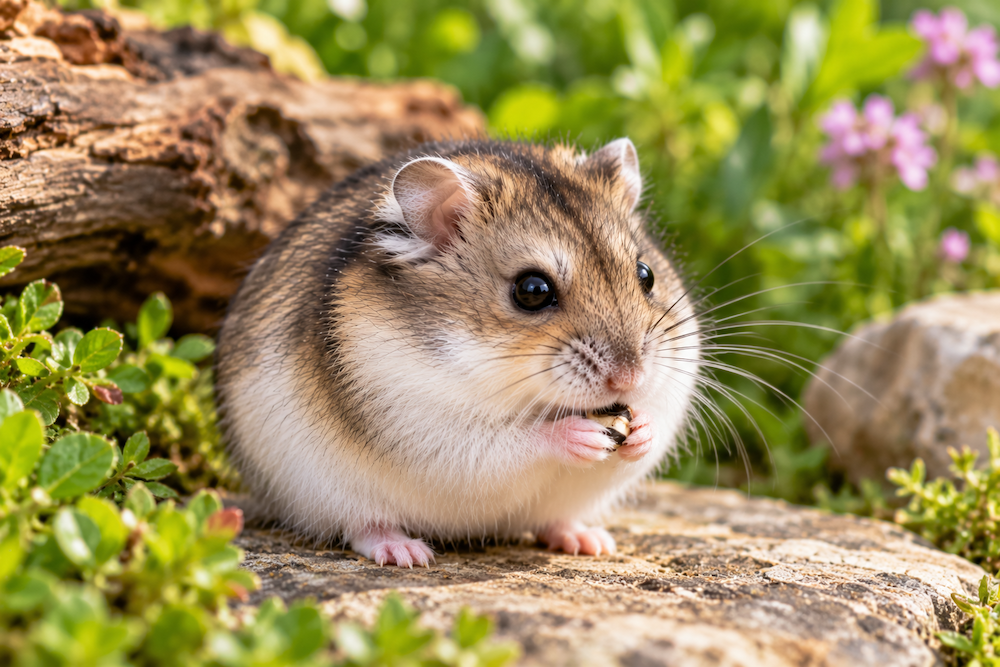







Tiny, energetic and bursting with curiosity, Campbell's Dwarf Hamster is a fascinating little companion famous for its adorable appearance, remarkable cheek pouches and surprisingly bold personality.
🧠 QUICK SNAPSHOT
Trait | Campbell’s Dwarf Hamster |
|---|---|
Scientific Name | Phodopus campbelli |
Other Names | Campbell’s Russian Dwarf Hamster, Campbell’s Hamster |
Pet Type | Small Mammal / Rodent |
Natural Origin | Mongolia, northern China and neighbouring regions |
Typical Lifespan | Around 1.5–2.5 years |
Adult Size | Approximately 8–10 cm |
Adult Weight | Approximately 25–50 g |
Coat Type | Short, dense and soft |
Coat Colours | Agouti, grey, black, blue, mottled and various captive-bred colours |
Diet | Omnivore |
Activity | Primarily nocturnal and crepuscular |
Temperament | Curious, energetic, alert and sometimes defensive |
Noise Level | Very quiet |
Social Needs | Best housed individually in captivity |
Grooming | Self-grooming; benefits from sand bathing |
Housing | Spacious, secure enclosure with deep bedding |
Exercise Needs | High for their small size |
Breeding | Reproduces readily under suitable conditions |
Beginner Friendly? | Yes, with appropriate preparation |
Famous Feature | Expandable cheek pouches and remarkable adaptations to dry grassland environments |
📚 OVERVIEW
The Campbell’s Dwarf Hamster is a small, energetic rodent native to the grasslands and semi-arid regions of Mongolia, northern China and surrounding areas. Its scientific name, Phodopus campbelli, distinguishes it from the closely related Winter White Dwarf Hamster.
These delightful little animals have rounded bodies, short tails, furry feet and a distinctive dark stripe running along their backs. Selective breeding has produced numerous coat colours and patterns, making them particularly popular among dwarf hamster enthusiasts.
Campbell’s Dwarf Hamsters are naturally curious and spend considerable time digging, exploring, gathering food and investigating their surroundings. Although some become comfortable with gentle handling, others can be nervous or defensive, particularly when startled.
Their care requires spacious housing, deep bedding, a suitable exercise wheel, balanced nutrition, safe hiding places and patient handling. Despite their tiny size, they have complex behavioural needs and benefit enormously from an enriched environment.
✅ PROS & CONS
👍 Pros
Adorable, compact appearance
Curious and entertaining personalities
Generally quiet household pets
Available in many beautiful coat colours
Can become comfortable with gentle handling
Enjoy digging, exploring and foraging
Require no outdoor exercise
Fascinating natural behaviours to observe
👎 Cons
Relatively short lifespan
Can bite when frightened or startled
Active mainly during evening and night
Require more enclosure space than expected
Susceptible to diabetes and metabolic problems
Fragile and easily injured
Need regular habitat maintenance
Not suitable for unsupervised young children
Are Campbell’s Dwarf Hamsters Good Pets?
Yes. Campbell’s Dwarf Hamsters can make wonderful pets for people who enjoy observing small, active animals.
They’re curious, entertaining and capable of becoming accustomed to gentle human interaction.
However, they require appropriate housing, patient handling and careful attention to their nutritional needs.
Are Campbell’s Dwarf Hamsters Good for Beginners?
Yes, with proper preparation.
Their small size and relatively straightforward daily care make them appealing to beginners.
However, their delicate bodies, sometimes defensive temperament and specific dietary considerations require responsible ownership.
How Long Do Campbell’s Dwarf Hamsters Live?
Campbell’s Dwarf Hamsters typically live around 1.5–2.5 years.
Some individuals may reach three years with excellent care and favourable genetics.
Their lifespan depends on nutrition, environmental conditions, genetics and overall health.
How Big Do Campbell’s Dwarf Hamsters Get?
Adults generally measure approximately 8–10 cm in length.
They typically weigh around 25–50 grams.
Their compact bodies and short tails give them a distinctive rounded appearance.
What Colours Do Campbell’s Dwarf Hamsters Come In?
Wild Campbell’s Dwarf Hamsters typically have grey-brown coats with darker dorsal stripes.
Captive breeding has produced numerous colour variations, including black, blue, mottled and other patterns.
However, some unusual colour varieties may occur in hybrid breeding lines.
What Is the Difference Between Campbell’s and Winter White Dwarf Hamsters?
Campbell’s and Winter White Dwarf Hamsters are closely related but distinct species.
Winter Whites are particularly famous for their ability to develop pale winter coats, while Campbell’s Hamsters generally retain their normal colouring throughout the year.
However, captive-bred hybrids are common, making reliable identification difficult without documented ancestry.
Are Campbell’s Dwarf Hamsters Friendly?
Many can become friendly and comfortable around familiar caregivers.
However, temperament varies considerably between individuals.
Some are naturally confident, while others are more cautious or defensive.
Gentle, consistent interactions help build trust.
Do Campbell’s Dwarf Hamsters Like Being Held?
Some tolerate gentle handling once they become accustomed to people.
Others prefer exploring independently rather than being held.
Always handle them close to a safe surface because falls can cause serious injuries.
Do Campbell’s Dwarf Hamsters Bite?
Yes, they can bite when frightened, startled or handled incorrectly.
Some individuals may also defend their nesting areas or food stores.
Allowing the hamster to approach voluntarily and avoiding sudden movements can reduce biting.
Do Campbell’s Dwarf Hamsters Recognise Their Owners?
Hamsters can learn to recognise familiar scents, sounds and routines.
They may approach when they associate a caregiver with food or positive experiences.
However, their relationships with people differ from those of highly social animals such as dogs or rats.
Are Campbell’s Dwarf Hamsters Nocturnal?
They’re primarily active during the evening, night and early morning.
However, they may also wake for short periods throughout the day.
Their activity patterns can vary depending on environmental conditions and individual behaviour.
Do Campbell’s Dwarf Hamsters Need Companions?
No.
Although wild Campbell’s Dwarf Hamsters can display social tolerance, captive individuals may become territorial and aggressive.
Individual housing is generally the safest recommendation for pet owners.
Human interaction and environmental enrichment help provide stimulation without the risks of fighting.
Can Two Campbell’s Dwarf Hamsters Live Together?
Keeping two together carries a significant risk of fighting and injury.
Even hamsters that previously appeared compatible can become aggressive as they mature.
Separate, fully equipped enclosures are the safest option for most owners.
What Size Cage Does a Campbell’s Dwarf Hamster Need?
A spacious enclosure with at least 100 × 50 cm of continuous floor space is a good target, with larger accommodation preferred.
The enclosure should accommodate deep bedding, an exercise wheel, hiding places and enrichment.
Secure ventilation and narrow bar spacing are essential.
How Deep Should Campbell’s Dwarf Hamster Bedding Be?
Campbell’s Dwarf Hamsters are natural burrowers.
Providing approximately 20–25 cm or more of suitable bedding allows them to dig and construct tunnels.
Low-dust paper-based bedding and other safe burrowing substrates are commonly recommended.
Do Campbell’s Dwarf Hamsters Need an Exercise Wheel?
Yes.
A suitable exercise wheel allows hamsters to run and exercise naturally.
A solid-surfaced wheel approximately 20–25 cm in diameter is commonly appropriate, provided the hamster can run without arching its back.
Avoid wire or mesh running surfaces.
What Do Campbell’s Dwarf Hamsters Eat?
Campbell’s Dwarf Hamsters are omnivores.
Their diet should include a balanced, species-appropriate dwarf hamster food mixture containing suitable seeds, grains and protein sources.
Small amounts of appropriate vegetables and occasional insects can provide variety.
Fresh drinking water must always be available.
Can Campbell’s Dwarf Hamsters Eat Fruit?
Fruit is generally best avoided or offered only in extremely small amounts.
Campbell’s Dwarf Hamsters can be susceptible to diabetes, making sugary foods a particular concern.
Suitable non-starchy vegetables are usually preferable treats.
Are Campbell’s Dwarf Hamsters Prone to Diabetes?
Yes.
Campbell’s Dwarf Hamsters are recognised as being susceptible to diabetes and related metabolic problems.
Excessive sugar intake, obesity and genetic predisposition may contribute to health concerns.
A balanced diet, appropriate exercise and veterinary monitoring are important.
Do Campbell’s Dwarf Hamsters Need Sand Baths?
Yes.
A suitable sand bath provides useful grooming opportunities and environmental enrichment.
Use clean, hamster-safe sand rather than fine, dusty bathing powder.
Many dwarf hamsters enjoy rolling, digging and grooming in sand.
How Often Should You Clean a Campbell’s Dwarf Hamster Cage?
Remove soiled bedding and uneaten fresh food regularly.
Larger cleaning sessions should be based on enclosure conditions rather than a rigid weekly schedule.
Preserving some clean, familiar bedding can help reduce stress and maintain the hamster’s scent environment.
Can Campbell’s Dwarf Hamsters Escape?
Yes.
Their small bodies allow them to squeeze through surprisingly narrow gaps.
Secure lids, appropriate bar spacing and careful enclosure inspections are essential.
Exercise outside the enclosure should occur only in a safe, supervised area.
How Can You Tell if a Campbell’s Dwarf Hamster Is Male or Female?
Sex can be determined by examining the distance between the genital and anal openings.
Males generally have a greater distance between these openings.
An experienced veterinarian or knowledgeable breeder can help identify sex safely.
What Health Problems Are Common in Campbell’s Dwarf Hamsters?
Potential concerns include diabetes, dental overgrowth, respiratory infections, skin problems, obesity and tumours.
Changes in appetite, thirst, urination, breathing or activity may indicate illness.
Prompt assessment by a veterinarian experienced with small mammals is important.
Are Campbell’s Dwarf Hamsters Legal to Keep as Pets?
Ownership laws vary considerably between countries.
Campbell’s Dwarf Hamsters are legal pets in many places, but some countries restrict hamster ownership because of biosecurity concerns.
In Australia, hamsters are generally prohibited as pets, including Campbell’s Dwarf Hamsters, so local regulations must always be checked.
What Makes Campbell’s Dwarf Hamster Unique?
Imagine a tiny hamster capable of surviving in the challenging grasslands of Mongolia, carrying enormous amounts of food in its cheeks and navigating underground tunnels with remarkable efficiency.
That’s the extraordinary Campbell’s Dwarf Hamster.
These fascinating little rodents are beautifully adapted to environments where temperatures can vary dramatically and food availability changes with the seasons.
Their compact bodies, furry feet and short tails help them cope with life in demanding habitats.
But perhaps their most entertaining feature is their expandable cheek pouches.
Like other hamsters, Campbell’s Dwarf Hamsters can stuff food into specialised pouches extending backwards from their cheeks, allowing them to transport supplies to hidden storage areas.
Watching one fill its cheeks can be surprisingly amusing, as its face appears to grow dramatically wider.
Their underground lifestyle is equally fascinating.
Wild Campbell’s Dwarf Hamsters use burrows for shelter, nesting and food storage, protecting themselves from predators and harsh environmental conditions.
Unlike their close relatives, the Winter White Dwarf Hamsters, Campbell’s Hamsters generally don’t undergo a dramatic seasonal transformation to white fur.
Another remarkable characteristic is their reproductive biology.
Research has documented unusual levels of paternal involvement in this species, with male Campbell’s Dwarf Hamsters sometimes helping care for offspring under certain conditions.
This makes them particularly interesting to scientists studying mammalian social behaviour.
And despite their tiny size, these hamsters can be remarkably energetic, spending considerable time exploring, digging, foraging and running.
Campbell’s Dwarf Hamster may be small enough to fit comfortably in your hands, but its extraordinary survival adaptations, fascinating family behaviours and endlessly curious personality make it one of nature’s most remarkable little rodents.