






Famous for its adorable upturned nose and dramatic acting skills, the Hognose Snake is one of the most entertaining pet reptiles.
🧠 QUICK SNAPSHOT
Trait | Hognose Snake |
|---|---|
Scientific Name | Heterodon nasicus (Western Hognose Snake) |
Other Names | Western Hognose, Plains Hognose |
Pet Type | Snake / Reptile |
Natural Origin | Central North America |
Typical Lifespan | Around 15–20 years |
Adult Size | Approximately 35–90 cm |
Adult Weight | Around 60–400 g, depending on sex and size |
Colours | Brown, tan, grey, orange and numerous captive-bred morphs |
Diet | Carnivore |
Activity | Primarily diurnal |
Temperament | Curious, defensive when frightened, generally solitary |
Noise Level | Very quiet |
Social Needs | Solitary |
Handling | Moderate; gentle, infrequent handling |
Housing | Secure terrestrial vivarium with deep substrate |
Temperature | Basking area approximately 30–33°C |
Grooming | None required |
Beginner Friendly? | Yes, with appropriate preparation |
Famous Feature | Upturned snout and extraordinary defensive displays |
📚 OVERVIEW
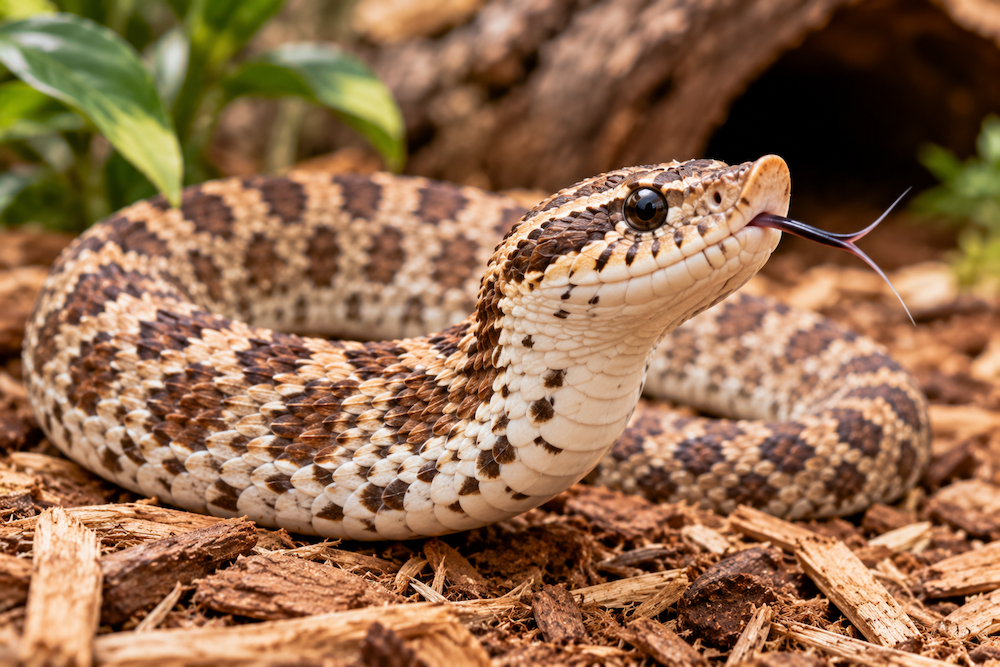
The Hognose Snake is a distinctive group of snakes best known for their upturned snouts and remarkable defensive behaviours. The Western Hognose Snake (Heterodon nasicus) is the species most commonly kept in captivity.
Native to the grasslands and sandy habitats of central North America, Western Hognose Snakes use their specialised noses to dig through loose soil while searching for prey or shelter.
They’re relatively small, primarily ground-dwelling snakes that spend considerable time exploring, burrowing and resting beneath the substrate.
Hognose Snakes are rear-fanged and produce venomous saliva used in subduing prey. Although serious reactions are uncommon, bites can cause significant local swelling and other symptoms.
Their care requires secure housing, appropriate heating, deep substrate, suitable humidity and a carefully managed feeding routine.
✅ PROS & CONS
👍 Pros
Distinctive upturned nose
Fascinating defensive behaviours
Relatively compact adult size
Generally manageable enclosure requirements
Active during daylight hours
Enjoy natural burrowing behaviours
Numerous beautiful colour morphs
Long potential lifespan
👎 Cons
Rear-fanged venom can cause reactions
Some individuals are defensive
May refuse food periodically
Require specialised reptile husbandry
Need deep, suitable substrate
Can escape insecure enclosures
Generally unsuitable for frequent handling
Ownership restrictions vary by location
Are Hognose Snakes Good Pets?
Yes. Western Hognose Snakes can make fascinating pets for responsible reptile enthusiasts.
They’re relatively small, interesting to observe and display unusual natural behaviours.
However, their rear-fanged venom, specialised feeding requirements and defensive responses mean they’re not suitable for everyone.
Are Hognose Snakes Good for Beginners?
Western Hognose Snakes are often recommended for prepared beginner snake keepers.
Their compact size and generally manageable husbandry requirements make them appealing.
However, prospective owners must understand their venomous saliva, feeding challenges and species-specific environmental needs.
How Long Do Hognose Snakes Live?
Western Hognose Snakes commonly live around 15–20 years in captivity.
Some individuals may live longer with excellent care.
Their lifespan makes them a significant long-term responsibility.
How Big Do Hognose Snakes Get?
Western Hognose Snakes generally reach approximately 35–90 cm in length.
Females are usually considerably larger and heavier than males.
Their relatively compact size makes them easier to accommodate than many larger pet snakes.
Are Hognose Snakes Venomous?
Yes.
Western Hognose Snakes possess enlarged rear teeth and venom-producing oral glands.
Their venom is primarily used to help subdue prey, particularly amphibians in the wild.
Although they’re generally considered less medically dangerous than many front-fanged venomous snakes, bites can cause painful swelling and other reactions.
Are Hognose Snakes Dangerous to Humans?
Serious reactions are uncommon, but Hognose Snake bites shouldn’t be dismissed as harmless.
Prolonged bites can result in swelling, pain and occasionally more significant symptoms.
Anyone bitten should seek appropriate medical advice, particularly if symptoms develop or worsen.
Do Hognose Snakes Bite?
Yes, although many prefer defensive displays or retreating.
Bites may occur when a snake mistakes fingers for food or feels threatened.
Feeding tools, gentle handling and recognising defensive behaviour help reduce the risk.
Why Do Hognose Snakes Play Dead?
Hognose Snakes are famous for an extraordinary defensive behaviour called thanatosis, or death-feigning.
When threatened, some individuals roll onto their backs, open their mouths and remain motionless.
They may also release unpleasant-smelling secretions to make themselves less appealing to predators.
Why Do Hognose Snakes Flatten Their Heads?
Head and neck flattening is a defensive display.
A frightened Hognose Snake may spread its neck, hiss and attempt to appear larger or more intimidating.
This behaviour sometimes earns them the nickname Puff Adder, although they’re not true adders.
Why Do Hognose Snakes Have Upturned Noses?
Their distinctive snouts are specialised for digging.
The reinforced, upturned nose helps them push through loose soil and sandy substrate.
This adaptation supports natural behaviours such as burrowing, sheltering and searching for prey.
Are Hognose Snakes Friendly?
Hognose Snakes don’t form affectionate relationships in the same way as mammals.
However, many captive-bred Western Hognose Snakes become accustomed to predictable care routines and gentle handling.
Individual temperament varies considerably.
Do Hognose Snakes Like Being Held?
Hognose Snakes don’t require handling for social or emotional wellbeing.
Some tolerate brief, gentle handling, while others become stressed or defensive.
Handling should be avoided during shedding, immediately after feeding or when the snake displays signs of distress.
Do Hognose Snakes Recognise Their Owners?
There is limited evidence that Hognose Snakes recognise individual people in a human-like social sense.
However, they can become accustomed to familiar scents, environmental cues and regular husbandry routines.
Their responses are primarily shaped by instinct and learned associations.
What Do Hognose Snakes Eat?
Wild Western Hognose Snakes feed heavily on amphibians, particularly toads, although they may consume other small animals.
Captive-bred individuals are commonly maintained on appropriately sized, thawed frozen rodents.
Some individuals can be reluctant feeders, particularly when young.
How Often Should You Feed a Hognose Snake?
Feeding frequency depends on age, body condition and prey size.
Young snakes may eat approximately every five to seven days, while healthy adults often eat every seven to fourteen days.
Feeding schedules should be adjusted according to growth, condition and veterinary advice.
Why Is My Hognose Snake Not Eating?
Food refusal can occur because of seasonal changes, unsuitable temperatures, stress, shedding or prey preferences.
Some Western Hognose Snakes are naturally fussy feeders.
Persistent refusal, particularly with weight loss or other symptoms, requires assessment by a reptile-experienced veterinarian.
What Size Enclosure Does a Hognose Snake Need?
Western Hognose Snakes need secure terrestrial enclosures with adequate floor space.
An enclosure approximately 90 × 45 × 45 cm can be a useful starting point for many adults, while larger females benefit from more space.
Deep substrate, hiding places and an appropriate temperature gradient are essential.
Do Hognose Snakes Need Deep Substrate?
Yes.
Burrowing is a natural and important behaviour for Western Hognose Snakes.
Providing approximately 10–15 cm or more of suitable substrate, where practical, allows them to dig and create sheltered areas.
The substrate should be safe, appropriately dry and free from hazardous materials.
What Temperature Do Hognose Snakes Need?
Western Hognose Snakes need a thermal gradient.
A basking area of approximately 30–33°C is commonly provided, with cooler areas around 22–26°C.
Thermostatically controlled heating and accurate temperature monitoring are essential.
Do Hognose Snakes Need UVB Lighting?
Western Hognose Snakes can survive without UVB when other husbandry requirements are correctly met.
However, appropriate low-level UVB exposure is increasingly recommended to support natural reptile physiology and behaviour.
Lighting should be selected and positioned according to reputable species-specific guidance.
Do Hognose Snakes Need High Humidity?
Western Hognose Snakes generally prefer relatively dry environments.
Ambient humidity around 30–50% is commonly suitable, although requirements vary with local conditions.
A humid hide can help during shedding without making the entire enclosure excessively damp.
Can Two Hognose Snakes Live Together?
Generally, no.
Western Hognose Snakes are primarily solitary animals.
Keeping them together can create stress, competition and potential feeding-related injuries.
Separate enclosures are usually safest.
Do Hognose Snakes Shed Their Skin?
Yes.
Like other snakes, Hognose Snakes periodically shed their outer skin as they grow.
Before shedding, their eyes may appear cloudy and their colours become dull.
Appropriate hydration, humidity and suitable enclosure surfaces help support healthy shedding.
Are Hognose Snakes Active During the Day?
Yes.
Western Hognose Snakes are primarily diurnal, making them particularly interesting for owners who enjoy observing daytime activity.
They often spend time exploring, basking and burrowing.
Activity levels vary with temperature and season.
What Health Problems Are Common in Hognose Snakes?
Potential concerns include respiratory infections, retained shed, parasites, mouth infections and nutritional problems.
Incorrect temperatures, inappropriate humidity and poor enclosure hygiene can contribute to illness.
Regular observation and access to a reptile-experienced veterinarian are important.
What Is the Difference Between Western and Eastern Hognose Snakes?
Western Hognose Snakes (Heterodon nasicus) are generally associated with grasslands and sandy habitats in central North America.
Eastern Hognose Snakes (Heterodon platirhinos) occur across eastern North America and are especially famous for dramatic defensive displays.
Western Hognose Snakes are more commonly available as captive-bred pets.
Are Hognose Snakes Legal to Keep as Pets?
Ownership regulations vary significantly between countries and regions.
Some jurisdictions restrict Hognose Snakes because of their venomous characteristics or non-native wildlife status.
Always verify local legislation and obtain snakes from responsible, legal sources.
What Makes the Hognose Snake Unique?
Imagine a snake that gets frightened, flattens its neck like a cobra, hisses dramatically and then pretends to die.
That’s the extraordinary Hognose Snake.
These unusual reptiles possess one of the most entertaining defensive strategies in the snake world.
When threatened, a Hognose Snake may first attempt to appear intimidating by flattening its head and neck.
If that fails, some species take their performance even further.
They roll onto their backs, open their mouths and remain motionless, creating the convincing appearance of a dead snake.
Some even release foul-smelling secretions to complete the illusion.
But their dramatic acting skills aren’t their only remarkable adaptation.
Their famous upturned noses work like miniature shovels, helping them dig through loose soil and sandy ground.
They’re also specialised predators.
Wild Hognose Snakes are particularly associated with hunting amphibians, and their rear-fanged venom helps them subdue prey.
Then there’s their extraordinary appearance.
Selective breeding has produced Western Hognose Snakes with striking colours and patterns, including albino, anaconda-patterned and other distinctive morphs.
Despite their sometimes intimidating displays, many captive-bred individuals spend much of their time quietly exploring, burrowing and basking.
The Hognose Snake may be small, but with its shovel-shaped nose, theatrical defensive performances and fascinating adaptations, it’s one of nature’s most extraordinary reptile characters.