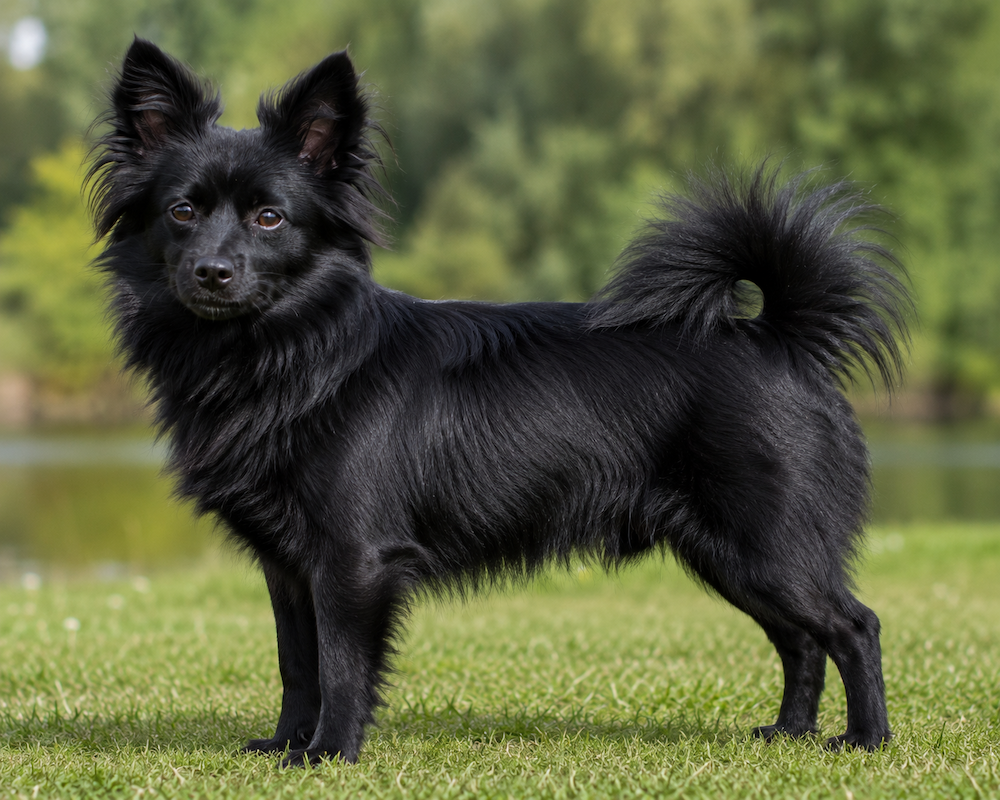







Elegant, affectionate, and delightfully cheerful — the Markiesje is a rare Dutch companion breed known for its silky black coat, graceful appearance, playful personality, and strong attachment to its family.
🧠 QUICK SNAPSHOT
- Temperament: Affectionate, cheerful, intelligent
- Energy Level: Moderate
- Size: Small
- Good With Families: Yes
- Trainability: High
- Grooming: Moderate
- Best For: Families, couples, active retirees, apartment dwellers
📚 OVERVIEW
The Markiesje, sometimes called the Dutch Tulip Hound, is a small companion dog originating in the Netherlands. With its glossy black coat, feathered ears, elegant build, and expressive dark eyes, the breed has the appearance of a small spaniel but is primarily valued as a companion.
Dogs resembling the modern Markiesje can be seen in Dutch artwork dating back centuries, although the organised development of today’s breed is much more recent. During the 20th century, enthusiasts in the Netherlands began establishing a consistent breeding population based on dogs displaying the desired appearance and temperament.
Modern Markiesjes are lively without being excessively demanding. They enjoy walks and play but are equally enthusiastic about curling up beside their owners afterwards. Their manageable size, affectionate personality, and willingness to learn can make them highly adaptable companions.
The breed remains uncommon outside the Netherlands, so finding a responsibly bred puppy may require considerable patience. For owners fortunate enough to encounter one, however, the Markiesje offers an appealing combination of elegance, intelligence, and companionship.
✅ PROS & CONS
Pros
- Extremely affectionate and people-oriented
- Small and adaptable
- Intelligent and responsive to training
- Playful without extreme exercise demands
- Usually friendly and sociable
- Attractive, manageable coat
Cons
- Rare outside the Netherlands
- Doesn’t enjoy being left alone for long periods
- Coat requires regular brushing
- Can be sensitive
- Early socialisation remains important
- Finding an experienced breeder can be difficult
Is a Markiesje a Good Family Dog?
Yes, the Markiesje can be an excellent family dog thanks to its affectionate, friendly, and people-oriented temperament. These small dogs tend to form close relationships with their owners and enjoy being involved in everyday household life rather than spending long periods alone.
Markiesjes generally interact well with respectful children. Their playful nature makes them enjoyable companions, although their relatively fine build means younger children should be taught to handle them gently.
They can also live successfully with other dogs and may adapt well to cats when introduced appropriately. Early socialisation helps puppies become comfortable with visitors, animals, unfamiliar environments, and the normal activity of a busy household.
One of the breed’s greatest strengths is adaptability. A Markiesje can suit a family home, couple, single owner, or active retiree provided it receives enough companionship and activity. Owners wanting a small dog that participates enthusiastically in family life may find the Markiesje particularly appealing.
How Much Exercise Does a Markiesje Need?
A Markiesje generally needs around 45 to 60 minutes of exercise each day, supplemented by play and mental enrichment. Although primarily a companion breed, this is an agile and energetic little dog that enjoys considerably more activity than simply moving around the house.
Daily walks, games of fetch, exploring new environments, trick training, and supervised running in secure areas can all provide appropriate exercise. Many Markiesjes also enjoy activities such as agility because their light, athletic build allows them to move quickly and enthusiastically.
Mental stimulation is equally valuable. Puzzle feeders, scent games, hide-and-seek, and short training sessions give the dog’s intelligent mind something productive to do.
The breed’s manageable exercise requirements also contribute to its adaptability. Owners don’t necessarily need a large property, provided they are committed to daily walks and interaction. Once its exercise and social needs are satisfied, a Markiesje is usually very happy relaxing alongside its family.
Is a Markiesje Easy to Train?
Yes, the Markiesje is generally easy to train because it is intelligent, attentive, and enjoys interacting with its owner. Its companion-dog heritage means cooperation with people tends to come relatively naturally.
Positive reinforcement using small treats, praise, toys, and games usually produces excellent results. Because Markiesjes can be sensitive, calm encouragement is considerably more effective than harsh corrections.
Training should begin during puppyhood with basic skills such as recall, loose-lead walking, settling, polite greetings, and comfortable handling. Early socialisation with different people, friendly dogs, environments, noises, and experiences helps build confidence.
Their intelligence also makes Markiesjes good candidates for trick training, agility, scent games, and other activities that provide both mental and physical stimulation.
The breed can potentially be a good choice for committed first-time dog owners. Consistency remains important, but owners are generally working with an enthusiastic little companion that genuinely enjoys learning and spending time with people.
Does a Markiesje Shed?
Yes, the Markiesje does shed, although grooming requirements are generally manageable. Its medium-length, silky black coat has attractive feathering around areas such as the ears, legs, and tail.
Brushing around two or three times each week helps remove loose hair and prevents tangles from developing in the feathered areas. During periods of heavier seasonal shedding, more frequent brushing may be useful.
The coat doesn’t normally require extensive trimming or elaborate professional grooming. Occasional bathing keeps it clean, while the feathering should be checked after outdoor adventures for grass seeds, burrs, and debris.
Routine nail trimming, dental care, and ear checks should also form part of the grooming schedule.
The Markiesje is not considered hypoallergenic. However, owners looking for a small, attractive companion without the extensive grooming requirements of some long-coated breeds may find its coat relatively straightforward to maintain.
What Health Problems Are Common in a Markiesje?
The Markiesje is generally considered a relatively healthy breed, but its small population makes responsible breeding particularly important. Maintaining genetic diversity while monitoring inherited conditions is essential to the breed’s long-term future.
Reported health concerns within the breed can include patellar luxation, in which the kneecap moves out of its normal position, and certain inherited eye problems. Responsible breeders should follow the health-screening recommendations established by relevant breed organisations and keep detailed records of health within their breeding lines.
Because the Markiesje remains rare internationally, prospective owners should be cautious about breeders producing puppies without documented pedigrees, health information, or knowledge of the breed’s relatively small gene pool.
Maintaining a healthy weight, providing regular exercise, good dental care, balanced nutrition, and routine veterinary examinations all contribute to long-term wellbeing.
With responsible breeding and appropriate care, a Markiesje can typically enjoy a lifespan of around 12 to 14 years, with some individuals living longer.
⭐ Why Is the Markiesje So Rare?
The Markiesje is unusual because its modern breed history is relatively recent despite dogs resembling it appearing in Dutch paintings and artwork from centuries ago.
Interest in establishing the Markiesje as a distinct breed increased in the Netherlands during the 20th century. Enthusiasts searched for dogs displaying the elegant black appearance and companion temperament associated with the traditional type and began a structured breeding program.
Because this foundation population was relatively small, breeders have had to pay particular attention to genetic diversity and health while developing consistent breed characteristics.
Even today, the Markiesje remains much better known in the Netherlands than elsewhere. Prospective owners in other countries may discover that finding a puppy involves joining waiting lists or working with specialist breeders.
Its rarity is therefore part of its appeal, but it also creates responsibility. Preserving the Markiesje requires careful breeding focused on health, temperament, and genetic diversity, not simply producing more puppies to satisfy growing international demand.