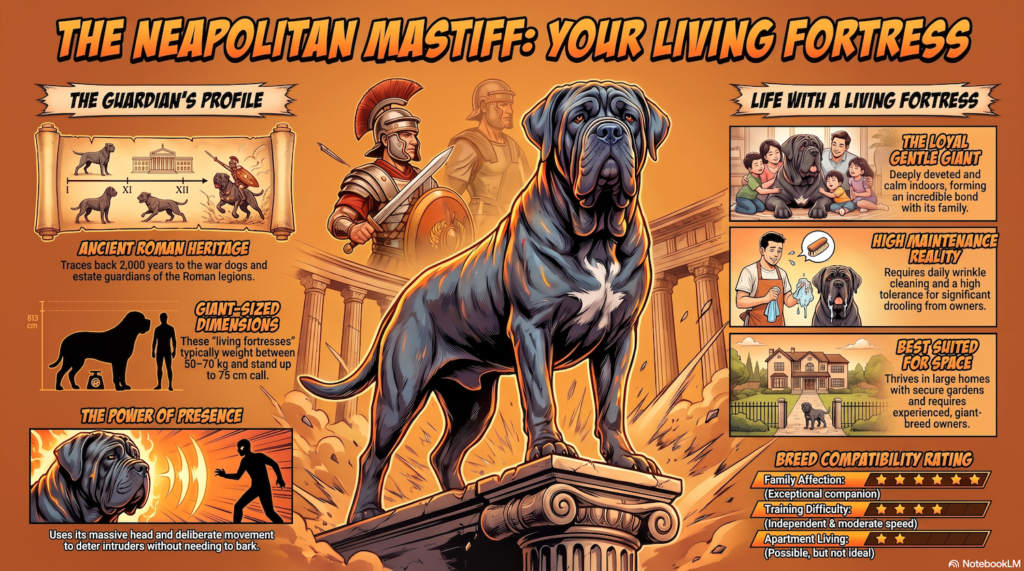
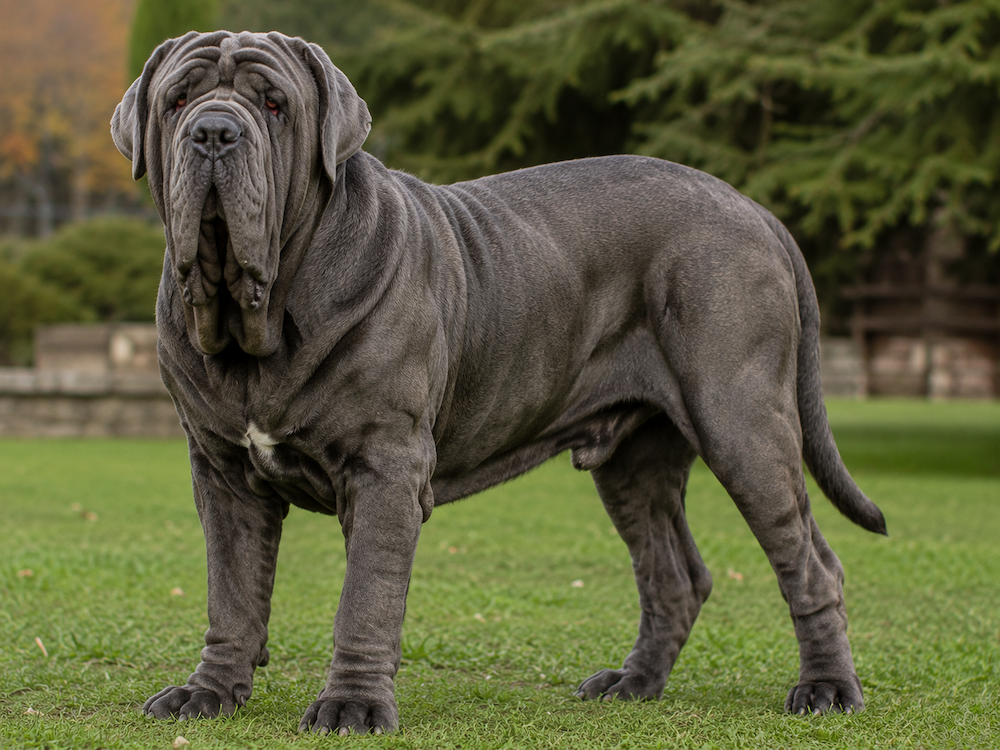







Powerful, protective, and deeply devoted — the Neapolitan Mastiff is a legendary Italian guardian breed renowned for its immense size, unmistakable wrinkled appearance, and unwavering loyalty.
🧠 QUICK SNAPSHOT
- Temperament: Loyal, protective, calm
- Energy Level: Moderate
- Size: Giant
- Good With Families: Yes
- Trainability: Moderate
- Grooming: Low
- Best For: Experienced owners, families, homes with space
📚 OVERVIEW
The Neapolitan Mastiff, or Mastino Napoletano, is one of the world’s oldest and most impressive guardian breeds. Descended from the massive war dogs of ancient Rome, these giants were later developed in southern Italy to protect homes, farms, and livestock. Their loose skin, heavy wrinkles, broad head, and enormous frame were all designed to help protect them during confrontations with intruders and large predators.
Despite its intimidating appearance, the Neapolitan Mastiff is typically calm, affectionate, and deeply devoted to its family. It is naturally protective without being unnecessarily aggressive and prefers quietly observing its surroundings rather than reacting impulsively. This breed forms exceptionally strong bonds with its owners and thrives when included as part of family life. Because of its size, strength, and guardian instincts, the Neapolitan Mastiff is best suited to experienced owners who can provide early socialisation, consistent training, and responsible leadership.
✅ PROS & CONS
Pros
- Exceptionally loyal and protective
- Calm and gentle with family
- Excellent natural guardian
- Low exercise requirements
- Quiet around the home
Cons
- Massive size requires experienced handling
- Heavy drooling is common
- Short lifespan compared to smaller breeds
- Can be stubborn during training
- Expensive to feed and care for
Is a Neapolitan Mastiff a Good Family Dog?
Yes, the Neapolitan Mastiff can be a wonderful family dog when raised, trained, and socialised correctly. This breed is renowned for its loyalty and forms incredibly strong bonds with its family, often becoming a gentle giant around the people it loves. Despite its imposing appearance, it is usually calm, patient, and surprisingly affectionate with respectful children.
Because of its enormous size, supervision is recommended around young children to prevent accidental knocks or bumps. The breed generally gets along with other dogs and household pets when introduced from an early age, although proper socialisation remains essential.
The Neapolitan Mastiff is naturally suspicious of strangers but is not typically aggressive without reason. Its sheer presence alone is often enough to deter unwanted visitors. Families seeking a calm, devoted guardian who enjoys spending time close to its people will find the Neapolitan Mastiff to be a deeply rewarding companion.
How Much Exercise Does a Neapolitan Mastiff Need?
The Neapolitan Mastiff requires around 45 to 60 minutes of exercise each day. Although it is a giant breed, it is not especially energetic and generally prefers steady walks over vigorous activity.
Daily walks, gentle play, and opportunities to explore provide sufficient physical exercise. Puppies should avoid excessive running or jumping while their joints are developing, as giant breeds mature slowly and can be prone to orthopaedic problems. Swimming can also be beneficial for some adults because it provides low-impact exercise that is easier on the joints.
Mental stimulation remains important despite the breed’s relaxed nature. Basic obedience, puzzle feeders, scent games, and regular interaction with the family help keep the Neapolitan Mastiff mentally engaged. Maintaining a healthy body weight through appropriate exercise is essential for reducing stress on joints and supporting long-term health.
Is a Neapolitan Mastiff Easy to Train?
The Neapolitan Mastiff is intelligent but independent, making training moderately challenging. It learns quickly but is not a breed that responds well to repetitive drills or harsh corrections. Building trust and respect is far more effective than attempting to dominate this sensitive giant.
Positive reinforcement using praise, food rewards, and calm, consistent leadership produces the best results. Training should begin early while the dog is still small enough to manage comfortably. Teaching good manners during puppyhood is particularly important because an adult Neapolitan Mastiff can weigh over 70 kilograms.
Early socialisation is essential to expose puppies to different people, dogs, environments, and everyday situations. This helps ensure protective instincts develop appropriately and results in a calm, confident adult that can distinguish between genuine threats and normal social interactions.
Does a Neapolitan Mastiff Shed?
Yes, the Neapolitan Mastiff sheds moderately throughout the year. Its short, dense coat is relatively easy to maintain and requires only weekly brushing to remove loose hair and keep the skin healthy.
One aspect of grooming unique to the breed is caring for its numerous skin folds and wrinkles. These should be checked and gently cleaned regularly to prevent moisture buildup, irritation, or skin infections. Owners should also expect considerable drooling, particularly after drinking, eating, or during warm weather, making regular cleaning around the mouth part of everyday care.
Routine grooming should also include nail trimming, ear cleaning, dental care, and regular skin inspections. The Neapolitan Mastiff is not considered hypoallergenic.
What Health Problems Are Common in a Neapolitan Mastiff?
Like many giant breeds, the Neapolitan Mastiff has a relatively short lifespan of around 7 to 10 years and is predisposed to several inherited health conditions. Responsible breeding and preventative care play an important role in maintaining long-term health.
Common concerns include hip dysplasia, elbow dysplasia, gastric dilatation-volvulus (bloat), heart disease, entropion, ectropion, and various skin infections that can develop within the breed’s characteristic wrinkles if not properly maintained. Obesity significantly increases stress on joints and should be avoided throughout life.
Choosing a puppy from health-tested parents is one of the best ways to reduce inherited risks. Regular veterinary examinations, maintaining a lean body condition, feeding a high-quality diet, and providing appropriate exercise all contribute to helping the Neapolitan Mastiff enjoy the healthiest and happiest life possible.