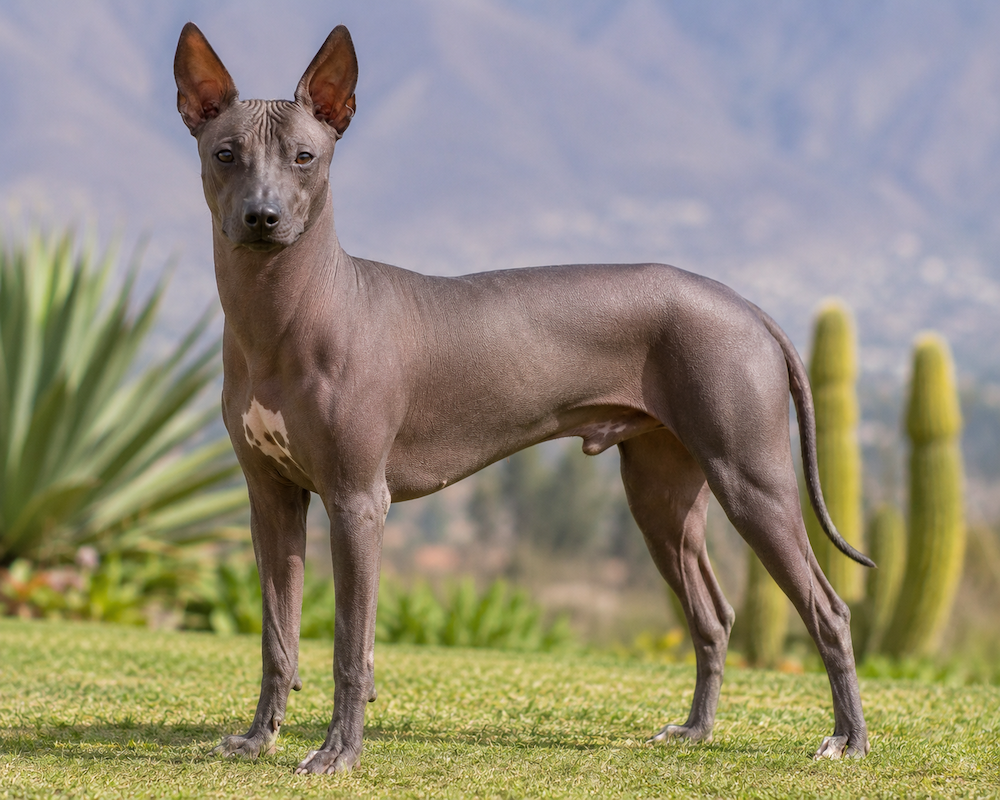





Elegant, affectionate, and unmistakably unusual — the Peruvian Inca Orchid is an ancient Peruvian breed best known for its hairless skin, graceful build, and remarkably close bond with its family.
🧠 QUICK SNAPSHOT
- Temperament: Affectionate, intelligent, alert
- Energy Level: Moderate to High
- Size: Small, Medium or Large
- Good With Families: Yes
- Trainability: Moderate to High
- Grooming: Low, but specialised skin care is required
- Best For: Attentive families, experienced owners, people looking for an unusual companion
📚 OVERVIEW
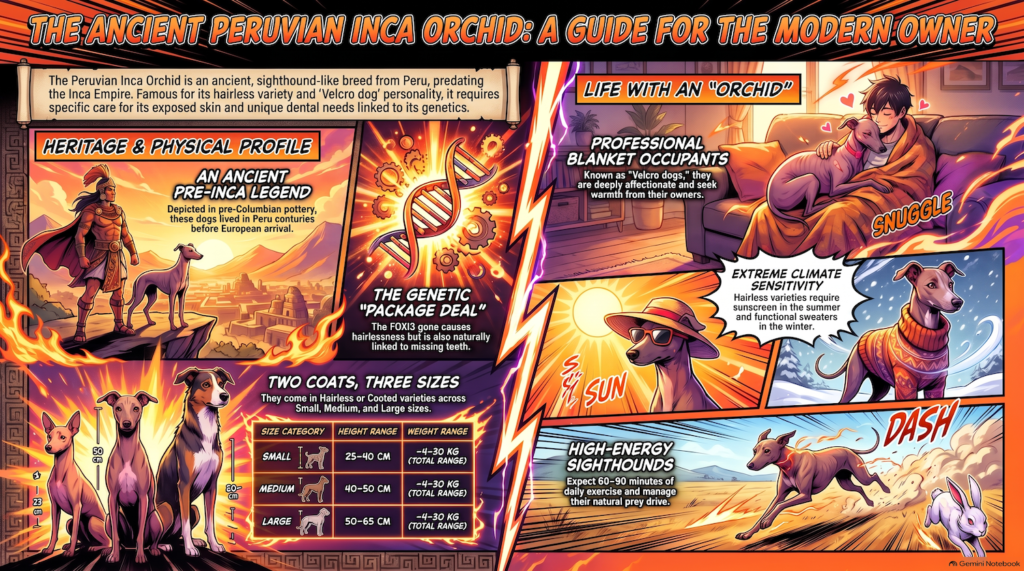
The Peruvian Inca Orchid, also known as the Peruvian Hairless Dog or Perro sin Pelo del Perú, is an ancient breed with a history stretching back long before the Inca Empire. Archaeological evidence, including pottery depicting hairless dogs, shows that dogs of this type lived alongside pre-Columbian civilisations in Peru for many centuries.
The breed is most famous for its hairless variety, although coated Peruvian Inca Orchids also occur naturally. Hairless dogs usually have smooth exposed skin with occasional tufts of hair on the head, feet, or tail. They are also unusual because the hairless genetic trait is associated with missing or abnormal teeth in many individuals.
Peruvian Inca Orchids come in several sizes, but all share an elegant, athletic appearance and graceful movement. They tend to be affectionate and deeply attached to their families while remaining more cautious around unfamiliar people.
For owners willing to understand the special requirements of a hairless breed, the Peruvian Inca Orchid offers an extraordinary combination of ancient history, intelligence, athleticism, and companionship.
✅ PROS & CONS
Pros
- Extremely affectionate with its family
- Intelligent and observant
- Hairless variety leaves virtually no dog hair around the home
- Athletic without requiring extreme amounts of exercise
- Fascinating ancient history
- Distinctive appearance
Cons
- Hairless dogs require specialised skin care
- Can be reserved around strangers
- Sensitive to cold and strong sunlight
- Early socialisation is important
- Hairless dogs can have dental abnormalities
- Rare and potentially difficult to find
Is a Peruvian Inca Orchid a Good Family Dog?
Yes, the Peruvian Inca Orchid can be an excellent family dog, particularly in a relatively calm household that appreciates its affectionate and sensitive personality. These dogs tend to develop very strong attachments to their owners and often enjoy being physically close to the people they trust.
They can live successfully with respectful children, although their exposed skin makes rough handling particularly inappropriate for hairless individuals. Young children should be taught to interact gently and supervised around the dog.
Peruvian Inca Orchids can also coexist successfully with other dogs and household pets when appropriately socialised and introduced. Their temperament is often more reserved around strangers, and they shouldn’t be expected to enthusiastically greet everyone they meet.
Early positive socialisation helps puppies develop confidence without attempting to eliminate their natural watchfulness. For families prepared to provide companionship, gentle handling, regular exercise, and appropriate skin protection, the Peruvian Inca Orchid can become an exceptionally loving and loyal family member.
How Much Exercise Does a Peruvian Inca Orchid Need?
A Peruvian Inca Orchid generally needs around 45 to 75 minutes of exercise each day, although requirements vary considerably between the breed’s different sizes and individual dogs.
Daily walks, interactive play, running in securely enclosed areas, agility, scent games, and exploring new environments can all provide suitable activity. The breed is athletic and agile but usually doesn’t require the relentless exercise schedule associated with high-drive working breeds.
Weather needs to be considered carefully. Hairless dogs have very little natural protection from cold conditions and may require appropriately fitted clothing during winter. Their exposed skin also needs protection from excessive sun exposure and potential sunburn.
Mental stimulation is equally important. Puzzle feeders, trick training, scent games, and obedience exercises give this intelligent breed productive ways to use its mind.
A combination of regular physical activity, mental enrichment, and plenty of interaction with its family generally produces a relaxed and content companion around the home.
Is a Peruvian Inca Orchid Easy to Train?
The Peruvian Inca Orchid is intelligent and learns quickly, but its sensitive and sometimes independent temperament means training works best when owners use patience and positive reinforcement.
Food rewards, praise, toys, and enjoyable games can make training highly effective. Harsh corrections and confrontational methods should be avoided because sensitive individuals may become anxious or lose trust in their handler.
Early socialisation deserves particular attention. Puppies should gradually experience unfamiliar people, friendly dogs, different environments, household noises, travelling, grooming, and veterinary handling. This helps prevent natural caution from developing into excessive fearfulness.
Training sessions should remain interesting rather than repetitive. Many Peruvian Inca Orchids enjoy agility, trick training, scent work, and other activities that combine physical movement with problem-solving.
Committed first-time owners can succeed with the breed, although understanding its sensitivity and providing consistent boundaries will make training considerably easier.
Does a Peruvian Inca Orchid Shed?
The answer depends on which variety you own. Hairless Peruvian Inca Orchids shed virtually no coat because they have little or no body hair, while coated individuals do shed.
However, having no coat doesn’t mean having no grooming requirements. Hairless dogs need a completely different type of maintenance centred around their skin. Owners should regularly check for dryness, irritation, scratches, acne-like bumps, and sun damage.
Bathing should be gentle and not excessive, and any moisturising or sun-protection products should be suitable for dogs and recommended where appropriate by a veterinarian. Human skincare products should not automatically be used on canine skin.
Coated Peruvian Inca Orchids have relatively straightforward grooming requirements and generally need routine brushing.
The hairless variety is sometimes promoted as hypoallergenic, but no dog is completely allergen-free. Allergens can occur in skin cells and saliva as well as hair, so anyone with allergies should spend time around the breed before making a decision.
What Health Problems Are Common in a Peruvian Inca Orchid?
The Peruvian Inca Orchid is generally a healthy breed, with many individuals living approximately 12 to 14 years, but the hairless variety has some particularly distinctive health considerations.
The gene responsible for hairlessness is associated with abnormal dentition, meaning hairless dogs commonly have missing or unusually shaped teeth. Owners should pay particular attention to dental health and arrange regular veterinary dental examinations.
Hairless individuals are also more vulnerable to skin irritation, sunburn, cuts, and temperature extremes because they lack the protection normally provided by a coat.
Depending on size and individual breeding lines, orthopaedic problems and certain eye conditions can also occur. Appropriate health screening of breeding dogs remains important even though the breed is relatively uncommon.
Prospective owners should seek responsible breeders who understand the genetics of hairlessness and prioritise health and temperament. Regular veterinary examinations, excellent dental care, appropriate nutrition, maintaining a healthy body weight, and protecting exposed skin all contribute to a long and comfortable life.
⭐ Why Is the Peruvian Inca Orchid Hairless?
The Peruvian Inca Orchid’s hairlessness is caused by an inherited genetic trait rather than modern selective grooming or hair removal.
One fascinating consequence is that the gene influencing hair development also affects the teeth. This explains why hairless Peruvian Inca Orchids frequently have incomplete dentition, while coated members of the breed usually have a more typical set of teeth.
Coated puppies can occur naturally within breeding programs and are an important part of the breed’s genetics. The coated variety is therefore not simply a Peruvian Inca Orchid that somehow failed to inherit the breed’s appearance — it is a legitimate and valuable part of the population.
The unusual genetics behind the breed help make the Peruvian Inca Orchid one of the most fascinating examples of canine diversity.