






Elegant, intelligent, and incredibly athletic — the Pharaoh Hound is an ancient sighthound renowned for its speed, graceful appearance, and uniquely expressive personality.
🧠 QUICK SNAPSHOT
- Temperament: Intelligent, affectionate, independent
- Energy Level: High
- Size: Medium to Large
- Good With Families: Yes
- Trainability: Moderate
- Grooming: Low
- Best For: Active families, experienced owners, homes with secure fencing
📚 OVERVIEW
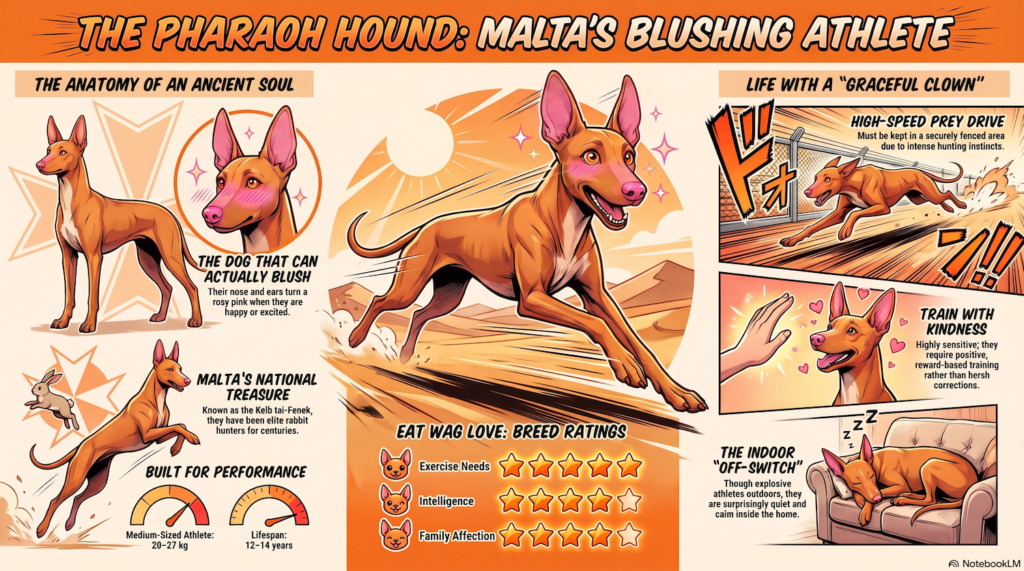
The Pharaoh Hound is one of the world’s oldest dog breeds, with a history that stretches back thousands of years. Although its appearance resembles the hunting dogs depicted in ancient Egyptian art, the modern breed is most closely associated with the Mediterranean island of Malta, where it is known as the Kelb tal-Fenek and has traditionally been used to hunt rabbits across rocky countryside.
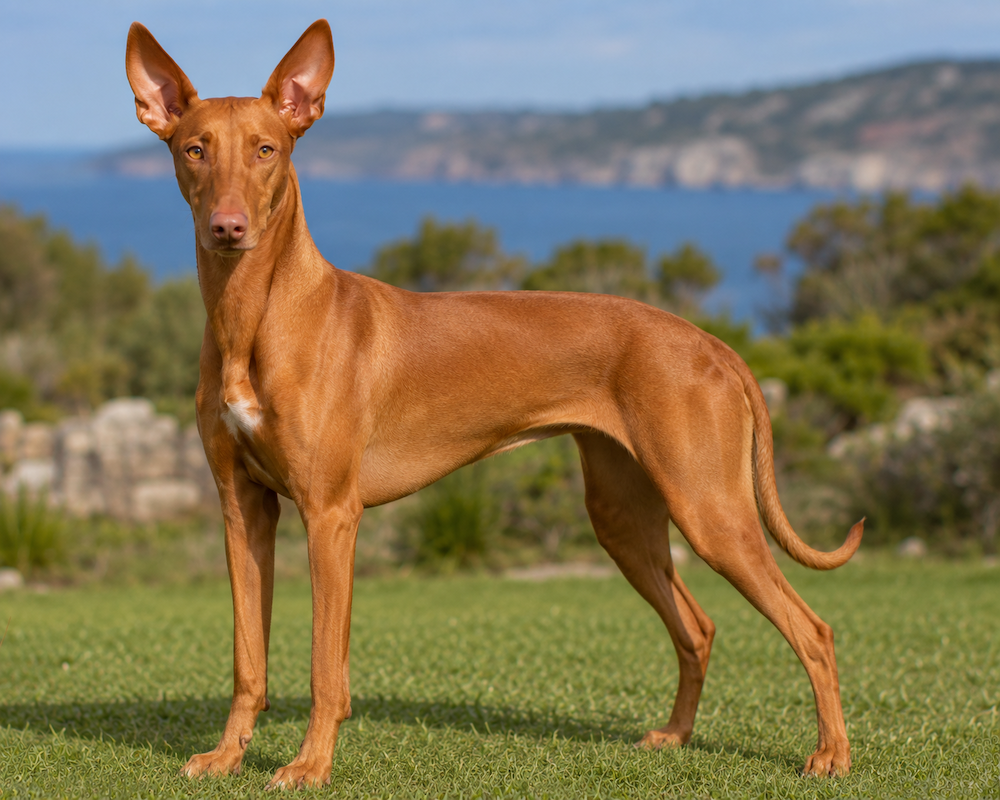
With its sleek athletic body, large upright ears, and striking amber eyes, the Pharaoh Hound is built for speed, agility, and endurance. It is a true sighthound, relying on exceptional eyesight and lightning-fast reflexes to pursue prey. Despite its hunting heritage, the Pharaoh Hound is a gentle, affectionate companion that enjoys relaxing with its family after a day of activity. One of the breed’s most charming traits is its ability to “blush”—its nose and ears can turn a rosy pink when it becomes excited or happy.
✅ PROS & CONS
Pros
- Friendly and affectionate with family
- Elegant, athletic, and graceful
- Low-maintenance coat
- Intelligent and playful
- Generally healthy and long-lived
Cons
- Strong prey drive
- Needs secure fencing
- Independent during training
- Requires regular vigorous exercise
- May be reserved with strangers
Is a Pharaoh Hound a Good Family Dog?
Yes, the Pharaoh Hound makes an excellent family companion for active households. This breed is affectionate, playful, and forms strong bonds with its family while maintaining a calm and gentle nature indoors. It enjoys spending time with people and often seeks out attention and affection after its daily exercise.
Pharaoh Hounds generally get along well with respectful children and usually live peacefully with other dogs. Their strong prey drive means care should be taken around smaller pets such as rabbits, guinea pigs, or birds, although many can learn to coexist with cats if raised together from puppyhood.
The breed is naturally alert but not aggressive and may initially appear reserved around unfamiliar people. Early socialisation helps build confidence and encourages friendly behaviour. Families who can provide companionship, exercise, and gentle leadership will enjoy a loyal, elegant, and entertaining companion.
How Much Exercise Does a Pharaoh Hound Need?
The Pharaoh Hound requires 60 to 90 minutes of exercise every day to remain physically healthy and mentally fulfilled. As a breed developed for hunting over long distances, it possesses impressive stamina and enjoys activities that allow it to stretch its legs safely.
Long walks, hiking, lure coursing, running, agility, and supervised off-lead play in securely fenced areas are excellent ways to satisfy its exercise needs. Because the Pharaoh Hound can reach impressive speeds and has a powerful instinct to chase moving objects, off-lead exercise should only occur in enclosed areas.
Mental stimulation is equally important. Puzzle toys, obedience training, scent games, and trick training help engage the breed’s intelligent mind and prevent boredom. With a balanced routine of physical exercise and mental enrichment, the Pharaoh Hound becomes a relaxed, happy, and well-mannered companion at home.
Is a Pharaoh Hound Easy to Train?
The Pharaoh Hound is intelligent and capable of learning quickly, but its independent nature means training requires patience and consistency. Like many sighthounds, it prefers to understand why it is being asked to perform a task rather than simply obeying commands automatically.
Positive reinforcement using praise, treats, toys, and enjoyable training sessions delivers the best results. The breed responds particularly well to encouragement and can become disinterested if training is repetitive or overly strict. Harsh corrections should always be avoided because they can reduce confidence and trust.
Early socialisation is essential to expose puppies to different people, environments, sounds, and other animals. Consistent, reward-based training helps develop a confident, polite companion while strengthening the bond between dog and owner. Many Pharaoh Hounds also excel in lure coursing, agility, and canine sports that make use of their natural athleticism.
Does a Pharaoh Hound Shed?
The Pharaoh Hound is considered a low-shedding breed with one of the easiest coats to maintain. Its short, fine coat lies close to the body and requires very little grooming compared to many other medium-sized dogs.
Weekly brushing with a soft grooming mitt or rubber brush is usually enough to remove loose hair and keep the coat healthy. Bathing is only needed occasionally, as the breed naturally has very little doggy odour. Because the coat is so fine, owners in colder climates may choose to provide a dog coat during winter walks.
Although it sheds very little, the Pharaoh Hound is not considered hypoallergenic. Regular nail trimming, ear cleaning, and dental care remain important parts of maintaining overall health and wellbeing.
What Health Problems Are Common in a Pharaoh Hound?
The Pharaoh Hound is generally one of the healthiest purebred dogs and commonly enjoys a lifespan of 12 to 14 years. Careful breeding has helped preserve excellent overall health, although there are still a few conditions prospective owners should be aware of.
Hip dysplasia can occasionally occur, while some individuals may develop patellar luxation or inherited eye disorders. Like many deep-chested breeds, the Pharaoh Hound also carries a small risk of gastric dilatation-volvulus (bloat), making it sensible to avoid vigorous exercise immediately before or after meals. Due to its lean body and low body fat, the breed can also be more sensitive to certain anaesthetic medications than many other dogs.
Regular veterinary examinations, maintaining a lean body condition, feeding a balanced diet, and purchasing a puppy from health-tested parents all contribute to a long, active, and healthy life. With proper care, the Pharaoh Hound remains an agile, affectionate companion well into its senior years.