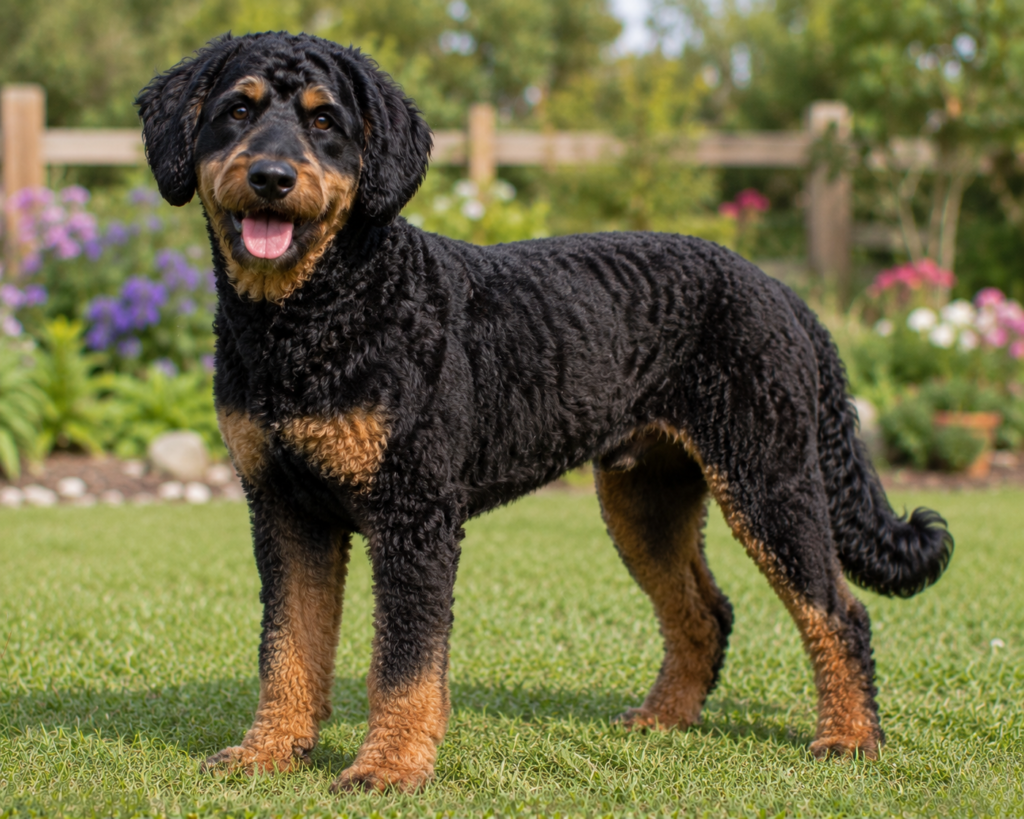







Intelligent, loyal, and wonderfully versatile — the Rottle combines the strength and confidence of the Rottweiler with the intelligence and trainability of the Poodle
🧠 QUICK SNAPSHOT
- Temperament: Loyal, intelligent, affectionate
- Energy Level: High
- Size: Medium to Large
- Good With Families: Yes
- Trainability: Very High
- Grooming: Moderate to High
- Best For: Active families, experienced owners, homes with space
📚 OVERVIEW
The Rottle is a designer crossbreed created by combining the confident Rottweiler with the exceptionally intelligent Standard Poodle. The goal of this cross is to produce a loyal family companion that retains the Rottweiler’s protective instincts while benefiting from the Poodle’s intelligence, athleticism, and often lower-shedding coat. Because both parent breeds are highly trainable working dogs, the Rottle is typically eager to learn and thrives when given plenty of physical activity and mental stimulation.
Individual Rottles can vary considerably in appearance, coat type, and personality depending on which parent they take after. Some resemble a shaggy Rottweiler with a wavy coat, while others inherit tighter curls and a more Poodle-like appearance. Regardless of coat type, most Rottles are affectionate with their families, highly loyal, and happiest when they have a purpose. They are best suited to active owners who can provide consistent training, socialisation, and plenty of companionship.
As with all crossbreeds, responsible breeding and comprehensive health testing of both parent breeds are essential, as puppies may inherit characteristics from either side.
✅ PROS & CONS
Pros
- Extremely intelligent and eager to learn
- Loyal and devoted to family
- Excellent companion for active households
- Often lower shedding than a purebred Rottweiler
- Excels in obedience, agility, and advanced training
Cons
- Needs extensive daily exercise
- Requires ongoing training and socialisation
- Grooming needs vary depending on coat type
- Can become bored or destructive if under-stimulated
- Protective instincts require responsible management
Is a Rottle a Good Family Dog?
Yes, the Rottle can make an outstanding family dog when properly trained and socialised. This crossbreed usually forms strong bonds with its family and is known for being affectionate, loyal, and eager to be involved in everyday life. Most Rottles are gentle with respectful children and enjoy participating in family activities, from weekend hikes to relaxing together at home.
Because one parent breed is naturally protective, early socialisation is extremely important. A well-socialised Rottle learns to distinguish between genuine threats and normal everyday situations, resulting in a confident and stable companion rather than an overly suspicious one.
Rottles generally live well with other dogs when raised together and carefully introduced. They may also adapt to homes with cats, although early introductions are recommended. Families who provide leadership, regular interaction, and plenty of exercise will enjoy an intelligent, dependable, and loving companion.
How Much Exercise Does a Rottle Need?
The Rottle requires 60 to 90 minutes of exercise every day, with many individuals enjoying even more activity. Both parent breeds are athletic working dogs, so the Rottle thrives when given regular opportunities to burn energy and challenge its mind.
Daily walks, jogging, hiking, swimming, agility, obedience, scent work, and interactive games are all excellent activities. Many Rottles particularly enjoy learning advanced skills and working closely with their owners, making them excellent candidates for canine sports and training competitions.
Mental stimulation is just as important as physical exercise. Puzzle toys, trick training, food-dispensing toys, and problem-solving games help prevent boredom. Without enough exercise and enrichment, a Rottle may become frustrated, vocal, or destructive. An active lifestyle helps this intelligent crossbreed remain calm, confident, and well behaved.
Is a Rottle Easy to Train?
Yes, the Rottle is generally one of the easiest large crossbreeds to train. Both the Rottweiler and the Poodle rank among the most intelligent dog breeds, and their offspring typically inherit an impressive willingness to learn.
Positive reinforcement using praise, treats, toys, and engaging activities produces outstanding results. Training should begin during puppyhood and continue throughout adulthood to maintain good manners and provide ongoing mental stimulation. Short, varied sessions keep the breed motivated and prevent boredom.
Early socialisation is particularly important to expose puppies to different people, dogs, environments, and experiences. This helps ensure protective instincts develop appropriately and encourages confident, friendly behaviour. With consistent leadership and positive training, the Rottle often excels in obedience, agility, therapy work, tracking, and many other canine activities.
Does a Rottle Shed?
Shedding varies considerably depending on which parent breed the Rottle takes after. Some inherit the Poodle’s curly, lower-shedding coat, while others develop a shorter or wavier coat that sheds more like a Rottweiler. Most Rottles fall somewhere between the two extremes.
Brushing two or three times each week helps remove loose hair, prevent tangles, and keep the coat healthy. Curly-coated Rottles often require professional grooming every six to eight weeks to prevent matting, while straighter coats are generally easier to maintain.
Although some Rottles may be more suitable for people with mild allergies, no crossbreed can be guaranteed to be hypoallergenic. Routine ear cleaning, nail trimming, and regular dental care should also form part of the grooming routine to maintain overall health.
What Health Problems Are Common in a Rottle?
Like all crossbreeds, the Rottle may inherit health conditions from either parent breed. Responsible breeders perform comprehensive health testing on both Rottweilers and Standard Poodles to reduce the likelihood of inherited diseases.
Potential health concerns include hip dysplasia, elbow dysplasia, progressive retinal atrophy (PRA), bloat (gastric dilatation-volvulus), heart disease, and certain inherited eye conditions. Some individuals may also inherit a predisposition to allergies or thyroid disorders. Maintaining a lean body weight and avoiding excessive exercise immediately before or after meals may help reduce the risk of bloat in deep-chested dogs.
Regular veterinary examinations, a balanced diet, consistent exercise, preventative healthcare, and purchasing a puppy from health-tested parents all contribute to long-term wellbeing. With proper care, most Rottles enjoy a healthy lifespan of 10 to 14 years while remaining active, loyal, and devoted companions.