






Gentle, intelligent, and beautifully elegant — a loyal companion with a calm and caring nature.
🧠 QUICK SNAPSHOT
- Temperament: Gentle, loyal, intelligent
- Energy Level: Moderate
- Size: Medium to large
- Good With Families: Yes
- Trainability: High
- Grooming: High
- Best For: Families, companionship, active homes
📚 OVERVIEW
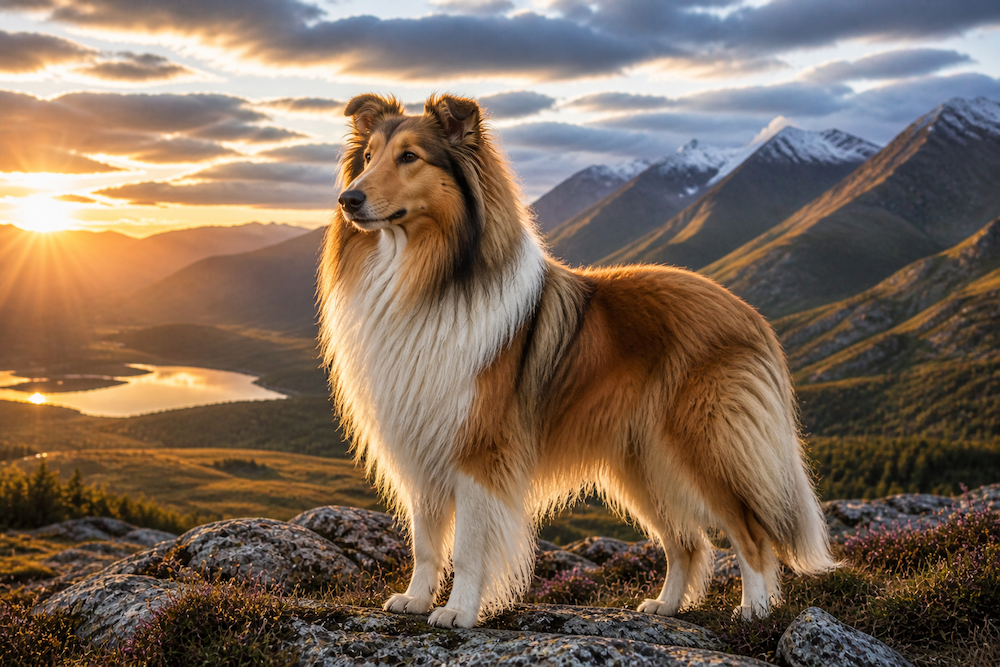
The Rough Collie is a graceful herding breed known for its long, flowing coat and kind expression. Made famous by “Lassie,” they are highly intelligent and devoted to their families.
They are gentle and sensitive dogs that thrive in environments where they are included and valued as part of the household.
✅ PROS & CONS
Pros
- Extremely loyal and affectionate
- Great with families and children
- Highly intelligent and trainable
- Beautiful, distinctive coat
Cons
- Requires regular grooming
- Can be sensitive
- Needs companionship
- May be vocal
Is a Rough Collie a Good Family Dog?
Yes. Rough Collies are generally gentle, affectionate, intelligent and devoted family dogs.
They tend to form strong bonds with their household and are famous for their sensitive, people-oriented temperament.
They need regular exercise and mental stimulation but are usually less intense than some other herding breeds.
Are Rough Collies Good With Children?
Generally, yes. Rough Collies have a strong reputation as excellent companions for children.
They’re typically patient, gentle and protective without being excessively forceful.
Their herding heritage can occasionally produce chasing or attempts to gather running children, so early training is still important.
How Much Exercise Does a Rough Collie Need?
Most Rough Collies need around 60–90 minutes of daily exercise.
Walks, games, training and opportunities to explore are usually sufficient for a healthy adult.
They’re active dogs but generally don’t require the relentless physical workload associated with highly driven working Border Collies.
Are Rough Collies Easy to Train?
Yes. Rough Collies are highly intelligent and generally eager to cooperate.
They’re often sensitive dogs, so positive reinforcement and calm, consistent training work particularly well.
Harsh training methods can be counterproductive with a breed that tends to respond strongly to its owner’s mood and tone of voice.
Do Rough Collies Shed a Lot?
Yes. Rough Collies can be heavy shedders.
Their spectacular coat consists of a long outer coat over a dense undercoat, with particularly noticeable shedding during seasonal coat changes.
Anyone considering the breed should expect dog hair around the home.
Are Rough Collies Hypoallergenic?
No.
Rough Collies aren’t considered hypoallergenic and can shed heavily.
Their abundant coat can also carry dander and other environmental allergens.
How Often Should You Groom a Rough Collie?
A Rough Collie generally needs thorough brushing several times a week, with additional grooming during heavy shedding periods.
Particular attention should be paid behind the ears, around the legs and in other areas where tangles and mats can develop.
Regular grooming is a significant part of owning the breed.
What Health Problems Are Common in Rough Collies?
Important health concerns include Collie Eye Anomaly (CEA), progressive retinal atrophy, hip dysplasia and certain inherited neurological conditions.
Collies can also carry the MDR1 gene variant, which can make affected dogs unusually sensitive to certain medications.
Responsible breeders should use appropriate genetic testing and health screening.
What Is MDR1 in Rough Collies?
MDR1 is a genetic variant affecting a protein responsible for transporting certain substances, including some medications, out of the brain.
Dogs carrying affected variants can experience dangerous reactions to particular drugs or inappropriate doses.
A DNA test can identify a dog’s MDR1 status, allowing veterinarians to choose medications appropriately.
How Long Do Rough Collies Live?
Rough Collies commonly live around 12–14 years, although individual lifespan varies.
Responsible breeding, maintaining a healthy weight, appropriate exercise and regular veterinary care can all contribute to longevity.
How Big Does a Rough Collie Get?
Rough Collies are medium-to-large dogs.
Adult males generally stand around 56–66 cm tall depending on the breed standard used, with females somewhat smaller. Adults commonly weigh approximately 20–34 kg.
Their enormous coat can make them appear substantially heavier than they actually are.
When Is a Rough Collie Fully Grown?
Most Rough Collies reach close to adult height between 12 and 18 months, although they may continue filling out after this.
Their coat also continues developing as they mature.
Young Collies can look considerably less glamorous than the fully coated adults seen in photographs.
Can a Rough Collie Live in an Apartment?
Yes, potentially.
Rough Collies can be relatively calm indoors when properly exercised, but they need daily outdoor activity and mental stimulation.
Their tendency to alert bark can sometimes be a bigger challenge in an apartment than their physical size.
Do Rough Collies Bark a Lot?
They can be quite vocal.
Collies are naturally alert dogs and often use their voices to announce visitors, unusual sounds or exciting activity.
Early training is useful because persistent barking can become a habit, particularly when a Collie is bored or under-exercised.
Are Rough Collies Protective?
Rough Collies are often watchful and devoted to their families, but they aren’t typically aggressive guard dogs.
Many will alert their owners to something unusual and may position themselves protectively around family members.
Their temperament should be stable and confident rather than unnecessarily confrontational.
Are Rough Collies Good With Other Dogs?
Generally, yes.
Well-socialised Rough Collies tend to be sociable and can live very successfully with other dogs.
Their relatively gentle temperament often makes them well suited to multi-dog households.
Are Rough Collies Good With Cats?
Many Rough Collies live successfully with cats, particularly when introduced appropriately.
Their herding instincts can sometimes cause chasing or attempts to control movement, but this is different from the intense predatory behaviour seen in some hunting breeds.
Do Rough Collies Have a Strong Herding Instinct?
Yes. Rough Collies descend from livestock-working dogs, and some retain noticeable herding behaviours.
They may circle, follow, chase movement or attempt to keep people and animals together.
The strength of these instincts varies considerably between modern companion and working lines.
What Colours Do Rough Collies Come In?
Recognised colours vary somewhat between kennel organisations but commonly include sable and white, tricolour and blue merle.
Some standards also recognise predominantly white Collies with coloured markings.
The classic sable-and-white coat became particularly famous through portrayals of Lassie.
What Is the Difference Between a Rough Collie and a Smooth Collie?
The major difference is the coat.
The Rough Collie has a long, abundant outer coat and dense undercoat, while the Smooth Collie has a short, dense coat.
They share the same basic ancestry and are closely related varieties, with broadly similar temperament, structure and working heritage.
What Is the Difference Between a Rough Collie and a Border Collie?
They’re distinct breeds despite sharing herding ancestry.
Border Collies are generally more intensely work-driven and are famous for their specialised gathering style and extraordinary need for mental activity.
Rough Collies tend to be somewhat calmer and are widely kept as family companions, although they’re still intelligent and active herding dogs.
Is a Rough Collie the Same Breed as Lassie?
Yes. Lassie is a Rough Collie.
The fictional character became one of the most famous dogs in popular culture through books, films and television.
Lassie’s enormous popularity helped make the Rough Collie’s long sable-and-white coat instantly recognisable around the world.
Was Lassie Played by a Male or Female Dog?
Although Lassie is a female character, the role has traditionally been played predominantly by male Rough Collies.
Male Collies were often preferred partly because they tend to carry a larger, fuller coat and can maintain that appearance more consistently for filming.
The original canine film star was a male Rough Collie named Pal.
Where Does the Rough Collie Come From?
The Rough Collie developed primarily in Scotland and northern Britain from traditional dogs used to herd and manage sheep.
The early working Collies were generally less glamorous than today’s show dogs.
During the 19th century, selective breeding increasingly standardised the breed’s appearance, eventually producing the elegant long-coated Collie familiar today.
What Were Rough Collies Originally Bred For?
Rough Collies descend from herding and livestock-management dogs.
Their ancestors needed intelligence, responsiveness, endurance and the ability to work closely with shepherds in demanding countryside.
Modern Rough Collies are now much more commonly family companions, but their intelligence and sensitivity reflect that working heritage.
Did Queen Victoria Make Rough Collies Popular?
Queen Victoria helped increase public interest in Collies during the 19th century after encountering them in Scotland and keeping Collies herself.
Royal enthusiasm contributed to the transformation of the Collie from a predominantly working farm dog into a fashionable companion and show breed.
Lassie would later give the breed another enormous wave of international popularity.
Is a Rough Collie a Good First Dog?
Yes. A Rough Collie can be a very good first dog for an owner prepared for its grooming, exercise and training requirements.
They’re intelligent, responsive and usually eager to form close relationships with their owners.
Their sensitivity means gentle, consistent training is particularly important.
What Makes the Rough Collie Unique?
Few dogs have had their public image shaped by a fictional character as completely as the Rough Collie.
Say “Lassie” and millions of people immediately picture the long sable coat, narrow elegant face and enormous white ruff of a Rough Collie.
But before Hollywood, television and heroic rescues from wells, Collies were practical livestock dogs.
Their ancestors worked alongside shepherds in Scotland and northern Britain, where intelligence, responsiveness and the ability to understand what humans wanted mattered far more than glamorous hair.
That helps explain why modern Rough Collies can be so extraordinarily attentive to their families.
They’re often described as sensitive because they seem to notice voices, moods and household routines remarkably quickly.
The famous Lassie stories exaggerated what one dog could accomplish — as fictional stories tend to do.
But they chose a remarkably appropriate breed for the role.
Because if you’re going to write stories about a dog that constantly watches its family, notices when something is wrong and insists on becoming involved…
a Collie was a pretty convincing choice.