
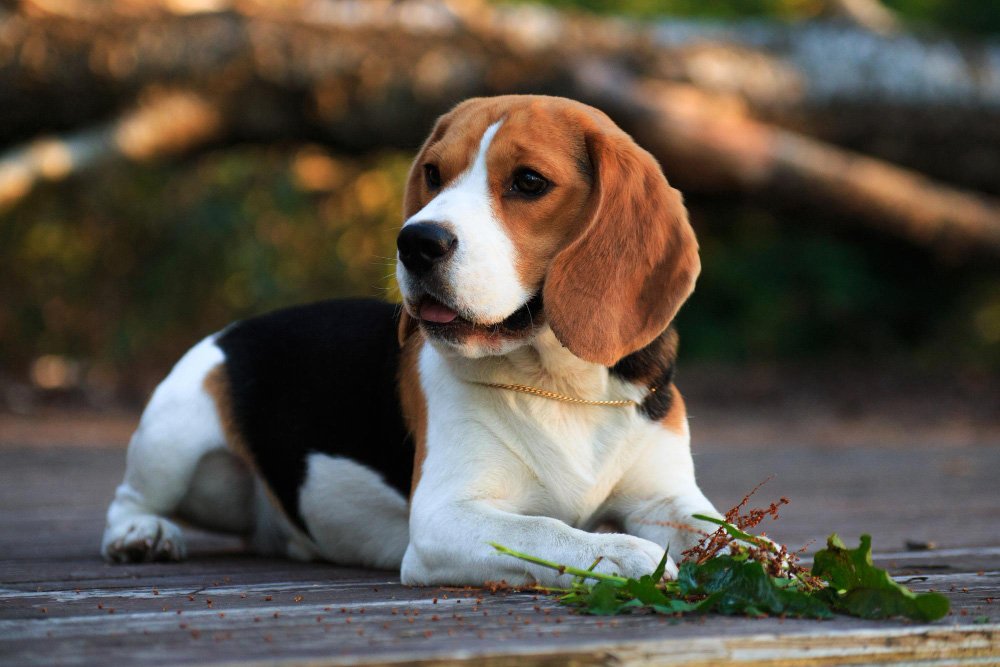







Curious, friendly, and full of energy — a lovable companion with a nose for adventure.
🧠 QUICK SNAPSHOT
- Temperament: Friendly, Curious, Playful
- Energy Level: High
- Size: Small–Medium
- Good with Families: Excellent
- Training Difficulty: Moderate
📚 OVERVIEW
Beagles are small to medium-sized hounds known for their excellent sense of smell and cheerful personalities. Originally bred for hunting, they are active, curious, and love exploring. Their friendly nature makes them great companions for families and multi-pet households.
✅ PROS & CONS
Pros
- Very friendly and social
- Great with children and other pets
- Fun-loving and energetic
Cons
- Strong scent drive can make recall difficult
- Can be vocal (howling/barking)
- Needs regular exercise and supervision
Is a Beagle a Good Family Dog?
Yes, the Beagle is generally an excellent family dog, known for being friendly, cheerful and sociable.
Beagles were historically bred to work in packs, so many naturally enjoy company and can form strong relationships with adults, children and other dogs.
They tend to be playful and affectionate without usually being excessively protective.
Their main challenges are their powerful noses, independent streak and enthusiasm for food. Secure fencing and consistent training are important.
For families wanting a happy, active companion, the Beagle has enormous appeal — provided everyone understands that the nose occasionally appears to be in charge of the dog.
How Much Exercise Does a Beagle Need?
An adult Beagle generally needs around 60–90 minutes of exercise each day, together with regular mental stimulation.
Beagles are genuine working scent hounds rather than simply small companion dogs.
Long walks, scent games, tracking activities and opportunities to explore are excellent outlets.
Allowing a Beagle time to sniff on walks is particularly valuable because scent exploration provides significant mental stimulation.
A secure area for running and playing can also help.
Despite their ability to sleep impressively well on a sofa, Beagles need regular activity to remain physically and mentally healthy.
Is a Beagle Easy to Train?
Beagles are intelligent but independent, so they can be more challenging to train than highly handler-focused breeds.
They were developed to follow scent trails persistently, often while working some distance from their handlers.
That independence remains part of the modern Beagle personality.
Food rewards can be extremely effective, and short, positive training sessions usually work best.
Recall deserves particular attention because an exciting scent can quickly become more interesting than the person calling the dog.
A Beagle usually understands what you want.
The difficulty begins when its nose has suggested an alternative plan.
Does a Beagle Shed?
Yes, Beagles shed moderately throughout the year, with heavier shedding often occurring seasonally.
Their short, dense double coat is relatively easy to maintain.
Brushing once or twice each week helps remove loose hair and keeps the coat healthy.
More frequent brushing may be useful during seasonal coat changes.
Their long, dropped ears also require regular checking because reduced airflow can contribute to ear infections.
Beagles aren’t considered hypoallergenic.
Their coat may be short, but owners quickly discover that short hair can still reach an impressive number of places around the house.
What Health Problems Are Common in Beagles?
Beagles are generally robust dogs, but several health conditions occur within the breed.
Potential concerns include epilepsy, hypothyroidism, hip dysplasia and inherited eye disorders.
Their long, dropped ears can also make ear infections relatively common.
Some Beagle lines can carry inherited conditions such as Musladin-Lueke syndrome, making responsible genetic testing important.
Obesity is another major concern because Beagles are famously food motivated.
Responsible breeders should perform recommended health testing, while owners should carefully control portions and maintain regular exercise.
With a Beagle, protecting the waistline can be one of the most important parts of preventive healthcare.
How Long Do Beagles Live?
Beagles typically live around 12–15 years, although some live longer.
Genetics, nutrition, exercise, body condition and preventive veterinary care all influence lifespan.
Maintaining a healthy weight is particularly important because Beagles can gain weight surprisingly easily.
Regular dental care, ear checks and veterinary examinations are also valuable throughout life.
Many Beagles remain playful, curious and extremely interested in food well into old age.
The legs may eventually slow down.
The appetite rarely receives the same message.
Can a Beagle Live in an Apartment?
Yes, a Beagle can live successfully in an apartment, provided it receives enough exercise and mental stimulation.
Its manageable size makes apartment living physically practical.
The bigger issue is usually noise.
Beagles can bark, howl and produce their characteristic baying vocalisation, particularly when bored, excited or left alone.
Their exercise requirements also mean several outdoor trips each day may be necessary.
A well-exercised Beagle can settle comfortably indoors, but prospective apartment owners should probably consider the neighbours as well as the floor space.
Do Beagles Bark and Howl a Lot?
Beagles can be very vocal dogs.
They may bark normally, howl and produce the distinctive prolonged baying sound traditionally associated with scent hounds.
This wasn’t an accidental characteristic.
Beagles hunted in packs, and vocalising while following a scent helped hunters keep track of the dogs even when they couldn’t see them.
Modern Beagles may vocalise because of excitement, boredom, loneliness or interesting activity outside the home.
Training can reduce excessive noise, but expecting a Beagle to be naturally silent is unrealistic.
For such a relatively compact dog, the breed comes equipped with a remarkably substantial sound system.
Are Beagles Good With Other Dogs?
Beagles are generally excellent with other dogs.
They were historically bred to hunt in packs, so the ability to work and live alongside other dogs was extremely valuable.
Many Beagles actively enjoy canine companionship and thrive in multi-dog households.
Early socialisation remains important, and individual personalities naturally vary.
Their generally friendly and playful nature has helped make the Beagle one of the more naturally sociable hound breeds.
Are Beagles Good With Cats?
Beagles can live successfully with cats, particularly when raised alongside them and introduced carefully.
However, their hunting heritage means they can have a significant prey drive.
A running cat may trigger chasing behaviour in some individuals.
A Beagle that peacefully shares a home with its own cat may also react differently toward unfamiliar cats outdoors.
Small pets such as rabbits, guinea pigs and rodents require particularly careful management because they may trigger hunting behaviour.
Can Beagles Be Left Alone?
Beagles generally don’t enjoy being left alone for long periods.
Their pack-oriented history means many strongly prefer having human or canine companionship.
Lonely or bored Beagles may howl, bark, chew, dig or attempt to escape.
Some can develop separation-related distress.
Puppies should gradually learn to spend reasonable periods alone, while exercise and enrichment can help make absences easier.
A Beagle may look independent while following a scent, but socially it is very much a dog designed to have company.
Are Beagles Escape Artists?
Yes, Beagles can be exceptionally determined escape artists, particularly when an interesting scent is involved.
They may dig beneath fences, squeeze through gaps or follow an open gate without apparently considering the return journey.
Secure fencing is therefore extremely important.
Owners should regularly check boundaries for gaps and weaknesses.
Reliable recall can also be difficult once a Beagle becomes absorbed in a scent trail.
If you see your Beagle carefully inspecting the bottom of the fence, don’t automatically assume curiosity.
It may be conducting an engineering assessment.
How Good Is a Beagle’s Sense of Smell?
The Beagle has an extraordinary sense of smell and is one of the world’s best-known scent-hound breeds.
Beagles were developed to follow ground scent over considerable distances while hunting.
Their noses contain an enormous number of scent receptors, while their long ears may help disturb and funnel scent particles around the head as they track close to the ground.
This ability has found modern applications far beyond hunting.
Beagles have been used professionally to detect prohibited food, agricultural products and other substances in luggage and cargo.
To a Beagle, the world isn’t simply something to look at.
It’s something to read through smell.
Why Are Beagles Used at Airports?
Beagles have been used at airports and border facilities as detection dogs, particularly for identifying food, plants and agricultural products.
Their excellent noses are obviously important, but temperament and size also make them particularly useful.
Beagles are small enough to move easily around luggage and busy passenger areas, while their generally friendly appearance can seem less intimidating than larger working breeds.
In the United States, the well-known Beagle Brigade has used trained Beagles to detect prohibited agricultural products carried by travellers.
That cheerful little dog sniffing a suitcase may therefore be doing serious biosecurity work.
Why Are Beagles So Obsessed With Food?
Beagles are famously food motivated, partly because a strong appetite was useful in active working dogs expected to spend long periods hunting.
Modern Beagles often retain that enthusiasm despite burning considerably fewer calories.
Their powerful noses also mean they can detect food that humans might barely notice.
This combination makes them excellent candidates for reward-based training but also increases the risk of obesity and food theft.
Meals should be measured rather than provided freely, and treats need to be included in the dog’s overall calorie intake.
A Beagle can give an extremely convincing performance suggesting it hasn’t eaten in weeks.
Check with the person who fed it five minutes ago before believing the story.
Can Beagles Be Trusted Off Lead?
Beagles can be difficult to trust off lead in unsecured areas because their scent drive is exceptionally strong.
Even a well-trained Beagle may suddenly encounter an irresistible trail and begin following it.
Once focused on scent, recall can become unreliable.
Secure enclosed areas provide a much safer environment for off-lead exercise.
Long training lines can also give Beagles greater freedom while owners continue developing recall skills.
Individual dogs vary, but owners should never underestimate how powerfully centuries of selective breeding can influence behaviour.
What Were Beagles Originally Bred to Hunt?
Beagles were developed primarily to hunt hare and rabbit by scent.
Their moderate size allowed hunters to follow the pack on foot rather than requiring horses.
Beagles worked together, methodically following scent trails while using their voices to communicate their progress.
Their success depended less on catching prey through raw speed and more on persistence, scenting ability and teamwork.
Those traits remain obvious in modern Beagles.
The rabbit may have disappeared from the equation, but the nose certainly hasn’t.
Where Does the Beagle Come From?
The modern Beagle was developed primarily in Britain, although small scent hounds resembling Beagles existed for centuries before today’s breed was standardised.
Various British hounds contributed to its development.
During the 19th century, breeders worked toward a more consistent type, with Reverend Phillip Honeywood’s pack in Essex often mentioned as particularly influential in the development of the modern Beagle.
The breed later became enormously popular internationally, particularly in the United States.
Today, the Beagle is one of the world’s most recognisable scent hounds.
What Was a Pocket Beagle?
Historically, extremely small Beagles were sometimes known as Pocket Beagles because some were reportedly small enough to be carried in saddlebags or pockets associated with mounted hunters.
Queen Elizabeth I is frequently linked with tiny “singing Beagles,” although historical terminology and breeding types weren’t as standardised as modern breed labels.
Today’s major kennel-club Beagle standards don’t recognise a separate official Pocket Beagle breed.
Modern puppies advertised as “Pocket Beagles” may simply be unusually small Beagles or dogs selectively bred for reduced size.
Prospective owners should therefore be cautious of breeders using extreme miniature size primarily as a marketing feature.
Is Snoopy a Beagle?
Yes. Snoopy from Peanuts is officially a Beagle, even though his appearance is highly stylised compared with a real one.
Charles M. Schulz introduced Snoopy in 1950, and the character became one of the most recognisable dogs in popular culture.
Snoopy’s imaginative personality bears only a loose relationship to typical canine behaviour, but some Beagle owners may recognise the independence, appetite and ability to become absorbed in a world of his own.
Real Beagles generally don’t fly Sopwith Camels.
But given their confidence, it may simply be because nobody has handed them the keys.