






Graceful, elegant, and incredibly fast — a gentle soul with a hunter’s instinct.
🧠 QUICK SNAPSHOT
- Temperament: Gentle, Independent, Quiet
- Energy Level: Moderate to High
- Size: Medium–Large
- Good with Families: Yes (calm homes)
- Training Difficulty: Moderate
📚 OVERVIEW
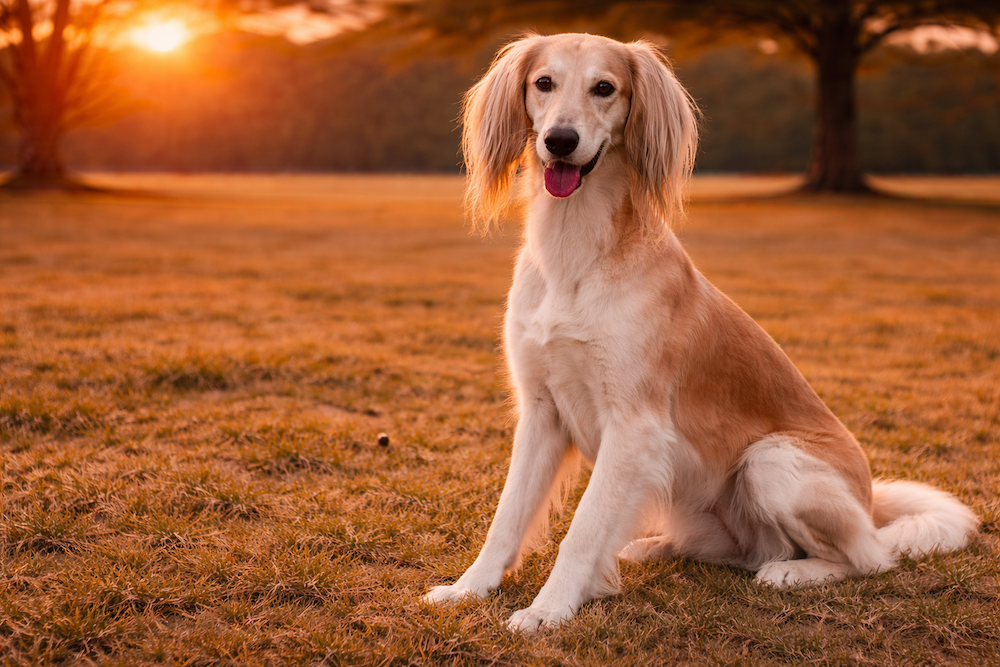
Salukis are one of the oldest dog breeds in the world, known for their elegance, speed, and endurance. Originally bred for hunting in desert environments, they are incredibly fast and agile. At home, they are calm and affectionate, often forming close bonds with their owners.
✅ PROS & CONS
Pros
- Gentle and calm indoors
- Elegant and unique appearance
- Quiet and less vocal than many breeds
Cons
- Strong prey drive
- Can be independent and difficult to train
- Needs secure spaces due to speed and chasing instincts
Is a Saluki a Good Family Dog?
Yes. Salukis can be gentle, affectionate and devoted family dogs, particularly in calm households.
They often form strong bonds with their owners but tend to be more reserved and independent than highly demonstrative breeds.
Their sensitive temperament and powerful prey drive are important considerations for prospective owners.
Are Salukis Good With Children?
Salukis can be good with respectful children, especially when raised with them.
They generally prefer gentle handling and may find rough or extremely noisy play stressful.
Their slender build also means they aren’t as physically robust as their height might suggest, so interactions with young children should be supervised.
How Much Exercise Does a Saluki Need?
Most adult Salukis need around 60–90 minutes of daily exercise, including opportunities to run safely.
They’re extraordinarily fast dogs but don’t necessarily need to exercise continuously throughout the day.
Many are surprisingly calm indoors after their exercise needs have been met.
Are Salukis Easy to Train?
Salukis are intelligent but can be challenging to train because of their independent nature.
They were bred to hunt at considerable distances from people and make their own decisions rather than constantly wait for instructions.
Patient, positive training works best, but owners shouldn’t expect Border Collie-style obedience.
Do Salukis Shed?
Yes, but generally not heavily.
Their coat is relatively easy to maintain, and shedding is usually light to moderate.
Feathered Salukis need additional brushing around the ears, tail and legs to prevent tangles.
Are Salukis Hypoallergenic?
No.
Salukis aren’t considered hypoallergenic, although their relatively light shedding and low-maintenance coat may mean less loose hair around the home than some breeds.
People with dog allergies can still react to their dander and saliva.
How Often Should You Groom a Saluki?
Salukis are generally low-maintenance dogs to groom.
Weekly brushing is usually sufficient, although feathered areas may require extra attention.
Smooth-coated Salukis require even less coat maintenance. Nail trimming, dental care and regular ear checks are also important.
What Health Problems Are Common in Salukis?
Salukis are generally considered relatively healthy, but potential concerns include heart disease, certain cancers, eye conditions and some inherited disorders.
Like other deep-chested breeds, they can also be at risk of gastric dilatation-volvulus (bloat).
Responsible breeders should use appropriate health screening and understand conditions occurring within their bloodlines.
How Long Do Salukis Live?
Salukis commonly live around 12–14 years, with some living longer.
This is a relatively good lifespan for a dog of their height.
Healthy weight, appropriate exercise, good breeding and preventive veterinary care can all contribute to longevity.
How Big Does a Saluki Get?
Salukis are tall, slender sighthounds.
Adults generally stand around 58–71 cm at the shoulder, with females often smaller than males.
They commonly weigh approximately 18–30 kg, although their extremely lean build can make them appear lighter than expected for their height.
Can a Saluki Live in an Apartment?
Yes, surprisingly.
Adult Salukis can be very calm indoors once properly exercised and may spend considerable time relaxing.
The greater challenge is providing safe opportunities for exercise and running rather than simply providing a large house.
Can Salukis Be Left Alone?
Adult Salukis can learn to tolerate reasonable periods alone, although they still form strong attachments to their families.
They’re often more independent than many companion breeds.
Regular exercise and enrichment remain important, particularly before longer periods alone.
Do Salukis Bark a Lot?
Generally, no.
Salukis tend to be relatively quiet dogs and aren’t usually known for excessive barking.
They may alert their owners to something unusual, but constant vocalisation isn’t normally a defining breed characteristic.
Are Salukis Affectionate?
Yes, although Saluki affection can be subtle and selective.
Many become deeply attached to their families while remaining reserved with unfamiliar people.
Rather than enthusiastically greeting everyone they meet, a Saluki may prefer quietly staying close to the people it trusts.
Are Salukis Good With Other Dogs?
Generally, yes, particularly with appropriate socialisation.
Many Salukis enjoy living with other dogs, especially other sighthounds.
As with any breed, compatibility depends on individual temperament and introductions.
Are Salukis Good With Cats?
Some Salukis can live successfully with cats, especially when raised with them, but considerable caution is required.
Salukis have an extremely strong prey drive, and unfamiliar cats running outdoors may trigger chasing even in a dog that accepts a household cat.
Smaller pets can be at even greater risk.
Do Salukis Have a High Prey Drive?
Yes. A strong prey drive is one of the Saluki’s defining characteristics.
They were developed to spot, pursue and catch fast-moving game across open terrain.
Wildlife such as rabbits can trigger an immediate chase response, so secure fencing and careful management are essential.
Can Salukis Be Trusted Off Leash?
Salukis can be particularly challenging off leash in unsecured areas.
Once a sighthound spots moving prey, its hunting instinct can temporarily become much more compelling than its owner’s recall command.
Securely fenced areas are generally the safest places to allow a Saluki to run freely.
How Fast Can a Saluki Run?
Salukis are among the fastest dog breeds in the world and can reach speeds around 65–70 km/h over short distances.
More importantly, they combine speed with impressive endurance.
This combination allowed them to pursue fast-moving game across large areas of open terrain.
What Were Salukis Originally Bred to Hunt?
Salukis were traditionally used to hunt fast game such as gazelles and hares, with quarry varying across regions.
Unlike scent hounds that primarily follow a trail with their noses, Salukis are sighthounds that locate and pursue prey largely using vision.
Speed, endurance and independent decision-making were essential working characteristics.
What Is the Difference Between a Saluki and a Greyhound?
Both are fast sighthounds, but they’re distinct breeds.
Greyhounds are generally heavier and more powerfully built for explosive speed, while Salukis have a lighter, elegant build and historically combined high speed with endurance across difficult terrain.
Salukis are also famous for the feathering found on the ears, legs and tail of the feathered variety.
What Is the Difference Between a Saluki and an Afghan Hound?
Both are ancient sighthound types, but they look quite different.
Afghan Hounds have a dramatically long, flowing coat requiring substantial grooming, while Salukis have a much lighter coat with either feathering or a smooth finish.
Both can be independent, sensitive and strongly driven to chase.
Do All Salukis Have Feathered Ears?
No. There are feathered and smooth Salukis.
The familiar feathered variety has silky hair on areas such as the ears, tail and backs of the legs.
Smooth Salukis lack this feathering but otherwise share the same basic breed characteristics.
What Colours Do Salukis Come In?
Salukis occur in numerous colours and combinations, including cream, fawn, golden, red, black and tan, tricolour and grizzle patterns.
Accepted colours can vary somewhat between kennel-club standards.
Colour has no meaningful effect on the dog’s fundamental exercise, training or companionship needs.
Where Does the Saluki Come From?
The Saluki has ancient roots across the Middle East and surrounding regions, rather than being straightforwardly attributable to one modern country.
Saluki-type sighthounds were used for hunting across a vast geographic area for centuries.
The breed’s exact ancient development can’t be reconstructed as neatly as that of modern breeds created from documented breeding programmes.
Is the Saluki One of the Oldest Dog Breeds?
The Saluki is commonly described as one of the world’s oldest recognised dog breeds or breed types.
Ancient artwork and archaeological evidence show slender sighthound-type dogs resembling Salukis existed thousands of years ago.
However, it’s safer to say the modern Saluki comes from a very ancient sighthound tradition than to claim today’s pedigree dogs are genetically unchanged from specific ancient dogs.
Is a Saluki a Good First Dog?
A Saluki can work for a dedicated first-time owner, but it isn’t necessarily an easy beginner breed.
Its independence, sensitivity, exceptional speed and strong prey drive require thoughtful management.
Someone expecting automatic obedience and reliable off-leash recall may find the breed particularly challenging.
What Makes the Saluki Unique?
The Saluki combines two characteristics that don’t always seem as though they should belong to the same animal.
Inside the house, an adult Saluki can appear to have dedicated its life to finding the softest available piece of furniture.
Outside, that elegant couch ornament can suddenly become one of the fastest dogs on Earth.
That transformation makes perfect sense when you understand its history.
Salukis developed within ancient sighthound traditions across the Middle East and surrounding regions, where dogs pursued exceptionally fast prey across vast, demanding landscapes.
They needed speed — but also endurance, eyesight and the independence to make decisions while far from their handlers.
Thousands of years later, much of that instinct remains.
Which explains one of the most important rules of Saluki ownership:
If your Saluki sees a rabbit before you do, the rabbit may suddenly become considerably more important than your recall command.