






Energetic, fearless, and always ready for action — a lively terrier built for speed and adventure.
🧠 QUICK SNAPSHOT
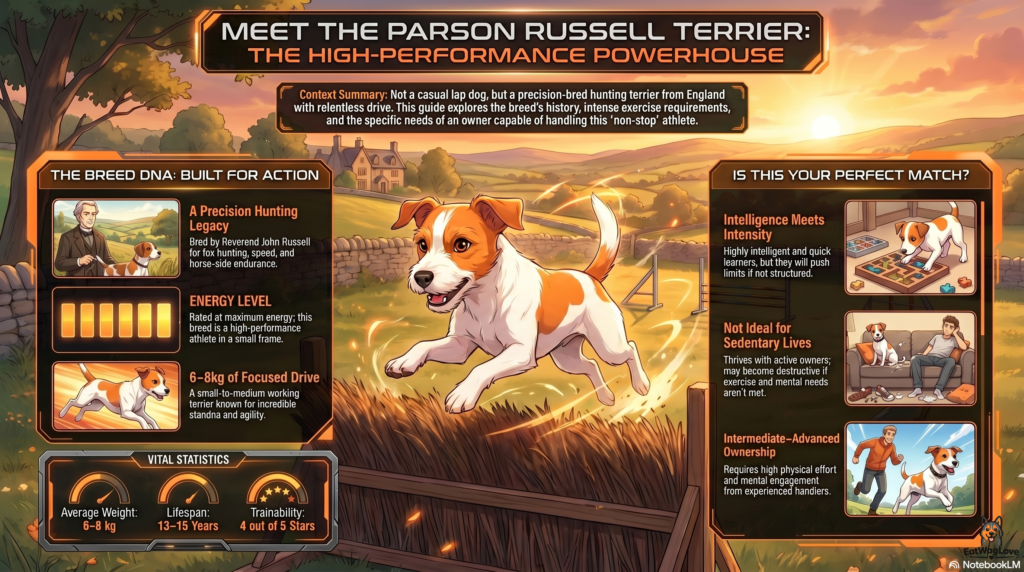
- Temperament: Energetic, bold, intelligent
- Energy Level: Very high
- Size: Small to medium
- Good With Families: Yes
- Trainability: Moderate
- Grooming: Low
- Best For: Active owners, outdoor lifestyles
📚 OVERVIEW
The Parson Russell Terrier is a high-energy working breed originally developed for fox hunting. Known for its athletic ability and fearless nature, it thrives in environments where it can stay active and engaged.
They are intelligent and confident dogs that need both physical activity and mental stimulation.
✅ PROS & CONS
Pros
- Extremely energetic and playful
- Intelligent and alert
- Strong, athletic build
- Loyal and engaging
Cons
- Very high exercise needs
- Can be stubborn
- Strong prey drive
- Requires constant stimulation
Is a Parson Russell Terrier a Good Family Dog?
Yes. The Parson Russell Terrier can be an affectionate, lively, intelligent and entertaining family dog for an active household.
These are genuine working terriers with enormous personalities packed into relatively small bodies. They usually enjoy being involved in family activities and form strong bonds with their owners.
However, prospective owners need to be comfortable with high energy, strong prey drive, digging, chasing and independent thinking.
Are Parson Russell Terriers Good With Children?
Generally, yes, particularly with active, respectful children.
They’re sturdy, playful dogs that often enjoy games and outdoor adventures.
Their energetic temperament can make them boisterous, and interactions with young children should always be supervised.
How Much Exercise Does a Parson Russell Terrier Need?
Most need at least 60–90 minutes of exercise each day, together with substantial mental stimulation.
Walking alone may not be enough.
Running, hiking, scent games, agility, Earthdog activities and interactive play can provide much better outlets for a dog developed to work energetically for long periods.
Is a Parson Russell Terrier a High-Energy Dog?
Very.
The Parson Russell Terrier is a high-energy working terrier, not simply a small companion dog.
Even after a substantial walk, many are perfectly willing to investigate the garden, chase a ball or begin a home-improvement project involving an unnecessary hole.
Is a Parson Russell Terrier Easy to Train?
They’re extremely intelligent and learn quickly, but they can also be independent.
Positive, varied and rewarding training usually produces the best results.
The challenge often isn’t teaching a Parson what a command means. It’s convincing the dog that your suggestion is more interesting than whatever it has just discovered.
Are Parson Russell Terriers Intelligent?
Yes.
Working underground after foxes required courage, problem-solving ability and independent decision-making.
Modern Parsons often excel in agility, obedience, scent work, tricks and other activities that challenge their brains.
Are Parson Russell Terriers Stubborn?
They can certainly appear stubborn.
Terriers were deliberately selected to persist when pursuing quarry rather than abandon the job easily.
That determination is extremely useful underground and occasionally less convenient when the dog has decided something in the garden deserves investigation.
Are Parson Russell Terriers Difficult to Toilet Train?
Usually not.
They’re intelligent and generally respond well to consistent routines.
Frequent outdoor opportunities and immediate positive reinforcement are particularly useful during puppyhood.
Does a Parson Russell Terrier Shed?
Yes.
Smooth-coated Parsons can shed surprisingly noticeable amounts of short hair, while broken and rough coats also shed.
Regular brushing and appropriate coat maintenance help control loose hair.
Is a Parson Russell Terrier Hypoallergenic?
No.
None of the three coat types makes the Parson Russell Terrier genuinely hypoallergenic.
All dogs produce allergens through skin, saliva and other sources.
What Coat Types Do Parson Russell Terriers Have?
There are three commonly recognised coat types:
Smooth – short and close.
Broken – mostly short with some longer wiry hair, often around the face.
Rough – longer and harsher throughout.
All should retain the practical weather-resistant character expected from a working terrier.
How Often Should You Groom a Parson Russell Terrier?
Usually once or twice a week.
Smooth coats are particularly easy to maintain, while broken and rough coats may benefit from periodic hand stripping to remove dead hair and preserve their texture.
Nails, ears and teeth also require routine care.
Should a Parson Russell Terrier Be Hand Stripped?
Broken and rough coats traditionally benefit from hand stripping.
This removes mature dead hairs while preserving the harsh texture and colour of the coat.
Clipping is sometimes used for pets but can gradually make the coat softer.
What Health Problems Are Common in Parson Russell Terriers?
Potential concerns include patellar luxation, primary lens luxation, hereditary eye disorders, deafness and certain neurological conditions.
Legg-Calvé-Perthes disease can also occur in small terrier populations.
Responsible breeders should use appropriate genetic and clinical health screening rather than relying simply on the breed’s reputation for toughness.
What Is Primary Lens Luxation in Parson Russell Terriers?
Primary lens luxation, or PLL, is an inherited eye disorder in which the fibres holding the lens in place deteriorate.
The lens can then move from its normal position, potentially causing severe pain, glaucoma and vision loss.
DNA testing is available for relevant genetic risk, making responsible breeding particularly important.
Can Parson Russell Terriers Be Deaf?
Yes.
Congenital deafness can occur, particularly in predominantly white dogs.
BAER testing can objectively determine whether a dog hears normally in both ears.
A dog deaf in only one ear can otherwise appear completely normal in everyday life.
How Long Does a Parson Russell Terrier Live?
Parson Russell Terriers commonly live around 13–15 years, with some reaching their later teens.
They’re generally robust, long-lived dogs.
Maintaining healthy weight and good dental and veterinary care can help support longevity.
How Big Does a Parson Russell Terrier Get?
Adult Parsons generally stand around 33–36 cm at the shoulder, with females typically somewhat smaller than males.
Weight commonly falls around 6–8 kg, although proportion and working structure matter more than chasing a particular number.
They’re relatively long-legged compared with many dogs commonly called Jack Russells.
Is There a Miniature Parson Russell Terrier?
No.
There’s no recognised Miniature Parson Russell Terrier.
The breed’s size and proportions were developed around its ability to follow foxes underground while remaining athletic enough to accompany a hunt.
Is There a Teacup Parson Russell Terrier?
No.
“Teacup Parson Russell Terrier” isn’t a recognised breed variety.
Extreme miniaturisation would work against the functional structure expected from this athletic working terrier.
Can a Parson Russell Terrier Live in an Apartment?
Yes, but only if its exercise and stimulation needs are properly met.
The dog’s physical size isn’t the problem.
Its energy, barking and need for activity can make apartment living challenging for sedentary owners.
Does a Parson Russell Terrier Need a Backyard?
No, but a secure yard is extremely useful.
If a garden is available, owners should remember that a fence is only effective if the terrier can’t go over it, through it or underneath it.
Are Parson Russell Terriers Escape Artists?
They can be exceptional escape artists.
Parsons are athletic jumpers, enthusiastic diggers and extremely persistent when something interesting is on the other side of a boundary.
Secure fencing is essential.
Are Parson Russell Terriers Good at Digging?
Very.
Digging is directly connected with the breed’s historical work underground.
Providing a designated digging area can be more realistic than expecting some individuals never to dig at all.
Can a Parson Russell Terrier Be Left Alone?
Adult Parsons can learn to tolerate reasonable periods alone, but bored individuals can become destructive.
They’re intelligent, energetic dogs that need physical and mental outlets.
A bored Parson with access to furniture and a garden can create its own entertainment remarkably efficiently.
Are Parson Russell Terriers Cuddly?
Many are surprisingly affectionate.
After sufficient exercise, a Parson may happily curl up beside or on its owner.
Their intense working temperament doesn’t prevent them from forming very close relationships with their families.
Are Parson Russell Terriers Good With Other Dogs?
They can be, particularly with good early socialisation.
However, terriers can be bold and assertive, and some individuals may be selective around unfamiliar dogs.
Their confidence often exceeds what their relatively small size might suggest.
Are Parson Russell Terriers Good With Cats?
Some live successfully with cats, especially when raised together.
However, the breed has a strong prey drive, and unfamiliar running cats may trigger chasing.
Individual temperament and careful introductions are extremely important.
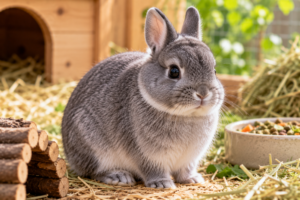
Can Parson Russell Terriers Live With Rabbits or Guinea Pigs?
They’re generally a risky combination.
The Parson was deliberately bred to pursue animals.
Rabbits, guinea pigs, hamsters and other small pets should be securely separated rather than assuming training will eliminate deeply rooted predatory instincts.
Do Parson Russell Terriers Have a Strong Prey Drive?
Yes — very strong.
Chasing and pursuing quarry are fundamental to the breed’s history.
Squirrels, rabbits, rodents and other wildlife can instantly become more interesting than an owner’s recall command.
Are Parson Russell Terriers Good Off Leash?
They can be challenging off leash.
Some develop excellent recall through intensive training, but prey drive can override it.
Secure fenced environments are the safest places for unrestricted running.
Do Parson Russell Terriers Bark a Lot?
They can be quite vocal.
Terriers traditionally used barking to communicate excitement, alert handlers and work around quarry.
Exercise, training and mental stimulation can reduce unnecessary barking, but complete silence isn’t a realistic expectation.
Are Parson Russell Terriers Good Watchdogs?
Yes.
They’re extremely alert and quick to announce unusual activity.
Their bark and confidence make them effective little alarm dogs.
Are Parson Russell Terriers Aggressive?
Aggression toward people isn’t a defining breed characteristic.
A well-bred Parson should be bold, confident and energetic.
However, their terrier intensity and prey drive require proper socialisation and responsible management.
When Does a Parson Russell Terrier Calm Down?
Many become noticeably more settled around two to three years old, but “settled” is relative.
Parsons often remain energetic, playful and highly curious well into their senior years.
This isn’t a breed that reliably transforms into a couch potato after puppyhood.
Do Parson Russell Terriers Get the Zoomies?
Absolutely.
They’re extremely fast, agile dogs with an impressive power-to-weight ratio.
A Parson at full speed can change direction almost instantly.
Are Parson Russell Terriers Good Running Dogs?
Yes.
Healthy, mature Parsons can make excellent running companions when properly conditioned.
Their working history gave them much greater stamina than their small size suggests.
Are Parson Russell Terriers Good Hiking Dogs?
Excellent.
They’re athletic, adventurous and usually enthusiastic about exploring.
Wildlife and off-leash reliability are the main considerations.
Can Parson Russell Terriers Swim?
Many can swim well, although enthusiasm varies.
They’re not specialised water dogs.
Supervision remains important around deep, cold or moving water.
What Does a Parson Russell Terrier Look Like?
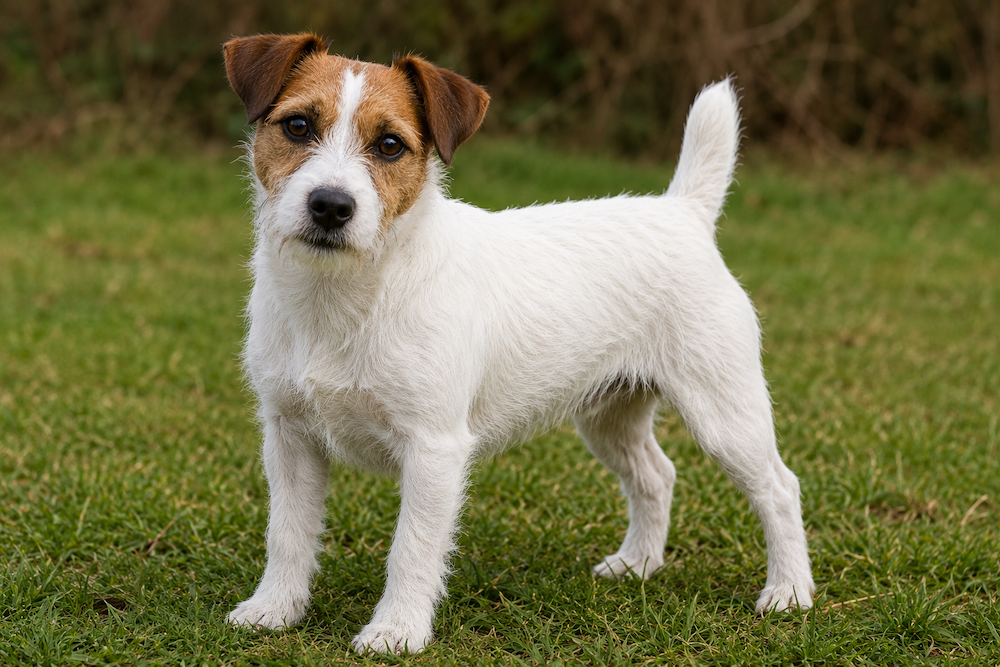
The Parson Russell Terrier is a small, athletic, relatively long-legged terrier with a predominantly white coat, compact body and V-shaped ears folding forward.
Its build should allow it to run efficiently while remaining narrow and flexible enough to work underground.
The breed should look functional rather than exaggerated.
Why Are Parson Russell Terriers Mostly White?
White colouring helped hunters distinguish a terrier from the fox it was pursuing.
This was particularly valuable when dogs emerged from cover or underground during a hunt.
Coloured markings commonly appear around the head and body.
What Colours Can Parson Russell Terriers Be?
The coat should be predominantly white, with tan, black or black-and-tan markings.
Markings are particularly common around the head and base of the tail.
The overall impression should remain that of a white terrier.
Can a Parson Russell Terrier Be Merle?
No.
Merle isn’t a traditional colour in the Parson Russell Terrier.
A merle dog marketed as a purebred Parson should raise serious questions about ancestry.
What Is the Difference Between a Parson Russell Terrier and a Jack Russell Terrier?
The names share the same historical origin but today can refer to dogs with different recognised standards.
The Parson Russell Terrier is generally taller and more squarely proportioned, reflecting the type developed to run with horses and hounds before going underground after foxes.
The modern recognised Jack Russell Terrier is typically somewhat shorter.
Usage of “Jack Russell” also varies considerably between countries and among working-dog enthusiasts.
Is a Parson Russell Terrier Just a Long-Legged Jack Russell?
That’s a useful visual shortcut, but the history is more complicated.
Both descend from the terrier tradition associated with Reverend John Russell.
Over time, different working types and breed standards developed, eventually producing separately recognised populations.
The Parson represents the taller, more squarely built fox-working type.
What Is the Difference Between a Parson Russell Terrier and a Russell Terrier?
In organisations that recognise both, the Parson Russell Terrier is the taller, squarer dog, while the Russell Terrier is lower to the ground and proportionally longer.
Both share historical roots in fox-working terriers.
Breed names and recognition have varied internationally, which explains much of the confusion.
Is a Parson Russell Terrier the Same as a Fox Terrier?
No.
Both were developed for fox-hunting work and share aspects of Britain’s terrier heritage, but they’re distinct breeds.
The Parson Russell’s development is specifically linked to Reverend John Russell and his working terriers.
Where Does the Parson Russell Terrier Come From?
The Parson Russell Terrier developed in England during the 19th century from fox-working terriers associated with Reverend John “Jack” Russell.
Russell wanted athletic terriers capable of accompanying mounted hunts and then going underground to locate or bolt a fox.
The modern breed was eventually standardised from this working tradition.
Who Was Reverend John “Jack” Russell?
John Russell was an English clergyman born in 1795 who became famous for his passion for fox hunting and working terriers.
His nickname was Jack.
Rather than creating a breed overnight, he developed and selected terriers according to their ability to work effectively with foxhounds.
Who Was Trump, John Russell’s Famous Terrier?
Trump was a white terrier bitch acquired by John Russell while he was studying at Oxford.
She became famous in later accounts as an ideal example of the type of fox-working terrier Russell admired.
Trump is enormously important to breed history, although claims that every modern Parson Russell descends directly from her are much harder to establish.
What Was the Parson Russell Terrier Originally Bred For?
Its principal job was fox work.
The dog needed enough stamina to accompany horses and hounds across country, then enough courage and flexibility to enter a fox earth.
Its purpose underground was traditionally to locate and bolt the fox so the hunt could continue, rather than simply kill it underground.
Why Does a Parson Russell Terrier Have Long Legs?
The relatively long legs were functional.
A terrier following a mounted fox hunt needed sufficient speed and stamina to keep up across country.
Once quarry went underground, the dog still needed a narrow, flexible body capable of entering an earth.
Why Is a Parson Russell Terrier’s Chest So Important?
Working terriers needed a chest narrow enough to enter underground passages.
Historically, hunters valued dogs that could be spanned, meaning a person’s hands could fit around the chest behind the front legs.
This functional requirement remains an important part of understanding correct Parson structure.
What Does “Spanning” a Parson Russell Terrier Mean?
Spanning involves placing the hands around the dog’s chest behind the shoulders to assess its size and compressibility.
A fox-working terrier needed enough chest capacity for stamina without becoming too broad to work underground.
It’s an unusual example of a breed characteristic directly connected to the dimensions of the dog’s workplace.
Did Parson Russell Terriers Kill Foxes Underground?
Their traditional role was primarily to locate and bolt the fox, allowing the hunt to continue above ground.
A terrier that became excessively aggressive underground could complicate the hunt and risk serious injury.
Courage was essential, but so were judgement and self-preservation.
Why Were Parson Russell Terriers Used With Foxhounds?
Foxhounds could follow quarry across open country but couldn’t enter narrow underground earths.
The terrier performed the part of the hunt the larger hounds physically couldn’t.
This required a dog small enough for underground work but athletic enough to travel with the hunt.
Is the Parson Russell Terrier an Old Breed?
Its working ancestry extends back into the 19th century, but formal recognition as the breed we know today came much later.
For generations, enthusiasts cared more about whether a Russell-type terrier could work than whether it matched a rigid show standard.
That delayed conventional pedigree standardisation.
Why Did It Take So Long for the Parson Russell Terrier to Become a Recognised Breed?
Many working-terrier enthusiasts resisted formal kennel-club recognition because they feared breeding for appearance would damage working ability.
As a result, Russell-type terriers remained primarily function-driven for generations.
Only much later did organised efforts establish a formal breed standard.
When Was the Parson Russell Terrier Officially Recognised?
Recognition occurred at different times under different organisations and names.
Britain’s Kennel Club recognised the type in 1990, initially under the name Parson Jack Russell Terrier.
The name was later changed to Parson Russell Terrier.
Why Was the Name Changed From Parson Jack Russell Terrier?
The shorter name Parson Russell Terrier helped distinguish the recognised taller breed from the much broader population commonly called Jack Russell Terriers.
“Parson” also directly references Reverend John Russell.
The name therefore connects the modern breed with its historical founder while reducing some of the confusion surrounding “Jack Russell.”
Are Parson Russell Terriers Still Used as Working Dogs?
Yes.
Some continue to work as terriers, while many others channel their instincts into activities such as Earthdog, barn hunt, scent work, agility and other canine sports.
Working ability remains an important part of the breed’s identity.
Are Parson Russell Terriers Good at Earthdog Sports?
Excellent.
Earthdog trials allow terriers to navigate artificial underground tunnels and locate safely contained quarry.
The activity closely reflects the purpose for which the breed was originally developed without requiring an actual fox hunt.
Are Parson Russell Terriers Good at Agility?
Excellent.
They’re fast, light, intelligent and extraordinarily agile.
A well-trained Parson can compete very successfully while clearly enjoying the opportunity to run at maximum speed with official permission.
Are Parson Russell Terriers Good at Scent Work?
Yes.
Their hunting heritage gives them plenty of enthusiasm for following scent.
Scent work can be especially valuable because it exercises the dog’s brain as well as its nose.
Why Does My Parson Russell Terrier Chase Squirrels?
Because small, fast-moving animals trigger exactly the sort of instincts humans deliberately selected for generations.
Squirrels, rabbits and rodents can be extremely difficult for a Parson to ignore.
This is one reason secure fencing and recall training are so important.
Why Does My Parson Russell Terrier Shake Its Toys?
The grab-and-shake movement is a form of predatory behaviour.
Terriers historically used similar movements when dealing with small quarry.
Squeaky toys provide a much safer modern outlet.
Why Does My Parson Russell Terrier Stare Into Holes?
Because for its ancestors, holes were potential workplaces.
Fox earths, rabbit holes and rodent burrows could contain exactly what a terrier was trying to find.
A suspicious hole can therefore receive an extraordinary amount of attention.
Why Does My Parson Russell Terrier Dig Under Fences?
Digging and pursuing interesting scents are deeply rewarding terrier behaviours.
If something fascinating is on the opposite side of a fence, the dog may view the fence as an engineering problem rather than a boundary.
Secure fencing needs to account for excavation as well as jumping.
Why Does My Parson Russell Terrier Seem Fearless?
Courage was essential for a dog expected to enter a dark underground tunnel after a fox.
Generations of selection favoured confident, persistent dogs willing to continue working in intimidating situations.
Modern Parsons often retain that extraordinary self-belief.
Is a Parson Russell Terrier a Good Dog for Older People?
Potentially, for very active older owners.
The breed’s small size is convenient, but its energy level is substantial.
Someone seeking a quiet lap dog would probably find the Parson considerably more demanding than expected.
Is a Parson Russell Terrier a Good First Dog?
It can be, but it isn’t one of the easiest choices.
They’re intelligent, robust and affectionate, but first-time owners need to be prepared for high energy, prey drive, digging, chasing, independent thinking and intensive recall training.
An active owner who enjoys training can find them enormously rewarding.
What Makes the Parson Russell Terrier Unique?
The Parson Russell Terrier makes far more sense once you understand that its body was effectively designed around two completely different workplaces.
First, it had to travel across the English countryside with a mounted fox hunt.
That required longer legs, speed and stamina.
Then the fox disappeared underground.
Suddenly the same dog needed to be small, narrow and flexible enough to follow it into an earth.
That explains the Parson’s unusual combination of athletic legs and spannable chest.
The story is closely linked with Reverend John “Jack” Russell, the fox-hunting clergyman whose terriers became famous during the 19th century. His celebrated dog Trump helped establish the ideal he admired: predominantly white, athletic and capable of genuine work.
For generations, working ability mattered more to Russell-terrier enthusiasts than formal appearance. That helps explain why the names Jack Russell, Russell Terrier and Parson Russell Terrier became so confusing and why official recognition came surprisingly late.
The modern Parson may never see a fox.
But give it a squirrel, a mysterious hole, an agility course or one unsecured section of garden fence and several centuries of terrier logic immediately become obvious.
It’s small enough to fit underground, athletic enough to get there quickly, and confident enough to assume that whatever is down there should probably be investigated.