






Friendly, playful, and full of charm — a lovable companion that blends energy with affection.
🧠 QUICK SNAPSHOT
- Temperament: Affectionate, playful, social
- Energy Level: Moderate
- Size: Medium
- Good With Families: Yes
- Trainability: Moderate
- Grooming: Low to moderate
- Best For: Families, companionship, active homes
📚 OVERVIEW
The Pugador is a cross between a Pug and a Labrador Retriever, combining the friendly nature of the Labrador with the playful personality of the Pug. They are social dogs that enjoy being around people and thrive on companionship.
Their appearance and energy levels can vary depending on which parent breed they take after more strongly.
✅ PROS & CONS
Pros
- Friendly and affectionate
- Great with families and children
- Social and people-oriented
- Fun, playful personality
Cons
- Can gain weight easily
- May inherit breathing issues from the Pug side
- Needs regular activity and attention
- Can become bored if left alone too long
Is a Pugador a Good Family Dog?
Yes. A Pugador can be an affectionate, playful and people-oriented family dog, although individual temperament can vary considerably.
The Pugador is a cross between a Pug and a Labrador Retriever. Both parent breeds are known for enjoying human companionship, but the Labrador contributes considerably more size, strength and energy.
A well-socialised Pugador can therefore make an excellent companion for an active family.
Are Pugadors Good With Children?
Generally, yes.
Both Labradors and Pugs are commonly good family companions, and Pugadors can inherit their friendly, playful nature.
Larger Pugadors may be enthusiastic enough to knock over small children accidentally, so supervision and early manners training are important.
How Much Exercise Does a Pugador Need?
Most Pugadors need around 45–90 minutes of daily exercise, depending on their size, age and breathing ability.
A dog inheriting more Labrador characteristics may be highly energetic, while one with a shorter Pug-like muzzle may have much less exercise tolerance.
Exercise should always be adjusted to the individual dog’s structure and respiratory health.
Is a Pugador Easy to Train?
Usually, yes.
Labradors are famously trainable and food motivated, while Pugs also tend to respond enthusiastically to rewards.
A Pugador may inherit some Pug stubbornness, but positive reinforcement and short, consistent training sessions usually work well.
Do Pugadors Shed a Lot?
Yes. Pugadors can be moderate to heavy shedders.
Both Labradors and many Pugs have dense shedding coats, so crossing the two doesn’t usually produce a low-shedding dog.
Regular brushing can help control loose hair.
Is a Pugador Hypoallergenic?
No.
Neither the Labrador Retriever nor Pug is considered hypoallergenic, and a Pugador isn’t expected to be either.
People with significant dog allergies should spend time around the individual dog before considering ownership.
How Often Should You Groom a Pugador?
Most Pugadors have relatively easy-care short coats and benefit from brushing once or twice a week, increasing during heavier shedding periods.
If the dog inherits pronounced facial wrinkles from the Pug, these should also be checked and kept clean and dry.
Dental care, nail trimming and ear cleaning are important routine requirements.
What Health Problems Are Common in Pugadors?
Pugadors can inherit health conditions from either parent breed, including hip and elbow dysplasia, eye disorders, obesity, patellar luxation and certain heart problems.
Dogs inheriting a shortened Pug-like muzzle can also experience brachycephalic obstructive airway syndrome (BOAS) and reduced heat tolerance.
Crossbreeding doesn’t automatically eliminate inherited disease, so health testing of both parents remains important.
Can a Pugador Have Breathing Problems?
Yes, particularly if it inherits a significantly shortened muzzle from the Pug.
A Pugador with a longer Labrador-like muzzle may have fewer brachycephalic airway concerns, but appearance alone doesn’t guarantee normal breathing.
Persistent noisy breathing, exercise intolerance or struggling in warm weather should be investigated by a veterinarian.
How Long Does a Pugador Live?
A Pugador may live approximately 10–14 years, although there is limited large-scale lifespan data specifically for this cross.
Lifespan can be influenced by adult size, genetics, body condition and inherited health problems.
Keeping a Pugador lean is particularly important because both parent breeds can be extremely enthusiastic about food.
How Big Does a Pugador Get?
Pugador size can vary enormously because its parent breeds are so different in size.
Adults may weigh approximately 10–30 kg or more, depending on which parent they resemble and how the cross has been bred.
Anyone buying a Pugador puppy should therefore be cautious about promises of an exact adult size.
When Is a Pugador Fully Grown?
Most Pugadors reach close to adult height between 12 and 18 months, although larger individuals may continue filling out beyond this.
Dogs that inherit more Labrador size generally take longer to mature than smaller, more Pug-like individuals.
Can a Pugador Live in an Apartment?
Potentially, yes.
Smaller, calmer Pugadors can adapt well to apartments when properly exercised.
A larger dog inheriting Labrador energy may find apartment living more challenging, particularly without substantial daily outdoor activity.
Can Pugadors Be Left Alone?
Adult Pugadors can learn to tolerate reasonable periods alone, but both parent breeds are strongly people-oriented.
Some may become bored or develop separation-related behaviour if regularly isolated for long periods.
Exercise, enrichment and gradual independence training can help.
Are Pugadors Cuddly?
Many are very affectionate.
Pugs were developed primarily for companionship, while Labradors are famously people-oriented dogs.
A Pugador may therefore combine the Pug’s enthusiasm for laps with a Labrador’s enthusiasm for being involved in absolutely everything.
Do Pugadors Bark a Lot?
Usually, they’re not considered exceptionally vocal, although individuals vary.
They may bark at visitors, excitement or unfamiliar noises.
Boredom and insufficient exercise can also increase barking.
Are Pugadors Good With Other Dogs?
Generally, yes.
Both parent breeds are typically sociable, and well-socialised Pugadors often enjoy the company of other dogs.
Their size can vary dramatically, so play between a small Pugador and much larger dogs should still be supervised.
Are Pugadors Good With Cats?
Many can live successfully with cats, particularly when raised with them.
Labradors can have retrieving and chasing instincts, but they’re not generally characterised by the extremely high prey drive of some hunting breeds.
Early introductions remain important.
Do Pugadors Like Water?
Some love it.
Labradors were developed as water-working retrievers and are famously enthusiastic swimmers.
However, a Pugador inheriting the Pug’s short muzzle, broad chest or breathing difficulties may be a poor swimmer and should be closely supervised around water.
Can Pugadors Handle Hot Weather?
Care is required, particularly with short-muzzled individuals.
A Pugador inheriting brachycephalic features may struggle to cool itself effectively through panting.
Exercise should be restricted during hot weather, especially during Australian summers.
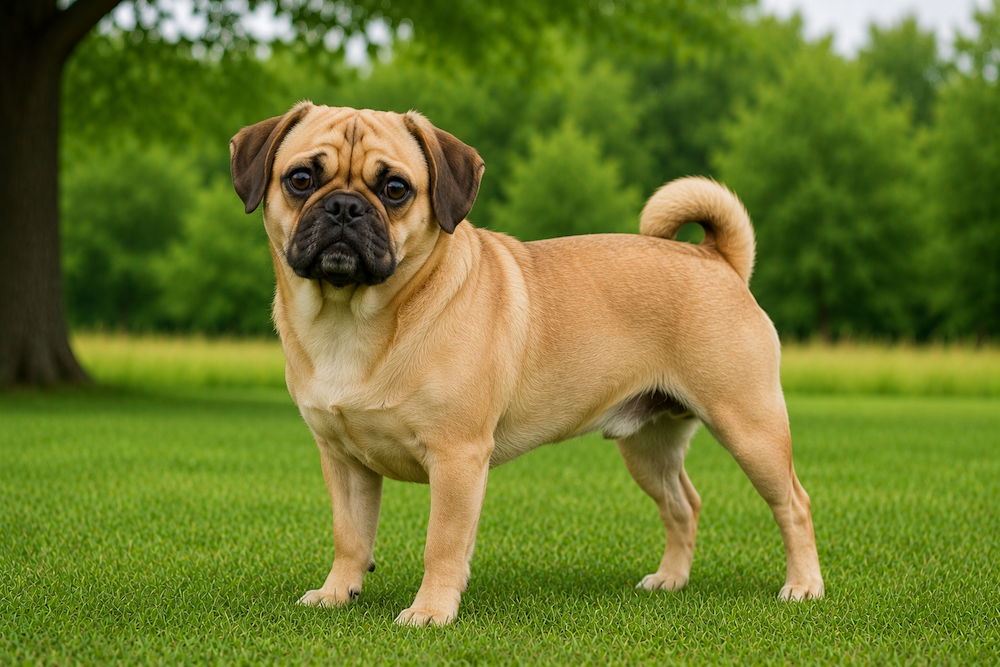
What Does a Pugador Look Like?
There is no standard Pugador appearance.
Some resemble smaller, stockier Labradors with shortened faces, while others look like substantially larger, longer-legged Pugs.
The muzzle, ears, tail, body proportions and overall size can all vary, even between puppies from the same litter.
What Colours Can Pugadors Be?
Pugadors can occur in colours including black, fawn, cream and various shades influenced by Labrador and Pug genetics.
Some may inherit darker facial markings from the Pug.
Colour is far less important than healthy structure, breathing and temperament.
What Is the Difference Between a Pugador and a Pug?
A Pug is an established small companion breed, while a Pugador combines Pug and Labrador Retriever ancestry.
Pugadors are generally larger, more athletic and potentially more energetic.
They may also have a longer muzzle, although this isn’t guaranteed.
What Is the Difference Between a Pugador and a Labrador?
A Labrador Retriever is an established medium-to-large working retriever, while a Pugador is a Labrador crossed with a Pug.
Pugadors are usually smaller and stockier than Labradors but considerably less predictable in size, structure and exercise requirements.
Is a Pugador a Purebred Dog?
No.
The Pugador is a Pug × Labrador Retriever cross rather than a recognised purebred breed.
It’s also sometimes called a Pug Lab mix or Labrador Pug mix.
Because there is no established breed standard, individual Pugadors can differ substantially.
What Does F1 Pugador Mean?
An F1 Pugador has one purebred Pug parent and one purebred Labrador Retriever parent.
The puppy receives approximately half its ancestry from each breed, but visible characteristics aren’t divided neatly in half.
One puppy may strongly resemble the Labrador while another from the same litter can inherit much more obvious Pug characteristics.
How Do You Breed a Pug With a Labrador?
The enormous size difference between the breeds creates important welfare considerations.
In a first-generation cross, the larger Labrador should generally be the mother, rather than expecting a much smaller Pug female to safely carry puppies sired by a Labrador.
Responsible breeding should prioritise reproductive safety as well as the health and structure of both parents.
Where Does the Pugador Come From?
The Pugador is a relatively modern mixed-breed companion dog rather than a breed with a well-documented historical origin.
There is no reliably established single creator, country or date for the cross.
Pug-Labrador mixes may have existed accidentally for many years before names such as Pugador became used commercially.
Is a Pugador Healthier Than a Pug?
Not necessarily.
A Pugador that inherits a longer muzzle and less exaggerated body structure may avoid some of the physical problems associated with extreme Pug conformation.
However, it can also inherit health risks from both the Pug and Labrador.
Crossbreeding alone doesn’t guarantee a healthier dog.
Is a Pugador a Good First Dog?
A Pugador can be a good first dog for an owner prepared for its unpredictable size and energy level.
They’re often affectionate, food motivated and trainable.
Prospective owners should pay particular attention to breathing, weight management, joint health and exercise requirements.
What Makes the Pugador Unique?
Few crosses combine parent breeds that look quite as different as the Pug and Labrador Retriever.
The Pug was developed over centuries as a small companion dog whose main job was staying close to people.
The Labrador developed into an athletic working retriever capable of swimming, carrying game and working alongside humans for hours.
Put them together and the genetic possibilities are enormous.
One Pugador might inherit a longer Labrador muzzle, athletic body and passion for retrieving.
Another might be shorter, stockier and far more Pug-like.
But there is one characteristic where the two breeds have remarkably little disagreement:
food.
Labradors are famous for their appetites.
Pugs aren’t exactly renowned for turning down dinner either.
So while predicting the exact size, appearance or energy level of a Pugador can be difficult, there’s a reasonable chance that when somebody opens the refrigerator, your Pugador will already be there.