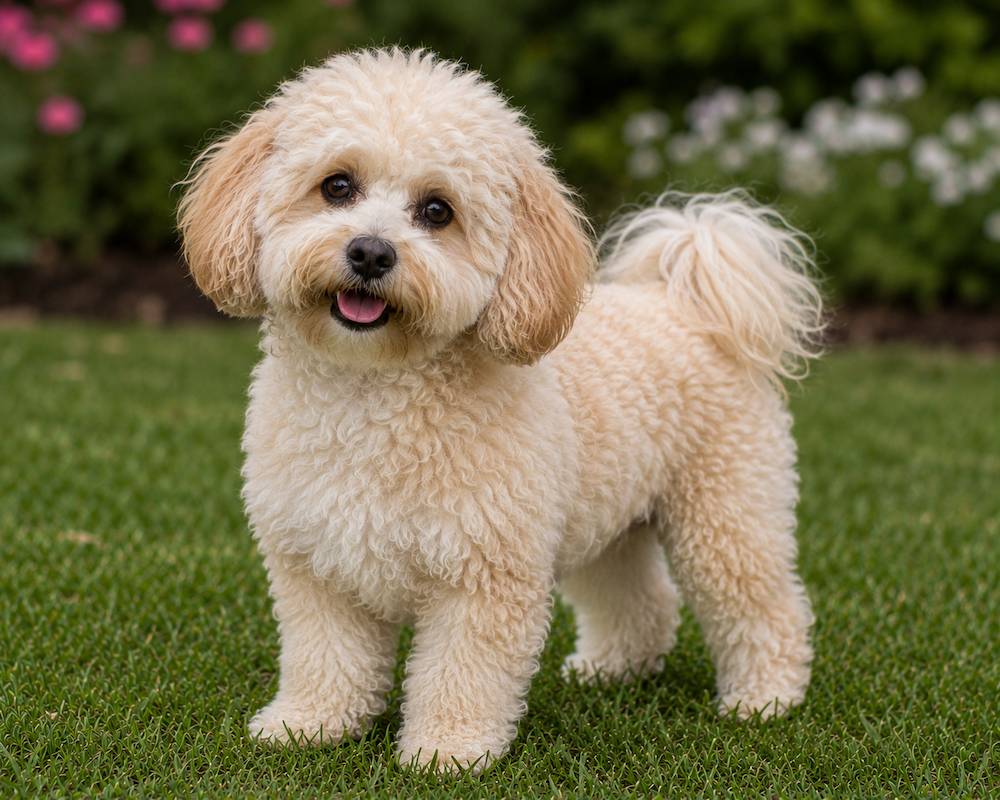




Fluffy, affectionate, and full of joy — a cheerful companion that loves family life and attention.
🧠 QUICK SNAPSHOT
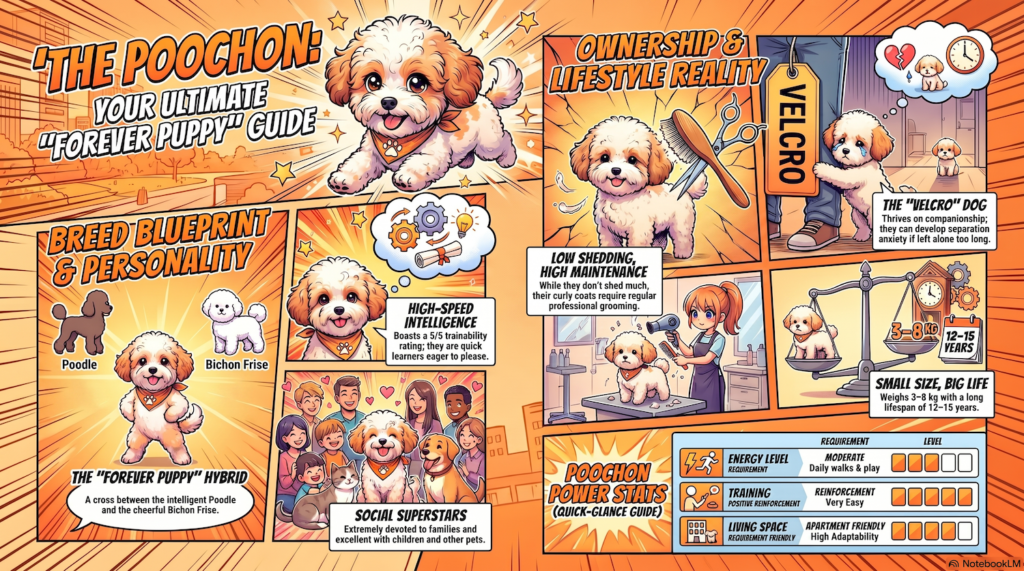
- Temperament: Friendly, affectionate, playful
- Energy Level: Moderate
- Size: Small
- Good With Families: Yes
- Trainability: High
- Grooming: Moderate to high
- Best For: Families, apartments, companionship
📚 OVERVIEW
The Poochon is a cross between a Bichon Frise and a Poodle, combining intelligence, affection, and a playful personality into one adorable package. These small dogs are known for their friendly nature and strong desire to be around people.
They are highly adaptable companions that fit comfortably into apartments, family homes, and a wide variety of lifestyles, provided they receive plenty of attention and companionship.
✅ PROS & CONS
Pros
- Extremely affectionate and family-oriented
- Intelligent and easy to train
- Often low shedding depending on coat type
- Great companion for families and seniors alike
Cons
- Requires regular grooming
- Can develop separation anxiety
- Needs daily interaction and companionship
- May become vocal if bored or lonely
Is a Poochon a Good Family Dog?
Yes. A Poochon can be an affectionate, intelligent and playful family companion.
The Poochon is a cross between a Bichon Frise and a Toy or Miniature Poodle, two breeds known for companionship and close relationships with people.
They’re generally sociable and adaptable, although temperament varies between individual dogs.
Are Poochons Good With Children?
Generally, yes.
Poochons are usually friendly and playful, making them suitable companions for respectful children.
Because they’re small dogs, interactions with young children should be supervised to prevent accidental injury from rough handling.
How Much Exercise Does a Poochon Need?
Most Poochons need around 30–60 minutes of exercise each day.
Daily walks combined with play and training are usually sufficient.
They can be surprisingly energetic and benefit from mental stimulation as much as physical exercise.
Is a Poochon Easy to Train?
Usually, yes.
Poodles are exceptionally trainable, while Bichon Frises are intelligent companion dogs that generally respond well to reward-based training.
Poochons often learn commands and tricks quickly when training is positive, consistent and interesting.
Are Poochons Difficult to Toilet Train?
Some can require patience.
Small companion breeds can take longer to become reliably house trained because they have relatively small bladders and need frequent toilet opportunities as puppies.
A consistent routine and immediate positive reinforcement usually produce the best results.
Does a Poochon Shed?
Most Poochons are low-shedding, although coat type varies.
Both the Poodle and Bichon Frise have coats that release relatively little loose hair compared with many breeds.
However, crossing them doesn’t guarantee that every Poochon will have exactly the same coat.
Is a Poochon Hypoallergenic?
Poochons are often promoted as hypoallergenic because both parent breeds are relatively low-shedding.
However, no Poochon can be guaranteed to be allergy-free.
Dog allergens are also found in saliva and skin secretions, so people with allergies should spend time with the individual dog before making a decision.
How Often Should You Groom a Poochon?
Most Poochons need brushing several times a week, and often daily if the coat is long or particularly curly.
Professional grooming is commonly required approximately every six to eight weeks.
Low shedding doesn’t mean low maintenance — loose hair tends to remain trapped within the coat, where it can form mats.
What Health Problems Are Common in Poochons?
Poochons can inherit conditions occurring in either parent breed, including patellar luxation, eye disorders, dental disease, allergies, bladder problems and certain hip or joint conditions.
Some Poodle lines can also carry inherited genetic diseases.
Responsible breeders should health-test both parents rather than assuming that a crossbreed is automatically protected from inherited disease.
How Long Does a Poochon Live?
Poochons commonly live around 12–16 years.
Both Bichon Frises and small Poodles are relatively long-lived breeds.
Healthy weight, good dental care, appropriate exercise and responsible breeding can all contribute to a long life.
How Big Does a Poochon Get?
Most Poochons weigh approximately 3–8 kg, although size can vary considerably.
A Poochon with a Toy Poodle parent will generally be smaller than one produced using a Miniature Poodle.
Because the Poochon isn’t a standardised breed, there’s no single official adult size.
When Is a Poochon Fully Grown?
Most Poochons reach close to their adult height by around 9–12 months.
They may continue filling out and developing their mature coat after this.
The eventual size depends partly on whether Toy or Miniature Poodle ancestry is involved.
Is There a Teacup Poochon?
There is no officially recognised Teacup Poochon.
“Teacup”, “Micro” and similar terms are generally marketing descriptions rather than established size varieties.
Deliberately breeding for extreme smallness can increase the risk of fragile bones, dental crowding, hypoglycaemia and other health problems.
Can a Poochon Live in an Apartment?
Yes. Poochons can make excellent apartment dogs.
Their small size and moderate exercise requirements make them adaptable to smaller homes.
They still need daily exercise, mental stimulation and companionship, and barking should be addressed through training.
Can a Poochon Be Left Alone?
Adult Poochons can learn to tolerate reasonable periods alone, but many are highly people-oriented.
Both Bichons and Poodles were developed around close interaction with humans, and some Poochons can develop separation-related behaviour.
Teaching independence gradually from puppyhood is important.
Are Poochons Cuddly?
Many are extremely cuddly.
Poochons commonly enjoy sitting on laps, sleeping beside their owners and following family members around the home.
Individual personalities vary, but affection is one of the cross’s major attractions.
Do Poochons Bark a Lot?
They can be moderately vocal.
Some bark to announce visitors, unfamiliar noises or activity outside.
Boredom and separation can also contribute to excessive barking, so exercise, enrichment and early training are important.
Are Poochons Good With Other Dogs?
Generally, yes.
Both parent breeds are usually sociable, and well-socialised Poochons often enjoy canine company.
Their small size means interactions with much larger dogs should still be supervised carefully.
Are Poochons Good With Cats?
Usually, yes.
Neither the Bichon Frise nor Poodle side automatically guarantees cat compatibility, but many Poochons live successfully with cats.
Early introductions and calm, supervised interactions provide the best foundation.
What Does a Poochon Look Like?
Poochons are typically small, fluffy dogs with soft wavy or curly coats, expressive eyes and compact bodies.
Some have tighter Poodle-like curls, while others develop a softer, fluffier Bichon-style appearance.
Their appearance can vary even between puppies from the same litter.
What Colours Can Poochons Be?
Poochons can occur in colours including white, cream, apricot, red, black, brown and combinations of these colours.
Some puppies also change colour significantly as they mature.
Poodle colour genetics in particular can produce fading or lightening over time.
Why Is My Poochon’s Coat Changing Colour?
Coat colour changes can be completely normal.
Poodles carry genes that can cause some colours to fade or lighten with age, and these can be inherited by Poochon puppies.
An apricot or red puppy, for example, may become noticeably lighter as its adult coat develops.
What Is the Difference Between a Poochon and a Bichon Frise?
A Bichon Frise is an established purebred breed, while a Poochon combines Bichon Frise and Poodle ancestry.
Poochons may have curlier coats, different colours and somewhat more variation in size and appearance.
Their temperament can also reflect different combinations of characteristics from the two parent breeds.
What Is the Difference Between a Poochon and a Cavapoo?
A Poochon is Bichon Frise × Poodle, while a Cavapoo is Cavalier King Charles Spaniel × Poodle.
Both are popular small companion crosses.
Poochons tend to have two strongly low-shedding parent breeds, while Cavapoos can inherit more noticeable shedding from the Cavalier side.
What Is the Difference Between a Poochon and a Maltipoo?
A Poochon combines a Bichon Frise and Poodle, while a Maltipoo combines a Maltese and Poodle.
Both are small, affectionate Poodle crosses with potentially low-shedding coats.
Poochons may inherit the Bichon’s characteristic fluffy coat, while Maltipoos can inherit the Maltese’s longer, silkier coat texture.
Is a Poochon a Purebred Dog?
No.
The Poochon is a cross between a Bichon Frise and a Poodle.
It’s sometimes also called a Bichpoo or Bichon Poodle, but these names generally describe the same type of cross rather than separate breeds.
What Does F1 Poochon Mean?
An F1 Poochon has one purebred Bichon Frise parent and one purebred Poodle parent.
This gives the puppy approximately 50% ancestry from each breed.
It doesn’t guarantee that its appearance, coat or personality will be an exact halfway combination.
What Is an F1B Poochon?
An F1B Poochon is generally produced by crossing an F1 Poochon back to one of its parent breeds, most commonly a Poodle.
This can increase the likelihood of a curly, low-shedding coat.
However, generation labels still can’t guarantee coat type or suitability for people with allergies.
Where Does the Poochon Come From?
The Poochon is a modern designer cross, generally associated with the growth in popularity of Poodle crosses during the late 20th and early 21st centuries.
There’s no reliably documented single breeder who can be credited with creating the first Poochon.
Accidental and intentional Bichon-Poodle crosses almost certainly existed before the name became commercially popular.
Why Were Bichon Frises Crossed With Poodles?
The combination brings together two intelligent, people-oriented companion breeds that also have low-shedding coats.
Breeders generally aim for a small, affectionate companion with the Bichon’s cheerful personality and the Poodle’s trainability.
However, genetics remain variable, so no particular coat or temperament can be guaranteed.
Is a Poochon Healthier Than a Purebred Dog?
Not automatically.
Crossbreeding can increase genetic diversity, but Poochons can still inherit genetic conditions from either parent breed.
The most important factor is responsible breeding using appropriately health-tested Bichon Frise and Poodle parents.
“Hybrid vigour” shouldn’t be treated as a substitute for health testing.
Is a Poochon a Good Dog for Older People?
Often, yes.
Poochons are small, affectionate and usually have manageable exercise requirements, making them potentially excellent companions for older people.
Owners should still consider professional grooming costs and the breed’s strong desire for companionship.
Is a Poochon a Good First Dog?
Yes. Poochons can be excellent first dogs for owners prepared for regular grooming.
They’re generally intelligent, affectionate, manageable in size and responsive to training.
The biggest misconception is that low shedding means low maintenance. Their coat may leave relatively little hair on the sofa precisely because much of that loose hair remains trapped in the curls and needs to be brushed out.
What Makes the Poochon Unique?
The Poochon combines two breeds that have far more history than its fluffy modern appearance might suggest.
The Bichon Frise comes from a centuries-old family of small Mediterranean companion dogs that became favourites in European households and royal courts.
The Poodle, despite its fashionable reputation, developed from highly intelligent European water-working dogs.
Put the two together and you can get a small companion that’s affectionate, clever, playful and remarkably trainable.
There’s also an unusual advantage compared with many other popular Poodle crosses: both sides of the family are already known for relatively low-shedding coats.
That still doesn’t make every Poochon hypoallergenic, nor does it make the coat maintenance-free.
In fact, the opposite can be true.
The hair that doesn’t conveniently fall onto your floor has an unfortunate habit of staying in the coat until somebody brushes it out.
So the Poochon may save you some vacuuming.
It has simply transferred the work to the grooming brush.