






Tiny, affectionate, and full of personality — a lovable companion that thrives on attention and family life.
🧠 QUICK SNAPSHOT
- Temperament: Affectionate, playful, confident
- Energy Level: Moderate
- Size: Small
- Good With Families: Yes
- Trainability: Moderate to high
- Grooming: Moderate to high
- Best For: Families, apartments, companionship
📚 OVERVIEW
The Morkie is a cross between a Maltese and a Yorkshire Terrier, combining the affectionate nature of the Maltese with the spirited personality of the Yorkie. These small dogs are packed with character and quickly become devoted companions.
Morkies love being around people and often form strong bonds with their owners, making them excellent lap dogs and family pets.
✅ PROS & CONS
Pros
- Extremely affectionate and loving
- Compact size suits apartments and smaller homes
- Playful and entertaining personality
- Strong bond with family members
Cons
- Requires regular grooming and coat care
- Can develop separation anxiety
- May be vocal when bored or excited
- Small size requires careful handling around young children
Is a Morkie a Good Family Dog?
Yes. The Morkie can be an affectionate, playful, lively and highly people-oriented family companion.
A Morkie is a cross between a Maltese and a Yorkshire Terrier, so temperament can vary depending on which parent it takes after more strongly.
They’re generally best with families who want a small companion dog that enjoys being closely involved in everyday life.
Is a Morkie Good With Children?
Morkies can be good with gentle, respectful children.
However, they’re small dogs and can be accidentally injured by rough handling, dropping or overly enthusiastic play.
Homes with older children who understand how to interact carefully with small dogs are often the easiest fit.
How Much Exercise Does a Morkie Need?
Most Morkies need around 30–60 minutes of exercise each day, depending on size, age and temperament.
Several shorter walks combined with indoor play often work well.
Despite their small size, the Yorkshire Terrier side can produce a surprisingly energetic little dog.
Is a Morkie a High-Energy Dog?
Usually moderately energetic.
Some are relaxed lap dogs with playful bursts, while others inherit considerably more of the Yorkshire Terrier’s busy, adventurous personality.
Mental stimulation is just as useful as physical exercise.
Is a Morkie Easy to Train?
Morkies are intelligent and can learn quickly, but they may also be independent.
The Maltese contributes companion-dog trainability, while the Yorkshire Terrier can add classic terrier determination.
Short, positive training sessions using food, praise and play generally work best.
Are Morkies Intelligent?
Yes.
Both parent breeds are intelligent, observant little dogs.
Morkies often learn household routines extremely quickly and can become very good at discovering which behaviours produce attention, food or access to someone’s lap.
Are Morkies Stubborn?
Some can be.
Yorkshire Terriers were developed from determined working terriers, while Maltese have spent centuries successfully persuading humans to accommodate them.
The resulting Morkie can be remarkably skilled at having its own opinion.
Are Morkies Difficult to Toilet Train?
They can require patience.
Small dogs have small bladders, and some Morkies dislike going outside during cold or wet weather.
Frequent toilet opportunities, supervision and consistent rewards are important.
Does a Morkie Shed?
Usually very little, although coat type varies.
Both Maltese and Yorkshire Terriers are known for relatively low-shedding coats, so many Morkies inherit this characteristic.
However, no crossbred dog’s exact coat can be guaranteed in advance.
Is a Morkie Hypoallergenic?
Not truly.
Morkies are often promoted as hypoallergenic because their parent breeds shed relatively little, but no dog is completely allergen-free.
People react primarily to proteins found in saliva, skin secretions and dander rather than simply loose hair.
What Type of Coat Does a Morkie Have?
A Morkie’s coat can range from soft and silky to slightly wavy or fluffy.
Some strongly resemble the straight, flowing Maltese coat, while others develop the finer silky texture and colouring associated with the Yorkshire Terrier.
Coat characteristics can vary even between littermates.
Does a Morkie’s Coat Keep Growing?
Many Morkies inherit continuously growing hair similar to their parent breeds.
Without regular trimming, the coat can become quite long.
This is one reason Morkies require considerably more grooming than their small size might suggest.
How Often Should You Groom a Morkie?
Ideally several times each week, and often daily if the coat is kept long.
Fine hair can tangle and mat surprisingly quickly, particularly behind the ears, beneath the legs and around the collar or harness.
Regular combing is essential.
How Often Does a Morkie Need a Haircut?
Most pet Morkies benefit from professional grooming approximately every six to eight weeks.
Many owners choose a shorter puppy-style trim because it’s easier to maintain.
Long coats require much more frequent home grooming.
Why Does My Morkie Get Tear Stains?
Tear staining can occur in both Maltese and Yorkshire Terriers and is therefore common in Morkies.
Visible staining is particularly obvious on pale facial hair.
Persistent excessive tearing should be assessed because eye irritation, blocked tear drainage, allergies or other problems can contribute.
What Health Problems Are Common in Morkies?
Potential concerns inherited from either parent can include patellar luxation, dental disease, eye disorders, tracheal problems, liver abnormalities, hypoglycaemia in very small puppies and Legg-Calvé-Perthes disease.
Responsible breeders should health-test both parent breeds rather than assuming crossbreeding automatically eliminates inherited disease.
Are Morkies Prone to Dental Problems?
Yes.
Their small jaws can lead to crowded teeth and periodontal disease.
Daily tooth brushing is particularly valuable, along with regular veterinary dental assessment.
Dental care should begin while the dog is young.
Are Morkies Prone to Luxating Patellas?
They can be.
Patellar luxation occurs when the kneecap moves out of its normal position and is relatively common among small dogs.
Affected dogs may intermittently skip or hold up a rear leg.
Are Morkies Prone to Collapsing Trachea?
They can inherit susceptibility to tracheal problems, particularly from the Yorkshire Terrier side.
A harness is often preferable to placing repeated pressure on the neck with a collar.
Persistent coughing or a characteristic honking cough warrants veterinary assessment.
Can Morkie Puppies Get Hypoglycaemia?
Very small puppies can be vulnerable to dangerously low blood sugar, particularly if they aren’t eating adequately.
Weakness, trembling, disorientation or collapse requires urgent attention.
This is one reason extremely tiny “teacup” puppies require particular caution.
Are Morkies Healthier Than Purebred Dogs?
Not automatically.
Crossing two breeds can increase genetic diversity, but a Morkie can still inherit health problems found in either the Maltese or Yorkshire Terrier.
“Hybrid vigour” doesn’t mean every crossbred puppy will be healthier than every purebred dog.
How Long Does a Morkie Live?
Morkies commonly live around 12–15 years, and some may live longer.
Both parent breeds are relatively long-lived.
Good dental care, healthy weight, appropriate exercise and preventive veterinary care can help support longevity.
How Big Does a Morkie Get?
Most Morkies are small dogs, commonly weighing around 2.5–6 kg and standing approximately 15–25 cm tall.
Size varies depending on the parents.
A crossbred dog doesn’t have the same tightly controlled size standard as an established pedigree breed.
When Is a Morkie Fully Grown?
Most reach close to their adult height by around 9–12 months.
They may continue filling out physically and maturing behaviourally beyond that point.
Very small individuals can mature somewhat earlier.
Is There a Mini Morkie?
There is no officially recognised Miniature Morkie variety.
Because Morkies are already small, terms such as “Mini Morkie” are generally marketing descriptions rather than established breed classifications.
Ask for the actual size and health history of the parents instead.
Is There a Teacup Morkie?
There is no recognised Teacup Morkie breed or size.
“Teacup” generally describes dogs deliberately bred or marketed for unusually tiny size.
Extreme miniaturisation can increase the risk of hypoglycaemia, fragile bones, dental crowding and other health problems.
Can a Morkie Live in an Apartment?
Yes.
Morkies are generally excellent apartment dogs because of their small size and moderate exercise requirements.
However, their tendency to bark can become an issue in buildings with close neighbours.
Does a Morkie Need a Backyard?
No.
Daily walks, indoor play and mental stimulation can easily meet the needs of many Morkies.
A secure yard is useful but not essential.
Can a Morkie Be Left Alone?
Morkies generally prefer considerable human companionship.
Adult dogs can learn to tolerate reasonable periods alone, but routinely leaving one isolated for long hours may lead to distress or boredom.
Independence training should begin gradually.
Are Morkies Prone to Separation Anxiety?
They can be.
Both parent breeds are strongly associated with human companionship, and many Morkies form intense attachments to their owners.
Teaching puppies that short periods alone are safe can help prevent excessive dependence.
Are Morkies Velcro Dogs?
Many are.
Following their favourite person from room to room is common.
A Morkie may be perfectly capable of independent thought while simultaneously deciding that its human shouldn’t be permitted to go anywhere unsupervised.
Are Morkies Cuddly?
Usually.
Many Morkies love laps, beds, sofas and close physical contact.
Their history comes from two breeds that have spent generations living very closely with people.
Are Morkies Good With Other Dogs?
Many are, particularly when properly socialised.
Their small size doesn’t necessarily translate into a small personality, and some can be surprisingly assertive around larger dogs.
Early positive experiences are important.
Are Morkies Good With Cats?
They can be.
Morkies raised with cats often live alongside them successfully.
However, Yorkshire Terrier ancestry can contribute prey drive, so introductions should still be gradual.
Are Morkies Good With Rabbits or Guinea Pigs?
Caution is necessary.
The Yorkshire Terrier was developed partly from working terriers used against vermin.
A Morkie that appears completely harmless around people may still have strong instincts toward small moving animals.
Do Morkies Have a Strong Prey Drive?
It varies.
Morkies leaning toward the Maltese side may show relatively little interest in chasing animals, while those inheriting stronger Yorkshire Terrier instincts can be surprisingly enthusiastic hunters.
Individual variation is considerable.
Do Morkies Bark a Lot?
They can.
Yorkshire Terriers are alert watchdogs, and Maltese can also be quick to announce unusual activity.
Without training, a Morkie may decide that every visitor, neighbour and unexplained sound deserves an official announcement.
Are Morkies Good Watchdogs?
They’re often excellent alarm dogs.
Their hearing and alertness allow them to notice activity quickly.
Their ability to physically protect a property is obviously more limited.
Are Morkies Aggressive?
Aggression isn’t an expected characteristic of a well-socialised Morkie.
However, fear, poor socialisation, resource guarding or allowing inappropriate behaviour because the dog is tiny can create problems.
Small dogs need the same thoughtful training as larger dogs.
Do Morkies Have Small Dog Syndrome?
“Small dog syndrome” isn’t a medical condition or breed trait.
It’s an informal description for behaviours such as excessive barking, guarding, lunging or demanding attention that people sometimes tolerate in small dogs but wouldn’t accept from larger ones.
Consistent training can prevent many of these behaviours.
Are Morkies Friendly With Strangers?
Many are friendly once introduced, although some initially bark or behave cautiously.
Early socialisation with different people can help create a confident adult dog.
Temperament can vary depending on which parent breed is more influential.
When Does a Morkie Calm Down?
Many begin becoming noticeably calmer between one and two years old.
However, the Yorkshire Terrier side can keep some Morkies energetic and mischievous well into adulthood.
They’re often playful throughout their lives.
Do Morkies Get the Zoomies?
Yes.
A Morkie can suddenly race through several rooms at impressive speed before returning to the sofa as though nothing happened.
Their small size makes surprisingly elaborate indoor racetracks possible.
Are Morkies Good Walking Dogs?
Yes.
Their size makes them easy to handle, while their curiosity often makes walks highly enjoyable.
Several shorter walks may suit them better than one extremely long outing.
Are Morkies Good Hiking Dogs?
Healthy adults can enjoy moderate hikes.
Their small size means owners need to consider terrain, temperature and distance carefully.
They’re more capable than they look but aren’t miniature endurance machines.
Can Morkies Swim?
Some can swim, but enthusiasm and ability vary.
Their small bodies can tire or become chilled quickly.
A canine life jacket is sensible around deep water.
Do Morkies Get Cold Easily?
Yes, many do.
Their small bodies and relatively fine coats don’t provide the insulation of a heavy double-coated breed.
A warm dog coat can be useful during genuinely cold weather.
Can Morkies Handle Hot Weather?
Generally, with sensible precautions.
Exercise should be reduced during extreme heat, and fresh water and shade should always be available.
Their small size doesn’t protect them from overheating.
What Does a Morkie Look Like?
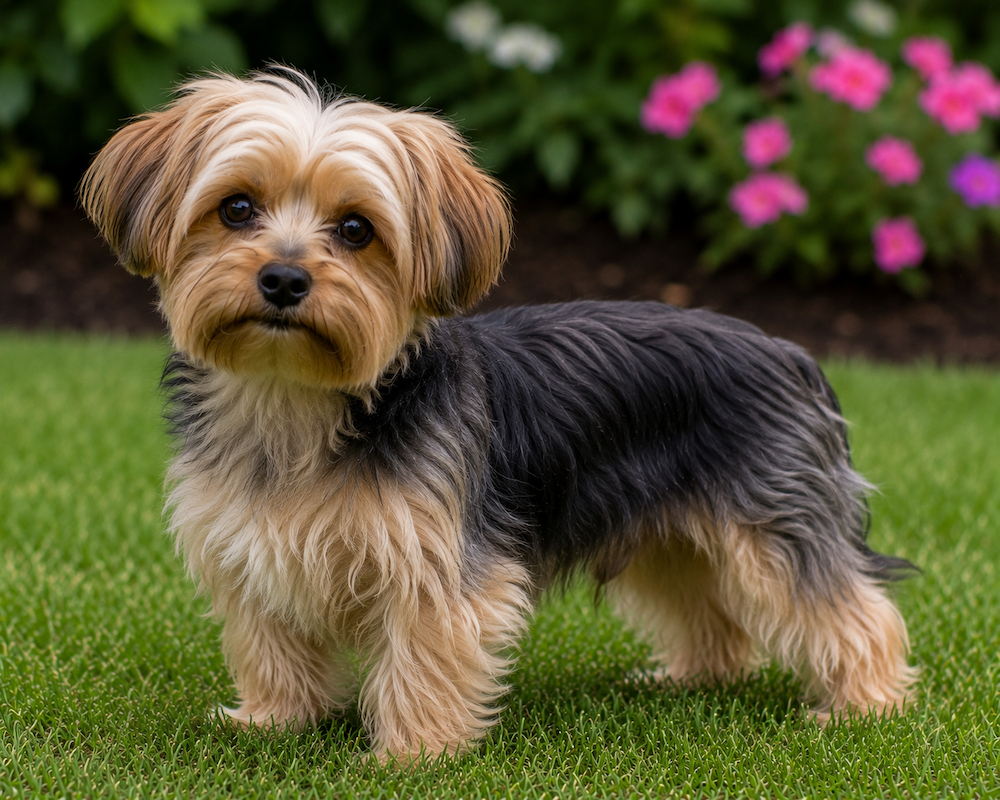
Morkies are small dogs with expressive dark eyes, compact bodies and soft coats that may be straight, silky, wavy or slightly fluffy.
Some look strongly like tiny Yorkshire Terriers, while others resemble Maltese with darker colouring.
There’s no single guaranteed Morkie appearance.
What Colours Can Morkies Be?
Possible colours include combinations of black, tan, brown, gold, cream, silver and white.
Puppy colour can change considerably as the dog matures, particularly when Yorkshire Terrier coat-colour genetics are involved.
Why Does a Morkie’s Colour Change as It Gets Older?
Yorkshire Terriers undergo dramatic coat-colour changes as they mature.
Puppies are generally much darker than adults as black hairs gradually lighten toward steel-blue or silver tones and tan areas develop richer colouring.
Morkies can inherit some of this colour-changing tendency.
Can a Morkie Be Black?
Yes.
Young Morkies can have substantial black colouring, particularly when the Yorkshire Terrier parent has a strong influence.
Some coats lighten considerably with age.
Can a Morkie Be White?
Yes.
Maltese ancestry can produce substantial white or cream colouring.
Some Morkies are predominantly pale, while others have white combined with darker Yorkshire Terrier-type colours.
Can a Morkie Be Merle?
Merle isn’t a standard colour in either the Maltese or Yorkshire Terrier.
A merle puppy marketed as a genuine first-generation Maltese × Yorkshire Terrier should therefore raise questions about additional ancestry.
Does a Morkie Look More Like a Maltese or a Yorkie?
Either is possible.
One puppy may have a predominantly pale Maltese-like coat, while a littermate can have obvious Yorkshire Terrier colouring and facial features.
Crossbreeding doesn’t produce a perfectly predictable halfway appearance.
What Is a Morkie?
A Morkie is a Maltese × Yorkshire Terrier cross.
It’s sometimes called a Yorktese or Maltese Yorkie.
The name combines elements of the two parent breed names.
Is a Morkie a Purebred Dog?
No.
A Morkie is deliberately produced from two different established breeds.
That doesn’t determine whether an individual dog will make a wonderful pet, but it does mean the Morkie isn’t a purebred in the conventional pedigree sense.
Is the Morkie Recognised by Major Kennel Clubs?
The Morkie isn’t recognised as an established purebred breed by major traditional kennel clubs such as those that register Maltese and Yorkshire Terriers.
Some hybrid or designer-dog registries may record Morkies.
Registration with such an organisation isn’t equivalent to recognition as an established purebred breed.
Is a Morkie the Same as a Yorktese?
Usually, yes.
“Morkie” became the more popular name, while Yorktese is another name used for the Maltese × Yorkshire Terrier cross.
Individual breeders and registries may use different terminology.
Is a Morkie the Same as a Maltipoo?
No.
A Morkie combines a Maltese and Yorkshire Terrier.
A Maltipoo combines a Maltese and Poodle.
The Maltese is the common parent, but the other half of the ancestry is completely different.
Is a Morkie the Same as a Yorkiepoo?
No.
A Yorkiepoo combines a Yorkshire Terrier with a Poodle.
A Morkie combines a Yorkshire Terrier with a Maltese.
Poodle ancestry therefore separates the Yorkiepoo from the Morkie.
Is a Morkie a Doodle?
No.
“Doodle” generally refers to crosses involving a Poodle.
A standard Morkie has Maltese and Yorkshire Terrier ancestry and contains no Poodle.
What Is an F1 Morkie?
An F1 Morkie is produced by crossing a purebred Maltese with a purebred Yorkshire Terrier.
Its ancestry is therefore approximately 50% from each parent breed.
That doesn’t mean every physical or behavioural trait will appear exactly halfway between the two.
What Is an F1B Morkie?
An F1B is usually produced by crossing a Morkie back to one of its parent breeds.
That could mean Morkie × Maltese or Morkie × Yorkshire Terrier.
Because those combinations produce very different genetic proportions, buyers should always ask which breed was used for the backcross.
What Is an F2 Morkie?
An F2 Morkie is generally produced by breeding two F1 Morkies together.
Later-generation breeding can produce considerable variation unless breeders are selecting consistently over many generations.
Generation labels don’t guarantee coat, temperament, size or health.
Can Two Morkies Have Purebred Morkie Puppies?
They can certainly produce Morkie puppies, but breeding two Morkies together doesn’t suddenly make their offspring purebred in the traditional kennel-club sense.
Developing a stable new breed requires many generations of documented pedigrees, predictable characteristics, health selection and a sufficiently broad breeding population.
Could the Morkie Eventually Become a Recognised Breed?
Potentially, but simply producing Morkies for many years isn’t enough.
A serious breed-development programme would need multigenerational pedigrees, a defined standard, predictable traits, systematic health testing and careful management of genetic diversity.
Whether breeders will pursue that level of coordinated development remains uncertain.
Where Does the Morkie Come From?
The Morkie emerged during the modern popularity of deliberately bred companion-dog crosses, particularly during the late 20th and early 21st centuries.
There’s no well-documented single founder, first litter or universally accepted country of origin.
Claims that one person definitively “invented” the Morkie should therefore be treated cautiously.
Was the Morkie Created in the United States?
The cross became particularly popular in North America, and many modern designer-dog sources associate its development with the United States or Canada.
However, Maltese and Yorkshire Terriers could obviously have been crossed before the name “Morkie” became fashionable.
A precise first breeder and birthplace aren’t reliably documented.
Who Invented the Morkie?
There is no reliably documented single inventor.
Unlike some breeds with carefully recorded founders, the Morkie’s early history appears to involve multiple breeders crossing Maltese and Yorkshire Terriers as demand for small companion hybrids increased.
It’s therefore better described as a modern cross that became popular rather than the creation of one identifiable person.
Did Wally Conron Create the Morkie?
No.
Wally Conron is famously associated with the development of the Labradoodle programme at Royal Guide Dogs Australia.
He didn’t create the Morkie.
The enormous popularity of Poodle crosses helped fuel the broader designer-dog trend, but not every modern hybrid traces back to Conron.
Why Were Maltese and Yorkshire Terriers Crossed?
The combination potentially brings together two highly popular small companion breeds.
Breeders could aim for the Maltese’s affectionate companion temperament alongside the Yorkshire Terrier’s confidence, intelligence and colourful silky coat.
However, crossbreeding can’t guarantee exactly which traits each puppy will inherit.
Is the Morkie a Designer Dog?
Yes.
“Designer dog” is an informal term commonly used for deliberately produced crosses between established breeds.
The Morkie fits this description because it combines Maltese and Yorkshire Terrier ancestry.
The term itself says nothing about the quality or health of an individual breeder’s dogs.
Is the Morkie an Ancient Breed?
No.
The Morkie itself is modern.
However, its two parent breeds have dramatically different and fascinating histories extending much further back.
How Old Is the Maltese Side of the Morkie?
The Maltese belongs to an extremely old Mediterranean companion-dog tradition.
Small dogs associated with Melita and the central Mediterranean were described in ancient writings, although connecting every ancient reference directly to the modern registered Maltese requires caution.
The breed has been associated with companionship for centuries.
How Old Is the Yorkshire Terrier Side of the Morkie?
The Yorkshire Terrier is much more recent.
It developed in 19th-century northern England, particularly Yorkshire and neighbouring industrial regions.
Its ancestors were working terriers used around mills, mines and other environments where rodents were a problem.
Were Yorkshire Terriers Originally Working Dogs?
Yes.
Despite today’s glamorous coat and tiny size, Yorkshire Terrier ancestors came from working terrier populations associated with vermin control.
The modern breed eventually became smaller and increasingly fashionable as a companion dog.
That working ancestry can still emerge surprisingly clearly in a Morkie.
Were Maltese Originally Working Dogs?
Primarily, no.
The Maltese has an extraordinarily long history as a small companion and lap dog.
This creates an interesting contrast within the Morkie: one side comes from an ancient companion tradition, while the other carries comparatively recent working-terrier ancestry.
Why Can Morkies Have Such Different Personalities?
Their parent breeds were historically selected for very different purposes.
The Maltese was shaped primarily around human companionship, while the Yorkshire Terrier’s ancestors needed enough courage and prey drive to pursue vermin.
A Morkie can inherit different combinations of these characteristics.
Is a Morkie More Like a Terrier or a Lap Dog?
Potentially both.
A Morkie may spend an hour cuddled on someone’s lap and then instantly transform into a tiny terrier when something small runs across the garden.
That contrast is one of the cross’s most distinctive personality features.
Is a Morkie Good for Older People?
Often, yes.
Their small size, affection and moderate exercise requirements can suit active older owners.
Potential owners should consider grooming, dental care and the possibility of barking or separation-related behaviour.
Is a Morkie a Good First Dog?
It can be.
Morkies are manageable in size, intelligent and highly companionable.
First-time owners should be prepared for regular grooming, dental care, consistent toilet training, barking and the possibility of terrier-style determination.
Are Morkies Good Therapy Dogs?
Some can be.
Their small size and strong interest in people can make calm, well-socialised individuals suitable for therapy work.
The individual dog’s confidence and ability to relax around unfamiliar people are more important than the cross itself.
Are Morkies Good at Dog Sports?
Yes.
Morkies can enjoy agility, rally, trick training, scent games and other activities adapted to their size.
The Yorkshire Terrier side can provide surprising athleticism, while both parent breeds can be enthusiastic learners.
Why Does My Morkie Follow Me Everywhere?
Both parent breeds are strongly people-oriented.
Maltese were developed primarily as companions, while modern Yorkshire Terriers also tend to bond closely with their owners.
The resulting Morkie often sees little reason why any household activity should occur without supervision.
Why Does My Morkie Sit on My Lap All the Time?
For a dog with substantial Maltese ancestry, lap sitting is hardly an unexpected career choice.
Warmth, security and human contact all reinforce the behaviour.
Many Morkies would happily make “professional lap dog” their full-time occupation.
Why Does My Morkie Suddenly Chase Small Animals?
That’s likely the Yorkshire Terrier side making itself known.
Yorkies may look like glamorous companion dogs today, but their terrier ancestors were selected for vermin control.
A Morkie can inherit those instincts even if it otherwise behaves like a dedicated lap dog.
Why Does My Morkie Shake Its Toys?
Grabbing and shaking toys resembles elements of predatory behaviour inherited from terrier ancestry.
For many Morkies, it’s completely normal play.
Durable appropriately sized toys provide a safe outlet.
Why Does My Morkie Think It’s a Big Dog?
Small terriers were historically selected for courage and determination rather than an accurate appreciation of their body weight.
A Morkie leaning toward its Yorkshire Terrier ancestry may confidently approach dogs many times its size.
Owners sometimes need to supply the risk assessment that the dog forgot to perform.
What Makes the Morkie Unique?
The Morkie brings together two tiny dogs whose histories could hardly be more different.
On one side is the Maltese, descended from an ancient Mediterranean tradition of elegant companion dogs that spent centuries close to wealthy and aristocratic households.
On the other is the Yorkshire Terrier, whose ancestors emerged from the industrial communities of northern England and included determined little terriers expected to deal with rats and other vermin.
Put those histories together and you get a dog that can be remarkably difficult to categorise.
A Morkie may have the silky coat and lap-loving instincts of a Maltese, then suddenly spot something moving in the garden and remember that half its family tree once had considerably more serious opinions about rodents.
It’s affectionate enough to follow its owner from room to room, confident enough to challenge dogs several times its size and intelligent enough to work out exactly which family member is most likely to surrender a snack.
The Morkie may be a modern cross.
But underneath that tiny designer-dog exterior are an ancient Mediterranean lap dog and a Yorkshire rat catcher sharing the controls.
And apparently, neither one is particularly interested in being ignored.