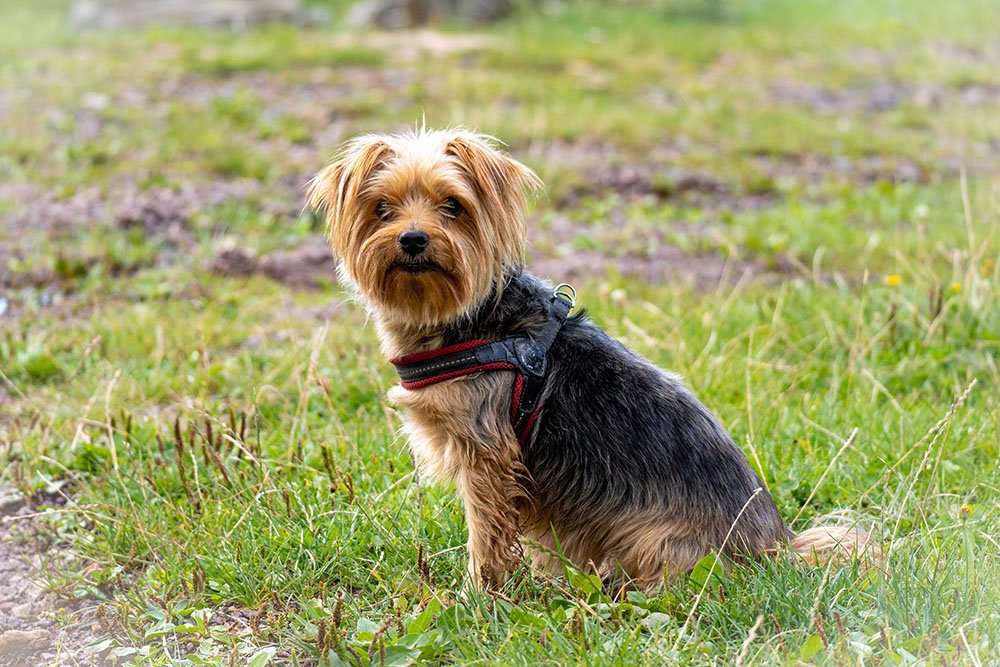







Tough, loyal, and full of character — a spirited little companion with a true Australian heart.
🧠 QUICK SNAPSHOT
- Temperament: Loyal, confident, alert
- Energy Level: Moderate to high
- Size: Small
- Good With Families: Yes
- Trainability: High
- Grooming: Low to moderate
- Best For: Families, active owners, companionship
📚 OVERVIEW
The Australian Terrier is one of Australia’s oldest native dog breeds, originally developed to help control rodents and snakes while serving as a loyal farm companion. Small in size but big in personality, these dogs are known for their courage, intelligence, and devotion to their family.
They are adaptable companions that enjoy both outdoor adventures and relaxing at home with their people
✅ PROS & CONS
Pros
- Loyal and affectionate companion
- Intelligent and easy to train
- Adaptable to many living situations
- Alert and excellent watchdog
Cons
- Strong prey drive toward small animals
- Can be vocal when alerting owners
- Needs regular exercise and stimulation
- May display typical terrier stubbornness
Is an Australian Terrier a Good Family Dog?
Yes, the Australian Terrier can be an excellent family dog, particularly for households wanting a small but confident and active companion.
Australian Terriers are affectionate, alert and typically strongly attached to their families. They tend to be more robust than their compact size might suggest and often enjoy being involved in everyday activities.
They can be very good with respectful children, although supervision is sensible with any small dog.
Like most terriers, they have an independent streak and plenty of personality.
The Australian Terrier may be small enough to fit comfortably on your lap, but nobody appears to have informed the dog that it’s supposed to behave like a small breed.
How Much Exercise Does an Australian Terrier Need?
An adult Australian Terrier generally needs around 45–60 minutes of exercise each day, combined with regular play and mental stimulation.
Daily walks, exploring, retrieving games, scent work and training can all help meet its needs.
Australian Terriers were developed as genuine working dogs rather than purely decorative companions, so they’re typically more energetic than their size might suggest.
A securely fenced garden can be useful, but these terriers still need regular interaction and activities outside the home.
Their manageable size makes exercising them relatively straightforward.
Just don’t mistake small legs for small energy levels.
Is an Australian Terrier Easy to Train?
Australian Terriers are intelligent and capable of learning quickly, although their independent terrier personality can occasionally make training interesting.
Positive reinforcement, food rewards and short, varied training sessions usually work well.
Repetitive exercises may cause them to lose interest.
Recall deserves particular attention because a small animal suddenly running away can activate strong terrier instincts.
Early socialisation is also important to help them develop confidence around unfamiliar people, dogs and environments.
The Australian Terrier can learn plenty of commands.
The challenge occasionally lies in convincing it that your priorities should outrank whatever interesting smell it has just discovered.
Does an Australian Terrier Shed?
Australian Terriers are generally low to moderate shedders.
They have a harsh, weather-resistant outer coat with a softer undercoat.
Regular brushing helps remove loose hair and prevents tangles, particularly around the furnishings on the legs and underside.
Show coats may be hand stripped to preserve their characteristic harsh texture, while pet dogs can have somewhat simpler grooming routines.
Their coat should not normally require constant bathing.
Although shedding is relatively manageable, Australian Terriers aren’t guaranteed to be hypoallergenic.
Low shedding and no allergens are not the same thing.
What Health Problems Are Common in Australian Terriers?
Australian Terriers are generally considered a robust and relatively healthy breed, but several conditions can occur.
Patellar luxation, where the kneecap slips out of its normal position, is one concern.
Legg-Calvé-Perthes disease, which affects the hip joint, can also occur in small terrier breeds including the Australian Terrier.
Diabetes mellitus has been reported at an elevated frequency in the breed, and some individuals can develop allergies or skin problems.
Eye disorders may also occur.
Responsible breeders should conduct appropriate health screening and be open about health issues occurring within their breeding lines.
How Long Do Australian Terriers Live?
Australian Terriers typically live around 12–15 years, with some individuals living longer.
Their small size and generally sturdy constitution contribute to a relatively good lifespan.
Maintaining an appropriate body weight, providing regular exercise, caring for the teeth and arranging routine veterinary checks can all support healthy ageing.
Senior Australian Terriers may slow down physically while remaining mentally alert and interested in family life.
Terriers have a remarkable ability to become elderly without necessarily becoming particularly impressed by the concept of retirement.
Can an Australian Terrier Live in an Apartment?
Yes, the Australian Terrier can adapt very well to apartment living provided its exercise and mental-stimulation needs are met.
Its small size makes it physically well suited to compact homes.
However, barking can be an issue because Australian Terriers are naturally alert watchdogs.
Training from puppyhood can help prevent every hallway noise or passing neighbour from becoming an emergency announcement.
Daily outdoor exercise remains essential regardless of the size of the home.
A small apartment isn’t necessarily a problem.
A bored terrier in a small apartment can be.
Do Australian Terriers Bark a Lot?
Australian Terriers can be quite vocal, particularly when alerting their owners to unfamiliar people, animals or sounds.
The breed was historically expected to notice what was happening around farms and properties, so alertness was valuable.
Without training, that useful instinct can turn into excessive barking.
Teaching a reliable quiet cue, providing sufficient exercise and preventing boredom can make a significant difference.
They generally make excellent watchdogs because very little escapes their attention.
The Australian Terrier might weigh only a few kilograms, but its internal security system appears to believe it’s responsible for the entire property.
Are Australian Terriers Good With Other Dogs?
Australian Terriers can live successfully with other dogs, particularly when properly socialised from puppyhood.
However, terriers are often confident and assertive, and some Australian Terriers may challenge dogs considerably larger than themselves.
Careful introductions are important in multi-dog households.
Early socialisation can help puppies develop appropriate communication skills around other dogs.
Owners shouldn’t assume that small size automatically means a dog will be submissive.
The Australian Terrier has historically displayed considerably more courage than concern about weight categories.
Are Australian Terriers Good With Cats?
Australian Terriers can sometimes live successfully with cats, particularly when raised alongside them, but their strong prey drive means careful introductions are important.
The breed was developed partly to control rats, snakes and other unwanted animals around Australian properties.
Rapid movement can therefore trigger chasing behaviour.
A dog that accepts its own household cat may still chase unfamiliar cats outdoors.
Small pets such as mice, rats, guinea pigs and rabbits require particularly careful separation.
A terrier’s hunting instincts don’t disappear simply because dinner now arrives in a bowl.
Can an Australian Terrier Be Left Alone?
A mature Australian Terrier can generally tolerate reasonable periods alone when gradually accustomed to them.
However, these dogs form strong attachments to their families and shouldn’t routinely spend most of their lives isolated.
Bored Australian Terriers may bark, dig or find other ways to entertain themselves.
Providing exercise before longer absences and leaving appropriate enrichment can help.
Their independent terrier personality can make them somewhat more self-sufficient than certain companion breeds, but independence doesn’t mean they don’t value company.
Do Australian Terriers Dig?
Yes, many Australian Terriers love to dig.
Digging is perfectly understandable when you consider their working history.
Terriers were developed to pursue vermin, including animals that disappeared into burrows or hiding places.
A modern Australian Terrier may therefore approach a beautifully landscaped garden and see something quite different from its owner:
an exciting excavation project awaiting professional attention.
Training, supervision and providing a designated digging area can help protect prized garden beds.
Physical exercise and mental stimulation may also reduce digging caused purely by boredom.
Why Were Australian Terriers Bred to Hunt Rats and Snakes?
Australian Terriers were developed as practical working dogs capable of controlling vermin around farms, homesteads and settlements.
Early Australian life could involve substantial rodent problems, while venomous snakes represented another potential danger.
Small, courageous terriers were useful because they could pursue pests into places larger dogs couldn’t easily reach.
The breed’s speed, alertness and determination made it valuable around properties.
Snake encounters are obviously extremely dangerous, and modern owners should never encourage their dogs to attack snakes.
What was once considered useful working behaviour is not a safe recreational activity for today’s pet terrier.
Where Does the Australian Terrier Come From?
The Australian Terrier was developed in Australia during the 19th century, largely from British terrier breeds brought to the country by settlers.
Its ancestry is believed to involve several terrier types, with breeds such as the Cairn, Skye and other British terriers contributing to its development.
Breeders wanted a small but hardy dog capable of coping with Australian conditions while performing practical jobs around farms and settlements.
Unlike several breeds carrying “Australian” in their names, this one genuinely was developed in Australia.
It is also historically significant as one of the earliest Australian-developed dog breeds to gain formal recognition.
Is the Australian Terrier Related to the Silky Terrier?
Yes, the Australian Terrier and Australian Silky Terrier share historical connections, although they’re separate breeds today.
Both developed in Australia using terrier ancestry imported from Britain.
The Silky Terrier was influenced by Australian Terrier-type dogs together with Yorkshire Terriers, producing a smaller companion with a much finer, silkier coat.
The Australian Terrier retained a harsher coat and more obvious working-terrier appearance.
Their personalities also reflect their histories: both can be lively and confident, but the Australian Terrier was particularly shaped as a practical vermin-control and farm dog.
They’re relatives, but one kept its work jacket while the other developed a considerably silkier wardrobe.