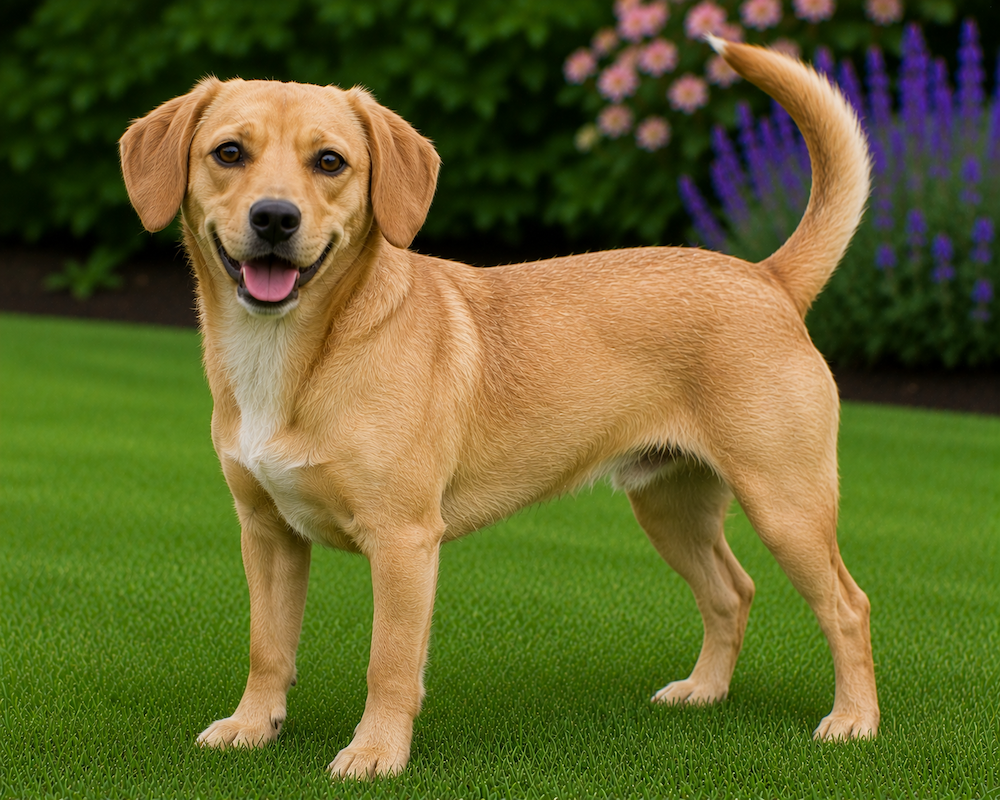







Friendly, energetic, and endlessly loyal — a lovable companion that combines the best traits of the Beagle and Labrador Retriever.
🧠 QUICK SNAPSHOT
- Temperament: Friendly, affectionate, intelligent
- Energy Level: High
- Size: Medium to large
- Good With Families: Yes
- Trainability: High
- Grooming: Low
- Best For: Active families, outdoor lifestyles, companionship
📚 OVERVIEW
The Beagador is a cross between a Beagle and a Labrador Retriever, creating a friendly, intelligent, and energetic companion. Combining the Beagle’s incredible sense of smell with the Labrador’s eagerness to please, the Beagador is an affectionate family dog that loves being involved in every activity.
These dogs are social, playful, and happiest when they have plenty of exercise, mental stimulation, and quality time with their family.
✅ PROS & CONS
Pros
- Extremely friendly and affectionate
- Great with children and other pets
- Intelligent and easy to train
- Excellent companion for active families
Cons
- High exercise requirements
- Can follow scents and wander if off lead
- May become destructive if bored
- Prone to weight gain without proper diet and activity
Is a Beagador a Good Family Dog?
Yes, a Beagador can be an excellent family dog, particularly for active households wanting a friendly and outgoing companion.
The Beagador is a cross between a Beagle and Labrador Retriever, two breeds famous for their sociable personalities. Many Beagadors are affectionate, playful and enthusiastic about participating in family life.
They can be very good with children, although younger dogs may be energetic and boisterous.
Individual temperament varies because the Beagador is a crossbreed rather than a standardised breed.
One trait you can reasonably prepare for is enthusiasm — for people, games, walks and especially anything that might possibly be edible.
How Much Exercise Does a Beagador Need?
Most adult Beagadors need around 60–90 minutes of exercise each day, although particularly energetic individuals may require more.
Both parent breeds were developed as working dogs.
Labradors are athletic retrievers, while Beagles are persistent scent hounds capable of following trails for long periods.
Walking, hiking, retrieving, swimming and scent games can all provide excellent exercise.
Mental stimulation is equally important.
A Beagador’s nose can turn an ordinary walk into a lengthy investigation, so allowing appropriate opportunities to sniff can be surprisingly satisfying.
Is a Beagador Easy to Train?
Beagadors are usually intelligent and capable of learning quickly, although their Beagle ancestry can contribute an independent streak.
Labradors are famously trainable and food motivated, while Beagles can become intensely focused on interesting scents.
Fortunately, many Beagadors are also extremely interested in treats, which can make positive-reinforcement training highly effective.
Recall training should begin early.
Once an interesting smell appears, a Beagador may suddenly experience a temporary decline in its ability to hear its own name.
The dog hasn’t necessarily forgotten its training.
Its nose has simply submitted a higher-priority request.
Does a Beagador Shed?
Yes, Beagadors generally shed moderately and sometimes quite heavily.
Both Beagles and Labrador Retrievers have short, dense coats that shed.
A Beagador may therefore look relatively low maintenance while still depositing a surprising amount of hair around the home.
Brushing once or twice each week can help remove loose hair, with more frequent grooming during heavier seasonal shedding.
Their coat doesn’t normally require professional trimming.
Beagadors aren’t considered hypoallergenic and may not suit people with significant dog allergies.
What Health Problems Are Common in Beagadors?
Beagadors can potentially inherit health conditions found in both Beagles and Labrador Retrievers.
Hip and elbow dysplasia are important concerns, particularly from Labrador ancestry.
Inherited eye diseases can occur in both parent breeds.
Beagles can also be predisposed to conditions including epilepsy and certain inherited disorders, while Labradors have their own genetic risks including exercise-induced collapse (EIC) in some lines.
Ear infections can occur because both breeds have dropped ears that can restrict airflow.
Obesity is another major concern because both parent breeds can be highly food motivated.
Responsible breeders should health-test both parents for conditions relevant to their respective breeds.
How Long Do Beagadors Live?
Beagadors commonly live around 10–15 years, although lifespan varies according to genetics, size and overall health.
Maintaining a healthy body weight is particularly important.
Both Beagles and Labradors have reputations for enthusiastic appetites, and obesity can contribute to joint disease, diabetes and other health problems.
Regular exercise, appropriate portions, dental care and preventive veterinary checks can all support a longer, healthier life.
The greatest challenge may be convincing your Beagador that “I’m starving” isn’t automatically a medical emergency.
How Big Does a Beagador Get?
Beagadors are generally medium-sized dogs, but adult size can vary considerably.
A Beagle is much smaller than a Labrador Retriever, so puppies can mature anywhere between the typical sizes of their parents.
Many adult Beagadors weigh somewhere around 14–30 kg, although individuals may fall outside that range.
Some inherit the stockier build and greater height of the Labrador, while others remain closer to Beagle size.
Because the cross isn’t standardised, prospective owners should look at the actual size of both parents rather than expecting one guaranteed adult size.
Can a Beagador Live in an Apartment?
A Beagador can live in an apartment, but its exercise requirements and potential vocal behaviour need consideration.
These are usually energetic dogs that need substantial daily outdoor activity.
Beagle ancestry can also contribute barking, baying or howling, which may become an issue with close neighbours.
A well-exercised Beagador can settle nicely indoors.
Access to parks and interesting walking routes makes apartment living considerably easier.
The size of the home matters less than whether the dog receives enough exercise, companionship and things to sniff.
Do Beagadors Bark or Howl a Lot?
Some Beagadors can be quite vocal, particularly if they inherit the Beagle’s characteristic baying behaviour.
Beagles were bred to vocalise while following scent trails so hunters could locate the pack.
Labradors are generally less famous for howling, so individual Beagadors vary considerably.
Excitement, boredom, loneliness and interesting smells outside the home can all trigger vocalisation.
Early training and sufficient exercise can help prevent excessive barking.
A Beagador that inherits the Beagle voice and Labrador enthusiasm can produce an impressively enthusiastic neighbourhood announcement system.
Are Beagadors Good With Other Dogs?
Beagadors are generally very sociable with other dogs.
Both parent breeds have histories of working alongside other dogs and tend to be naturally social.
Many Beagadors enjoy canine companionship and can thrive in multi-dog households.
Early socialisation remains important so puppies develop appropriate communication and play skills.
Their enthusiasm can occasionally overwhelm quieter dogs, so matching personalities and play styles is important.
Are Beagadors Good With Cats?
Many Beagadors can live successfully with cats, particularly when raised alongside them and introduced carefully.
However, Beagle ancestry can contribute a strong prey drive and an intense interest in scent.
A running cat may trigger chasing behaviour in some individuals.
Training should discourage chasing from puppyhood, and cats should have safe areas where the dog cannot disturb them.
Small animals such as rabbits and rodents require particularly careful management because scent-hound instincts may be stronger around potential prey species.
Can a Beagador Be Left Alone?
Beagadors generally prefer plenty of companionship and may struggle when routinely left alone for long periods.
Both Beagles and Labradors are highly social dogs.
Bored or lonely Beagadors may bark, howl, chew or search for food and other entertainment.
Puppies should gradually learn that reasonable periods alone are normal.
Exercise and enrichment before absences can also help.
A Beagador may be perfectly capable of spending some time alone, but leaving an intelligent scent hound with Labrador appetite unsupervised and bored can produce some remarkably creative household investigations.
Do Beagadors Have a Strong Sense of Smell?
Yes. Beagadors can inherit an exceptionally powerful sense of smell, particularly from their Beagle ancestry.
Beagles were specifically developed to follow scent trails while hunting small game.
Labradors also possess excellent noses and are widely used in detection, search and assistance work.
Combining those backgrounds can produce a dog that takes scent extremely seriously.
Scent games, tracking exercises and nose work can therefore provide excellent enrichment.
Owners should also secure food carefully.
A cupboard that smells empty to you may contain an entire forensic investigation to a Beagador.
Do Beagadors Like Water?
Many Beagadors enjoy swimming and playing in water, particularly if they inherit strong Labrador Retriever characteristics.
Labradors were developed as water-working retrievers and have a strong historical association with swimming.
Beagles aren’t specialised water dogs, however, so not every Beagador will automatically love swimming.
Dogs should be introduced to water gradually and never forced.
Individual body shape and confidence also influence swimming ability.
If your Beagador inherits the Labrador enthusiasm for water, don’t be surprised if muddy ponds suddenly become irresistible tourist attractions.
Why Are Beagadors So Food Motivated?
Beagadors can be exceptionally food motivated because both parent breeds have reputations for enthusiastic appetites.
Labrador Retrievers are particularly famous for their interest in food, and research has identified genetic variants affecting appetite regulation in some Labradors.
Beagles are also highly food-driven dogs and often excel when treats are incorporated into training.
This motivation can make training easier, but it also increases the importance of portion control.
Treat calories need to be included in the dog’s overall daily intake.
Owners should also secure rubbish bins and food cupboards.
A Beagador may regard the phrase “not for dogs” as an interesting hypothesis requiring independent testing.
Is a Beagador the Same as a Labbe?
Usually, yes. Beagador and Labbe are both names commonly used for a Beagle–Labrador Retriever cross.
Other informal names may also appear.
Because this isn’t a formally standardised pedigree breed, there isn’t an internationally controlled naming system.
The name doesn’t determine which parent the puppy will resemble most strongly.
One Beagador may look like a slightly oversized Beagle, while another may resemble a smaller Labrador with longer ears.
Is a Beagador a Recognised Dog Breed?
The Beagador is generally considered a crossbreed rather than a formally recognised pedigree breed by major international kennel clubs.
It’s produced from Beagle and Labrador Retriever ancestry.
There is no single universally accepted Beagador breed standard, so size, appearance, coat and temperament can vary significantly.
That makes responsible breeding particularly important.
Prospective owners should ask about health testing of both parent breeds, temperament and the actual parents rather than relying on the Beagador label alone.
Where Did the Beagador Come From?
There is no well-documented single origin for the Beagador.
Beagle–Labrador crosses may have occurred accidentally for many years before people began deliberately breeding and marketing them as Beagadors or Labbes.
Their modern popularity fits within the broader rise of intentionally produced crossbreeds and “designer dogs.”
The combination has obvious appeal: the friendly, trainable Labrador Retriever paired with the compact, cheerful and scent-driven Beagle.
However, genetics doesn’t simply deliver the most desirable characteristic from each parent.
A Beagador might inherit the Labrador’s retrieving enthusiasm, the Beagle’s nose, characteristics of both — or an unpredictable mixture.
That’s the important thing to remember with this cross:
you know the ingredients, but every puppy can be a slightly different recipe.