






Intelligent, athletic, and wonderfully versatile — a hardworking companion that thrives on activity and close family bonds.
🧠 QUICK SNAPSHOT
- Temperament: Intelligent, loyal, energetic
- Energy Level: High
- Size: Medium
- Good With Families: Yes
- Trainability: Very high
- Grooming: Low
- Best For: Active families, working homes, outdoor enthusiasts
📚 OVERVIEW
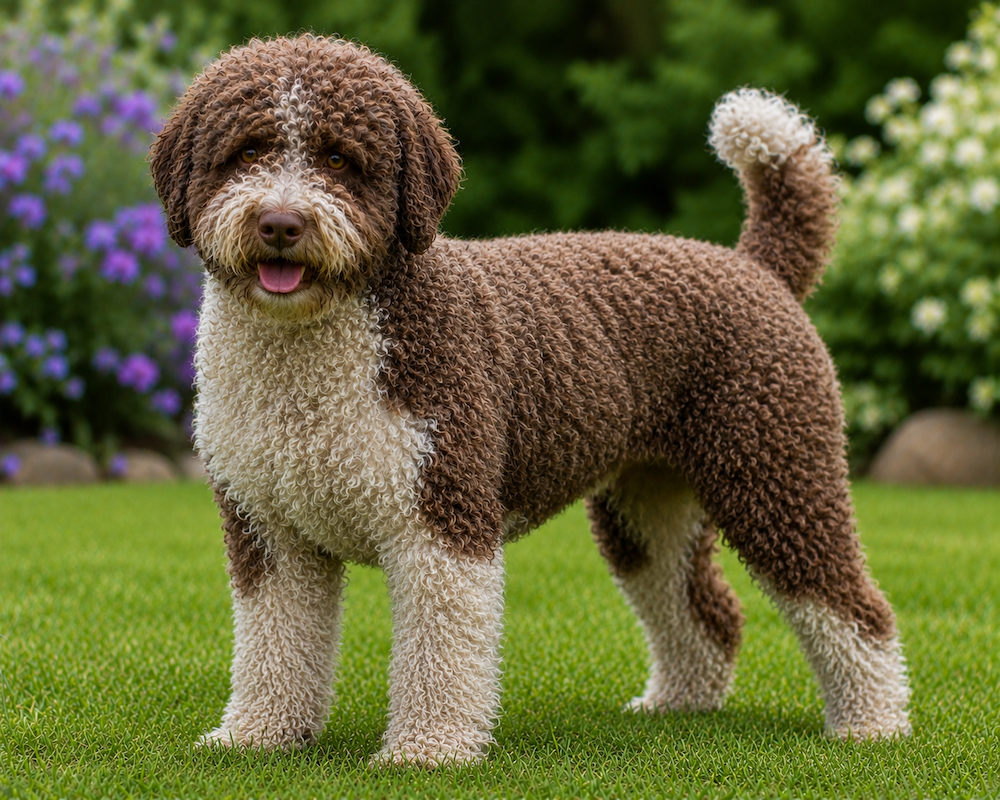
The Spanish Water Dog is a versatile working breed originally developed in Spain to herd livestock, retrieve game, and assist fishermen. Easily recognised by its distinctive curly coat, this breed is highly intelligent, athletic, and eager to work.
Spanish Water Dogs form deep bonds with their families and thrive when they have a purpose. Whether competing in dog sports, hiking, swimming, or simply joining family adventures, they are happiest when both their minds and bodies are kept active.
✅ PROS & CONS
Pros
- Exceptionally intelligent and trainable
- Loyal and devoted to family
- Excellent all-round working and sporting dog
- Low-shedding curly coat
Cons
- Needs significant daily exercise
- Requires plenty of mental stimulation
- Can be reserved with strangers
- Benefits from experienced training and early socialisation
Is a Spanish Water Dog a Good Family Dog?
Yes. Spanish Water Dogs can be loyal, intelligent and affectionate family dogs in active households.
They tend to form strong bonds with their families but can be naturally reserved or suspicious around strangers.
Early socialisation and consistent training are particularly important with this alert, working breed.
Are Spanish Water Dogs Good With Children?
Spanish Water Dogs can be good with respectful children, particularly when raised alongside them.
Their energetic nature and herding instincts can sometimes lead them to chase or attempt to control running children.
Early training helps establish appropriate behaviour.
How Much Exercise Does a Spanish Water Dog Need?
Most adult Spanish Water Dogs need around 60–90 minutes of exercise each day, with active individuals potentially needing more.
Walking, hiking, swimming, retrieving, training and dog sports can all provide useful outlets.
Mental stimulation is just as important because this is an exceptionally intelligent working breed.
Are Spanish Water Dogs Easy to Train?
Yes. Spanish Water Dogs are highly intelligent and generally quick learners.
However, they’re also independent, observant and capable of making their own decisions.
Positive, consistent training works particularly well, while harsh training can be counterproductive with this sensitive breed.
Do Spanish Water Dogs Shed?
Spanish Water Dogs are generally considered very low-shedding dogs.
Their distinctive curly coat tends to retain loose hair rather than releasing large amounts around the home.
Low shedding doesn’t mean the coat requires no care, however.
Are Spanish Water Dogs Hypoallergenic?
They’re often described as hypoallergenic because they shed relatively little, but no dog is completely hypoallergenic.
Dog allergens are also present in saliva and skin secretions.
People with allergies should spend time around adult Spanish Water Dogs before deciding whether the breed is suitable.
How Do You Groom a Spanish Water Dog?
The Spanish Water Dog has unusual grooming requirements.
Traditionally, its curly coat is not brushed or combed because doing so disrupts the natural curls and cords.
The coat is usually allowed to grow naturally and may be clipped periodically to an even length.
Owners need to learn how to maintain the coat correctly and prevent inappropriate matting.
Do Spanish Water Dogs Have Dreadlocks?
Their curly coat can naturally form cords as it grows, giving mature dogs a dreadlock-like appearance.
This shouldn’t simply be treated like ordinary neglected matting.
Properly maintained cords need to be monitored and separated appropriately so the coat and skin remain healthy.
What Health Problems Are Common in Spanish Water Dogs?
Potential health concerns include hip dysplasia, certain inherited eye diseases, thyroid problems and some neurological conditions.
Congenital deafness can also occur.
Responsible breeders should perform appropriate health and genetic testing before breeding.
How Long Do Spanish Water Dogs Live?
Spanish Water Dogs commonly live around 12–14 years.
Some live longer with good genetics, appropriate exercise, healthy body condition and regular preventive veterinary care.
How Big Does a Spanish Water Dog Get?
Spanish Water Dogs are medium-sized.
Adults generally stand around 40–50 cm at the shoulder and commonly weigh approximately 14–22 kg, with males typically larger than females.
Their curly coats can make them look considerably bulkier than they actually are.
Can a Spanish Water Dog Live in an Apartment?
It’s possible, but the breed’s exercise and mental-stimulation requirements must be taken seriously.
A well-exercised Spanish Water Dog can settle indoors, but this is an active working breed rather than a naturally sedentary companion dog.
Access to a backyard doesn’t replace daily activity.
Can Spanish Water Dogs Be Left Alone?
Adult Spanish Water Dogs can learn to tolerate reasonable periods alone.
However, they’re intelligent dogs that form close relationships with their families and can become bored without sufficient activity.
Long periods of isolation aren’t ideal.
Do Spanish Water Dogs Bark a Lot?
They can be quite vocal.
Spanish Water Dogs are naturally alert and watchful, and many readily bark when strangers approach or something unusual occurs.
Early training can help prevent alert barking from becoming excessive.
Are Spanish Water Dogs Good Guard Dogs?
Spanish Water Dogs can make effective watchdogs because they’re naturally observant and often reserved with strangers.
Some individuals also have protective instincts.
Extensive socialisation is important so appropriate watchfulness doesn’t develop into excessive suspicion or reactivity.
Are Spanish Water Dogs Affectionate?
Yes. Spanish Water Dogs are generally very affectionate and devoted to their families.
They may be considerably more reserved with unfamiliar people.
Many become particularly attached to one person while still forming strong relationships with the entire household.
Are Spanish Water Dogs Good With Other Dogs?
They can be when properly socialised.
Some Spanish Water Dogs can be confident or selective around unfamiliar dogs, making early positive experiences important.
Well-socialised individuals can live successfully in multi-dog households.
Are Spanish Water Dogs Good With Cats?
Many can live successfully with cats, particularly when raised alongside them.
However, their herding and working instincts can encourage chasing or controlling moving animals.
Introductions should be gradual and supervised.
Do Spanish Water Dogs Have Herding Instincts?
Yes. Herding is an important part of the breed’s working history.
Some Spanish Water Dogs may instinctively circle, chase or attempt to control the movement of livestock, other pets or even people.
Training and structured activities can provide appropriate outlets for these behaviours.
Do Spanish Water Dogs Like Water?
Many do.
The breed has historically performed water-related work and has become known for its strong swimming ability and retrieving skills.
Individual preferences vary, but many Spanish Water Dogs enthusiastically enjoy swimming and water activities.
Are Spanish Water Dogs Good Swimmers?
Yes. Most Spanish Water Dogs are naturally capable swimmers.
Their athletic build and historical use for water work make swimming a particularly suitable form of exercise.
Dogs should still be supervised around deep, rough or unfamiliar water.
Are Spanish Water Dogs High-Energy?
Yes. Spanish Water Dogs are active working dogs that need regular physical and mental activity.
They’re generally happiest when given something constructive to do rather than simply being expected to entertain themselves.
Agility, obedience, scent work, retrieving and herding activities can all suit the breed.
Are Spanish Water Dogs Smart?
Very.
Spanish Water Dogs were developed to perform several demanding working roles and are known for their intelligence, problem-solving ability and versatility.
They learn quickly, but that intelligence also means insufficiently stimulated dogs can invent their own activities.
What Colours Do Spanish Water Dogs Come In?
Spanish Water Dogs can occur in several colours, including black, brown, beige and white, as well as certain two-colour combinations.
Their distinctive curly or corded coat is far more important to their recognisable appearance than any single colour.
Is a Spanish Water Dog the Same as a Portuguese Water Dog?
No. They’re separate breeds.
Both have curly coats and histories involving water work, but the Spanish Water Dog also has a strong livestock-herding background, while the Portuguese Water Dog became particularly associated with assisting fishermen.
They also differ in coat standards, appearance and breed history.
What Were Spanish Water Dogs Originally Bred For?
Spanish Water Dogs developed as remarkably versatile working dogs.
They were used for herding livestock, retrieving from water and assisting with hunting and fishing-related work, with particular roles varying between regions.
Their ability to perform several different jobs explains much of the breed’s intelligence and adaptability.
Where Does the Spanish Water Dog Come From?
The Spanish Water Dog originated in Spain, where curly-coated working dogs have existed for centuries.
They became particularly associated with livestock work in areas such as Andalusia while also performing water and retrieving tasks in other regions.
The modern breed was formally standardised much more recently.
Is a Spanish Water Dog a Good First Dog?
A Spanish Water Dog can be challenging for an inexperienced owner.
They’re extremely intelligent and trainable, but their energy, sensitivity, herding instincts and natural wariness of strangers require thoughtful training and socialisation.
An active first-time owner willing to invest heavily in training can succeed, but this isn’t an effortless beginner breed.
What Makes the Spanish Water Dog Unique?
The Spanish Water Dog looks distinctive enough simply because of its extraordinary curly coat that can naturally develop into cords.
But the really interesting part is what sits underneath it.
This wasn’t a dog developed to perform one specialised task.
Spanish Water Dogs have been used to herd livestock, retrieve from water, assist hunters and perform water-related work — an impressive collection of jobs for one medium-sized dog.
That versatility required intelligence, athleticism and the ability to make decisions independently.
And then there’s the grooming.
Most dog owners hear “curly coat” and reach for a brush.
With the Spanish Water Dog, that’s exactly what you generally shouldn’t do.
So you get an unusual combination:
A herding dog.
A water dog.
A retriever.
A naturally corded coat.
And enough intelligence to make sure that if you don’t give it a job to do, there’s a very good chance it will create one for itself.