






Cheerful, intelligent, and full of confidence — a rare little companion with a big heart and a distinctive lion-like appearance.
🧠 QUICK SNAPSHOT
- Temperament: Affectionate, intelligent, cheerful
- Energy Level: Moderate
- Size: Small
- Good With Families: Yes
- Trainability: High
- Grooming: High
- Best For: Families, apartment living, companionship
📚 OVERVIEW
The Löwchen, whose name means “Little Lion Dog” in German, is one of the world’s rarest companion breeds. Famous for its traditional lion trim and lively personality, the Löwchen has been a beloved household companion throughout Europe for centuries.
Despite its elegant appearance, the Löwchen is an active, intelligent dog that enjoys games, learning new tricks, and spending time with its family. Friendly and adaptable, it fits comfortably into apartments as well as larger homes.
✅ PROS & CONS
Pros
- Extremely affectionate and family-oriented
- Highly intelligent and easy to train
- Adaptable to many living environments
- Low-shedding coat
Cons
- Requires regular professional grooming
- Doesn’t enjoy being left alone for long periods
- Needs daily interaction and mental stimulation
- Coat requires consistent maintenance
Is a Löwchen a Good Family Dog?
Yes. The Löwchen is generally an affectionate, cheerful, playful and people-oriented family dog.
Despite its glamorous appearance, it’s usually a sturdy little companion rather than a fragile ornament. Löwchens often form close relationships with the entire household and can remain playful well into adulthood.
As with any small dog, young children should be taught to handle them gently.
How Do You Pronounce Löwchen?
Löwchen is commonly pronounced approximately “LERV-shen” or “LOO-vuh-shen”, depending on accent and how closely the German pronunciation is followed.
The name is German and means “little lion.”
You’ll also see the breed written simply as Lowchen when the umlaut isn’t used.
What Does Löwchen Mean?
Löwchen literally means “little lion” in German.
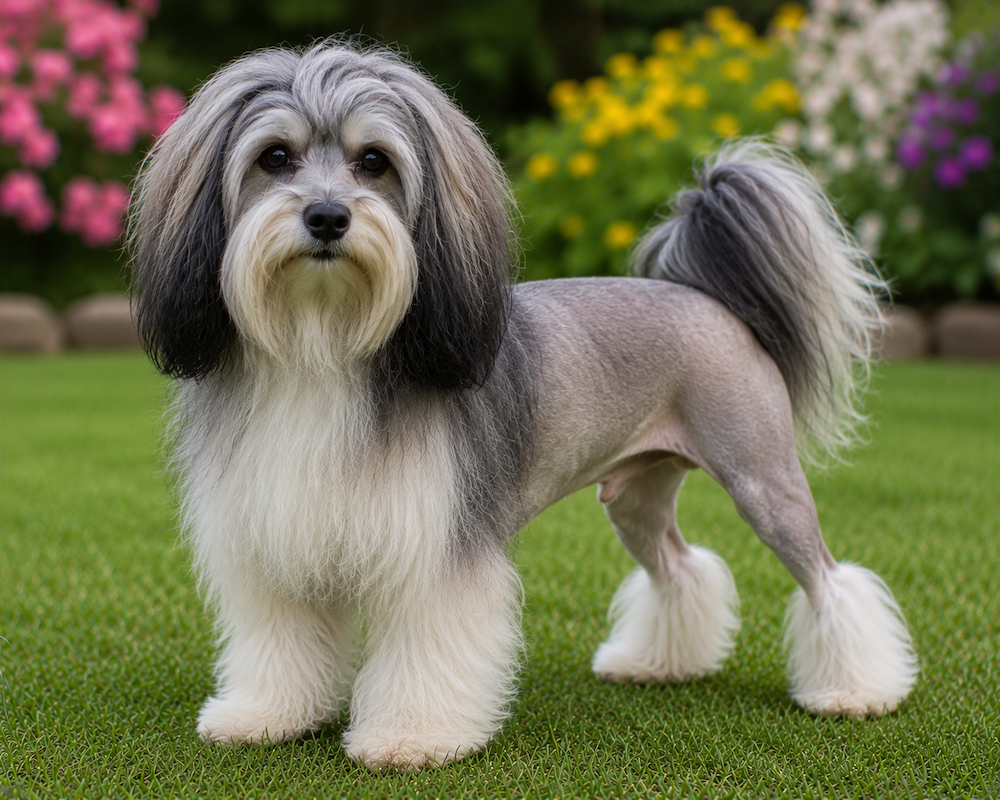
The name refers to the breed’s traditional lion-style haircut, which leaves a mane around the front of the body while the hindquarters are clipped short.
This distinctive grooming style has been associated with little companion dogs in Europe for centuries.
How Much Exercise Does a Löwchen Need?
Most Löwchens need around 30–60 minutes of exercise each day, along with play and mental stimulation.
They’re surprisingly energetic for a small companion breed.
Walks, games, trick training, agility and scent activities can all help keep them occupied.
Is a Löwchen a High-Energy Dog?
They’re generally moderate-energy dogs.
They enjoy activity and can be extremely playful, but usually don’t require the intensive exercise of working terriers or sporting breeds.
A well-exercised Löwchen is normally quite happy relaxing with its family afterward.
Is a Löwchen Easy to Train?
Generally, yes.
Löwchens are intelligent, attentive and usually eager to interact with their owners.
Positive reinforcement works particularly well, and many enjoy learning tricks simply because training gives them attention and something interesting to do.
Are Löwchens Intelligent?
Yes.
They’re quick learners and can perform well in obedience, agility and trick training.
Their intelligence combined with an outgoing personality can also make them remarkably effective at training their owners.
Are Löwchens Stubborn?
They can occasionally be independent, but they’re generally considered relatively cooperative for a small companion breed.
Boredom and inconsistent training can produce selective hearing.
Short, enjoyable training sessions usually produce excellent results.
Are Löwchens Difficult to Toilet Train?
Some can require patience, as is common with small companion dogs.
A consistent schedule, frequent outdoor opportunities and positive reinforcement are important.
Allowing undesirable habits to become established makes the process considerably harder.
Does a Löwchen Shed?
Very little.
Loose hairs tend to remain trapped within the coat rather than being deposited heavily around the home.
However, low shedding means the coat requires regular grooming to prevent tangles.
Is a Löwchen Hypoallergenic?
The Löwchen is often described as hypoallergenic because it sheds relatively little.
However, no dog is completely allergen-free, since allergens also occur in saliva and skin secretions.
People with allergies should spend time around the breed before committing to one.
Does a Löwchen Have Hair or Fur?
The Löwchen has a long, flowing coat commonly described as hair.
Biologically, hair and fur are the same substance, but the Löwchen’s relatively long growth cycle and low shedding make its coat behave more like that of other so-called hair breeds.
What Type of Coat Does a Löwchen Have?
The Löwchen has a long, dense, relatively soft coat that can have a natural wave.
It shouldn’t have the tightly curled woolly coat of a Poodle.
The famous lion appearance comes primarily from grooming rather than a naturally short hindquarter coat.
How Often Should You Groom a Löwchen?
A longer coat should be thoroughly brushed and combed several times each week.
Particular attention is needed behind the ears, under the legs and around areas of friction.
Dogs kept in practical pet clips require less maintenance but still need regular grooming.
Does a Löwchen Need Haircuts?
Yes.
The coat continues growing and normally requires regular trimming.
Show dogs are traditionally presented in the distinctive lion clip, while companion dogs can be maintained in simpler puppy-style trims.
How Often Does a Löwchen Need Professional Grooming?
Many companion Löwchens benefit from professional grooming approximately every six to eight weeks.
Owners maintaining the traditional lion clip may need more frequent attention to keep its outline neat.
What Is the Löwchen Lion Clip?
The traditional lion clip leaves the front portion of the dog covered in long coat while the hindquarters and much of the rear legs are clipped short.
Hair is retained around the feet and at the end of the tail.
The result resembles a miniature lion with a mane and tufted tail.
Is the Löwchen Born With a Lion-Like Coat?
No.
A Löwchen puppy doesn’t naturally grow with a bare rear end and mane.
The lion appearance is created by clipping.
Without the traditional trim, the dog develops a long coat across its entire body.
Does a Löwchen Have to Have a Lion Cut?
No.
The lion clip is part of traditional show presentation, but a companion Löwchen can be kept in any practical, comfortable haircut.
Many pet owners choose a shorter all-over trim because it’s easier to maintain.
Why Are Löwchens Shaved Around the Back?
The practice is centuries old, but its exact original purpose isn’t known with certainty.
Various stories claim the clipped hindquarters helped the dog provide warmth while remaining hygienic, or simply created a fashionable lion-like appearance.
The safest explanation is that lion clipping became a longstanding European grooming tradition, while specific functional origin stories are difficult to prove.
What Health Problems Are Common in Löwchens?
The Löwchen is generally considered a relatively healthy breed.
Potential concerns include patellar luxation, hip problems and inherited eye disorders, among other conditions found in small dogs.
Responsible breeders should use appropriate health screening.
Are Löwchens Prone to Patellar Luxation?
They can be.
Patellar luxation occurs when the kneecap moves out of its normal position.
Affected dogs may intermittently skip or hold up a hind leg.
Are Löwchens Prone to Eye Problems?
Some inherited eye disorders occur within the breed.
Responsible breeders should have breeding dogs examined according to recommended ophthalmic screening programmes.
Owners should seek veterinary attention for persistent redness, cloudiness or changes in vision.
Are Löwchens Prone to Dental Problems?
Like many small dogs, they can develop periodontal disease.
Their relatively compact jaws make regular dental care particularly important.
Daily tooth brushing is ideal.
How Long Does a Löwchen Live?
Löwchens commonly live around 13–16 years, with some reaching their late teens.
Their small size and generally robust health contribute to good longevity.
Maintaining a healthy weight and good dental care can make a meaningful difference.
How Big Does a Löwchen Get?
Most adults stand around 25–33 cm at the shoulder and weigh approximately 4–8 kg.
They’re small but sturdily built.
The breed shouldn’t appear extremely delicate or excessively fine-boned.
Is There a Miniature Löwchen?
No.
There is no recognised Miniature Löwchen.
The standard breed is already a small companion dog.
Is There a Teacup Löwchen?
No recognised Teacup Löwchen exists.
“Teacup” is a marketing description rather than an official size variety.
Deliberately breeding extremely tiny dogs can increase health and fragility concerns.
Can a Löwchen Live in an Apartment?
Yes.
Their small size, moderate exercise requirements and companion temperament make them excellent apartment dogs.
Barking can be the main issue if the dog becomes overly reactive to noises outside.
Does a Löwchen Need a Backyard?
No.
Daily walks, play and mental stimulation can meet their needs.
A secure garden is useful but isn’t necessary.
Can a Löwchen Be Left Alone?
Adult Löwchens can learn to tolerate reasonable periods alone.
However, they’re strongly people-oriented companion dogs and generally don’t enjoy being routinely isolated for long periods.
Gradual independence training is beneficial.
Are Löwchens Prone to Separation Anxiety?
Some can be.
Centuries of selection as close human companions means many Löwchens strongly prefer company.
Early training should include learning that being alone for short periods is safe and normal.
Are Löwchens Velcro Dogs?
Many are.
They often enjoy following family members from room to room and being involved in household activities.
The breed’s historical job description was essentially to be close to people.
Are Löwchens Cuddly?
Usually.
Most enjoy affection and physical contact with trusted family members.
Their manageable size makes them genuine lap dogs — unlike some 50-kilogram breeds that merely believe they are.
Are Löwchens Good With Children?
Generally, yes.
They’re playful and relatively sturdy for their size.
Children should still be taught not to pull hair, pick the dog up carelessly or disturb it while sleeping or eating.
Are Löwchens Good With Other Dogs?
Usually.
They’re generally sociable and can live successfully in multi-dog households.
Good early socialisation remains important.
Are Löwchens Good With Cats?
Many live happily with cats, particularly when introduced carefully.
The breed generally has a manageable prey drive compared with hunting terriers or sighthounds.
Individual behaviour still varies.
Do Löwchens Have a Strong Prey Drive?
Usually low to moderate.
They were primarily developed as companion dogs rather than specialist hunters.
Some individuals will still chase birds, rodents or other small animals.
Are Löwchens Good Off Leash?
They can develop excellent recall with training.
Their strong attachment to people can work in the owner’s favour.
However, secure areas remain the safest option around roads or wildlife.
Do Löwchens Bark a Lot?
They can be surprisingly vocal.
Many are alert dogs that readily announce visitors or unusual sounds.
Early training can prevent alert barking from developing into a response to absolutely everything that moves.
Are Löwchens Good Watchdogs?
Yes.
They’re alert, observant and quick to announce unfamiliar activity.
Their small size obviously limits what happens after the alarm has been raised.
Are Löwchens Good Guard Dogs?
No.
They’re companion dogs rather than physical protection dogs.
A Löwchen can inform you that an intruder has arrived, but the lion resemblance becomes considerably less useful after that.
Are Löwchens Aggressive?
A well-bred Löwchen shouldn’t be indiscriminately aggressive.
The ideal temperament is lively, confident and affectionate.
Poor socialisation, fear or inappropriate handling can affect behaviour in any small dog.
Are Löwchens Friendly With Strangers?
Many are outgoing and friendly once introduced.
Some may initially alert to unfamiliar visitors before quickly becoming sociable.
Extreme shyness isn’t characteristic of the ideal breed.
When Does a Löwchen Calm Down?
Many become noticeably more settled between one and three years old.
They often retain a playful, youthful personality throughout adulthood.
Their good longevity means that playful character can last for many years.
Do Löwchens Get the Zoomies?
Yes.
The lion clip can make the spectacle particularly entertaining because the heavily coated front half appears to be travelling considerably faster than the shaved rear half.
Are Löwchens Good Walking Dogs?
Yes.
They’re lively enough to enjoy substantial daily walks despite their small size.
They generally appreciate exploring rather than simply being carried everywhere.
Can Löwchens Go Hiking?
Healthy adults can enjoy moderate hikes.
Their compact size makes them surprisingly capable, although terrain, temperature and fitness should be considered.
Long coats should be checked afterward for grass seeds and debris.
Can Löwchens Swim?
Most can swim physically, although enthusiasm varies.
They’re not specialist water dogs.
The long coat can become heavy when wet, so close supervision around water is sensible.
Can Löwchens Handle Cold Weather?
Their long coat provides reasonable protection from cool conditions.
Dogs wearing the traditional lion clip have considerably less insulation over their hindquarters.
Additional protection may therefore be useful in genuinely cold weather.
Can Löwchens Handle Hot Weather?
They can tolerate moderate warmth, but exercise should be reduced during very hot conditions.
Keeping a companion coat practical and providing shade and water are important.
As with any dog, hot cars and strenuous midday exercise should be avoided.
What Does a Löwchen Look Like?
The Löwchen is a small, sturdy dog with a long flowing coat, expressive face, drop ears and a tail carried over the back.
In its traditional clip, the heavily coated front and clipped hindquarters create the famous miniature-lion silhouette.
Without that haircut, it looks quite different.
What Colours Can Löwchens Be?
One unusual feature of the breed is the enormous range of acceptable colours.
Löwchens can be black, white, cream, brown, blue, silver, red, gold or combinations of multiple colours, depending on the kennel-club standard.
Colour is much less restrictive than in many breeds.
Do Löwchens Change Colour?
They can.
Some coats lighten considerably as puppies mature.
Dark puppies may develop silvering or other changes, making adult colour difficult to predict precisely.
Can a Löwchen Be Black?
Yes.
Black is common and can occur either alone or combined with other colours.
Some black coats remain dark while others lighten with age.
Can a Löwchen Be White?
Yes.
White Löwchens and dogs with extensive white markings occur.
The breed’s standard allows considerable colour diversity.
Can a Löwchen Be Parti-Coloured?
Yes.
Parti-coloured and multicoloured coats are common.
The dramatic colour variation is part of the breed’s appeal.
Can a Löwchen Be Merle?
Merle isn’t considered a traditional Löwchen pattern.
A merle dog marketed as a purebred Löwchen should therefore prompt careful investigation of ancestry.
Is a Löwchen a Bichon?
The Löwchen is often grouped historically with the Bichon family of European companion dogs, although modern kennel organisations treat it as a distinct breed.
It shares broad ancestry and characteristics with other small European companion dogs.
Is a Löwchen Related to the Bichon Frise?
Probably through the broader history of small European companion dogs.
The breeds share similarities in size, temperament and coat type.
However, the precise relationships among early Bichon-type populations aren’t completely documented.
Is a Löwchen Related to the Maltese?
They belong to the broader tradition of small European companion dogs, but the Löwchen isn’t simply a long-haired Maltese.
Both developed as distinct populations with different grooming traditions and appearances.
Is a Löwchen Related to the Havanese?
They share characteristics common to the wider Bichon-type companion-dog family.
Their exact early genetic relationships are difficult to reconstruct because these dogs existed long before modern pedigree records.
Is a Löwchen Related to the Poodle?
They share some superficial similarities, particularly when the Löwchen is unclipped.
However, the Poodle developed primarily from water-dog ancestry, while the Löwchen belongs more closely to Europe’s small companion-dog tradition.
Is a Löwchen a Poodle Cross?
No.
The Löwchen is an established breed, not a modern designer Poodle cross.
Its characteristic coat and appearance don’t require Poodle ancestry.
Is a Löwchen the Same as a Little Lion Dog?
Yes.
Little Lion Dog is the English translation and an alternative historical name for the Löwchen.
The German name itself literally conveys the same idea.
Is a Löwchen an Ancient Breed?
The breed has old European roots, but claims that the modern Löwchen has existed unchanged since antiquity should be treated cautiously.
Small lion-clipped companion dogs appear in art going back centuries.
Connecting every historical dog directly to today’s registered Löwchen is much more difficult.
Where Does the Löwchen Come From?
The breed’s precise original homeland is surprisingly difficult to establish.
It’s strongly associated with continental Europe, particularly areas connected with modern France, Germany, Belgium and the Netherlands.
Different kennel organisations and breed histories have emphasised different countries.
Is the Löwchen French or German?
This is one of the breed’s historical puzzles.
Its German name means “little lion,” while modern breed development has strong connections with France, Belgium and Germany.
Rather than forcing the breed into one neat national origin story, it’s more accurate to describe it as an old continental European companion breed.
Why Does the Löwchen Have a German Name?
“Löwchen” is German for little lion.
German-speaking regions were among the areas where dogs of this general type were known.
The name became internationally established even though the breed’s historical development wasn’t confined neatly to modern Germany.
How Old Is the Löwchen?
Small dogs shown in lion-style clips appear in European artwork dating back several centuries.
Some breed histories trace Löwchen-like dogs to the 15th or 16th century.
These artworks demonstrate the age of the lion-dog tradition, although they can’t prove that every depicted dog belonged to the modern pedigree breed.
Are Löwchens Shown in Old European Paintings?
Yes.
Small companion dogs with lion-style grooming appear in paintings, tapestries and other European artworks.
This is one reason the Löwchen is often described as an old breed.
The distinctive haircut makes historical comparisons particularly intriguing.
Why Were Little Dogs Groomed Like Lions?
The lion was a powerful symbol of strength, courage and nobility.
Turning a small companion dog into a miniature lion created an amusing but prestigious visual effect.
Fashion likely played an important role.
Were Löwchens Dogs of European Nobility?
Dogs resembling Löwchens were associated with aristocratic and wealthy households.
Small companion dogs frequently appear beside women and families in European portraiture.
Keeping a carefully groomed companion dog could also signal wealth and social status.
Were Löwchens Lap Dogs?
Yes.
Companionship was central to their historical purpose.
They were small enough to sit on laps, travel easily and live closely with people.
Unlike many breeds, they didn’t need a hunting or farming occupation to justify their existence.
Were Löwchens Used as Foot Warmers?
There’s a popular story that the clipped hindquarters allowed the dog’s warm skin to function as a living hot-water bottle for aristocratic owners.
It’s a charming explanation, but strong historical evidence for this being the actual reason for the lion clip is limited.
Fashion is likely at least as important.
Were Löwchens Used to Attract Fleas Away From Their Owners?
Another frequently repeated story claims companion dogs were used as flea magnets, drawing parasites away from humans.
Small companion dogs undoubtedly carried fleas in historical Europe, but presenting this as the Löwchen’s specific designed purpose would be an exaggeration.
Did Löwchens Sleep in Their Owners’ Beds?
Very likely in many cases.
Small companion dogs historically lived in close physical proximity to wealthy owners.
Their modern desire to occupy beds and sofas therefore represents one tradition that required almost no retraining.
Did the Löwchen Nearly Become Extinct?
Yes.
By the middle of the 20th century, the Löwchen had become extraordinarily rare.
Its survival depended on a very small number of dedicated European breeders.
Was the Löwchen Once the Rarest Dog in the World?
It was famously described as one of the world’s rarest breeds.
The Guinness Book of Records historically highlighted the Löwchen’s extremely low numbers, which gave the breed considerable publicity.
The exact title and population varied by year, so “one of the world’s rarest” is the safer description.
How Few Löwchens Were Left?
Breed histories describe only a tiny breeding population remaining in Europe during the mid-20th century.
The exact number depends on which dogs and registrations are counted.
What isn’t disputed is that the breed came dangerously close to disappearing.
Who Saved the Löwchen From Extinction?
A Belgian breeder named Madame M. Bennert is one of the most important figures in modern Löwchen history.
During the mid-20th century she searched for surviving dogs of the old type and worked to rebuild the breed.
Her efforts helped prevent its disappearance.
Who Was Madame Bennert?
Madame Bennert was a Belgian breed enthusiast who became concerned about the Löwchen’s declining population.
She located suitable surviving dogs and developed a breeding programme to preserve them.
Modern Löwchens owe a significant part of their survival to her determination.
Did Madame Bennert Search Europe for Löwchens?
Breed histories describe her actively searching for remaining examples of the breed.
With so few dogs available, finding suitable breeding animals was difficult.
Her preservation programme became the foundation for the breed’s modern revival.
Who Was Dr Hans Rickert?
German breeder Dr Hans Rickert became another major figure in the breed’s recovery.
Dogs from Bennert’s lines contributed to his breeding programme, and his kennel helped expand and stabilise the modern population.
The Löwchen’s survival therefore involved international cooperation.
Why Is Löwchen Genetic Diversity Important?
The breed’s near-extinction created a significant population bottleneck.
When a breed is rebuilt from very few animals, many modern dogs inevitably share substantial ancestry.
Responsible breeding therefore requires careful attention to health, pedigrees and genetic diversity.
When Did Löwchens Become Popular Again?
Numbers gradually increased during the second half of the 20th century as breeders established populations in additional European countries, Britain and North America.
The breed nevertheless remains uncommon compared with mainstream companion breeds.
When Was the Löwchen Recognised in Britain?
The breed became established in Britain during the latter half of the 20th century.
Its unusual history and traditional lion clip attracted considerable interest among rare-breed enthusiasts.
When Did the AKC Recognise the Löwchen?
The American Kennel Club fully recognised the Löwchen in 1996.
That relatively recent date reflects how uncommon the breed remained outside Europe for much of the 20th century.
Why Is the Löwchen Still Rare?
Several factors contribute.
The breed began its modern recovery from a tiny population and has never been produced on the enormous scale of more fashionable companion breeds.
Its grooming requirements and relatively limited breeder network also restrict availability.
Is the Löwchen Still One of the Rarest Dog Breeds?
It’s still uncommon, but its population is much healthier than during its mid-20th-century crisis.
The breed is now established in multiple countries.
Whether it qualifies as one of the absolute rarest depends on the country and the population being measured.
Why Is a Löwchen Puppy Expensive?
Limited availability, small breeding populations, health screening and responsible breeding costs can make puppies expensive.
Rare doesn’t automatically mean well bred, however.
Health, temperament and responsible breeding should matter more than exclusivity.
Did Löwchens Ever Have a Working Job?
Their primary historical role was companionship.
However, they’re intelligent, athletic little dogs and modern Löwchens can excel in obedience, agility, rally and therapy work.
Not every old breed needed to chase something, herd something or guard something.
Are Löwchens Good at Agility?
Yes.
They’re agile, intelligent and enthusiastic enough to perform very well.
Agility also reveals just how athletic the dog underneath the elaborate haircut actually is.
Are Löwchens Good at Trick Training?
Excellent.
They generally enjoy interaction and can learn complex tricks quickly.
Trick training provides valuable mental stimulation and suits their naturally entertaining personality.
Are Löwchens Good Therapy Dogs?
Many can be.
Their small size, affectionate nature and outgoing temperament are useful qualities.
Individual dogs still need the calm confidence required to enjoy interaction with unfamiliar people.
Why Does My Löwchen Think It’s a Much Bigger Dog?
Confidence is one of the breed’s defining characteristics.
The lion haircut may be artificial, but the attitude often isn’t.
A Löwchen can approach the world with remarkably little awareness that it weighs less than many household cats.
Is a Löwchen a Good Dog for Older People?
It can be an excellent choice.
The breed combines manageable size with moderate exercise requirements and strong companionship.
Owners need to account for regular grooming and the dog’s need for social interaction.
Is a Löwchen a Good First Dog?
Yes, for many owners.
They’re generally affectionate, intelligent, manageable in size and relatively trainable.
The main commitments are regular grooming, companionship, exercise and preventing alert barking from becoming excessive.
What Makes the Löwchen Unique?
Few breeds demonstrate how dramatically fashion can disguise a dog’s true character.
For centuries, small companion dogs in Europe were groomed into the extraordinary lion clip, leaving a flowing mane at the front, clipped hindquarters and a tuft at the end of the tail. Dogs of this general appearance can be seen in European art hundreds of years old.
Then the little lion almost disappeared.
By the mid-20th century, Löwchens had become extraordinarily rare. Dedicated enthusiasts, particularly Madame Bennert in Belgium and later Dr Hans Rickert in Germany, helped rebuild the population from the few surviving dogs they could locate.
Today the Löwchen remains uncommon, but the breed survived.
And beneath one of the dog world’s most extravagant haircuts is something surprisingly uncomplicated: a cheerful, athletic little companion that generally wants to be wherever its family is.
The name means “little lion.”
The haircut makes it look like one.
And fortunately for everyone involved, the Löwchen itself seems completely convinced the resemblance is genuine.