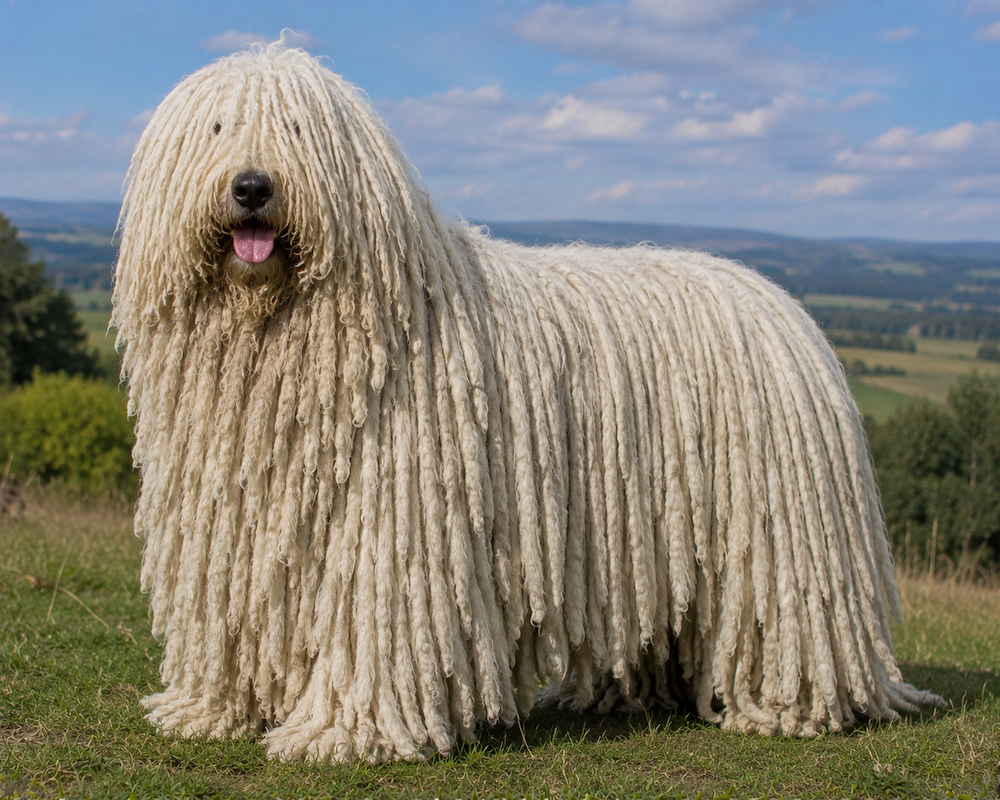







Fearless, loyal, and unmistakable — the Komondor is a powerful Hungarian livestock guardian famous for its remarkable corded coat and unwavering devotion to protecting its family.
🧠 QUICK SNAPSHOT
- Temperament: Loyal, courageous, independent
- Energy Level: Moderate
- Size: Large
- Good With Families: Yes (with experienced owners)
- Trainability: Moderate
- Grooming: Very High
- Best For: Experienced owners, rural properties, livestock guardians
📚 OVERVIEW
The Komondor is one of the world’s most distinctive dog breeds, instantly recognised by its long, naturally corded white coat. Originating in Hungary, this ancient livestock guardian was bred to protect sheep from wolves and other predators, blending seamlessly with the flock while standing ready to defend it at a moment’s notice.
Beneath its unique appearance lies a calm, intelligent, and fiercely loyal dog that takes its role as protector very seriously. The Komondor is naturally independent and capable of making decisions without human direction, making it an exceptional guardian but a breed best suited to experienced owners who understand its instincts and need for early socialisation.
✅ PROS & CONS
Pros
- Exceptionally loyal and protective
- Calm and confident temperament
- Unique, iconic appearance
- Excellent natural livestock and family guardian
- Generally healthy and hardy
Cons
- Requires extensive coat maintenance
- Not suitable for first-time owners
- Naturally suspicious of strangers
- Needs early socialisation and consistent training
- Best suited to homes with plenty of space
Is a Komondor a Good Family Dog?
Yes, a Komondor can be an outstanding family dog for experienced owners who appreciate guardian breeds. It forms deep, lifelong bonds with its family and is naturally protective without being unnecessarily aggressive. Around people it trusts, the Komondor is calm, affectionate, and surprisingly gentle, often watching over children with quiet confidence.
However, this breed was developed to make independent decisions while guarding livestock, so it is naturally wary of strangers and unfamiliar situations. Early and ongoing socialisation is essential to help the Komondor learn the difference between welcome visitors and genuine threats. Without proper exposure, its protective instincts can become overly cautious.
The Komondor thrives in homes with secure outdoor space where it can patrol its surroundings. It is generally unsuited to apartment living or busy urban environments. Families who provide structure, leadership, and companionship will be rewarded with one of the most devoted and dependable guardian dogs in the world.
How Much Exercise Does a Komondor Need?
A Komondor needs around 60 to 90 minutes of exercise each day to maintain good physical and mental health. Although it is not an excessively energetic breed, it enjoys purposeful activity that reflects its working heritage.
Daily walks, exploring secure properties, hiking, and moderate play sessions help keep the Komondor fit without overworking its large frame. Unlike retrievers or herding breeds, it generally prefers steady movement and patrol-like activity rather than repetitive games such as fetch.
Mental stimulation is equally important. Obedience training, scent games, problem-solving toys, and giving the dog responsibilities around the property all help satisfy its intelligent and independent nature. Without enough exercise or stimulation, the Komondor may become bored, stubborn, or increasingly territorial. A balanced routine helps it remain calm, confident, and well-adjusted.
Is a Komondor Easy to Train?
The Komondor is intelligent but highly independent, making training more challenging than many companion breeds. It was bred to protect livestock without constant supervision, so it naturally evaluates situations and makes its own decisions rather than automatically following commands.
Successful training relies on patience, consistency, and positive reinforcement. Harsh methods are unlikely to be effective and can damage the strong bond between dog and owner. Short, engaging sessions that build trust and respect tend to produce the best results.
Socialisation from an early age is essential. Introducing a Komondor puppy to a variety of people, animals, environments, and experiences helps develop a confident adult capable of responding appropriately to unfamiliar situations. While it may never display the eager obedience of some working breeds, a well-trained Komondor becomes a calm, reliable, and remarkably dependable guardian.
Does a Komondor Shed?
The Komondor has a unique coat that sheds very little compared with many other large breeds. Instead of loose hairs falling freely, much of the dead hair becomes trapped within its famous cords, making the breed appear to shed less while still requiring significant coat care.
Unlike traditional brushing, Komondor owners separate the cords by hand to prevent matting and maintain healthy coat development. Bathing and drying the coat can take many hours, making grooming a specialised commitment rather than a simple weekly routine.
Although low-shedding, the Komondor is not considered hypoallergenic. Its dense coat can trap dirt, moisture, and debris if not properly maintained. Regular ear cleaning, nail trimming, dental care, and ongoing coat management are essential to keeping this remarkable breed healthy and comfortable.
What Health Problems Are Common in a Komondor?
The Komondor is generally a healthy breed, but like many large guardian dogs, it is predisposed to several inherited conditions. Hip dysplasia is one of the most common concerns and can affect mobility as the dog ages. Responsible breeders carry out health screening to reduce the likelihood of passing this condition to future generations.
The breed is also susceptible to gastric dilatation-volvulus (bloat), a life-threatening condition that requires immediate veterinary treatment. Feeding smaller meals, avoiding vigorous exercise around mealtimes, and recognising the early symptoms can help reduce the risk.
Other health concerns may include eyelid disorders, joint issues, and occasional skin problems beneath the dense corded coat if grooming is neglected. Regular veterinary check-ups, maintaining a healthy body weight, purchasing puppies from health-tested breeders, and providing appropriate coat care all contribute to a long, healthy, and active life.