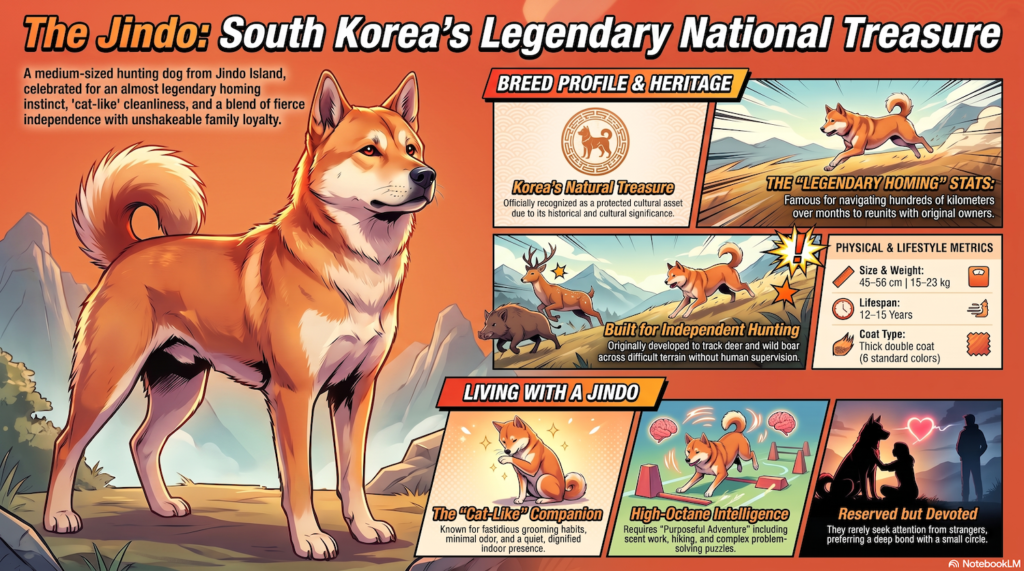
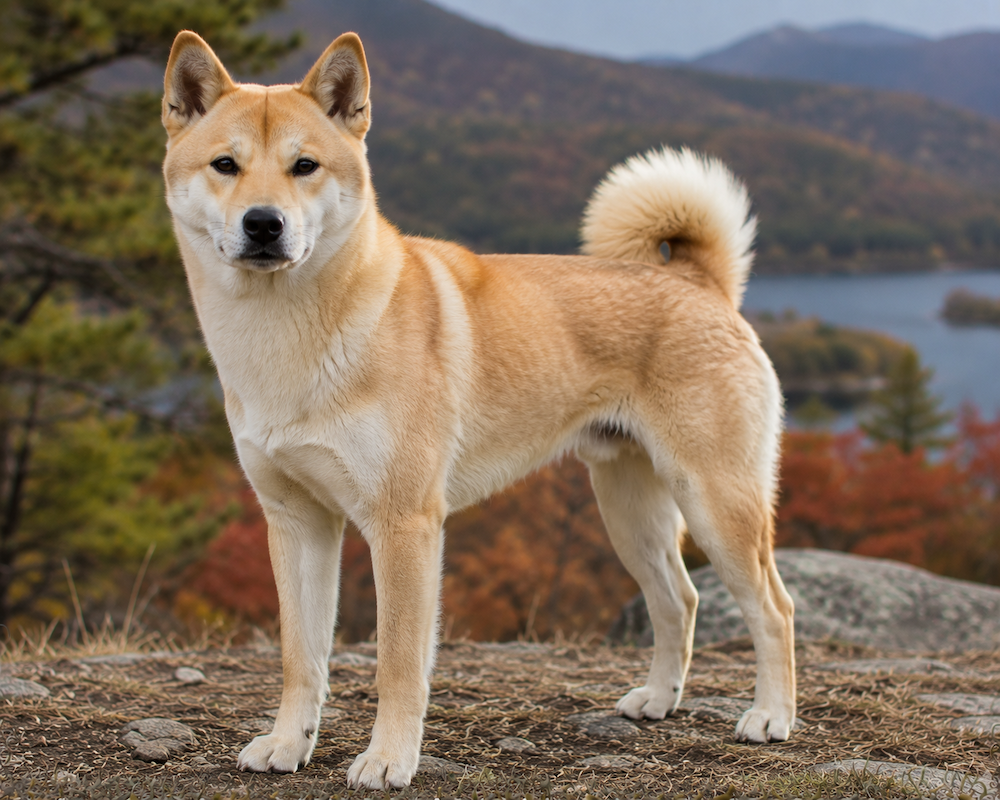







Intelligent, loyal, and fiercely devoted — the Jindo is South Korea's treasured national breed, renowned for its unwavering loyalty, independence, and exceptional hunting instincts.
🧠 QUICK SNAPSHOT
- Temperament: Loyal, intelligent, independent
- Energy Level: High
- Size: Medium
- Good With Families: Yes
- Trainability: Moderate
- Grooming: Low to Moderate
- Best For: Active owners, experienced dog owners, secure homes
📚 OVERVIEW
The Jindo originated on South Korea’s Jindo Island, where it was developed over centuries as an exceptional hunting and guarding dog. Celebrated for its intelligence, athleticism, and extraordinary loyalty, the Jindo has become a national treasure and is admired around the world for its strong character and deep bond with its family.
While affectionate and devoted to those it knows, the Jindo is naturally reserved around strangers and highly independent. It is a clean, dignified breed that enjoys having a purpose and thrives in homes where it receives regular exercise, mental stimulation, and consistent leadership. For owners who appreciate an intelligent dog with a loyal heart and a confident personality, the Jindo is an outstanding companion.
✅ PROS & CONS
Pros
- Exceptionally loyal to its family
- Intelligent and highly adaptable
- Naturally clean and low odour
- Excellent watchdog
- Athletic and healthy breed
Cons
- Strong prey drive
- Can be wary of strangers
- Independent and sometimes stubborn
- Requires secure fencing
- Needs plenty of daily exercise
Is a Jindo a Good Family Dog?
Yes, the Jindo can make an excellent family dog, particularly for active households that appreciate an intelligent and independent companion. This breed forms incredibly strong bonds with its family and is famous for its unwavering loyalty, often becoming especially devoted to one primary owner while remaining affectionate with the rest of the household.
Jindos are typically calm and respectful around children they know well, although interactions with younger children should always be supervised. Because they can be reserved with unfamiliar people, early socialisation is essential to help them develop confidence and good manners around visitors.
Their strong prey drive means care should be taken around small pets unless they have been raised together from puppyhood. Families who enjoy outdoor activities, hiking, and regular exercise will find the Jindo a willing and enthusiastic partner. With consistent leadership and plenty of companionship, this breed becomes a loyal and dependable member of the family.
How Much Exercise Does a Jindo Need?
The Jindo requires at least 60 to 90 minutes of exercise every day to stay physically healthy and mentally satisfied. Originally bred as a hunting dog, it possesses excellent stamina and enjoys activities that challenge both its body and mind.
Long walks, jogging, hiking, scent work, and secure off-lead play in enclosed areas are all excellent ways to meet its exercise needs. Many Jindos also excel in dog sports such as agility and obedience, where they can use their athleticism and intelligence.
Mental enrichment is just as important as physical activity. Puzzle toys, advanced training, and scent games help prevent boredom and destructive behaviours. Without sufficient exercise and stimulation, a Jindo may become restless, vocal, or attempt to escape in search of adventure. A consistent routine keeps this active breed happy, balanced, and well behaved.
Is a Jindo Easy to Train?
The Jindo is highly intelligent but naturally independent, making training both rewarding and challenging. Unlike breeds that constantly seek approval, the Jindo prefers to think for itself and often evaluates whether a command makes sense before responding.
Positive reinforcement works far better than harsh correction. Training should be consistent, engaging, and based on trust, as the breed responds best to owners who establish mutual respect. Short, varied sessions are generally more effective than repetitive drills.
Early socialisation is one of the most important aspects of raising a Jindo. Exposing puppies to different people, animals, environments, and experiences helps them develop into confident adults. While the breed may not display the eager obedience of a Labrador Retriever or Golden Retriever, it is highly capable of learning and becomes an exceptionally reliable companion when trained with patience and consistency.
Does a Jindo Shed?
Yes, the Jindo sheds moderately throughout the year and experiences heavy seasonal shedding, particularly during spring and autumn. Its dense double coat protects it from both hot and cold weather but requires regular maintenance to manage loose hair.
Weekly brushing is usually enough during most of the year, while brushing several times a week during seasonal coat changes helps remove the thick undercoat more efficiently. Fortunately, the Jindo is naturally very clean and often compared to cats because of its meticulous grooming habits and minimal dog odour.
The breed is not considered hypoallergenic, despite its relatively clean nature. Routine nail trimming, ear cleaning, dental care, and coat maintenance will keep a Jindo looking and feeling its best while helping to minimise shedding around the home.
What Health Problems Are Common in a Jindo?
The Jindo is generally regarded as a healthy and long-lived breed with relatively few inherited health problems compared with many modern dog breeds. However, it can still develop certain conditions that responsible owners should be aware of.
Hip dysplasia, hypothyroidism, and some eye disorders can occasionally occur, although they are less common than in many other medium-sized breeds. Some Jindos may also develop allergies or skin sensitivities that require veterinary management.
Choosing a puppy from a responsible breeder who performs health testing is one of the best ways to reduce the risk of inherited conditions. Maintaining a healthy weight, feeding a high-quality diet, providing regular exercise, and scheduling routine veterinary check-ups all contribute to helping a Jindo enjoy a long, active, and healthy life, often well into its teenage years.