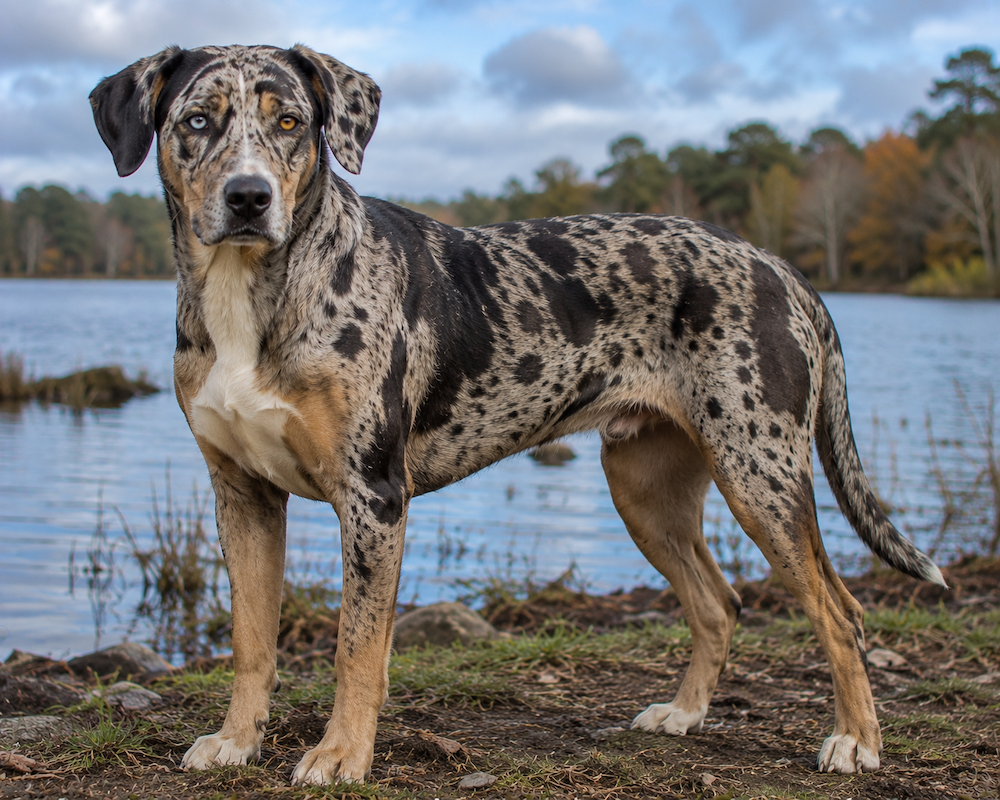







Intelligent, energetic, and incredibly versatile — the Catahoula Leopard Dog is a hardworking American breed renowned for its striking coat, keen instincts, and unwavering loyalty.
🧠 QUICK SNAPSHOT
- Temperament: Intelligent, loyal, independent
- Energy Level: Very High
- Size: Medium to Large
- Good With Families: Yes (with active families)
- Trainability: High
- Grooming: Low
- Best For: Active owners, working homes, experienced dog owners
📚 OVERVIEW
The Catahoula Leopard Dog originated in Louisiana, where it was developed as a versatile working dog capable of herding livestock, tracking game, and guarding property. Famous for its unique leopard-patterned coat and often striking blue, amber, or mismatched eyes, the Catahoula combines intelligence, athleticism, and determination in one remarkable package.
This breed thrives when it has a job to do and enjoys working closely with its family. Loyal and affectionate with those it knows, the Catahoula is naturally confident and can be reserved around strangers. It is best suited to active owners who can provide plenty of exercise, mental stimulation, and consistent training. In the right home, the Catahoula Leopard Dog becomes an exceptional companion that is as capable in the field as it is devoted at home.
✅ PROS & CONS
Pros
- Extremely intelligent and versatile
- Loyal and devoted to family
- Excellent working and sporting dog
- Low-maintenance coat
- Highly athletic and energetic
Cons
- Needs significant daily exercise
- Strong prey and herding instincts
- Can become destructive if bored
- Best suited to experienced owners
- Requires early socialisation and training
Is a Catahoula Leopard Dog a Good Family Dog?
Yes, the Catahoula Leopard Dog can be a wonderful family companion for active households that understand the needs of working breeds. It is deeply loyal to its family and often develops particularly strong bonds with the people it lives alongside. With proper training and socialisation, the breed is affectionate, playful, and enjoys being included in daily family life.
Because the Catahoula was bred to work independently while herding livestock and hunting, it has a confident personality and plenty of energy. Families with older children who enjoy outdoor activities often find this breed to be an excellent match. Young children should always be supervised, as the dog’s enthusiasm and herding instincts may occasionally become overwhelming.
Early socialisation is important to help the Catahoula develop confidence around unfamiliar people, animals, and environments. In a home that provides structure, activity, and companionship, it becomes an incredibly loyal and dependable member of the family.
How Much Exercise Does a Catahoula Leopard Dog Need?
The Catahoula Leopard Dog requires at least 90 to 120 minutes of exercise every day. This is an energetic working breed that was developed to spend long days herding livestock, tracking game, and working across challenging terrain, so a simple daily walk is rarely enough.
Long hikes, running, swimming, agility, scent work, obedience, and interactive games all provide excellent outlets for the breed’s energy. Many Catahoulas also excel in working dog sports where they can combine physical activity with problem-solving.
Mental stimulation is just as important as exercise. Puzzle toys, advanced obedience, scent games, and learning new skills help prevent boredom. Without enough activity, the breed may become destructive, vocal, or develop unwanted behaviours such as digging or escaping. Owners who enjoy an active lifestyle will find the Catahoula Leopard Dog to be an enthusiastic and capable adventure partner.
Is a Catahoula Leopard Dog Easy to Train?
Yes, the Catahoula Leopard Dog is highly intelligent and capable of learning quickly, but its independent nature means training requires consistency and patience. It enjoys solving problems and often responds best when training has a clear purpose rather than repetitive drills.
Positive reinforcement is the most effective approach. Reward-based methods, combined with firm but fair leadership, help build trust and encourage cooperation. Harsh corrections can reduce the dog’s confidence and willingness to engage.
Early socialisation is essential, particularly because the breed can be naturally reserved around strangers and has strong working instincts. Exposing puppies to a variety of people, animals, environments, and experiences helps them become confident adults. While first-time owners may find the breed challenging, experienced handlers who provide ongoing training and mental stimulation are rewarded with an exceptionally capable and obedient companion.
Does a Catahoula Leopard Dog Shed?
Yes, the Catahoula Leopard Dog sheds, but only at a low to moderate level. Its short, single coat is relatively easy to maintain and requires far less grooming than many other working breeds.
Weekly brushing is generally enough to remove loose hair, distribute natural oils, and keep the coat healthy and glossy. During seasonal shedding periods, brushing a little more frequently helps reduce hair around the home. Bathing is only needed occasionally unless the dog becomes particularly dirty after outdoor adventures.
Although its coat is easy to care for, the Catahoula Leopard Dog is not considered hypoallergenic. Routine nail trimming, ear cleaning, and dental care should also form part of its regular grooming routine. Owners who want an active breed without demanding coat maintenance often appreciate how straightforward the Catahoula is to groom.
What Health Problems Are Common in a Catahoula Leopard Dog?
The Catahoula Leopard Dog is generally a healthy and hardy breed, but it can be predisposed to several inherited health conditions. Hip dysplasia is one of the most common concerns, particularly in active working dogs, making responsible breeding and health testing especially important.
Dogs carrying the merle gene, which creates the breed’s distinctive coat patterns, may also be at increased risk of congenital deafness and certain eye abnormalities if two merle-coated dogs are bred together. Responsible breeders avoid these pairings and perform appropriate health screening.
Other potential concerns include elbow dysplasia and occasional eye disorders. Regular veterinary check-ups, maintaining a healthy weight, feeding a balanced diet, and providing appropriate exercise all contribute to helping a Catahoula Leopard Dog enjoy a long, healthy, and active life that often extends well into its teens.