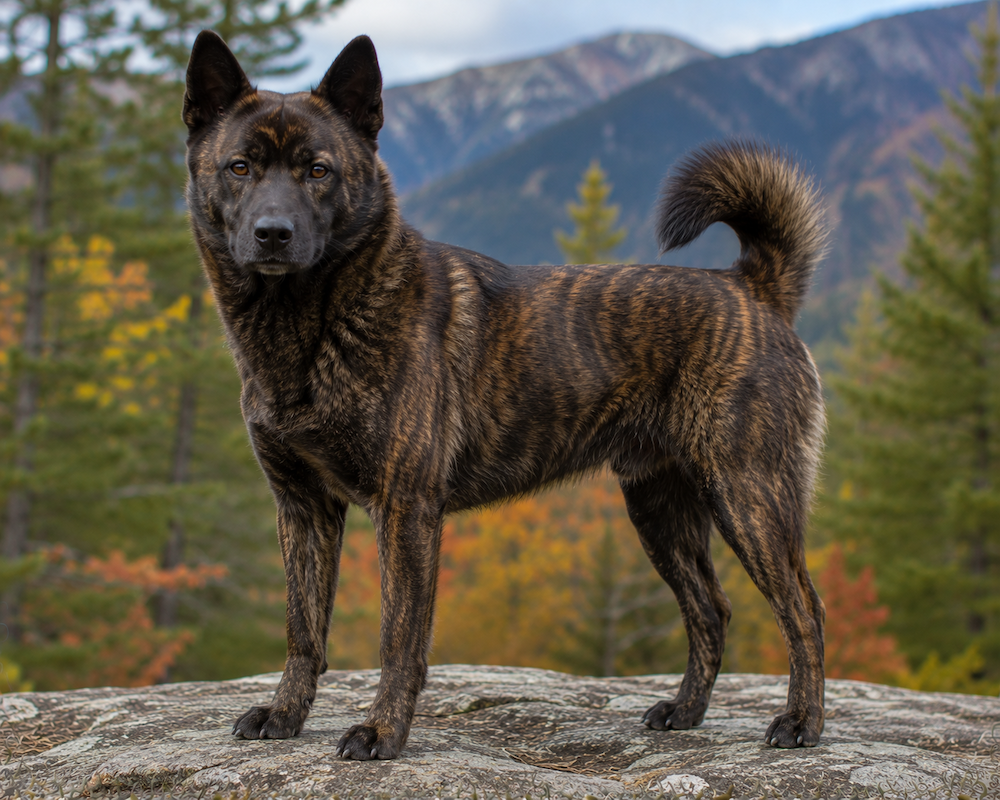







Loyal, intelligent, and naturally athletic — the Kai Ken is one of Japan's rarest native breeds, prized for its striking brindle coat, exceptional hunting ability, and deep devotion to its family.
🧠 QUICK SNAPSHOT
- Temperament: Loyal, intelligent, alert
- Energy Level: High
- Size: Medium
- Good With Families: Yes
- Trainability: High
- Grooming: Low
- Best For: Active families, experienced owners, outdoor lifestyles
📚 OVERVIEW
The Kai Ken is one of Japan’s six native dog breeds and is considered a national treasure in its homeland. Originally bred in the mountainous Kai Province to hunt wild boar and deer, this agile and sure-footed breed is renowned for its intelligence, bravery, and remarkable adaptability. Its distinctive brindle coat provides excellent camouflage in forested landscapes, making it an exceptional hunting companion.
Despite its working heritage, the Kai Ken is a deeply loyal and affectionate family dog. It forms close bonds with its owners while remaining naturally reserved around strangers. Highly observant and eager to stay close to its family, the Kai Ken thrives in active households where it receives regular exercise, mental stimulation, and positive training. For owners seeking an intelligent, athletic, and devoted companion, the Kai Ken is a truly rewarding breed.
✅ PROS & CONS
Pros
- Extremely loyal and devoted to family
- Intelligent and quick to learn
- Low-maintenance coat
- Naturally athletic and agile
- Generally healthy and long-lived
Cons
- Rare and difficult to find
- High exercise requirements
- Strong prey drive
- Can be reserved with strangers
- Needs early socialisation and consistent training
Is a Kai Ken a Good Family Dog?
Yes, the Kai Ken can make an outstanding family dog for active households that appreciate an intelligent and loyal companion. This breed is known for forming exceptionally strong bonds with its family and enjoys spending time close to the people it trusts. While not overly demanding for attention, the Kai Ken is happiest when included in everyday family activities.
Children who understand how to interact respectfully with dogs often develop wonderful relationships with a Kai Ken. The breed is typically gentle within the home but may initially be cautious around unfamiliar people, making early socialisation especially important. Introducing puppies to different people, environments, and experiences helps build confidence and encourages balanced behaviour as they mature.
Because of its strong hunting instincts, care should be taken when introducing a Kai Ken to small animals, particularly if they have not been raised together. With the right guidance and plenty of companionship, this breed becomes a loyal, dependable, and affectionate family member.
How Much Exercise Does a Kai Ken Need?
The Kai Ken requires 60 to 90 minutes of exercise each day to remain physically healthy and mentally fulfilled. As a breed developed for hunting across rugged mountain terrain, it possesses impressive stamina and enjoys activities that challenge both body and mind.
Long walks, hiking, jogging, agility, scent work, and interactive play are all excellent ways to satisfy its exercise needs. The Kai Ken particularly enjoys exploring new environments and benefits from varied activities that engage its natural curiosity and problem-solving abilities.
Mental stimulation is just as important as physical exercise. Puzzle toys, obedience training, trick work, and scent games help prevent boredom and keep the breed mentally engaged. Without sufficient activity, a Kai Ken may become restless or create its own entertainment. Owners who enjoy an active lifestyle will find this athletic breed an enthusiastic and capable companion for outdoor adventures.
Is a Kai Ken Easy to Train?
Yes, the Kai Ken is highly intelligent and generally responds well to training, although its independent nature means consistency is essential. Unlike some breeds that simply follow instructions, the Kai Ken likes to think for itself and benefits from training that is engaging and rewarding.
Positive reinforcement using praise, treats, and play produces the best results. Harsh corrections should be avoided, as they can reduce trust and make the dog less willing to cooperate. Short, varied training sessions help maintain enthusiasm and prevent boredom.
Early socialisation is particularly important for this naturally reserved breed. Introducing a Kai Ken puppy to a wide range of people, dogs, environments, and experiences helps develop confidence and good manners. With patient, consistent training, the Kai Ken becomes a responsive and reliable companion that excels in obedience, agility, and many canine sports.
Does a Kai Ken Shed?
Yes, the Kai Ken sheds moderately throughout the year and more heavily during seasonal coat changes. Its dense double coat provides excellent protection from harsh weather while remaining surprisingly easy to maintain.
Weekly brushing is usually sufficient for most of the year, while more frequent brushing during spring and autumn helps remove the thick undercoat and reduce loose hair around the home. The breed naturally keeps itself clean and only requires occasional bathing unless it becomes particularly dirty.
The Kai Ken is not considered hypoallergenic, so it may not be suitable for people with dog allergies. Regular nail trimming, ear cleaning, and dental care should also be part of its routine grooming programme to maintain overall health and wellbeing.
What Health Problems Are Common in a Kai Ken?
The Kai Ken is widely regarded as one of the healthiest purebred dogs, thanks in part to its relatively natural development and limited selective breeding. However, like all breeds, it can still be affected by certain inherited and age-related conditions.
Hip dysplasia and patellar luxation have occasionally been reported, although they occur less frequently than in many medium-sized breeds. Some Kai Kens may also develop eye conditions such as progressive retinal atrophy (PRA), making health screening by responsible breeders an important consideration.
Maintaining a healthy weight, feeding a balanced diet, providing regular exercise, and scheduling routine veterinary check-ups all help support a long and active life. Choosing a puppy from health-tested parents significantly reduces the risk of inherited problems. With proper care, the Kai Ken commonly lives between 12 and 15 years and remains active well into its senior years.