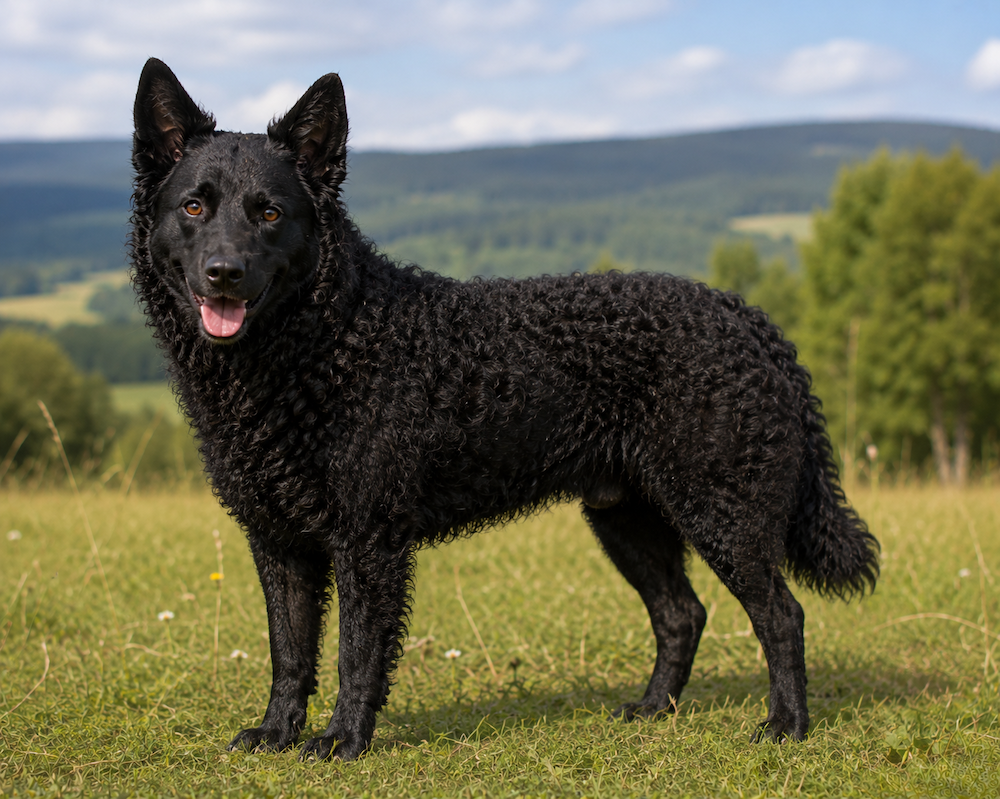







Intelligent, energetic, and endlessly devoted — the Croatian Sheepdog is a versatile herding breed that thrives on activity, companionship, and having a job to do.
🧠 QUICK SNAPSHOT
- Temperament: Intelligent, loyal, energetic
- Energy Level: Very High
- Size: Medium
- Good With Families: Yes
- Trainability: Very High
- Grooming: Low to Moderate
- Best For: Active families, dog sports, working homes
📚 OVERVIEW
The Croatian Sheepdog is an ancient herding breed that has worked alongside farmers in Croatia for centuries. Originally developed to herd sheep, cattle, and other livestock, this agile and highly intelligent dog is admired for its quick thinking, remarkable work ethic, and deep loyalty to its family. Although relatively rare outside its homeland, the breed has earned a reputation as an exceptional working dog and an enthusiastic family companion.
With its distinctive black, wavy coat and alert expression, the Croatian Sheepdog is always ready for action. It thrives in active homes where it can enjoy regular exercise, mental challenges, and meaningful interaction with its owners. Whether working on a farm, competing in agility, or joining the family on outdoor adventures, this energetic breed is happiest when it has a purpose and plenty of opportunities to stay busy.
✅ PROS & CONS
Pros
- Extremely intelligent and eager to learn
- Highly athletic and energetic
- Loyal and affectionate with family
- Excels in dog sports and training
- Low-maintenance coat
Cons
- Needs extensive daily exercise
- Can become bored if under-stimulated
- Strong herding instincts may need managing
- Not ideal for sedentary households
- Requires early socialisation and training
Is a Croatian Sheepdog a Good Family Dog?
Yes, the Croatian Sheepdog makes an excellent family dog for active households. This breed forms close bonds with its family and enjoys being involved in everything from outdoor adventures to relaxing at home after a busy day. It is naturally affectionate, loyal, and eager to spend time with the people it loves.
The breed generally gets along well with respectful children and often enjoys playing energetic games with them. Because of its strong herding instincts, some Croatian Sheepdogs may attempt to herd running children or other pets by circling or gently nipping at heels. Early training helps redirect these instincts into more appropriate behaviours.
Croatian Sheepdogs usually adapt well to homes with other dogs and can coexist peacefully with cats if introduced properly. Families who provide companionship, regular activity, and positive training will find this breed to be an intelligent, enthusiastic, and dependable member of the household.
How Much Exercise Does a Croatian Sheepdog Need?
The Croatian Sheepdog requires 90 to 120 minutes of exercise every day to remain physically fit and mentally satisfied. As a true working breed, it possesses exceptional stamina and enjoys challenging activities that engage both its body and mind.
Long walks, running, agility, flyball, obedience, herding trials, and hiking are all excellent ways to meet its exercise needs. The breed particularly enjoys activities that involve problem-solving and working alongside its owner, making it an ideal partner for dog sports.
Mental stimulation is equally important. Puzzle toys, scent work, advanced obedience, and trick training help prevent boredom and channel the breed’s intelligence into positive behaviours. Without enough activity, a Croatian Sheepdog may become vocal, destructive, or develop unwanted herding behaviours. A busy lifestyle is essential for keeping this energetic breed happy and balanced.
Is a Croatian Sheepdog Easy to Train?
Yes, the Croatian Sheepdog is one of the easiest herding breeds to train. It is exceptionally intelligent, eager to work, and highly responsive to positive reinforcement, making it a favourite among experienced trainers and dog sport enthusiasts.
Training should be varied, rewarding, and mentally stimulating. The breed learns quickly and enjoys solving problems, so introducing new challenges keeps it motivated. Praise, treats, toys, and interactive games all work well, while harsh corrections should be avoided as they can undermine the dog’s confidence.
Early socialisation remains essential to help the Croatian Sheepdog become comfortable around unfamiliar people, animals, and environments. With consistent guidance and ongoing opportunities to learn, the breed develops into a highly obedient companion capable of excelling in obedience, agility, herding, rally, and many other canine disciplines.
Does a Croatian Sheepdog Shed?
Yes, the Croatian Sheepdog sheds moderately throughout the year, with slightly heavier shedding during seasonal coat changes. Its naturally weather-resistant, medium-length wavy coat is relatively easy to maintain compared with many other herding breeds.
Weekly brushing is usually sufficient to remove loose hair, prevent tangles, and keep the coat healthy. During spring and autumn, brushing more frequently helps manage seasonal shedding and reduces loose hair around the home.
The breed rarely requires frequent bathing because its coat naturally resists dirt and weather. However, it is not considered hypoallergenic, so it is unlikely to be suitable for allergy sufferers. Routine grooming should also include regular nail trimming, ear cleaning, and dental care to maintain overall health.
What Health Problems Are Common in a Croatian Sheepdog?
The Croatian Sheepdog is generally considered a healthy and robust breed with relatively few inherited health concerns. Careful breeding over many generations has helped preserve its athleticism and resilience as a working dog.
Like many active medium-sized breeds, hip dysplasia can occasionally occur, although the risk is reduced when puppies come from health-tested parents. Some dogs may also develop progressive retinal atrophy (PRA) or other inherited eye conditions, making regular health screening an important part of responsible breeding programmes.
Routine veterinary check-ups, maintaining a healthy body weight, feeding a balanced diet, and providing consistent exercise all contribute to a long, active life. Purchasing a puppy from a reputable breeder who performs health testing gives owners the best chance of enjoying a healthy companion that often lives between 13 and 15 years.