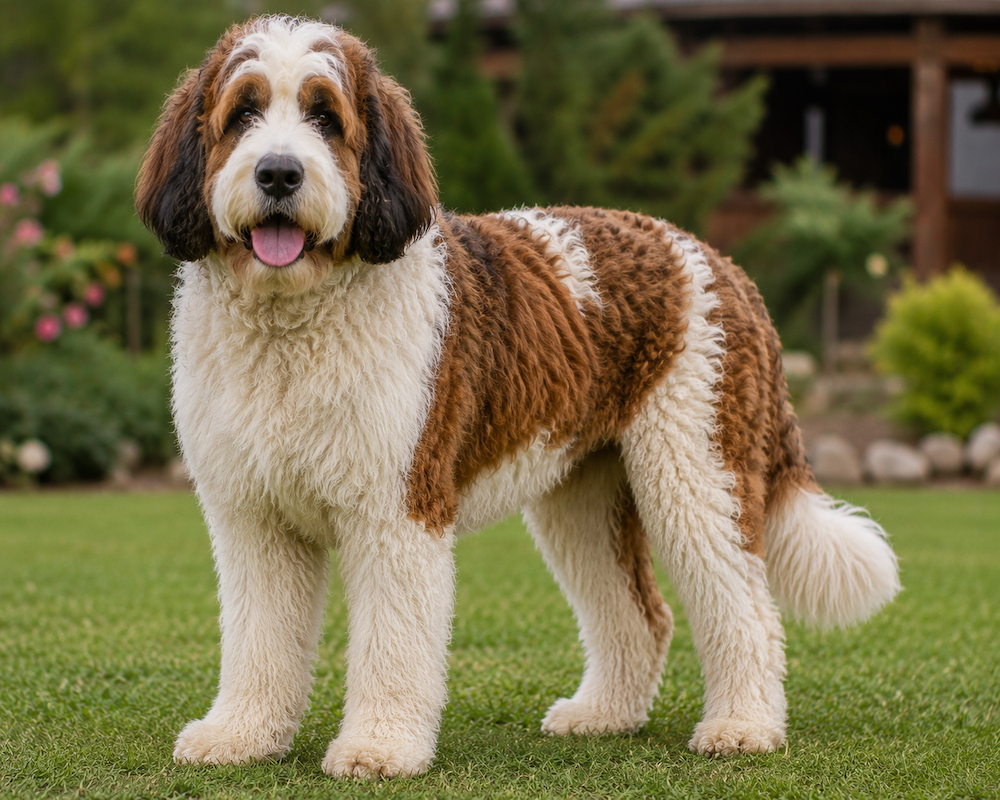







Gentle, intelligent, and wonderfully affectionate — the Saint Berdoodle combines the calm nature of the Saint Bernard with the intelligence of the Poodle to create a giant family companion with a heart to match its size.
🧠 QUICK SNAPSHOT
- Temperament: Gentle, loyal, intelligent
- Energy Level: Moderate
- Size: Giant
- Good With Families: Yes
- Trainability: High
- Grooming: High
- Best For: Families, homes with space, experienced or committed owners
📚 OVERVIEW
The Saint Berdoodle is a designer crossbreed created by combining the gentle Saint Bernard with the highly intelligent Standard Poodle. This mix was developed to retain the calm, affectionate temperament of the Saint Bernard while introducing the Poodle’s intelligence and, in some cases, a lower-shedding coat. The result is a giant companion that is loving, playful, and exceptionally people-oriented.
Saint Berdoodles vary considerably in appearance depending on which parent they favour. Some inherit a thick, wavy coat with classic Saint Bernard markings, while others develop tighter curls and more Poodle-like features. Regardless of appearance, most Saint Berdoodles are friendly, eager to please, and happiest when surrounded by their family. They thrive in homes with plenty of space, regular exercise, and owners who can provide consistent training and companionship.
As with all crossbreeds, temperament, coat type, and health can vary between individuals, making responsible breeding and health testing of both parent breeds extremely important.
✅ PROS & CONS
Pros
- Exceptionally gentle and affectionate
- Excellent with children
- Highly intelligent and trainable
- Loyal and family-oriented
- Usually friendly with other pets
Cons
- Large size requires plenty of space
- Coat needs regular grooming
- Can develop separation anxiety
- Expensive to feed and maintain
- May inherit drooling from the Saint Bernard
Is a Saint Berdoodle a Good Family Dog?
Yes, the Saint Berdoodle is widely considered an outstanding family dog. It is affectionate, patient, and naturally gentle, making it an excellent companion for families with children. Many owners describe the breed as a “gentle giant” because of its calm temperament and loving nature.
Saint Berdoodles generally enjoy living with other dogs and often adapt well to homes with cats when introduced appropriately. Because of their enormous size, young children should always be supervised to prevent accidental bumps during play, even though the breed is rarely intentionally rough.
This crossbreed thrives on companionship and does not enjoy spending long periods alone. Families who include their dog in everyday life and provide plenty of affection, exercise, and interaction will enjoy a loyal companion that quickly becomes an important part of the household.
How Much Exercise Does a Saint Berdoodle Need?
The Saint Berdoodle requires around 45 to 75 minutes of exercise each day. While active enough to enjoy outdoor adventures, it is generally less demanding than many other large working breeds.
Daily walks, hiking, swimming, interactive games, and gentle fetch sessions all provide excellent exercise. Puppies should avoid excessive running and jumping while their joints are developing, as giant breeds mature slowly and are more susceptible to orthopaedic problems during growth.
Mental stimulation is equally important. Puzzle feeders, obedience training, scent games, and learning new tricks help satisfy the intelligence inherited from the Poodle. A combination of moderate exercise and regular enrichment helps prevent boredom while maintaining a healthy body weight and supporting joint health.
Is a Saint Berdoodle Easy to Train?
Yes, the Saint Berdoodle is generally very easy to train. Both parent breeds are intelligent, and most Saint Berdoodles inherit a willingness to learn alongside a strong desire to please their owners.
Positive reinforcement using praise, treats, toys, and encouragement delivers excellent results. Training should begin early because even a friendly Saint Berdoodle becomes extremely large as an adult, making good manners essential from puppyhood. Short, enjoyable training sessions help keep the breed engaged while building confidence.
Early socialisation is particularly important. Introducing puppies to different people, dogs, environments, and everyday experiences helps develop a calm, confident adult. With consistent leadership and reward-based training, the Saint Berdoodle excels as a well-mannered family companion and may also enjoy therapy work, obedience, and other canine activities.
Does a Saint Berdoodle Shed?
Shedding varies depending on which parent breed the Saint Berdoodle takes after. Dogs with curlier Poodle-type coats often shed relatively little but require frequent brushing and professional grooming. Those with straighter Saint Bernard coats generally shed more heavily, especially during seasonal coat changes.
Most Saint Berdoodles benefit from brushing at least three or four times each week to prevent tangles and remove loose hair. Professional grooming every six to eight weeks is often recommended for curly or wavy-coated individuals. Owners should also clean the ears regularly and pay attention to any facial hair or beard that may trap food and moisture.
Although some Saint Berdoodles may be more suitable for people with mild allergies, no dog can be guaranteed to be hypoallergenic. Regular nail trimming and dental care should also form part of the grooming routine.
What Health Problems Are Common in a Saint Berdoodle?
Like all crossbreeds, the Saint Berdoodle may inherit health conditions from either parent breed. Responsible breeders perform health testing on both Saint Bernards and Standard Poodles to reduce the likelihood of inherited diseases.
Potential health concerns include hip dysplasia, elbow dysplasia, gastric dilatation-volvulus (bloat), heart disease, eye disorders, thyroid disease, and certain inherited orthopaedic conditions. Larger individuals are also more susceptible to joint problems if they become overweight, making careful weight management particularly important.
Regular veterinary examinations, feeding a balanced diet, maintaining a healthy body condition, and providing appropriate daily exercise all help support long-term health. Choosing a puppy from health-tested parents offers the best chance of enjoying a healthy companion that typically lives between 10 and 12 years.