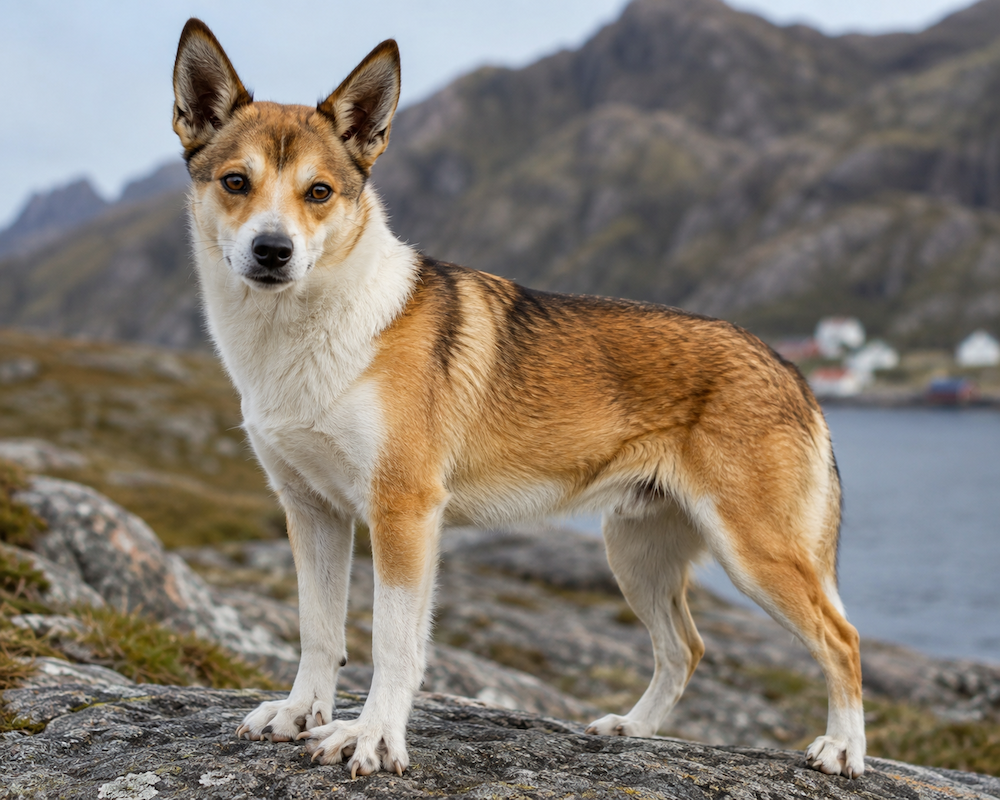







Agile, curious, and unlike almost any other dog — the Norwegian Lundehund is a rare Arctic breed famous for its extra toes, extraordinary flexibility, and remarkable history as a puffin hunter.
🧠 QUICK SNAPSHOT
- Temperament: Alert, curious, affectionate
- Energy Level: Moderate to High
- Size: Small
- Good With Families: Yes
- Trainability: Moderate
- Grooming: Low to Moderate
- Best For: Active families, experienced owners, people fascinated by unusual primitive breeds
📚 OVERVIEW
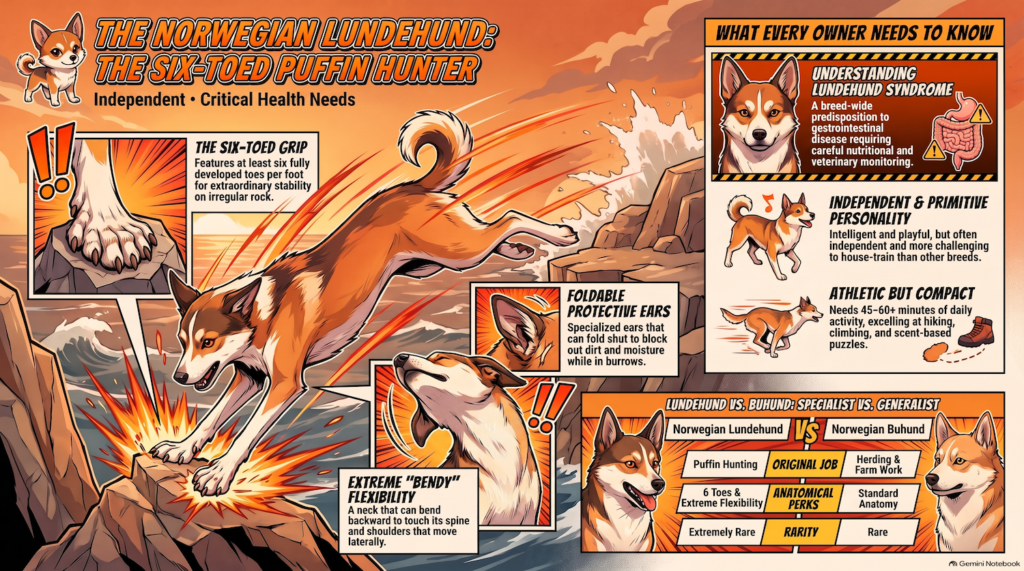
The Norwegian Lundehund is one of the world’s most unusual dog breeds. Originating on remote islands along the Norwegian coast, it was developed for the highly specialised job of hunting puffins and retrieving them from narrow nesting crevices in steep coastal cliffs. Its name reflects this history: lunde means puffin in Norwegian.
To perform this extraordinary task, the Lundehund developed physical characteristics rarely seen in other dogs. It has at least six fully developed toes on each foot, giving it exceptional grip on rocky surfaces. Its unusually flexible joints allow the front legs to extend sideways, while its neck can bend backwards far enough for the head to approach the spine. It can also close its ear canals to help protect them from dirt and moisture.
When puffin hunting declined, the Lundehund came dangerously close to extinction. Careful breeding preserved the population, but the breed remains rare today.
Modern Lundehunds are lively, curious, and affectionate companions with an independent streak inherited from generations of working in difficult terrain.
✅ PROS & CONS
Pros
- Fascinating and highly unusual breed
- Affectionate and playful with family
- Extremely agile
- Manageable small size
- Relatively easy coat maintenance
Cons
- Very rare and difficult to find
- Can be independent during training
- Significant breed-specific digestive health concerns
- Requires careful socialisation
- Seasonal shedding can be substantial
Is a Norwegian Lundehund a Good Family Dog?
Yes, the Norwegian Lundehund can be a good family dog for households prepared for its independent personality and unusual needs. It is typically affectionate with its own family, playful, curious, and happiest when included in everyday activities.
Lundehunds can live successfully with respectful children, particularly when socialised from puppyhood. Their relatively small size means children should be taught to handle them appropriately despite the breed’s surprisingly rugged construction.
They can also coexist successfully with other dogs, although individual personalities vary. Their historical hunting role means introductions to smaller animals should be handled carefully.
One characteristic prospective owners should understand is the Lundehund’s naturally cautious attitude towards unfamiliar situations. Early positive socialisation with different people, environments, sounds, and experiences is particularly valuable.
For families wanting an easy-going dog requiring minimal thought, there are simpler choices. For owners fascinated by primitive breeds and prepared to understand the Lundehund’s quirks, however, it can be an enormously entertaining companion.
How Much Exercise Does a Norwegian Lundehund Need?
A Norwegian Lundehund generally needs around 45 to 60 minutes of physical exercise each day, combined with regular opportunities for exploration and mental stimulation. Despite its small size, this is an agile working breed rather than a sedentary lap dog.
Daily walks, hiking, scent games, climbing activities designed for dogs, interactive play, and exploration of new environments can all provide excellent enrichment. Its extraordinary anatomy once allowed it to negotiate steep Norwegian cliffs, and modern Lundehunds still tend to enjoy climbing and investigating unusual spaces.
Mental exercise is equally valuable. Puzzle feeders, hide-and-seek games, scent trails, trick training, and problem-solving activities provide constructive outlets for the breed’s curiosity.
Secure fencing is important because an inquisitive Lundehund may investigate surprisingly small gaps or attempt to climb obstacles. Providing varied exercise rather than simply repeating the same walk every day helps keep this intelligent and unusual little dog physically fit and mentally satisfied.
Is a Norwegian Lundehund Easy to Train?
The Norwegian Lundehund is intelligent and capable of learning quickly, but it is not always easy to train because of its independent, primitive-breed temperament. These dogs were expected to negotiate dangerous terrain and solve problems without constant human direction, and modern Lundehunds retain much of that self-reliance.
Positive reinforcement using food, toys, praise, and games generally produces the best results. Short, interesting sessions are preferable to repetitive drilling, which can quickly cause the dog to lose interest.
House training can sometimes take longer than owners expect, making patience and a consistent routine particularly important during puppyhood.
Early socialisation should introduce the puppy gradually and positively to unfamiliar people, friendly dogs, different environments, household noises, travelling, grooming, and veterinary handling.
The Lundehund may never display the automatic obedience of some working breeds, but owners who make training interesting and rewarding can develop an intelligent, responsive, and enjoyable companion.
Does a Norwegian Lundehund Shed?
Yes, the Norwegian Lundehund sheds moderately throughout much of the year and can shed quite heavily during seasonal coat changes. Its dense double coat developed to protect it from the cold, wet conditions of coastal Norway.
For most of the year, brushing once or twice a week is usually sufficient. When the undercoat is being shed, more frequent brushing helps remove loose hair before it spreads throughout the home.
The coat itself requires no complicated trimming or professional styling. Bathing is generally necessary only occasionally, making the breed relatively straightforward to groom despite its seasonal shedding.
Owners should also maintain regular nail care—including attention to the Lundehund’s unusual additional toes and nails. Routine dental care and ear checks should form part of the normal grooming schedule.
The Norwegian Lundehund is not considered hypoallergenic, so it is unlikely to suit someone specifically searching for a non-shedding breed.
What Health Problems Are Common in a Norwegian Lundehund?
The most important health consideration in the Norwegian Lundehund is a collection of gastrointestinal problems commonly associated with Lundehund syndrome. These can include intestinal lymphangiectasia and other disorders that interfere with digestion, nutrient absorption, and protein levels in the body.
The severity varies considerably. Some dogs may experience relatively manageable digestive problems, while others can develop serious chronic illness requiring specialised veterinary care and dietary management.
The breed’s extremely small historical population has also created significant genetic challenges. This makes responsible breeding particularly important, and international efforts have explored ways of improving genetic diversity while preserving the Lundehund’s distinctive characteristics.
Prospective owners should discuss gastrointestinal health carefully with breeders and ask about the health and longevity of related dogs rather than focusing only on the puppy itself.
With appropriate care, many Norwegian Lundehunds live around 12 to 14 years. Regular veterinary monitoring, appropriate nutrition, maintaining a healthy weight, and recognising digestive changes early are particularly important for this rare breed.
⭐ What Makes the Norwegian Lundehund So Unusual?
Few breeds deserve the word unique as much as the Norwegian Lundehund.
Its specialised puffin-hunting ancestry produced an extraordinary collection of physical adaptations:
- At least six toes on each foot
- Exceptional flexibility in the shoulders
- An unusually flexible neck
- Ears capable of folding to help close the ear canal
- Remarkable climbing and balancing ability
These weren’t developed simply for appearance. They helped the Lundehund climb steep cliffs, squeeze into narrow rock passages, turn around in confined spaces, and retrieve puffins from difficult nesting sites.
Today, those characteristics provide a fascinating glimpse into what can happen when generations of dogs become extraordinarily specialised for one particular job.