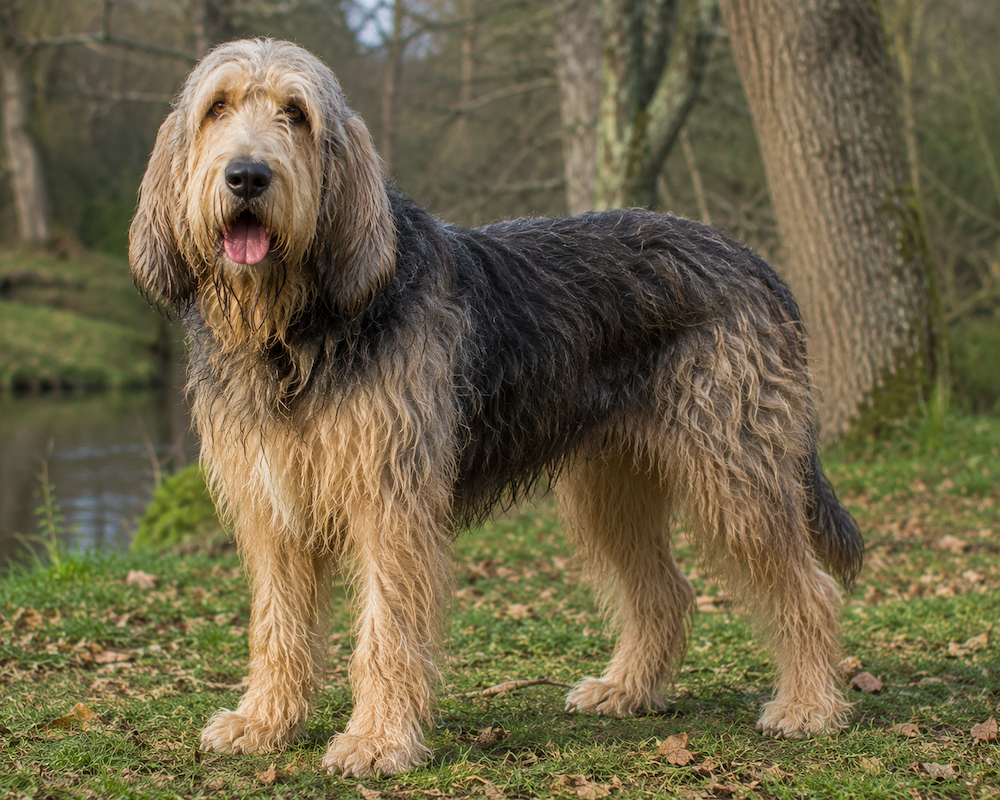







Big, boisterous, and wonderfully good-natured — the Otterhound is an exceptionally rare British scent hound with webbed feet, a remarkable nose, and a personality every bit as distinctive as its shaggy appearance.
🧠 QUICK SNAPSHOT
- Temperament: Friendly, independent, affectionate
- Energy Level: Moderate to High
- Size: Large
- Good With Families: Yes
- Trainability: Moderate
- Grooming: Moderate
- Best For: Active families, experienced owners, homes with plenty of secure space
📚 OVERVIEW
The Otterhound is an old British scent hound developed for the highly specialised task of hunting otters in and around rivers. This demanding work required a dog with tremendous stamina, an exceptional sense of smell, a weather-resistant coat, and the ability to work both on land and in water. Its large, webbed feet made it an especially capable swimmer.
When otter hunting ended in Britain, the breed lost its traditional purpose and its numbers declined dramatically. Today, the Otterhound is exceptionally rare, with relatively few puppies born worldwide each year.
Physically, this is a substantial dog. Its rough double coat, long ears, large feet, and shaggy face give it an unmistakably rustic appearance. Its personality is equally memorable. Otterhounds are generally friendly, enthusiastic, and affectionate but retain the independent streak expected of a scent hound.
They are not necessarily the neatest or most obedient dogs in the world, but for owners who appreciate a large hound with enormous character, the Otterhound offers something genuinely different.
✅ PROS & CONS
Pros
- Friendly and affectionate personality
- Generally excellent with families
- Loves outdoor adventures
- Outstanding scenting ability
- Powerful swimmer
- Distinctive and exceptionally rare breed
Cons
- Strong scent and hunting instincts
- Independent during training
- Large, powerful, and sometimes boisterous
- Can be very vocal
- Beard and coat can carry considerable water and mud
- Extremely rare and difficult to find
Is an Otterhound a Good Family Dog?
Yes, the Otterhound can be an excellent family dog for households with enough space and an appreciation for large, enthusiastic hounds. It is generally good-natured, affectionate, and sociable, enjoying companionship without necessarily demanding constant attention.
Otterhounds can be excellent companions for respectful children, although their large size and exuberant personality mean younger children can easily be knocked over accidentally. Supervision is therefore sensible.
Having historically worked alongside other hounds, Otterhounds often live successfully with other dogs. Cats may also be accepted when dogs are introduced appropriately from an early age, although the breed’s powerful hunting instincts mean smaller animals require more caution.
This isn’t usually a breed that wants to spend every moment sitting quietly beside its owner. The Otterhound likes exploring, investigating scents, getting wet, and generally participating in whatever is happening. An outdoors-oriented family willing to embrace a little mud and disorder can find the Otterhound a wonderfully entertaining companion.
How Much Exercise Does an Otterhound Need?
An adult Otterhound generally needs around 60 to 90 minutes of exercise every day, with active individuals often enjoying considerably longer outdoor adventures. This is an endurance breed originally expected to work for extended periods over difficult terrain and through water.
Long walks, hiking, scent work, tracking, swimming, and opportunities to explore provide excellent exercise. Swimming is particularly appropriate because the Otterhound’s large webbed feet and powerful body make it naturally suited to the water.
Owners need to take its exceptional nose seriously. Once an Otterhound discovers an interesting scent, following it may become considerably more important than listening to its owner. Off-lead exercise is therefore safest within securely enclosed areas.
Mental stimulation should complement physical activity. Scent trails, hide-and-seek, food puzzles, and tracking games allow the Otterhound to use the abilities for which it was originally developed and can be far more satisfying than simply adding another walk.
Is an Otterhound Easy to Train?
The Otterhound is intelligent, but it is not generally considered an easy breed to train. Like many scent hounds, it was developed to follow its nose and make independent decisions rather than constantly wait for instructions from a handler.
Positive reinforcement using food, praise, toys, and games produces the best results. Training sessions should remain interesting and relatively short because repetitive obedience exercises may quickly lose the dog’s attention.
Recall deserves particular attention. Even a well-trained Otterhound can become intensely focused when it discovers an interesting scent, so owners should not assume obedience training will completely override generations of hunting instinct.
Early socialisation and lead training are also important because a fully grown Otterhound is a large and powerful animal. Teaching polite walking and everyday manners during puppyhood makes adult life considerably easier.
Patient owners who understand hound behaviour will generally achieve much better results than those expecting instant obedience.
Does an Otterhound Shed?
Yes, the Otterhound sheds moderately, and its large, rough double coat requires regular maintenance. The coat consists of a coarse, weather-resistant outer layer and softer undercoat designed to protect the dog while working in cold water.
A thorough brushing at least once or twice each week helps remove loose hair and prevents tangles. Areas around the ears, legs, and underneath the body deserve particular attention.
The Otterhound’s beard introduces another consideration: water. After drinking or swimming, that impressive facial hair can carry a surprising amount of moisture around the house. Owners may find themselves keeping towels conveniently close to water bowls.
The long ears should also be checked and dried regularly because trapped moisture can encourage ear infections, particularly in dogs that swim frequently.
The Otterhound is not hypoallergenic, and anyone wanting a pristine, hair-free home may find there are easier breeds to live with.
What Health Problems Are Common in an Otterhound?
The Otterhound is generally a robust breed, but its large size and very small global population create several important health considerations. Most live approximately 10 to 13 years, although individual longevity varies.
Hip dysplasia and elbow dysplasia are important orthopaedic concerns, making health screening of breeding dogs essential. As a large, deep-chested breed, the Otterhound is also susceptible to gastric dilatation-volvulus (GDV or bloat), a potentially fatal emergency requiring immediate veterinary treatment.
A particularly important inherited concern within the breed is Glanzmann’s thrombasthenia, a bleeding disorder affecting normal blood clotting. Responsible breeders can use genetic testing to help avoid producing affected puppies.
The Otterhound’s rarity also makes careful management of genetic diversity extremely important. Prospective owners should seek breeders who participate in appropriate health screening and prioritise the long-term welfare of this vulnerable breed.
Regular veterinary care, maintaining a lean body condition, appropriate exercise, good nutrition, and responsible breeding all help give an Otterhound the best chance of a long and active life.
⭐ Why Is the Otterhound So Rare?
The Otterhound’s rarity is closely connected to the disappearance of the job for which it was developed.
For centuries, packs of Otterhounds were maintained specifically for hunting otters. When concerns about declining otter populations led to the end of the practice in Britain during the 1970s, the breed suddenly lost its traditional working role.
Unlike breeds that successfully transitioned into mainstream companion dogs, the enormous, shaggy, independent Otterhound remained relatively specialised. Maintaining a population became increasingly difficult.
Today, breed enthusiasts work to preserve the Otterhound while maintaining sufficient genetic diversity within a very small breeding population.
That means anyone considering an Otterhound isn’t simply choosing an unusual pet. They are becoming involved with the preservation of one of Britain’s most distinctive and vulnerable historic dog breeds.