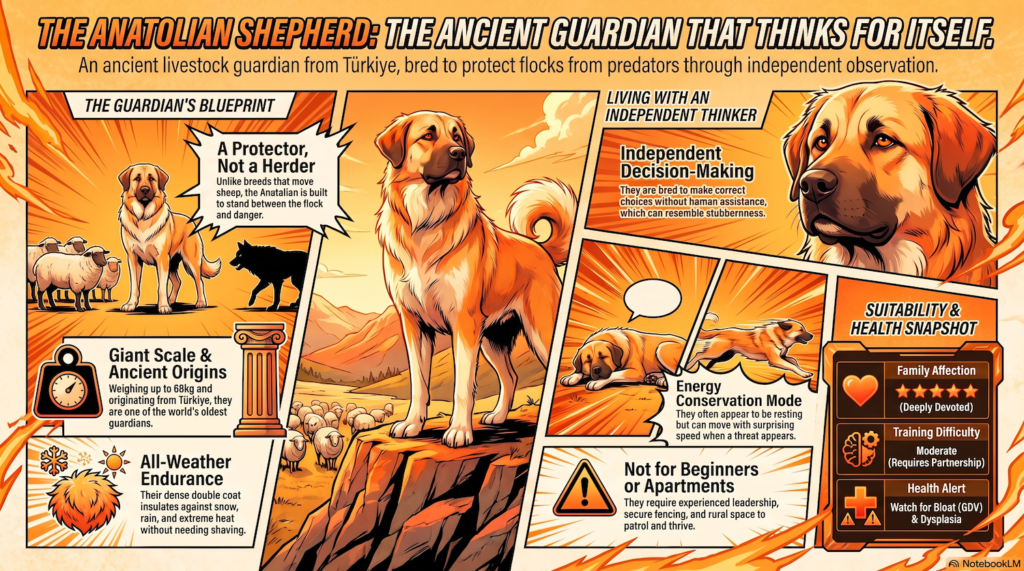
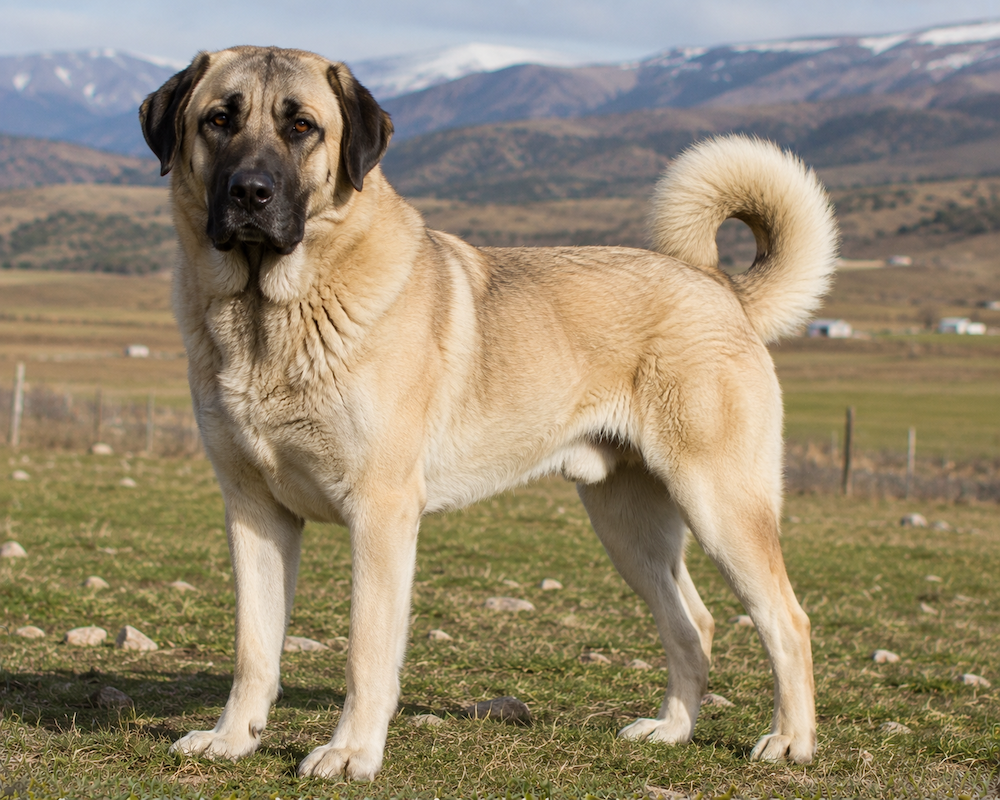







Calm, courageous, and incredibly protective — the Anatolian Shepherd is a powerful livestock guardian bred to think independently and defend its family without hesitation.
🧠 QUICK SNAPSHOT
- Temperament: Loyal, independent, protective
- Energy Level: Moderate
- Size: Large to Giant
- Good With Families: Yes (with experienced owners)
- Trainability: Moderate
- Grooming: Low to Moderate
- Best For: Rural properties, experienced owners, livestock guardians
📚 OVERVIEW
The Anatolian Shepherd is an ancient guardian breed that originated in Turkey, where it spent thousands of years protecting livestock from predators such as wolves and bears. Bred to work independently across vast landscapes, this impressive dog combines intelligence, confidence, and remarkable courage with a calm and steady temperament.
Unlike many working breeds, the Anatolian Shepherd is not driven by a desire to please. Instead, it was developed to make decisions without human direction, making it an exceptional guardian but also a breed that requires confident, experienced ownership. With early socialisation, consistent training, and plenty of space, the Anatolian Shepherd becomes an incredibly loyal protector that forms deep bonds with its family while remaining naturally reserved around strangers.
✅ PROS & CONS
Pros
- Outstanding natural guardian
- Loyal and devoted to its family
- Calm, confident temperament
- Low-maintenance coat
- Generally healthy and hardy breed
Cons
- Not suitable for first-time owners
- Highly independent thinker
- Needs extensive early socialisation
- Requires plenty of secure outdoor space
- Can be wary of unfamiliar people and animals
Is an Anatolian Shepherd a Good Family Dog?
Yes, an Anatolian Shepherd can be an excellent family dog for households that understand guardian breeds. These dogs are incredibly loyal and naturally protective, often developing strong bonds with every member of the family. They are usually calm around children they know well and instinctively take their role as protector very seriously.
However, the breed’s independent nature means it is not as outwardly affectionate or eager to please as many companion breeds. They are naturally suspicious of strangers, making early socialisation essential to help them distinguish normal visitors from genuine threats.
The Anatolian Shepherd is happiest in homes with large, securely fenced properties where it has space to patrol and feel useful. Apartment living or busy suburban environments are generally not ideal. For experienced owners who can provide leadership and structure, this breed is one of the most dependable family guardians in the canine world.
How Much Exercise Does an Anatolian Shepherd Need?
An Anatolian Shepherd typically needs 60 to 90 minutes of daily exercise, although its exercise requirements are more moderate than many working breeds. Rather than seeking constant high-energy activity, this breed enjoys purposeful movement and having a job to perform.
Daily walks, exploring large secure areas, hiking, and supervised time outdoors help maintain physical fitness and mental wellbeing. Because they were bred to guard rather than herd, Anatolian Shepherds generally prefer steady activity over repetitive games like endless ball throwing.
Mental stimulation is equally important. Obedience training, scent work, and opportunities to make decisions help satisfy the breed’s intelligent and independent mind. Without enough exercise or mental engagement, an Anatolian Shepherd may become bored, vocal, or increasingly territorial around its home.
Is an Anatolian Shepherd Easy to Train?
The Anatolian Shepherd is highly intelligent, but it is not an easy breed to train. Developed to work alone without constant human supervision, it naturally questions commands rather than following them automatically.
Successful training relies on consistency, patience, and positive reinforcement. Harsh corrections often reduce trust and cooperation, while calm, confident leadership encourages the dog to respect its owner. Training sessions should remain interesting and purposeful, as repetitive drills are unlikely to keep this breed engaged.
Socialisation during puppyhood is particularly important. Introducing the dog to a wide variety of people, animals, sounds, and environments helps create a confident adult that can accurately assess unfamiliar situations. While the Anatolian Shepherd may never display the eager obedience of breeds like the Labrador Retriever or Border Collie, it becomes a dependable and sensible companion when trained correctly.
Does an Anatolian Shepherd Shed?
Yes, the Anatolian Shepherd sheds throughout the year and experiences heavier seasonal shedding during spring and autumn. Its dense double coat protects it from harsh weather conditions and requires relatively little maintenance compared with many other large breeds.
Weekly brushing is usually enough to remove loose hair and keep the coat healthy. During seasonal coat changes, brushing several times each week helps manage the increased shedding and reduces hair around the home.
Despite its thick coat, the Anatolian Shepherd rarely requires frequent bathing because its coat naturally repels dirt. It is not considered hypoallergenic, so it is generally unsuitable for allergy sufferers. Routine nail trimming, ear cleaning, and dental care should also be part of its regular grooming routine to maintain overall health.
What Health Problems Are Common in an Anatolian Shepherd?
The Anatolian Shepherd is considered one of the healthier giant dog breeds, but it can still inherit several health conditions. Hip dysplasia and elbow dysplasia are the most common joint problems and can affect mobility later in life. Responsible breeders routinely screen breeding dogs to minimise these risks.
Like many large, deep-chested breeds, the Anatolian Shepherd is also susceptible to gastric dilatation-volvulus (bloat), a life-threatening condition that requires immediate veterinary attention. Feeding smaller meals, avoiding vigorous exercise after eating, and recognising the warning signs are important preventative measures.
Some Anatolian Shepherds may also develop eyelid disorders such as entropion, along with occasional thyroid conditions. Maintaining a healthy weight, providing regular veterinary check-ups, purchasing puppies from health-tested breeders, and feeding a high-quality diet all contribute to helping this magnificent guardian enjoy a long and active life.