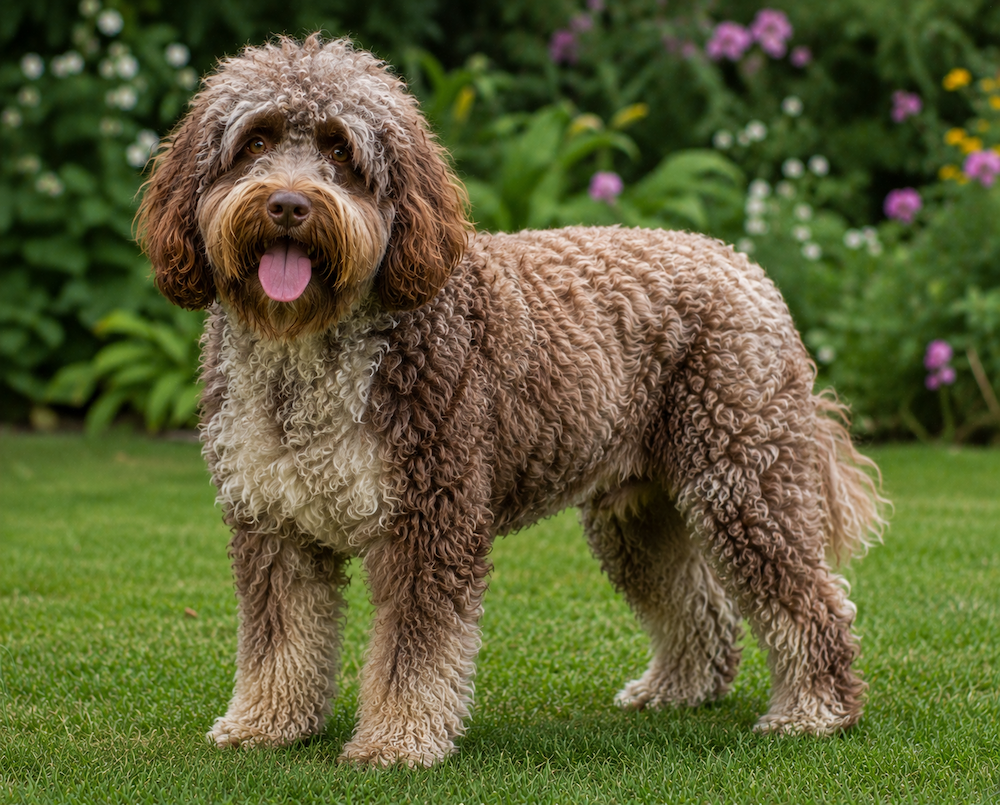







Intelligent, affectionate, and born for the water — a rare French breed with a curly coat and a joyful personality.
🧠 QUICK SNAPSHOT
- Temperament: Friendly, intelligent, affectionate
- Energy Level: High
- Size: Medium to large
- Good With Families: Yes
- Trainability: High
- Grooming: High
- Best For: Active families, outdoor enthusiasts, water lovers
📚 OVERVIEW
The Barbet is a rare French water dog with a long history as a skilled retriever of waterfowl. Known for its dense, curly coat and cheerful personality, the Barbet is an intelligent and versatile breed that excels both as a working dog and as a loving family companion.
These dogs are social, adaptable, and happiest when they can spend time with their family. True to their heritage, Barbets especially enjoy swimming and outdoor adventures.
✅ PROS & CONS
Pros
- Friendly and affectionate with family
- Highly intelligent and eager to please
- Excellent swimmer and outdoor companion
- Low-shedding coat
Cons
- Requires regular grooming to prevent matting
- Needs plenty of exercise and mental stimulation
- Can become bored if left alone too long
- Coat requires consistent maintenance
Is a Barbet a Good Family Dog?
Yes, the Barbet is generally an excellent family dog, known for being affectionate, sociable and strongly attached to its people.
Barbets are typically friendly dogs that enjoy participating in family life rather than being left on the sidelines. They can be very good with respectful children and usually combine playfulness with a relatively gentle temperament.
Early socialisation remains important, particularly because some Barbets can initially be reserved around unfamiliar people.
They thrive in households where they receive plenty of companionship.
For families wanting an active dog that also enjoys being close to its humans, the Barbet has considerable appeal — especially if nobody objects to a large curly shadow following them around the house.
How Much Exercise Does a Barbet Need?
An adult Barbet generally needs around 60–90 minutes of exercise each day, together with regular mental stimulation.
The breed was developed as a working water dog, so Barbets are athletic and usually enjoy activities such as walking, hiking, retrieving and especially swimming.
Many also perform well in obedience, agility, scent work and other dog sports.
Mental stimulation is important because Barbets are intelligent working dogs.
They don’t necessarily require the extreme exercise levels of some herding breeds, but they’re considerably more active than their shaggy teddy-bear appearance might suggest.
Is a Barbet Easy to Train?
Yes, Barbets are generally intelligent, responsive and relatively easy to train.
They were developed to work alongside people, and many are eager to participate in training.
Positive reinforcement works particularly well because Barbets can be sensitive dogs that respond better to encouragement than harsh correction.
Short, interesting sessions help maintain enthusiasm.
Early training should include recall, loose-lead walking and calm behaviour around people and other animals.
Their intelligence also makes advanced tricks and dog sports realistic possibilities.
The Barbet usually wants to cooperate — although adding water to the environment may suddenly make swimming considerably more interesting than your training session.
Does a Barbet Shed?
Barbets are generally considered low-shedding dogs, but their curly coats require substantial maintenance.
Instead of releasing large quantities of loose hair around the home, shed hairs can become trapped within the coat.
Without regular grooming, this can contribute to tangles and mats.
The coat needs thorough brushing and combing, with particular attention to areas behind the ears, beneath the legs and around other friction points.
Regular trimming is also common for pet Barbets.
Low shedding therefore doesn’t mean low maintenance.
With a Barbet, you may spend less time vacuuming loose hair — but considerably more time holding a comb.
Is a Barbet Hypoallergenic?
The Barbet is sometimes described as hypoallergenic because it sheds relatively little, but no dog can be guaranteed to be completely hypoallergenic.
Dog allergies are usually triggered by proteins found in dander, saliva and other secretions rather than simply by hair.
A person with allergies can therefore still react to a Barbet.
However, some allergy sufferers may find low-shedding breeds easier to live with than dogs that distribute large quantities of hair throughout the home.
Anyone with significant allergies should spend time around adult Barbets before deciding whether the breed is suitable.
What Health Problems Are Common in Barbets?
Barbets are generally considered a relatively healthy breed, but several inherited conditions deserve attention.
Hip dysplasia can occur, making appropriate hip screening important in breeding dogs.
Elbow problems and certain inherited eye disorders can also affect the breed.
Epilepsy has been reported in some Barbet lines.
Their long, hairy ears can also trap moisture, particularly in dogs that swim frequently, potentially contributing to ear infections.
Responsible breeders should conduct appropriate orthopaedic, eye and genetic health testing rather than relying on the breed’s relative rarity as evidence of good health.
How Long Do Barbets Live?
Barbets typically live around 12–14 years, although individual dogs may live longer.
Genetics, nutrition, exercise, body condition and preventive veterinary care all influence lifespan.
Regular ear care can be particularly useful for Barbets that swim frequently.
Maintaining an appropriate body weight also helps protect joints as the dog ages.
Many Barbets remain playful and enthusiastic well into their senior years.
How Big Does a Barbet Get?
The Barbet is a medium-sized dog, although its enormous curly coat can make it appear considerably larger.
Adult males generally stand around 58–65 cm at the shoulder, while females are usually approximately 53–61 cm, depending on the breed standard being followed.
Weight commonly falls somewhere around 16–28 kg, although individual dogs vary.
Beneath all that hair is an athletic working dog rather than an exceptionally heavy one.
A wet Barbet emerging from a lake can therefore produce one of the breed’s great surprises:
there is considerably less dog underneath the coat than you thought.
Can a Barbet Live in an Apartment?
Yes, a Barbet can adapt to apartment living if its daily exercise and mental-stimulation requirements are consistently met.
They’re generally calm enough indoors after sufficient activity and aren’t usually regarded as excessively noisy dogs.
However, their medium size, grooming requirements and need for regular outdoor exercise should be considered.
Access to parks, walking trails or other exercise areas makes apartment living much easier.
A Barbet doesn’t require a lake in the backyard.
Given the opportunity, however, it probably wouldn’t complain.
Can a Barbet Be Left Alone?
Barbets are highly people-oriented dogs and generally don’t enjoy routinely being left alone for very long periods.
They were developed to work closely with humans and often form strong attachments to their families.
Some individuals can develop separation-related behaviours if suddenly left alone for extended periods.
Puppies should gradually learn to spend reasonable periods independently.
Exercise and enrichment before absences can also help.
The Barbet is usually best suited to a household where the dog receives substantial daily companionship and interaction.
Are Barbets Good With Other Dogs?
Barbets are generally sociable and capable of living very successfully with other dogs.
Their typically friendly temperament can make them well suited to multi-dog households.
Early socialisation remains important so puppies learn appropriate canine communication and manners.
Individual personalities naturally vary, and introductions to new household dogs should still be handled carefully.
Many Barbets enjoy canine companionship and interactive play, particularly with dogs that match their energy level.
Are Barbets Good With Cats?
Many Barbets can live successfully with cats, particularly when introduced carefully or raised alongside them.
As retrieving dogs, Barbets generally weren’t developed specifically to hunt and kill small mammals in the way many terriers were.
However, individuals can still have varying levels of prey drive.
Early introductions, training and supervision are important.
Cats should also have elevated areas or separate spaces where they can escape unwanted canine attention.
Why Do Barbets Love Water So Much?
Barbets often love water because the breed was developed as a water-retrieving hunting dog.
For centuries, dogs of this type worked with hunters around wetlands, locating and retrieving waterfowl.
Their dense curly coat provided protection when working in cold and wet environments.
Many modern Barbets retain a strong attraction to swimming and retrieving.
This doesn’t mean every individual will automatically love water, but it’s deeply connected to the breed’s history.
A Barbet encountering a muddy pond may see something very different from its owner.
The owner sees a grooming disaster.
The Barbet sees heritage.
What Were Barbets Originally Bred to Do?
Barbets were historically bred as water dogs used by hunters to locate, flush and retrieve game birds from wetlands.
Their combination of swimming ability, intelligence and a protective curly coat made them particularly useful around water.
Dogs resembling the Barbet appear in European records and artwork going back centuries.
The breed became particularly associated with France and is often known as the French Water Dog.
Modern Barbets are more commonly companions, but many retain strong retrieving instincts and a natural enthusiasm for water.
Is the Barbet Related to the Poodle?
Yes, the Barbet belongs to the broader historical family of European water dogs associated with breeds such as the Poodle.
However, claims that one modern breed simply descended directly from another can oversimplify a complicated history.
Water dogs with curly or woolly coats existed across Europe for centuries and influenced the development of several modern breeds.
The Barbet, Poodle and other European water dogs therefore share historical connections.
Their similarities — curly coats, intelligence, retrieving ability and enthusiasm for water — aren’t accidental.
Where Does the Name Barbet Come From?
The name Barbet is associated with the French word barbe, meaning “beard”.
One look at the breed makes the reason fairly obvious.
Barbets typically have abundant facial hair around the muzzle and chin, creating the characteristic bearded appearance.
The name has been associated historically with shaggy French water dogs.
Interestingly, the term also contributed to the French word barbiche, referring to a small beard or goatee.
Few breeds have a name that describes their appearance quite so efficiently.
Where Does the Barbet Come From?
The Barbet is an old French water-dog breed with a history extending back for centuries.
Shaggy water dogs resembling the modern Barbet appear in historical descriptions and artwork, although tracing an uninterrupted modern pedigree back through those early dogs isn’t possible.
The breed was valued by hunters for working in marshes and retrieving waterfowl.
Like several European breeds, Barbet numbers declined dramatically during the 20th century, particularly around the World Wars.
Dedicated breeders later worked to rebuild the population.
The Barbet remains relatively uncommon internationally today, but its distinctive combination of water-dog heritage, curly coat and affectionate temperament has attracted growing interest.