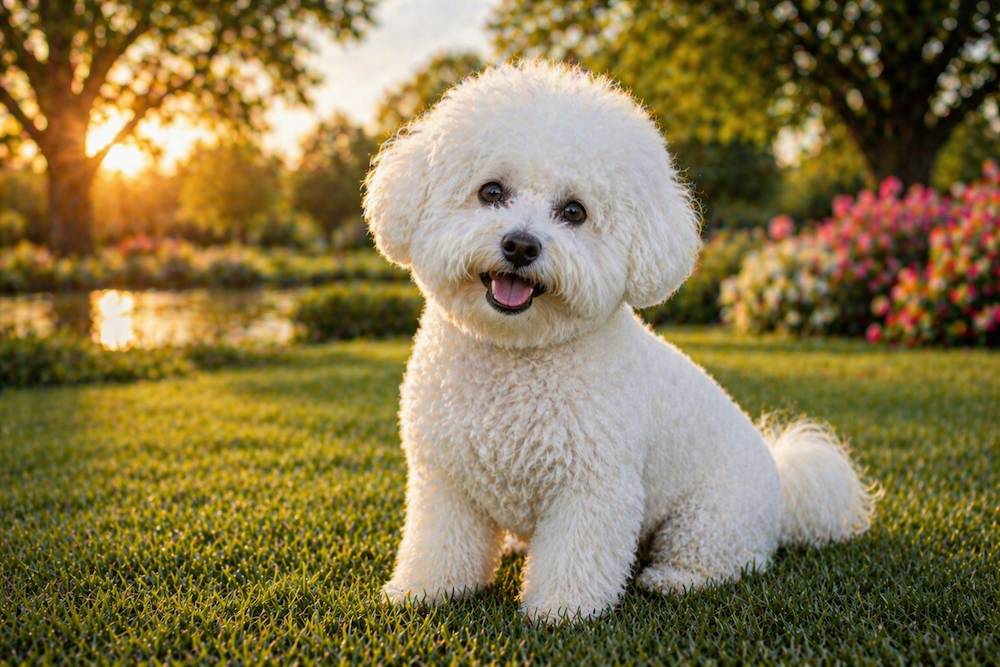







Fluffy, cheerful, and full of joy — a happy companion that loves everyone.
🧠 QUICK SNAPSHOT
- Temperament: Cheerful, Affectionate, Playful
- Energy Level: Moderate
- Size: Small
- Good with Families: Excellent
- Training Difficulty: Easy
📚 OVERVIEW
The Bichon Frise is a small companion dog known for its soft, white, fluffy coat and joyful personality. They are friendly, social, and love being the centre of attention. Bichons thrive on human interaction and are well-suited to family life and apartment living.
✅ PROS & CONS
Pros
- Very friendly and great with families
- Low shedding coat (often suitable for allergy sufferers)
- Playful and affectionate personality
Cons
- Requires regular grooming
- Can develop separation anxiety
- Needs attention and companionship
Is a Bichon Frise a Good Family Dog?
Yes, the Bichon Frise is generally an excellent family dog. Bichons are cheerful, affectionate and highly people-oriented, and many thrive in homes where they receive plenty of attention.
They can be very good with respectful children and are small enough to fit comfortably into most households.
Bichons were developed primarily as companion dogs, so being close to people comes naturally to them.
Their small size shouldn’t be confused with a quiet personality. A typical Bichon brings a surprisingly large amount of character in a very fluffy package.
How Much Exercise Does a Bichon Frise Need?
Most Bichon Frises need around 30–60 minutes of daily exercise, usually divided between walks and play.
They’re lively little dogs but don’t require the enormous exercise commitment of a working or sporting breed.
Many experience energetic bursts sometimes known as the “Bichon Blitz”, racing around the house or garden before returning to normal.
Interactive games and short training sessions provide useful mental stimulation as well.
Their manageable exercise requirements make them suitable for many lifestyles, including active older owners and apartment households.
Is a Bichon Frise Easy to Train?
Bichon Frises are intelligent and generally very trainable, particularly when positive reinforcement is used.
Their history as performers demonstrates their ability to learn tricks and routines.
Food rewards, praise and short, enjoyable sessions usually work well.
One area that can require additional patience is housetraining. Some Bichons take longer than expected to become completely reliable indoors.
Consistency and a predictable routine are important.
Once motivated, however, a Bichon can learn an impressive repertoire — centuries of entertaining people haven’t gone entirely to waste.
Does a Bichon Frise Shed?
The Bichon Frise is a very low-shedding breed, but its coat requires substantial maintenance.
Loose hairs tend to become trapped within the curly coat rather than falling around the home.
Regular brushing is essential to prevent knots and painful mats.
Most pet Bichons also require professional grooming approximately every four to six weeks, depending on coat length and style.
So while you may find relatively little hair on the furniture, maintaining that famous fluffy appearance requires considerably more work than its low shedding might suggest.
Is a Bichon Frise Hypoallergenic?
Bichon Frises are often described as hypoallergenic because they shed very little, but no dog is completely allergen-free.
Dog allergies are generally triggered by proteins found in saliva, dander and other secretions rather than hair itself.
Some allergy sufferers find Bichons easier to tolerate because less loose hair and attached dander are distributed around the home.
However, reactions vary considerably between individuals.
Anyone with significant dog allergies should spend time around adult Bichons before deciding whether the breed is suitable.
What Health Problems Are Common in Bichon Frises?
Bichon Frises are generally relatively long-lived dogs, but several health conditions occur within the breed.
Patellar luxation, where the kneecap moves out of its normal position, is an important concern.
Allergies and skin problems can also occur, along with dental disease, bladder stones and certain inherited eye disorders.
Ear infections may develop if the ears aren’t properly maintained.
Regular dental care is particularly important because small dogs can be susceptible to periodontal disease.
Responsible breeders should screen breeding dogs for relevant inherited conditions.
How Long Do Bichon Frises Live?
Bichon Frises typically live around 14–15 years, with many reaching their mid-teens and some living longer.
Their small size contributes to their relatively good longevity.
Maintaining a healthy weight, providing regular exercise, good dental care and routine veterinary examinations can all support a long life.
Because Bichons are highly social dogs, maintaining interaction and mental stimulation remains important as they age.
Many retain their playful personality surprisingly late into life.
Can a Bichon Frise Live in an Apartment?
Yes, the Bichon Frise is generally very well suited to apartment living.
Its small size and moderate exercise requirements make it relatively easy to accommodate in smaller homes.
Daily walks and interactive play are still essential.
Barking can become an issue in shared buildings if a Bichon becomes bored or reacts excessively to hallway noises.
The breed’s biggest apartment challenge may actually be its strong attachment to people rather than its physical size.
A well-exercised Bichon can be perfectly content without a large backyard.
Can a Bichon Frise Be Left Alone?
Bichon Frises generally don’t enjoy being left alone for long periods.
They were developed as companion dogs and tend to form extremely strong attachments to their owners.
Some can develop separation-related behaviour if independence isn’t gradually taught from puppyhood.
Owners should practise short, positive periods apart and gradually increase them.
Exercise and enrichment before an absence can also help.
The Bichon’s idea of an ideal lifestyle generally involves being wherever its favourite person happens to be.
Do Bichon Frises Bark a Lot?
Bichon Frises can be alert and fairly vocal, although they aren’t necessarily excessive barkers.
Some bark at visitors, noises outside or activity around the home.
Boredom, anxiety and insufficient exercise can increase barking.
Early training can teach appropriate responses to doorbells, visitors and everyday noises.
Because Bichons are highly social, barking can also become a way of demanding attention if owners accidentally reinforce it.
Are Bichon Frises Good With Other Dogs?
Bichon Frises are generally friendly and sociable with other dogs, especially when properly socialised.
Many live happily in multi-dog households.
Their playful personality can make them enthusiastic companions for similarly social dogs.
Because of their small size, interactions with much larger dogs should still be supervised carefully.
A friendly Bichon may have considerably more confidence than physical protection if play becomes too rough.
Are Bichon Frises Good With Cats?
Yes, Bichon Frises can often live very successfully with cats.
They generally have less intense prey drive than many hunting and terrier breeds, although individuals still vary.
Bichons raised alongside cats often learn to coexist peacefully and may even become close companions.
Introductions should still be gradual, and cats should always have somewhere they can retreat from an overenthusiastic young dog.
Why Does a Bichon Frise Have Tear Stains?
Bichon Frises can develop noticeable reddish-brown staining beneath their eyes, particularly because their white coat makes any discolouration highly visible.
Tears contain compounds that can stain light-coloured hair.
Excessive tearing may be influenced by eye irritation, blocked tear drainage, allergies, eyelid or eyelash abnormalities and other medical issues.
Persistent or suddenly worsening tear staining should therefore be discussed with a veterinarian rather than treated purely as a cosmetic problem.
Regular gentle cleaning can help keep the area tidy once underlying medical causes have been considered.
Why Is a Bichon Frise So Fluffy?
The Bichon Frise has a distinctive double coat consisting of a soft undercoat and curly outer coat.
The curls cause loose hairs to become trapped within the coat, contributing to both its fluffy appearance and low shedding.
Professional grooming creates the rounded silhouette associated with show Bichons, particularly around the head.
Without regular grooming, however, the coat can quickly mat.
The famous powder-puff appearance therefore isn’t completely automatic — there’s quite a bit of grooming behind that cloud.
What Does Bichon Frise Mean?
The name Bichon Frise has French origins, with frisé referring to the breed’s curly coat.
“Bichon” became associated historically with a family of small companion dogs found around Europe and the Mediterranean.
The breed is sometimes incorrectly called a “Bichon Frise Terrier,” but the Bichon isn’t a terrier.
Its historical role was primarily companionship rather than vermin hunting.
Is the Bichon Frise Related to the Maltese?
Yes, the Bichon Frise and Maltese belong to a broader historical family of small Mediterranean companion dogs.
The Bichon is also related historically to breeds such as the Bolognese, Havanese and Coton de Tulear.
These breeds share ancient connections through small companion dogs that travelled around Mediterranean trading routes.
However, they’re now distinct breeds with different coat types, appearances and breed standards.
The Maltese has a long, straight, silky coat, while the Bichon’s coat is characteristically curly and fluffy.
Were Bichon Frises Really Circus Dogs?
Yes. Bichon-type dogs became popular performing dogs, particularly after their fortunes as aristocratic companions declined.
Their intelligence, trainability, outgoing personalities and distinctive appearance made them well suited to travelling performers, street entertainers and circuses.
They could learn tricks and routines that attracted audiences.
This unusual chapter of the breed’s history helps explain why modern Bichons can be such enthusiastic trick-training students.
Long before dog-training videos existed, the Bichon was already performing for an audience.
Were Bichon Frises Once Dogs of Royalty?
Yes, Bichon-type dogs became fashionable among European nobility and royal courts, particularly during the Renaissance.
Small white companion dogs appear in historical European artwork alongside wealthy and aristocratic owners.
Their popularity rose and fell over the centuries, and Bichons eventually moved far beyond palace life to become performers and ordinary household companions.
Few breeds have experienced quite the same career progression:
royal companion, street performer, circus dog and eventually much-loved family pet.
Did Sailors Help Spread the Bichon Frise Around the World?
Small Bichon-type dogs were historically associated with Mediterranean sailors and trading routes, which helped distribute related companion dogs between islands and European ports.
Dogs could serve as companions aboard ships and were also valuable objects of trade.
The Canary Islands, particularly Tenerife, became strongly associated with dogs that contributed to the development of the Bichon Frise.
For this reason, ancestors of the breed were once commonly known as Bichon Tenerife.
Where Does the Bichon Frise Come From?
The Bichon Frise’s history stretches through the Mediterranean and continental Europe, rather than belonging neatly to one modern country.
Small Bichon-type dogs travelled through Mediterranean trading networks and became particularly associated with Tenerife in the Canary Islands.
They later became fashionable in European courts, especially in France, before experiencing periods of declining aristocratic popularity and finding new lives as performing dogs.
French and Belgian enthusiasts played an important role in preserving and standardising the modern breed during the 20th century.
The modern Bichon therefore carries an extraordinary history inside a very small dog — from Mediterranean voyages and royal courts to circus performances and today’s family sofa.