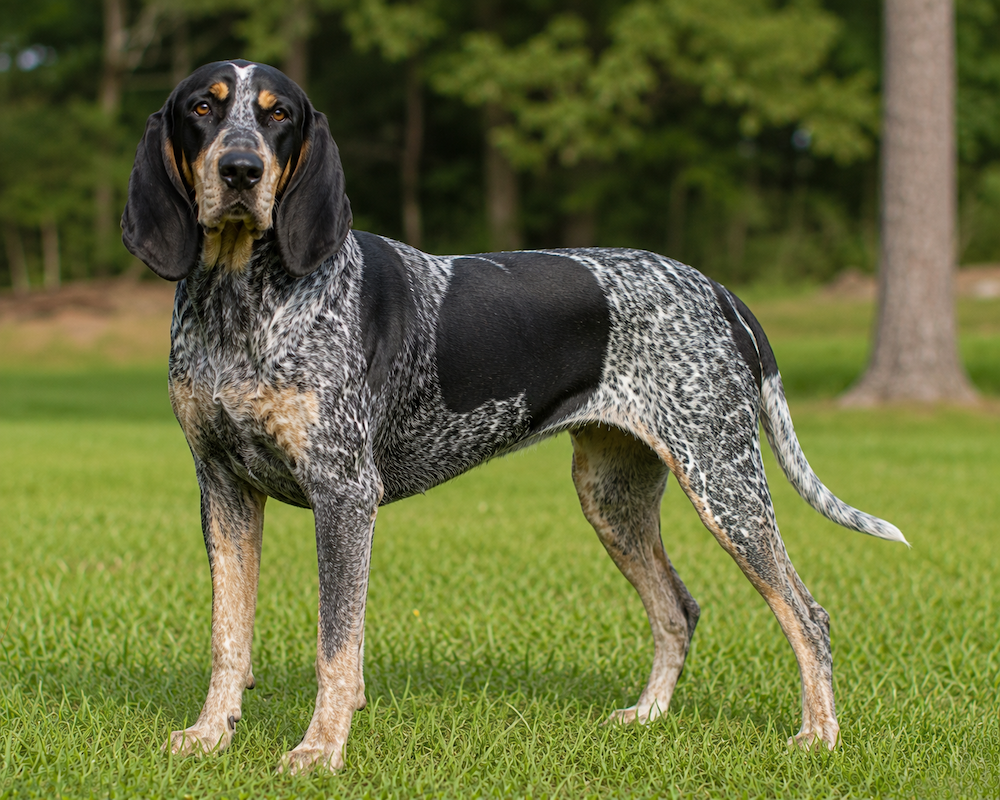







Powerful, determined, and wonderfully friendly — the Coonhound is an exceptional scent hound bred for endurance, intelligence, and an incredible sense of smell.
🧠 QUICK SNAPSHOT
- Temperament: Friendly, intelligent, determined
- Energy Level: Very High
- Size: Large
- Good With Families: Yes
- Trainability: Moderate
- Grooming: Low
- Best For: Active families, runners, rural homes, experienced dog owners
📚 OVERVIEW
The term Coonhound refers to a group of American scent hounds originally developed to track and tree raccoons and other game over vast distances. Popular breeds within this group include the Black and Tan Coonhound, Bluetick Coonhound, Redbone Coonhound, Treeing Walker Coonhound, American English Coonhound, and Plott Hound. While each breed has its own characteristics, they all share remarkable scenting ability, outstanding endurance, and a friendly, people-oriented temperament.
Built for long days in the field, Coonhounds possess incredible stamina and an instinctive desire to follow scents. Once their exercise needs have been met, they are generally calm and affectionate companions that enjoy relaxing with their families. Their distinctive baying voice, floppy ears, and expressive eyes make them instantly recognisable. Owners who enjoy hiking, running, camping, or other outdoor adventures will find a Coonhound to be a loyal and enthusiastic partner.
✅ PROS & CONS
Pros
- Friendly and affectionate personality
- Excellent with children and other dogs
- Outstanding sense of smell
- Low-maintenance coat
- Hardy and generally healthy
Cons
- Requires extensive daily exercise
- Powerful prey drive
- Can be extremely vocal
- Independent nature can make training challenging
- Needs secure fencing due to scent instincts
Is a Coonhound a Good Family Dog?
Yes, Coonhounds are generally excellent family dogs for active households. They are known for their gentle, affectionate nature and typically form strong bonds with every member of the family. Most Coonhounds are patient with children and enjoy being included in family activities, particularly those involving the outdoors.
Because these dogs were bred to work in hunting packs, they usually get along very well with other dogs. Some may also adapt to homes with cats if raised together, although their strong prey drive means smaller pets such as rabbits, guinea pigs, or birds require careful supervision.
Coonhounds thrive on companionship and prefer not to be left alone for long periods. Families who provide regular interaction, consistent training, and plenty of daily activity will enjoy a loyal, entertaining, and affectionate companion that is happiest when spending time with its people.
How Much Exercise Does a Coonhound Need?
A Coonhound requires 90 to 120 minutes of exercise every day, and many individuals benefit from even more activity. These dogs were bred to track game across challenging terrain for hours, so they possess exceptional stamina and endurance.
Long walks, running, hiking, scent work, tracking sports, and supervised off-lead exercise in securely fenced areas are ideal. Many Coonhounds excel at nose work because following scents is one of their greatest natural talents. Interactive games that encourage scent tracking provide both physical exercise and valuable mental stimulation.
Without sufficient activity, a Coonhound may become bored, noisy, or destructive. Owners who enjoy outdoor adventures and can provide plenty of opportunities for exercise will be rewarded with a calm, content, and well-balanced companion.
Is a Coonhound Easy to Train?
Coonhounds are intelligent dogs, but their independent nature means training requires patience and consistency. Having been bred to work away from hunters while following scent trails, they often prefer making their own decisions once an interesting scent captures their attention.
Positive reinforcement using treats, praise, toys, and enjoyable training sessions produces the best results. Harsh corrections should always be avoided, as they can reduce trust and motivation. Keeping training varied and rewarding helps maintain the breed’s interest.
Early socialisation is essential to expose puppies to different people, environments, and other animals. Reliable recall can be difficult to achieve because a determined Coonhound may ignore commands when following a scent. Ongoing training throughout the dog’s life helps build good manners and strengthens the bond with its owner.
Does a Coonhound Shed?
Yes, most Coonhounds shed moderately throughout the year. Their short, dense coats are designed to provide protection in rough outdoor conditions while remaining relatively easy to care for.
Weekly brushing with a rubber grooming mitt or soft-bristle brush removes loose hair, keeps the coat healthy, and helps distribute natural oils. During seasonal shedding periods, brushing more frequently can reduce loose hair around the home. Bathing is generally only necessary after particularly muddy adventures.
Because Coonhounds have long, floppy ears, regular ear cleaning is essential to reduce the risk of ear infections caused by trapped moisture and debris. Routine nail trimming and dental care should also form part of their grooming schedule. Coonhounds are not considered hypoallergenic.
What Health Problems Are Common in a Coonhound?
Coonhounds are generally healthy, athletic dogs with a lifespan of 10 to 13 years, although this varies slightly between the individual Coonhound breeds. Responsible breeders continue to health test breeding dogs to reduce inherited conditions.
Potential health concerns include hip dysplasia, elbow dysplasia, ear infections, progressive retinal atrophy (PRA), and gastric dilatation-volvulus (bloat), particularly in larger, deep-chested individuals. Obesity can also become an issue if active dogs receive insufficient exercise, increasing stress on the joints and reducing overall fitness.
Regular veterinary examinations, maintaining a healthy weight, feeding a balanced diet, and providing abundant daily exercise all contribute to long-term health. Purchasing a puppy from a reputable breeder who performs appropriate health screening provides the best opportunity to enjoy a healthy, active, and long-lived Coonhound.