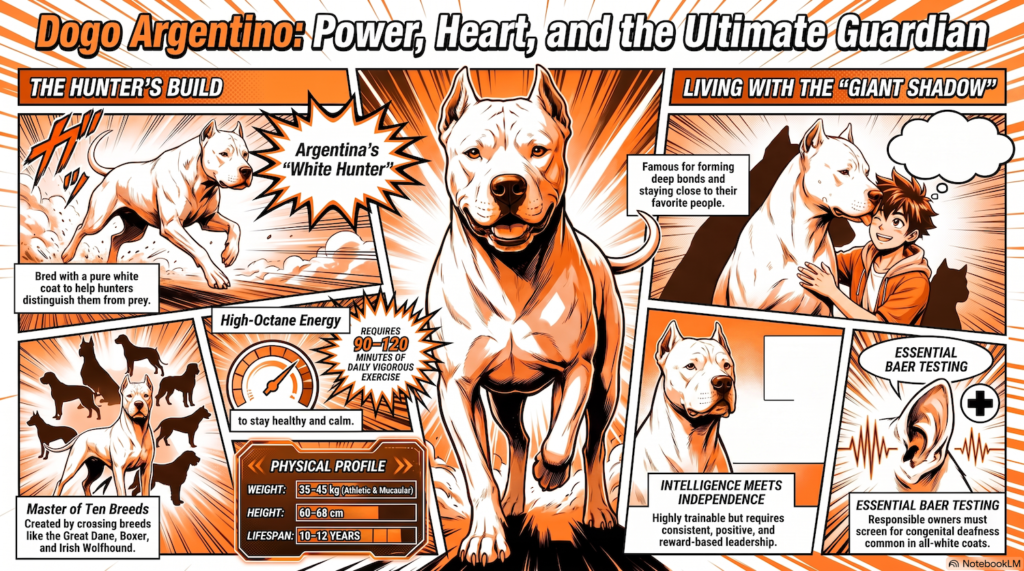
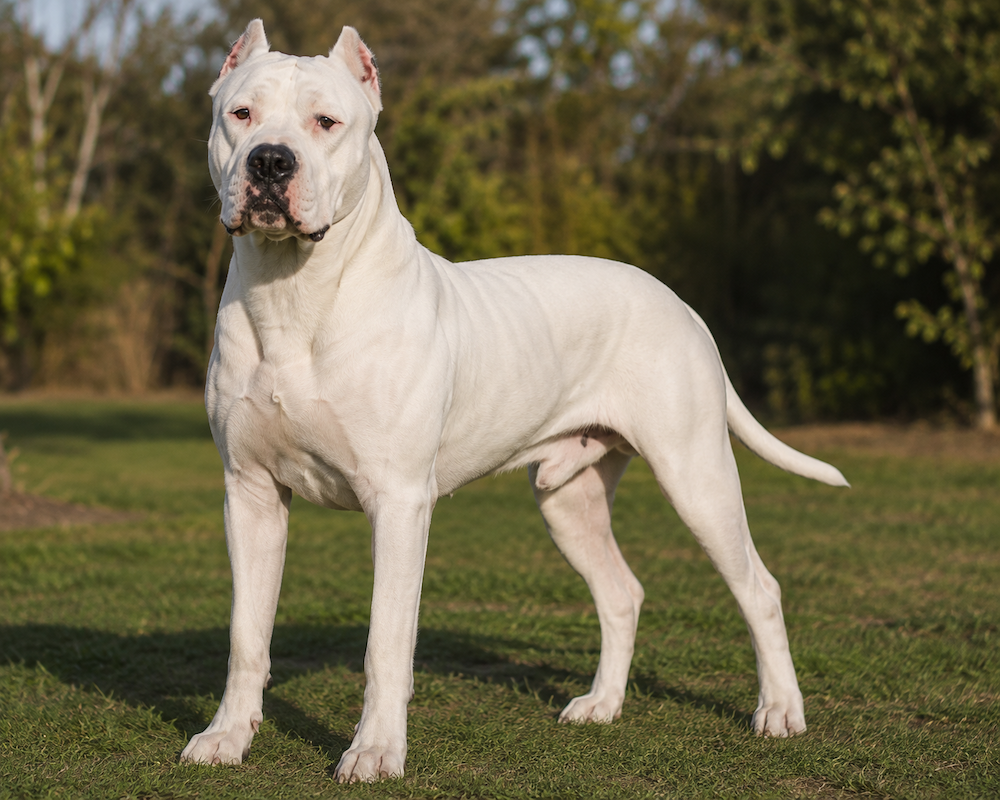







Powerful, courageous, and deeply loyal — the Dogo Argentino is an athletic working breed that combines impressive strength with a calm and affectionate nature toward its family.
🧠 QUICK SNAPSHOT
- Temperament: Loyal, courageous, confident
- Energy Level: High
- Size: Large
- Good With Families: Yes (Experienced Owners)
- Trainability: High
- Grooming: Low
- Best For: Experienced owners, active families, homes with secure fencing
📚 OVERVIEW
The Dogo Argentino was developed in Argentina during the 1920s by Dr. Antonio Nores Martínez, who set out to create a versatile hunting dog capable of pursuing wild boar and puma while remaining a loyal and dependable family companion. By carefully combining several breeds, including the now-extinct Cordoba Fighting Dog, he produced a powerful, athletic dog with remarkable courage, endurance, and intelligence.
Today, the Dogo Argentino is admired around the world for its versatility. While it remains an exceptional working and hunting dog, it is equally valued as a devoted family guardian. Beneath its muscular, all-white appearance lies a calm and affectionate companion that forms incredibly strong bonds with its owners. The breed thrives when given clear leadership, early socialisation, and regular physical and mental challenges. Because of its strength, confidence, and protective instincts, the Dogo Argentino is best suited to experienced dog owners.
✅ PROS & CONS
Pros
- Exceptionally loyal and protective
- Highly intelligent and trainable
- Athletic and versatile
- Affectionate with family
- Low-maintenance coat
Cons
- Requires experienced handling
- Needs extensive socialisation
- Strong prey drive
- High daily exercise requirements
- Not suitable for every household
Is a Dogo Argentino a Good Family Dog?
Yes, the Dogo Argentino can make an outstanding family companion when raised by knowledgeable owners who understand the breed’s working heritage. It is deeply devoted to its family and often develops especially close relationships with the people it lives alongside. Despite its imposing appearance, a well-socialised Dogo is typically calm, affectionate, and gentle with respectful children in its own household.
Because of its size and strength, supervision is always recommended around young children. Early socialisation is essential to help the breed develop confidence around unfamiliar people, animals, and environments. A properly socialised Dogo Argentino is alert and protective without becoming unnecessarily reactive.
The breed can live with other household pets if raised with them from puppyhood, although its hunting instincts mean introductions should always be managed carefully. Families who provide leadership, companionship, and an active lifestyle will enjoy an exceptionally loyal and dependable companion.
How Much Exercise Does a Dogo Argentino Need?
The Dogo Argentino requires 90 to 120 minutes of exercise every day to maintain its physical fitness and mental wellbeing. Originally developed as a big-game hunting dog, it possesses excellent stamina and enjoys activities that challenge both body and mind.
Long walks, hiking, jogging, tracking, scent work, obedience training, swimming, and interactive games are all excellent outlets for the breed’s energy. Securely fenced areas are important because the Dogo’s prey drive may encourage it to chase wildlife if given the opportunity.
Mental stimulation should be included every day through puzzle toys, advanced obedience, scent games, and problem-solving exercises. Without sufficient exercise and enrichment, the Dogo Argentino can become bored and develop destructive behaviours. A structured daily routine helps produce a calm, balanced, and well-mannered adult.
Is a Dogo Argentino Easy to Train?
Yes, the Dogo Argentino is highly intelligent and eager to work, making it very trainable when handled correctly. However, it also possesses confidence and determination, meaning consistent leadership is essential throughout its life.
Positive reinforcement using praise, treats, toys, and engaging training sessions delivers excellent results. Harsh training methods should be avoided because they may damage trust and create unnecessary conflict. The breed responds best to calm, fair, and confident guidance.
Early obedience training and comprehensive socialisation are critical. Puppies should experience a wide variety of people, dogs, environments, and situations to help them mature into confident, reliable adults. With consistent training, the Dogo Argentino excels in obedience, scent work, tracking, protection sports, and many other canine activities.
Does a Dogo Argentino Shed?
Yes, the Dogo Argentino sheds moderately throughout the year. Its short, smooth white coat is simple to maintain and generally requires only weekly brushing to remove loose hair and keep the skin healthy.
Bathing is only needed occasionally unless the dog becomes particularly dirty after outdoor activities. Because the breed’s white coat can leave the skin more exposed to strong sunlight, owners in hot climates should take precautions during prolonged outdoor activity to reduce the risk of sunburn.
Routine grooming should also include regular ear cleaning, nail trimming, and dental care. Although grooming is straightforward, the Dogo Argentino is not considered hypoallergenic.
What Health Problems Are Common in a Dogo Argentino?
The Dogo Argentino is generally a healthy and athletic breed with a lifespan of around 10 to 12 years, but several inherited health conditions should be considered by prospective owners.
One of the most significant concerns is congenital deafness, which occurs more frequently in predominantly white-coated breeds. Responsible breeders routinely perform hearing tests (BAER testing) on puppies before they are placed in new homes. Other potential concerns include hip dysplasia, elbow dysplasia, hypothyroidism, skin allergies, and gastric dilatation-volvulus (bloat).
Choosing a puppy from health-tested parents significantly reduces inherited health risks. Regular veterinary examinations, maintaining a healthy body weight, feeding a high-quality balanced diet, and providing appropriate daily exercise all help ensure the Dogo Argentino remains a healthy, active, and devoted companion throughout its life.