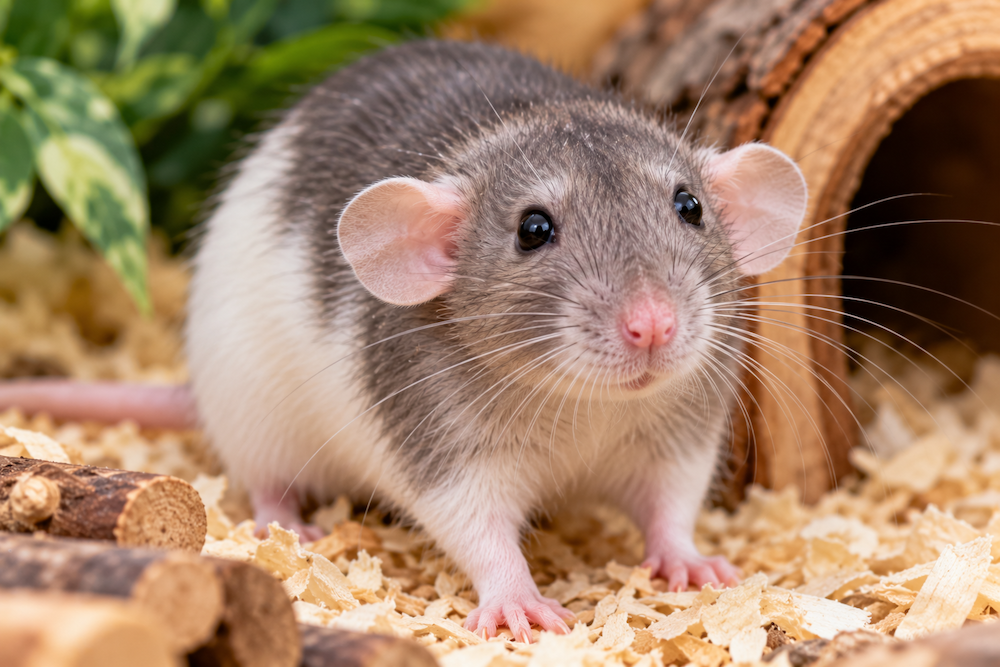







Adorable, intelligent and incredibly affectionate, the Dumbo Rat is a charming domestic rat variety famous for its oversized, low-set ears and remarkable ability to bond with humans.
🧠 QUICK SNAPSHOT
Trait | Dumbo Rat |
|---|---|
Scientific Name | Rattus norvegicus domestica |
Other Names | Dumbo Fancy Rat, Dumbo-Eared Rat |
Pet Type | Small Mammal / Rodent |
Natural Origin | Domesticated Brown Rat; Dumbo variety developed through selective breeding |
Typical Lifespan | Around 2–3 years |
Adult Size | Approximately 20–28 cm body length, excluding tail |
Adult Weight | Approximately 250–650 g |
Coat Type | Smooth, rex, satin and other varieties |
Coat Colours | White, black, grey, brown, cream, blue and patterned varieties |
Diet | Omnivore |
Activity | Primarily crepuscular and nocturnal |
Temperament | Intelligent, social, curious and affectionate |
Noise Level | Very quiet |
Social Needs | Very high; compatible rat companions essential |
Grooming | Mostly self-grooming; occasional assistance when needed |
Housing | Large, secure, multi-level cage with enrichment |
Exercise Needs | High; daily supervised exploration |
Beginner Friendly? | Yes, with appropriate preparation |
Famous Feature | Large, low-set rounded ears resembling those of a baby elephant |
📚 OVERVIEW
The Dumbo Rat is a distinctive variety of domestic Fancy Rat, recognised by its large, rounded ears positioned lower on the sides of its head than those of standard-eared rats. Despite its unusual appearance, the Dumbo Rat is not a separate species or breed.
Dumbo Rats are descendants of domesticated Brown Rats and share the remarkable intelligence, curiosity and social nature of other Fancy Rats. Their distinctive ear placement results from an inherited genetic variation developed through selective breeding.
These engaging little animals are capable of learning tricks, recognising familiar caregivers and developing strong relationships with both humans and other rats. Many enjoy climbing, exploring, solving puzzles and interacting with their owners.
Their care requires spacious housing, compatible rat companions, daily enrichment, a balanced diet and regular veterinary attention. Although relatively easy to care for, their social and behavioural needs should never be underestimated.
✅ PROS & CONS
👍 Pros
Extremely intelligent and trainable
Affectionate and sociable personalities
Adorable, distinctive ears
Can recognise familiar caregivers
Enjoy learning tricks and games
Generally quiet indoor pets
Available in many colours and coat types
Entertaining and interactive companions
👎 Cons
Relatively short lifespan
Must live with compatible rats
Susceptible to respiratory illnesses
Can develop tumours as they age
Require daily interaction and enrichment
Need a large, regularly cleaned cage
May chew furniture and household objects
Veterinary treatment can be expensive
Are Dumbo Rats Good Pets?
Yes. Dumbo Rats make excellent pets for people seeking intelligent, affectionate and interactive small animals.
They can develop strong relationships with their caregivers and enjoy regular social interaction.
However, they require companionship from other rats, spacious housing and daily enrichment.
Are Dumbo Rats Good for Beginners?
Yes.
Dumbo Rats are often suitable for beginners who understand their social and housing requirements.
They’re generally intelligent, adaptable and responsive to gentle handling.
However, prospective owners should be prepared for their short lifespan and potential veterinary expenses.
How Long Do Dumbo Rats Live?
Dumbo Rats typically live around 2–3 years.
Some individuals may live longer with excellent care and favourable genetics.
Their relatively short lifespan can be emotionally challenging for owners who develop strong attachments.
How Big Do Dumbo Rats Get?
Adult Dumbo Rats generally measure approximately 20–28 cm in body length, excluding the tail.
Their tails can add another 15–23 cm.
Males are usually larger and heavier than females.
What Is the Difference Between a Dumbo Rat and a Fancy Rat?
A Dumbo Rat is a type of Fancy Rat.
The main difference is ear placement.
Standard-eared Fancy Rats have ears positioned higher on their heads, while Dumbo Rats have larger-looking, rounded ears positioned lower on the sides.
Both share the same species and general care requirements.
Are Dumbo Rats Friendlier Than Normal Rats?
Not necessarily.
Dumbo Rats are often described as especially gentle, but there is no strong evidence that their ear shape determines temperament.
Personality depends on genetics, early socialisation, individual experiences and handling.
Are Dumbo Rats Affectionate?
Yes.
Many Dumbo Rats enjoy interacting with familiar people and may seek attention, climb onto their caregivers or settle beside them.
Individual preferences vary, and some rats are more independent than others.
Do Dumbo Rats Bond With Their Owners?
Yes.
Dumbo Rats can develop strong social relationships with familiar caregivers.
They may approach when called, recognise routines and actively seek interaction.
Consistent, positive experiences help build trust.
Do Dumbo Rats Recognise Their Owners?
Yes.
Domestic rats can recognise familiar individuals using scent, sound and other sensory information.
They may respond differently to familiar people than to strangers.
Their learning abilities make them particularly engaging companions.
Can Dumbo Rats Learn Tricks?
Absolutely.
Dumbo Rats are intelligent animals capable of learning behaviours through positive reinforcement.
They can learn to come when called, follow targets, navigate obstacles and retrieve small objects.
Short training sessions using appropriate rewards are especially effective.
Do Dumbo Rats Like Being Held?
Many Dumbo Rats become comfortable with gentle handling.
Some enjoy sitting on shoulders, exploring their owner’s clothing or resting in a secure lap.
Others prefer moving around rather than remaining still.
Always support their bodies and never lift them by the tail.
Do Dumbo Rats Bite?
Well-socialised pet rats generally bite infrequently.
However, biting can occur when a rat is frightened, injured, startled or feels threatened.
Gentle handling and respecting their body language help prevent problems.
Are Dumbo Rats Nocturnal?
Dumbo Rats are primarily crepuscular and nocturnal.
They’re often most active during the evening, night and early morning.
However, domestic rats can adjust some of their activity around familiar household routines.
Can Dumbo Rats Live Alone?
No.
Domestic rats are highly social animals that need companionship from other compatible rats.
Human interaction cannot fully replace normal rat-to-rat social behaviour.
Keeping at least two compatible rats together is essential, with larger stable groups often providing additional social opportunities.
How Many Dumbo Rats Should Be Kept Together?
Dumbo Rats should generally live in compatible same-sex pairs or groups.
Groups of three or more can provide particularly valuable social interaction.
Introductions must be managed carefully, especially when combining unfamiliar adult rats.
Can Male and Female Dumbo Rats Live Together?
Yes, but only when reproduction is responsibly prevented.
Unneutered males and females can breed rapidly.
Same-sex groups are generally the simplest arrangement for most pet owners.
What Size Cage Does a Dumbo Rat Need?
Dumbo Rats need a spacious, well-ventilated cage with room to climb, explore and exercise.
For a small group, a cage approximately 80 × 50 × 80 cm is a useful starting point, with substantially larger accommodation preferred.
Solid flooring, hammocks, hiding places and enrichment are important.
Do Dumbo Rats Need Exercise Outside Their Cage?
Yes.
Daily supervised time outside the cage provides valuable physical exercise and mental stimulation.
A rat-proofed room or secure play area allows climbing, exploring and interaction.
Electrical cables, toxic plants and escape routes must be secured.
What Do Dumbo Rats Eat?
Dumbo Rats are omnivores.
A balanced diet should be based on high-quality formulated rat pellets or blocks, supplemented with suitable vegetables and occasional appropriate treats.
Fresh water must always be available.
Can Dumbo Rats Eat Fruit?
Yes.
Small amounts of suitable fruits such as apple without seeds, berries, banana and melon can be offered occasionally.
Fruit should remain a treat rather than a major dietary component.
Avoid excessive sugary foods.
Do Dumbo Rats Need Baths?
Generally, no.
Healthy rats are meticulous self-groomers and usually maintain their coats without bathing.
Unnecessary bathing can cause stress and skin irritation.
Older or unwell rats may occasionally need gentle cleaning assistance.
Do Dumbo Rats Smell?
Dumbo Rats themselves are generally clean animals.
Most unpleasant odours come from soiled bedding, urine accumulation or inadequate ventilation.
Regular spot cleaning and appropriate cage maintenance help minimise smells.
Do Dumbo Rats Need Their Teeth Trimmed?
Healthy rats normally keep their continuously growing incisors worn down through natural chewing.
Providing safe chew materials supports normal dental behaviour.
Overgrown or misaligned teeth require veterinary attention and should never be trimmed at home.
What Health Problems Are Common in Dumbo Rats?
Common concerns include respiratory infections, mammary tumours, dental problems, obesity and age-related mobility difficulties.
Domestic rats are particularly susceptible to chronic respiratory disease.
Prompt veterinary care, good ventilation and appropriate hygiene are essential.
Are Dumbo Rats Legal to Keep as Pets?
Ownership regulations vary by country and region.
Domestic Fancy Rats, including Dumbo Rats, are legal pets in many places.
However, local restrictions, housing requirements and animal welfare regulations should always be checked.
What Makes the Dumbo Rat Unique?
Imagine a tiny animal with enormous rounded ears, the intelligence to learn tricks and the ability to recognise familiar people.
That’s the extraordinary Dumbo Rat.
These adorable rodents owe their distinctive appearance to a genetic variation that changes the position and shape of their ears.
Unlike standard-eared rats, Dumbo Rats have ears positioned lower on the sides of their heads, creating an appearance reminiscent of Disney’s famous flying elephant.
But their remarkable abilities go far beyond their appearance.
Domestic rats are exceptionally intelligent animals.
They can learn complex tasks, navigate mazes, recognise patterns and remember previously learned behaviours.
Research has also demonstrated that rats can display sophisticated social behaviours, including helping other rats in certain experimental situations.
Their communication is equally fascinating.
Rats produce ultrasonic vocalisations that humans cannot normally hear.
Some of these high-frequency sounds occur during playful or rewarding experiences, including gentle tickling in research settings.
Dumbo Rats also have extraordinarily sensitive whiskers.
These specialised sensory hairs help them investigate objects, navigate narrow spaces and understand their surroundings, particularly in low light.
Their long tails serve important functions too, helping with balance and temperature regulation.
Perhaps most surprising is how interactive they can become.
Many Dumbo Rats learn to approach familiar caregivers, respond to training and eagerly investigate new toys or environments.
The Dumbo Rat may have the ears of a cartoon character, but behind that adorable face is one of the most intelligent, social and fascinating small pets you can own.