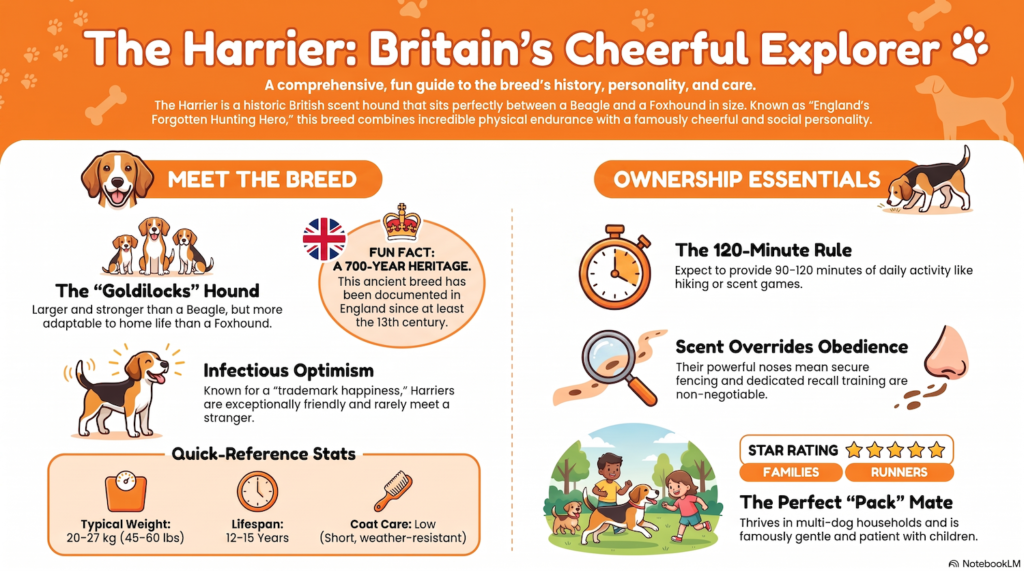
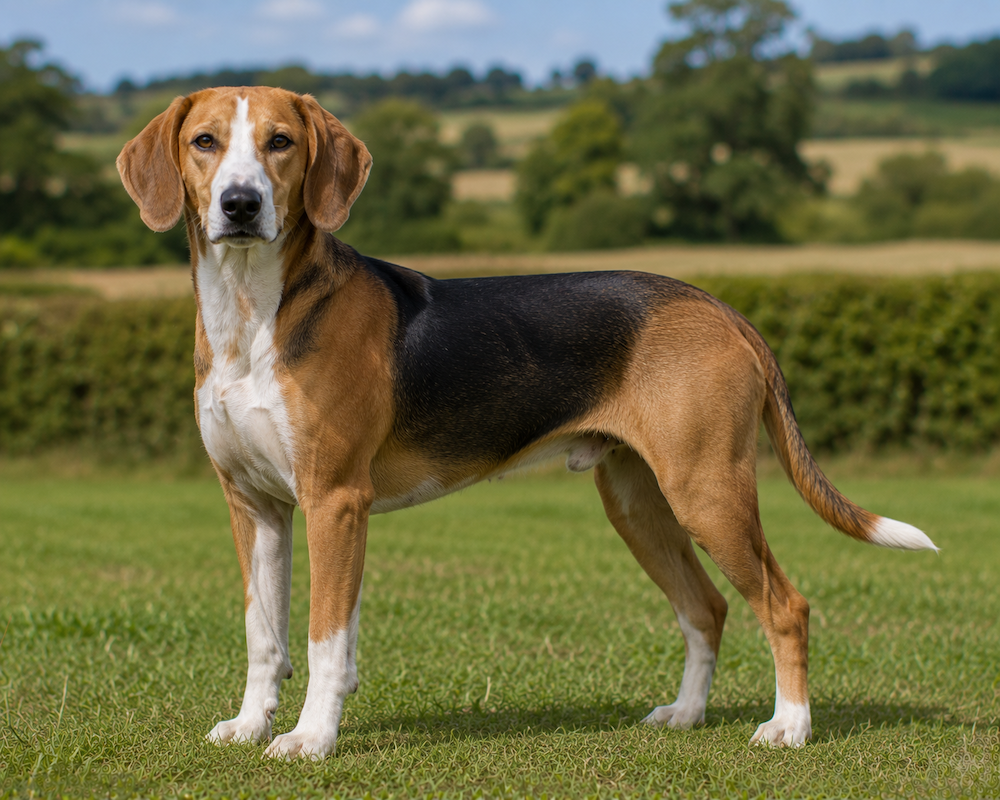







Friendly, energetic, and always ready for adventure — the Harrier is a cheerful scent hound that combines exceptional endurance with a loving and outgoing personality.
🧠 QUICK SNAPSHOT
- Temperament: Friendly, outgoing, intelligent
- Energy Level: Very High
- Size: Medium to Large
- Good With Families: Yes
- Trainability: Moderate
- Grooming: Low
- Best For: Active families, runners, rural homes, experienced dog owners
📚 OVERVIEW
The Harrier is a traditional British scent hound with a history stretching back hundreds of years. Originally bred to hunt hares in packs across the English countryside, the Harrier combines the exceptional nose of a Beagle with the endurance and athleticism of a larger hound. Although often mistaken for an oversized Beagle or a smaller English Foxhound, the Harrier is a distinct breed known for its cheerful personality, incredible stamina, and love of outdoor adventure.
Today, the Harrier is an affectionate and sociable family companion that thrives in active households. It enjoys spending time with people and other dogs, reflecting its long history of working closely within hunting packs. While relaxed and friendly at home after sufficient exercise, the Harrier remains a determined scent hound whose powerful nose can quickly lead it into mischief if not properly supervised. Owners who enjoy hiking, running, or exploring the outdoors will find the Harrier an enthusiastic and loyal companion.
✅ PROS & CONS
Pros
- Friendly and affectionate temperament
- Excellent with children and other dogs
- Highly athletic and energetic
- Low-maintenance coat
- Generally healthy and robust
Cons
- Needs extensive daily exercise
- Strong prey drive and scent instincts
- Can be vocal when excited
- Independent during training
- Requires secure fencing
Is a Harrier a Good Family Dog?
Yes, the Harrier is an excellent family dog for active households. This breed is naturally friendly, affectionate, and sociable, making it a wonderful companion for families with children. Harriers love being part of family activities and are happiest when included in outdoor adventures, games, and daily walks.
Because they were developed to hunt in packs, Harriers usually get along exceptionally well with other dogs. They can also adapt to living with cats if raised together from puppyhood, although their strong prey drive means introductions should always be managed carefully. Smaller pets such as rabbits or guinea pigs may trigger the breed’s natural hunting instincts.
The Harrier thrives on companionship and generally dislikes being left alone for long periods. Families who can provide plenty of interaction, exercise, and consistent training will enjoy a cheerful, loyal, and entertaining companion that fits well into an active lifestyle.
How Much Exercise Does a Harrier Need?
The Harrier requires 90 to 120 minutes of exercise every day and is one of the more energetic scent hounds. Bred to follow a trail for hours across challenging terrain, this breed possesses remarkable endurance and needs regular opportunities to burn off energy.
Long walks, jogging, hiking, scent work, tracking games, and securely fenced off-lead play are all excellent activities. The Harrier particularly enjoys following scent trails, making nose work and tracking sports ideal ways to satisfy its natural instincts while strengthening the bond with its owner.
Mental stimulation should accompany physical exercise. Puzzle feeders, scent puzzles, obedience training, and interactive games help keep the Harrier’s intelligent mind occupied. Without enough activity, the breed may become bored, vocal, or destructive. A varied daily routine ensures a calm, happy, and well-balanced companion.
Is a Harrier Easy to Train?
The Harrier is intelligent but possesses the independent mindset typical of scent hounds. While it learns commands quickly, it may choose to follow an interesting scent instead of responding immediately, making training moderately challenging.
Positive reinforcement using treats, praise, toys, and patience delivers the best results. Training sessions should remain short, varied, and enjoyable to maintain motivation. Harsh corrections should always be avoided, as they can reduce trust and willingness to cooperate.
Early socialisation is essential to expose Harrier puppies to different people, dogs, environments, and experiences. Reliable recall should be practised consistently throughout the dog’s life, but owners should remember that no scent hound can be completely trusted off lead in unsecured areas once it catches an appealing scent. Consistent, positive training produces a polite and enjoyable family companion.
Does a Harrier Shed?
Yes, the Harrier sheds moderately throughout the year. Its short, dense coat is weather-resistant and requires very little maintenance, making it one of the easier medium-sized breeds to groom.
Weekly brushing with a grooming mitt or soft-bristle brush removes loose hair, stimulates healthy skin, and keeps the coat looking glossy. During seasonal shedding periods, brushing more frequently can help reduce loose hair around the home. Bathing is only required occasionally, usually after muddy outdoor adventures.
Like many hounds, the Harrier’s long ears should be checked and cleaned regularly to reduce the risk of ear infections caused by trapped moisture and debris. Routine nail trimming and dental care should also form part of its regular grooming schedule. The Harrier is not considered hypoallergenic.
What Health Problems Are Common in a Harrier?
The Harrier is generally regarded as a healthy and hardy breed, benefiting from generations of breeding for endurance and working ability. Most Harriers enjoy long, active lives with relatively few inherited health concerns.
Hip dysplasia can occasionally occur, particularly in larger individuals, while some dogs may develop ear infections due to their long, floppy ears. Eye conditions such as progressive retinal atrophy (PRA) are uncommon but have been reported within the breed. Like many deep-chested active dogs, there is also a small risk of gastric dilatation-volvulus (bloat), making it sensible to avoid vigorous exercise immediately before or after meals.
Routine veterinary examinations, maintaining a healthy body weight, feeding a balanced diet, and providing plenty of daily exercise all help support long-term health. Purchasing a puppy from a reputable breeder who performs appropriate health testing gives owners the best opportunity to enjoy a healthy Harrier that commonly lives between 12 and 15 years.